
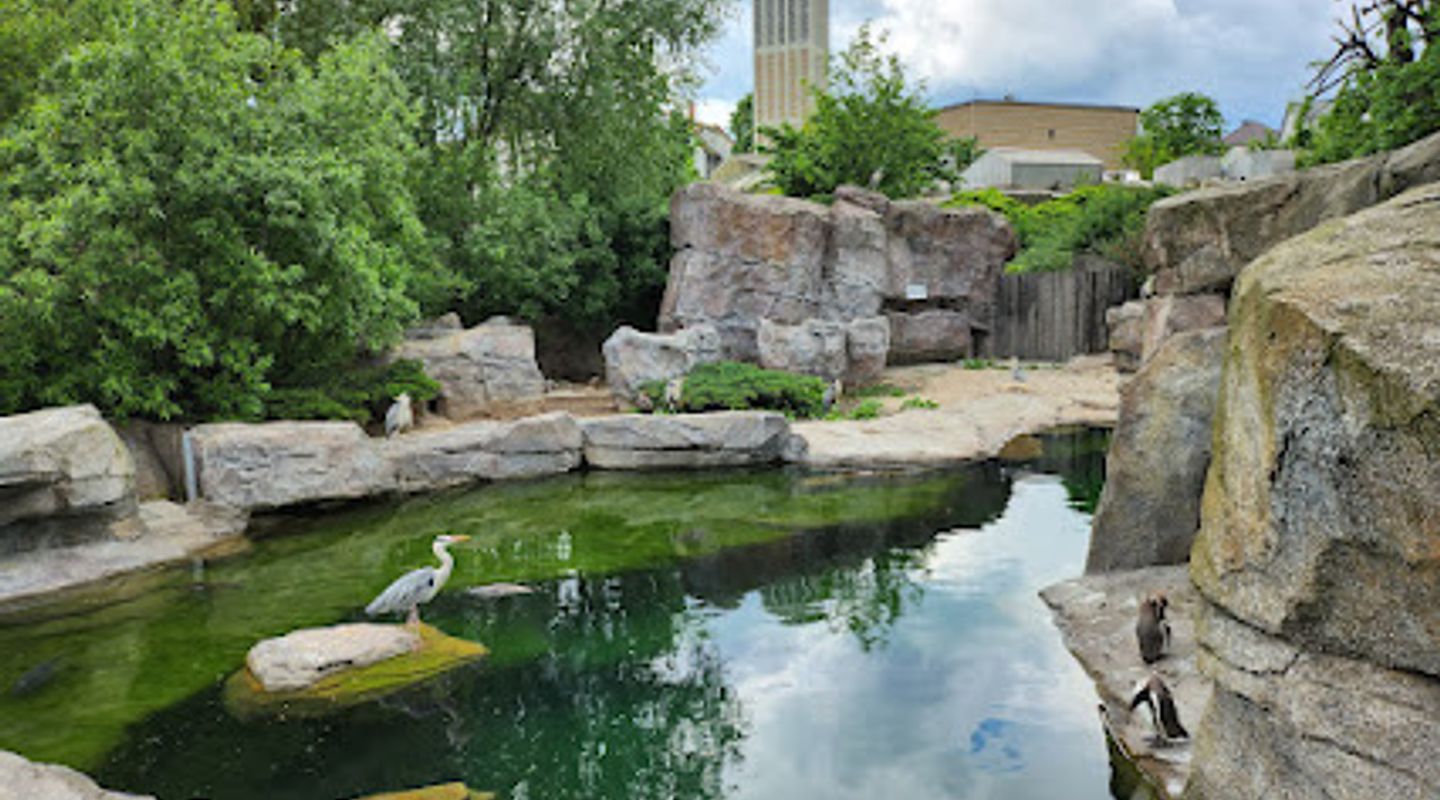
Zoo Frankfurt, Taunus Travel Guide
Discover a world of wildlife in the heart of Frankfurt: explore diverse habitats, encounter fascinating animals, and support global conservation efforts at Germany's second oldest zoo.
Frankfurt Zoo, the second oldest zoo in Germany, is a captivating urban oasis showcasing over 4,500 animals from around 450 species. Located in the heart of Frankfurt, the zoo offers a diverse range of habitats, from the dense jungle-like Borgori Forest, home to gorillas and bonobos, to the nocturnal realm of the Grzimek House, where bats and aardvarks roam. Visitors can marvel at Sumatran tigers, African animals, playful seals, and a vibrant array of marine life in the Exotarium. Beyond its impressive collection, Frankfurt Zoo actively participates in global conservation efforts, making it a must-visit destination for animal lovers and those seeking a deeper understanding of the natural world. The zoo's commitment to education and conservation, combined with its accessible location and diverse exhibits, ensures a memorable experience for visitors of all ages. Don't miss the opportunity to witness wildlife thriving in the heart of the city.
A brief summary to Zoo Frankfurt
- Bernhard-Grzimek-Allee 1, Frankfurt, Bornheim/Ostend, 60316, DE
- Click to display
- Click to display
- Monday 9 am-7 pm
- Tuesday 9 am-7 pm
- Wednesday 9 am-7 pm
- Thursday 9 am-7 pm
- Friday 9 am-7 pm
- Saturday 9 am-7 pm
- Sunday 9 am-7 pm

Know before you go
Hi, I'm Eve. Here are a few practical things to know before exploring Zoo Frankfurt.
- Visit the Grzimek House to experience nocturnal animals in their active phase, a unique opportunity to observe creatures that are usually asleep during the day.
- Check the zoo's schedule for feeding times and animal demonstrations, which offer a chance to learn more about the animals and their behaviors.
- Purchase tickets online in advance, especially during peak season, to avoid queues and ensure entry, as visitor capacity may be limited.
- Consider supporting the zoo's conservation efforts by donating to the Nature Conservation Euro program when purchasing your ticket.
- Take advantage of the zoo's accessibility by using public transport; the U6/U7 and tram line 14 stop directly at the 'Zoo' station.
Do you manage this location?
Take control to get all the benefits, like improved information, better appearance, and stronger visibility across AI-powered discovery. Learn more about listing your business on Evendo
Activate your presenceOther nearby places you may find interesting
The closest places of the same kind, if this one is not quite what you had in mind.
Explore Zoo Frankfurt on the Map
A handpicked selection of must-see spots near Zoo Frankfurt, mapped for you.
Unlock the Best of Zoo Frankfurt
Buy tickets
-
No tickets available
Book tours with entry
-
No tours available
Book tours without entry

Getting There
-
Public Transport
The most convenient way to reach Frankfurt Zoo is by public transport. From Frankfurt Hauptbahnhof (Central Station), take any S-Bahn heading towards the city center to Konstablerwache (approximately 3 stops). At Konstablerwache, transfer to the U6 or U7 U-Bahn lines in the direction of Ostbahnhof or Enkheim. Get off at the 'Zoo' station, which is just one stop from Konstablerwache. The zoo entrance is directly in front of the station exit. A single ticket (Einzelfahrschein) for Frankfurt costs €3.80 and is valid for travel on all forms of public transport within the city. Alternatively, a short-trip ticket (Kurzstrecke) costing €2.25 may be sufficient depending on your starting point. A day ticket (Tageskarte) is available for €7.40 if you plan to make multiple trips. The Frankfurt Card, offering unlimited travel and discounts on attractions, costs €12.00 for a single-day ticket.
-
Taxi/Ride-Share
Taxis and ride-sharing services are readily available throughout Frankfurt. A taxi ride from Frankfurt Hauptbahnhof to the zoo will typically cost between €15 and €20, depending on traffic. Be sure to specify 'Zoo Frankfurt' as your destination. Keep in mind that traffic can be heavy during peak hours, potentially increasing the fare.
-
Driving
If driving, use a GPS and input the address 'Bernhard-Grzimek-Allee 1, 60316 Frankfurt am Main'. Note that free parking around the zoo is very limited, especially on weekends. Several paid parking garages are located in the immediate vicinity, including Zoopassage (Grüne Straße 11), City-Parkhaus Ost (Waldschmidtstr. 43 or Wittelsbacher-Allee 26), and Mousonturm (Waldschmidtstr. 6). Parking fees typically range from €2 to €4 per hour, with daily maximums around €20. Consider using public transport to avoid parking hassles and contribute to a greener environment.
Discover more about Zoo Frankfurt













Your all‑in‑one travel companion app
Explore expert travel guides, compare and book tours, experiences, hotels, and more—all from the palm of your hand. Download now for seamless trip planning wherever your wanderlust takes you.


Explore More of Taunus
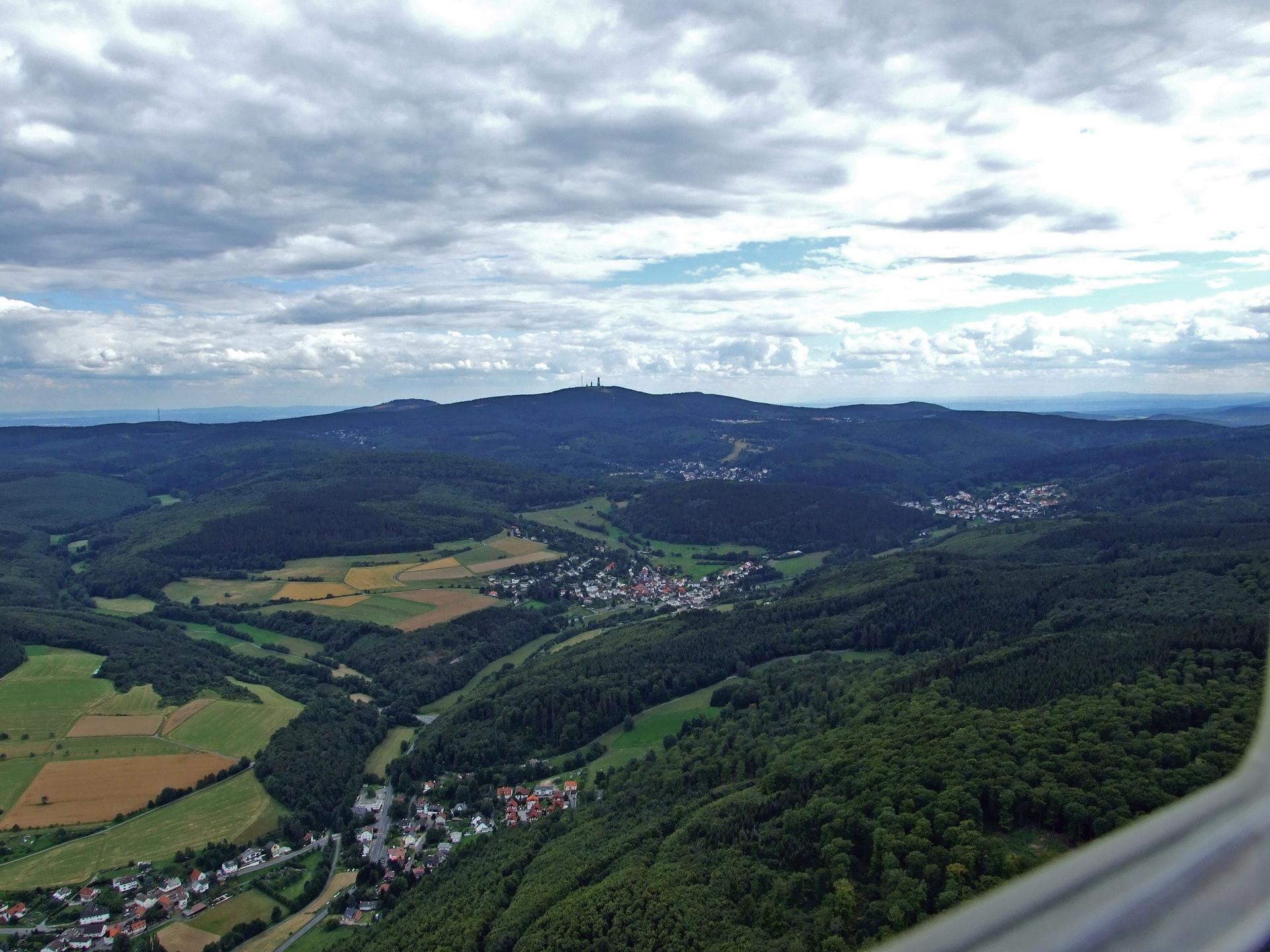
Looking beyond Zoo Frankfurt? Discover Taunus for broader travel guides, local hot-spots, and regional highlights.
Explore Taunus
Discover the birthplace of Johann Wolfgang von Goethe, a literary gem in Frankfurt that celebrates the life and works of Germany's greatest writer.

Experience the magic of live performances at The English Theatre Frankfurt, the largest English-speaking theatre in continental Europe, offering diverse productions year-round.
