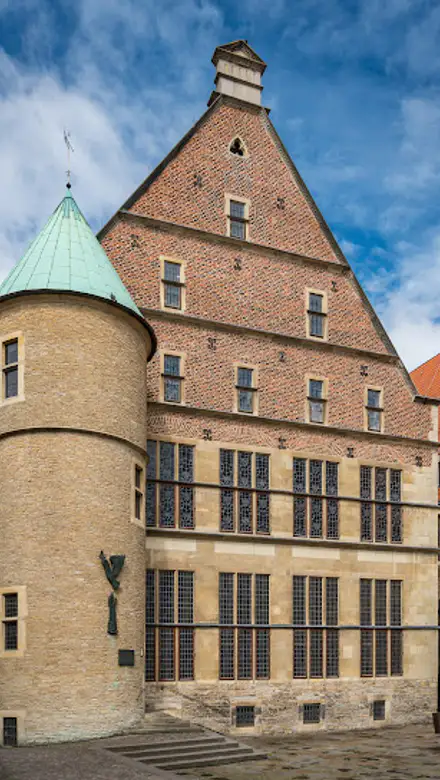
Historic City Hall Travel Guide
Free Guide: Discover Münster's Historic City Hall: Witness the site of the Peace of Westphalia, explore Gothic architecture, and delve into European history at this iconic landmark.


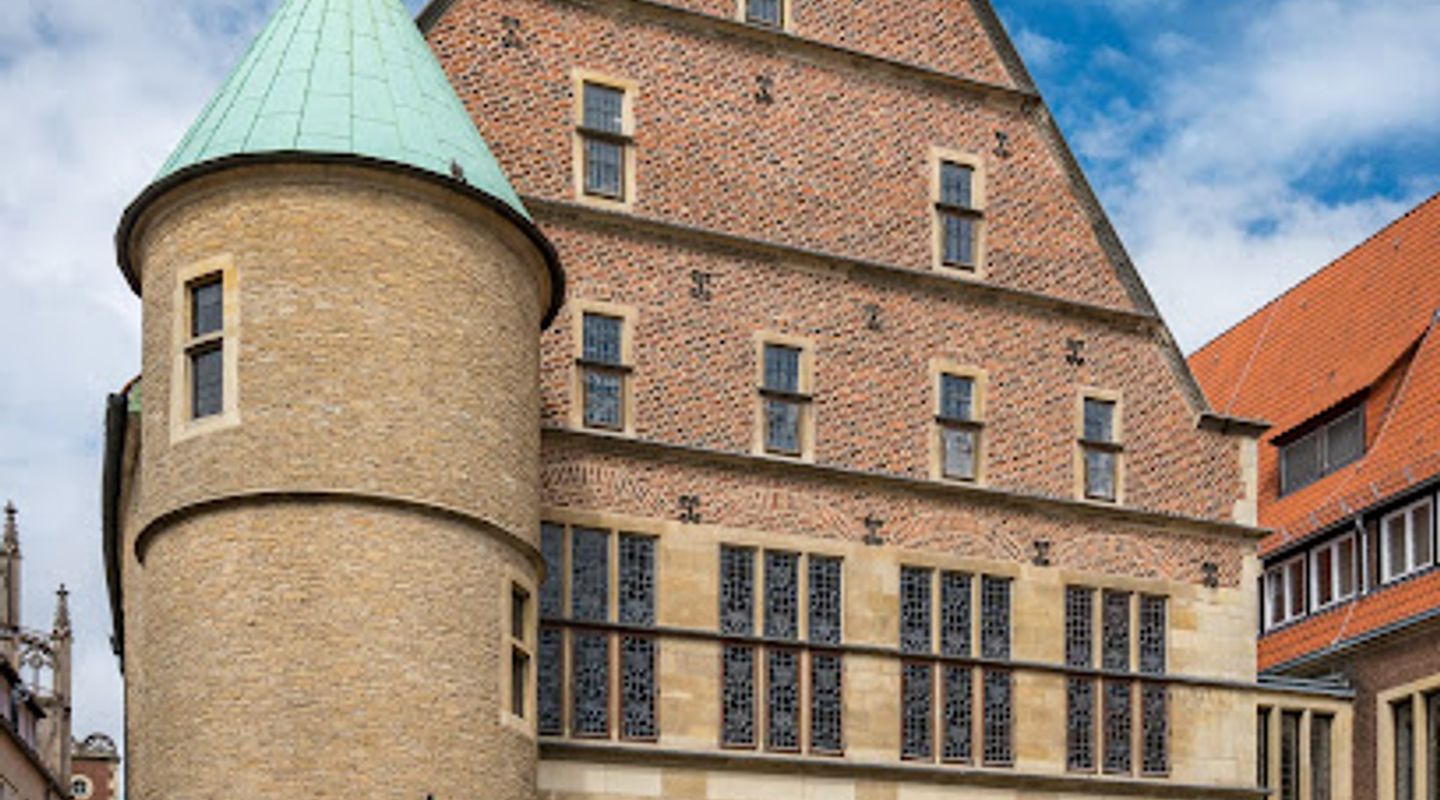
A brief summary of Historic City Hall
Discover Münster's Historic City Hall: Witness the site of the Peace of Westphalia, explore Gothic architecture, and delve into European history at this iconic landmark.
The Historische Rathaus (Historic City Hall) in Münster is more than just a building; it's a symbol of peace, resilience, and historical significance. Located in the heart of the Prinzipalmarkt, this iconic landmark stands as a reminder of the city's rich past and its role in shaping European history. The hall is renowned for being the site where the Peace of Westphalia was negotiated in 1648, ending the Thirty Years' War and the Eighty Years' War. Visitors can explore the Friedenssaal (Peace Hall), marvel at its ornate interior, and learn about the complex negotiations that took place within its walls. The building itself is a stunning example of Gothic architecture, with its intricate facade and imposing presence dominating the square. A visit to the Historic City Hall offers a unique opportunity to step back in time and witness a pivotal moment in European history, making it a must-see destination for anyone visiting Münster.
Opening hours
- MonClosed
- Tue10 am–5 pm
- Wed10 am–5 pm
- Thu10 am–5 pm
- Fri10 am–5 pm
- Sat10 am–4 pm
- Sun10 am–4 pm
Opening hours as listed on the venue’s Google Business Profile. Hours can change for services and special events, so check with the venue before you go.
- Address
- Prinzipalmarkt 10, 48143 Münster
- Phone
- Website
Getting there
Walking
Public Transport
Taxi/Ride-Share
Discover more about Historic City Hall
Overview
Münster's Historic City Hall, or Historisches Rathaus, is a captivating landmark that serves as a powerful reminder of the city's pivotal role in European history. Situated prominently on the Prinzipalmarkt, the city's central marketplace, the City Hall is not merely an architectural marvel but also a symbol of peace, reconciliation, and the enduring spirit of Münster. The building's significance stems primarily from its role in the Peace of Westphalia negotiations. In 1648, after years of grueling conflict, representatives from across Europe gathered within these very walls to broker an end to the devastating Thirty Years' War and the Eighty Years' War. The Friedenssaal, or Peace Hall, is the heart of the City Hall and the very room where the treaties were signed, forever etching Münster into the annals of history. Stepping into the Friedenssaal is like stepping back in time. The hall is meticulously preserved, allowing visitors to immerse themselves in the atmosphere of those momentous negotiations. The walls are adorned with portraits of the participating ambassadors and rulers, each face a silent witness to the complex political maneuvering that unfolded here. The original wooden panels, the ornate chandeliers, and the long tables where the treaties were drafted all contribute to a palpable sense of history. Beyond its historical importance, the Historic City Hall is also a stunning example of Gothic architecture. Its facade is a masterpiece of intricate stonework, featuring pointed arches, delicate tracery, and imposing statues. The building's gabled roof and towering presence dominate the Prinzipalmarkt, creating a visual spectacle that is both awe-inspiring and deeply evocative. The Prinzipalmarkt itself enhances the City Hall's appeal. This historic marketplace is characterized by its uniform architecture, with gabled houses lining the square, creating a harmonious and visually appealing backdrop. The arcades that run along the front of the buildings offer shelter from the elements and provide a space for shops and cafes, adding to the square's vibrant atmosphere. A visit to the Historic City Hall offers a multifaceted experience. History buffs will be enthralled by the Friedenssaal and the stories it holds. Architecture enthusiasts will appreciate the building's Gothic grandeur. And anyone with an interest in European history will find themselves moved by the significance of this place. The City Hall is not just a museum piece; it remains an active center of civic life. It is still used for official receptions, ceremonies, and meetings, ensuring that its historical legacy continues to resonate in the present day. This blend of past and present gives the City Hall a unique vibrancy and relevance. To fully appreciate the Historic City Hall, consider taking a guided tour. Knowledgeable guides can provide invaluable insights into the history of the building, the Peace of Westphalia negotiations, and the significance of the various artifacts and artworks within the Friedenssaal. These tours offer a deeper understanding of the events that transpired here and their lasting impact on Europe. After exploring the City Hall, take some time to wander through the Prinzipalmarkt. Browse the shops, sample local delicacies at the cafes, and soak in the atmosphere of this historic marketplace. The Prinzipalmarkt is a vibrant hub of activity, and it offers a glimpse into the daily life of Münster. The Historic City Hall is more than just a building; it is a symbol of peace, resilience, and the enduring power of diplomacy. It is a place where history comes alive, and it is a must-see destination for anyone visiting Münster. Its architectural beauty, historical significance, and vibrant atmosphere make it a truly unforgettable experience. Visiting the Historische Rathaus offers a profound connection to a pivotal moment in European history, allowing one to reflect on the complexities of peace and the enduring legacy of diplomacy. The Friedenssaal, with its meticulously preserved details, serves as a time capsule, transporting visitors back to the era of negotiations and treaties that shaped the continent. The building's Gothic architecture, with its intricate facade and imposing presence, further enhances the experience, creating a visual spectacle that is both awe-inspiring and deeply evocative. The Historische Rathaus stands as a testament to Münster's rich past and its continued commitment to peace and international cooperation. Moreover, the Historische Rathaus is not merely a static monument; it remains an active center of civic life, hosting official receptions, ceremonies, and meetings. This blend of historical significance and contemporary relevance gives the building a unique vibrancy and ensures that its legacy continues to resonate in the present day. The Historische Rathaus is a place where the past and present converge, offering visitors a deeper understanding of Münster's identity and its role in shaping European history. In conclusion, the Historische Rathaus is an essential destination for anyone seeking to explore Münster's rich cultural heritage. Its historical significance, architectural beauty, and vibrant atmosphere make it a truly unforgettable experience. Whether you are a history buff, an architecture enthusiast, or simply someone who appreciates the power of diplomacy, the Historische Rathaus will leave a lasting impression.
Evendo Review Centre
 Google
Guest reviews
Explore Historic City Hall on the map
A handpicked selection of must-see spots near Historic City Hall, mapped for you.
Get your free copy of our complete guide to Historic City Hall, delivered straight to you.
Everything on this page, from opening hours and how to get there to Eve’s tips and the best time to go, in one PDF you can read offline, print or share.
Already have an account? Sign in
Your Historic City Hall guide is ready.
We'll send it to · Not you? Sign out

Getting your guide ready…
We are putting together a fresh copy of the Historic City Hall guide. This can take up to a minute.
This can take a few moments. If your browser asks, choose Allow so the download can start. You'll find the guide in your Downloads folder.
Nothing happened? Download it again
Sorry, the guide is taking longer than usual. Please try again in a minute, or get it by email instead.
Unlock the best of Historic City Hall
Skip-the-line tickets, guided tours with entry, and walking tours of the area, booked in a few clicks.


Other nearby places you may find interesting
The closest places of the same kind, if this one is not quite what you had in mind.
-
-
-
-
-


Swipe for more places
More to explore near Historic City Hall

 Best experiences near Historic City Hall
 Best hotels near Historic City Hall
 Best landmarks near Historic City Hall
 Best attractions near Historic City Hall
 Best shops near Historic City Hall
 Best restaurants near Historic City Hall
 Best bars near Historic City Hall
Do you manage this location?
Take control to get all the benefits, like improved information, better appearance, and stronger visibility across AI-powered discovery.
Explore more

Explore more of Westphalia
Discover Westphalia: A blend of medieval charm, cultural heritage, and natural beauty in the heart of northwestern Germany.
Explore Westphalia
Explore more of Germany
Experience Germany: where history meets innovation, and urban energy blends with natural beauty. Discover diverse cultures, delicious cuisine, and stunning landscapes.
Explore Germany