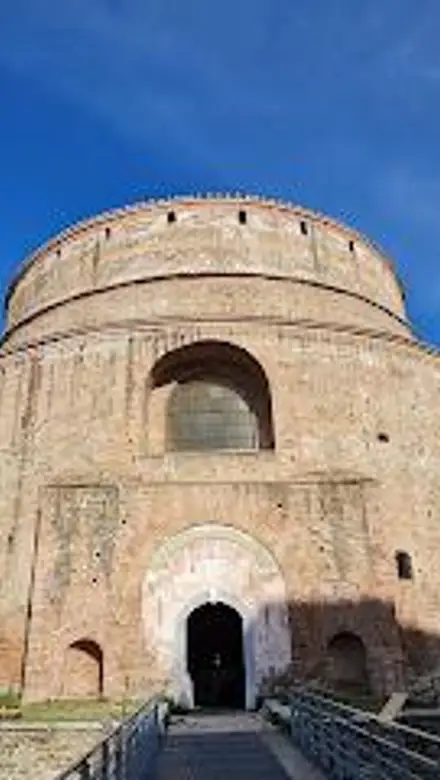
Rotunda, Thessaloniki Travel Guide
Free Guide: Explore Thessaloniki's ancient Rotunda: a Roman monument transformed into a church, mosque, and museum, showcasing centuries of history and art.


A brief summary of Rotunda
Explore Thessaloniki's ancient Rotunda: a Roman monument transformed into a church, mosque, and museum, showcasing centuries of history and art.
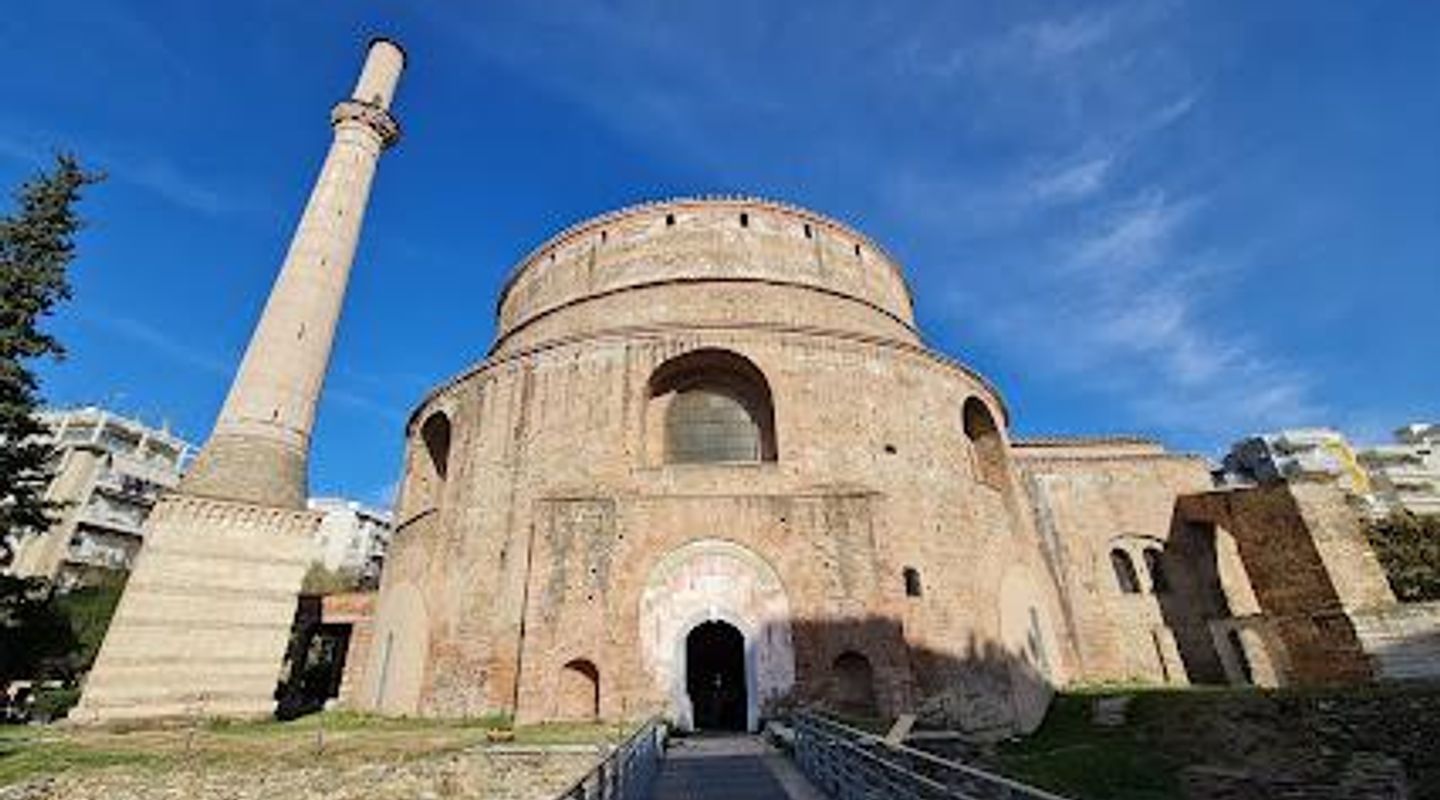
The Rotunda, or Rotonda, in Thessaloniki, is a remarkably well-preserved ancient Roman monument dating back to the early 4th century AD. Originally built by Emperor Galerius, its purpose shifted from a potential temple or mausoleum to a Christian church, then an Ottoman mosque, and now functions as a museum and place of worship, showcasing a blend of architectural styles and religious influences.
Opening hours
- Mon8:30 am–3:30 pm
- TueClosed
- Wed8:30 am–3:30 pm
- Thu8:30 am–3:30 pm
- Fri8:30 am–3:30 pm
- Sat8:30 am–3:30 pm
- Sun8:30 am–3:30 pm
Opening hours as listed on the venue’s Google Business Profile. Hours can change for services and special events, so check with the venue before you go.
- Address
- Platia Agiou Georgiou Rotonta 5, Thessaloniki 546 35
- Phone
- Website
Getting there
Walking
Public Transport
Taxi
Discover more about Rotunda
Overview
The Rotunda of Thessaloniki, also known as the Church of Agios Georgios (Saint George), stands as a powerful symbol of the city's layered past. Constructed around 306 AD by the Roman Emperor Galerius as part of his imperial complex, its original intent remains debated, with theories suggesting it was designed as a pagan temple dedicated to Zeus or the Cabeiri, or as Galerius's own mausoleum. Its architecture is reminiscent of the Pantheon in Rome, featuring a massive circular structure with walls over 6 meters thick and a soaring dome reaching nearly 30 meters in height.In the late 4th century, the Rotunda transitioned into a Christian church, undergoing modifications to accommodate Christian worship. This era saw the addition of stunning mosaics, which remain a highlight for visitors today. These mosaics, dating from the 4th to 6th centuries, depict scenes from the lives of martyrs and feature intricate botanical and geometric motifs. The monument served as the city's metropolitan church from 1523/24 to 1590/91. During the Ottoman period, in 1590, the Rotunda was converted into a mosque, named the Mosque of Hortatz Effendi, and a minaret was added. Following Thessaloniki's liberation in 1912, it was reclaimed as a Christian site, dedicated to Saint George. Today, the Rotunda is a museum and a space for religious ceremonies and cultural events, and was recognized as a UNESCO World Heritage Site in 1988. Visitors can explore its rich history and admire the stunning mosaics that reflect the artistic brilliance of past centuries.
Evendo Review Centre
 Google
Guest reviews
Explore Rotunda on the map
A handpicked selection of must-see spots near Rotunda, mapped for you.
Get your free copy of our complete guide to Rotunda, delivered straight to you.
Everything on this page, from opening hours and how to get there to Eve’s tips and the best time to go, in one PDF you can read offline, print or share.
Already have an account? Sign in
Your Rotunda guide is ready.
We'll send it to · Not you? Sign out

Getting your guide ready…
We are putting together a fresh copy of the Rotunda guide. This can take up to a minute.
This can take a few moments. If your browser asks, choose Allow so the download can start. You'll find the guide in your Downloads folder.
Nothing happened? Download it again
Sorry, the guide is taking longer than usual. Please try again in a minute, or get it by email instead.
Unlock the best of Rotunda
Skip-the-line tickets, guided tours with entry, and walking tours of the area, booked in a few clicks.


 Tour
TourThessaloniki Scavenger Hunt & Highlights Self-Guided Walking Tour
from $7.47 Tour
TourThessaloniki Self Guided Audio Tour Roman to Ottoman with Quiz
from $7.47 Tour
TourThessaloniki Bike Tour, the best way to explore the city
from $44.81 Tour
TourThessaloniki Sunset Coastal Views and Local Insights E Bike Tour
from $45.34
Other nearby places you may find interesting
The closest places of the same kind, if this one is not quite what you had in mind.
-
-
-
-
-


Swipe for more places
More to explore near Rotunda

 Best experiences near Rotunda
 Best hotels near Rotunda
 Best landmarks near Rotunda
 Best attractions near Rotunda
 Best shops near Rotunda
 Best restaurants near Rotunda
 Best bars near Rotunda
Do you manage this location?
Take control to get all the benefits, like improved information, better appearance, and stronger visibility across AI-powered discovery.
Explore more

Explore more of Thessaloniki
Discover Thessaloniki, Greece's vibrant northern gem, where ancient history meets modern allure. Enjoy rich culture, delicious cuisine, stunning views, and lively nightlife.
Explore Thessaloniki
Explore more of Greece
Discover Greece: A land where ancient history meets modern vibrancy, offering stunning islands, crystal-clear seas, and unforgettable cultural experiences.
Explore Greece