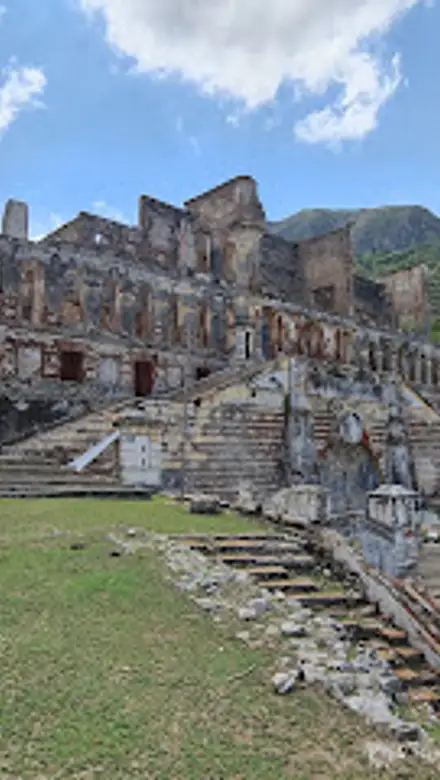
Sans Souci Palace Travel Guide
Free Guide: Explore the majestic ruins of Sans Souci Palace in Milot, Haiti, a UNESCO World Heritage site and a symbol of Haitian independence, offering a glimpse into the opulent era of King Henri Christophe.


A brief summary of Sans Souci Palace
Explore the majestic ruins of Sans Souci Palace in Milot, Haiti, a UNESCO World Heritage site and a symbol of Haitian independence, offering a glimpse into the opulent era of King Henri Christophe.
The Sans Souci Palace, nestled in Milot, Haiti, stands as a majestic ruin and a poignant reminder of the country's post-revolutionary opulence. Built by King Henri Christophe in the early 19th century, it was once the heart of his kingdom, rivaling European palaces in grandeur. Today, visitors can explore the remnants of this UNESCO World Heritage site, imagining the lavish feasts and dances that once filled its halls. The palace offers a unique window into Haitian history, showcasing the ambition and architectural prowess of a nation forging its identity. Its location, near the Citadelle Laferrière, makes it an essential stop for anyone exploring Haiti's rich cultural heritage, offering a blend of historical significance and breathtaking scenery. Exploring the palace grounds provides a tangible connection to Haiti's past, revealing the stories etched into its weathered walls and offering a deeper understanding of the nation's journey.
Opening hours
- Every dayOpen 24 hours
Opening hours as listed on the venue’s Google Business Profile. Hours can change for services and special events, so check with the venue before you go.
- Address
- JQ3J+VCM, Milot
Getting there
Public Transport
Taxi/Ride-Share
Discover more about Sans Souci Palace
Overview
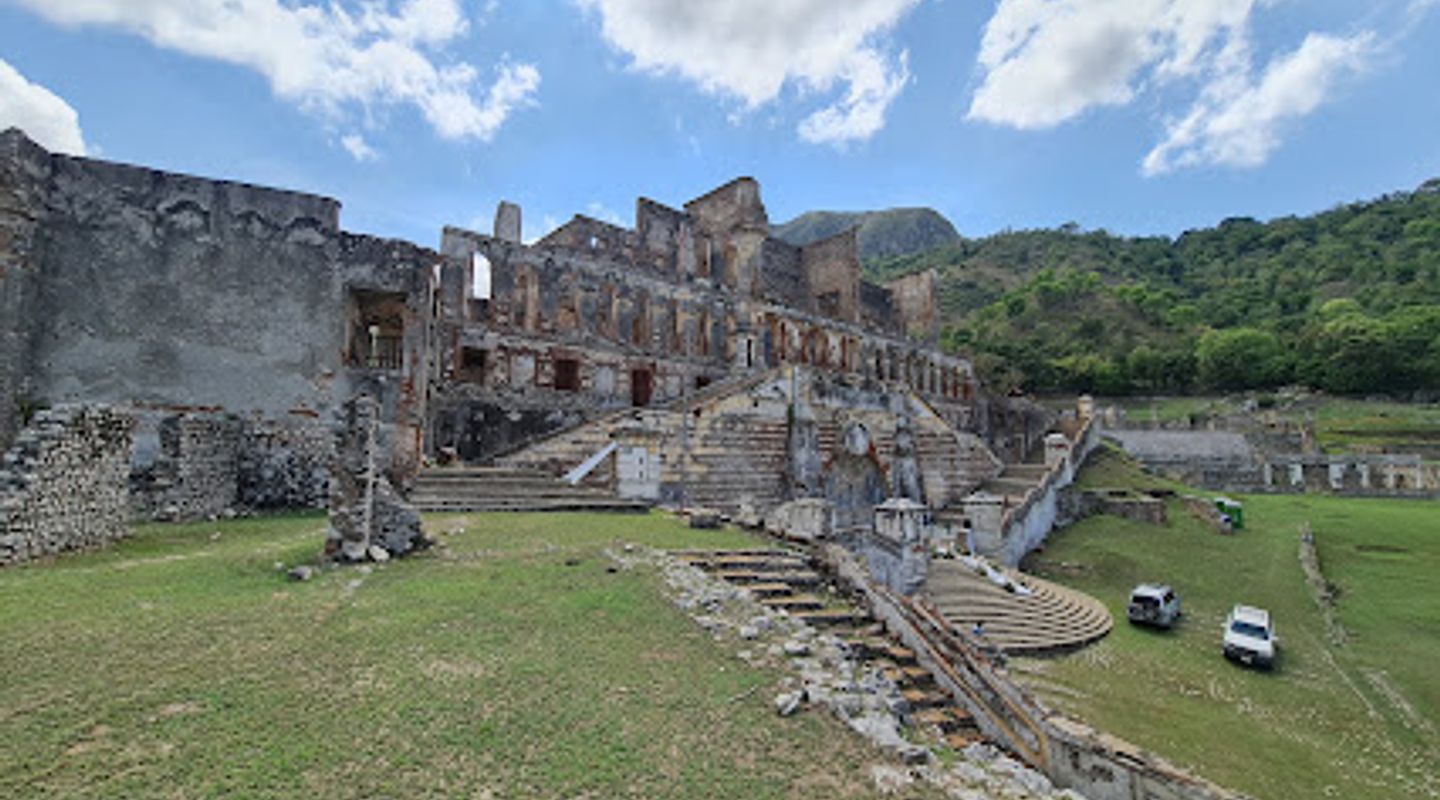
Sans Souci Palace, located in Milot, Haiti, is more than just a collection of ruins; it's a powerful symbol of Haitian independence, ambition, and the complex legacy of King Henri Christophe. Constructed between 1810 and 1813, the palace served as the principal royal residence for Christophe, who rose from slavery to become a key figure in the Haitian Revolution and later, the self-proclaimed King Henry I of Haiti. The name "Sans Souci," meaning "without worry" in French, is said to be derived from another Haitian revolutionary, Jean-Baptiste Sans Souci. Legend has it that Christophe had Sans Souci murdered and built the palace on the very spot as a display of his power. Whether fact or folklore, the name carries a heavy weight, juxtaposed against the palace's tumultuous history and eventual abandonment. During its brief heyday, Sans Souci Palace was a marvel to behold. Foreign visitors often compared it to the Palace of Versailles, marveling at its neoclassical architecture, sprawling gardens, and intricate system of waterworks. The palace boasted immense gardens with artificial springs, canals, basins and pools inspired by the Grand Canal of Versailles. It was designed to impress, to demonstrate Haiti's sophistication and cultural prowess to the world, particularly to its former colonizer, France. Lavish feasts, opulent balls, and royal ceremonies filled the palace halls, solidifying Christophe's image as a powerful and cultured monarch. However, the palace's grandeur was short-lived. Following Christophe's death by suicide in 1820, the palace fell into disuse. A devastating earthquake in 1842 further ravaged the structure, leaving it in the state of picturesque ruin that visitors see today. Despite its ruined state, Sans Souci Palace continues to evoke a sense of awe and wonder. The symmetrical classical façade, with its baroque double stairway, still stands as a testament to the palace's former glory. Vestiges of the adjoining gardens and pools hint at the opulence that once defined the royal residence. Exploring the palace grounds, visitors can wander through the remnants of administrative buildings, the prince's residence, stables, barracks, a prison, an arsenal, a workshop, and a hospital. These accompanying structures, grouped around the palace in an amphitheater-like fashion, offer a glimpse into the daily life of the royal court and the vast scale of Christophe's ambitions. Sans Souci Palace is inextricably linked to the Citadelle Laferrière, a massive mountaintop fortress located just a few miles away. Both sites were commissioned by Henri Christophe as symbols of Haitian independence and strength. Together with the buildings at Ramiers, they form a UNESCO World Heritage Site, recognized for their historical significance and cultural value. Visiting Sans Souci Palace today is a journey through time. As you walk through the ruins, imagine the bustling activity of the royal court, the sounds of music and laughter, and the weight of history that permeates the very stones. The palace serves as a reminder of Haiti's complex past, its struggle for freedom, and the enduring spirit of its people. While the palace itself is the main attraction, the surrounding town of Milot offers a glimpse into contemporary Haitian life. Local guides are available to provide insights into the history of the palace and the region, and vendors sell souvenirs and local crafts. Engaging with the local community adds another layer to the visitor experience, providing a deeper understanding of Haiti's cultural heritage. Despite the challenges facing Haiti, Sans Souci Palace remains a source of national pride and a testament to the country's rich history. Efforts are underway to preserve and restore the site, ensuring that future generations can appreciate its significance. A visit to Sans Souci Palace is an essential experience for anyone traveling to Haiti, offering a unique opportunity to connect with the country's past and witness the enduring legacy of King Henri Christophe. No trip to Haiti is complete without experiencing the grandeur of Sans Souci Palace. The palace is a reminder of Haiti's diverse architectural accomplishments as well as a monument to Haiti's struggle for liberty. The walls have been burnished by weather and time, revealing a multitude of colors on the rocky surfaces, and leaving a watercolor impression of this royal residence. The palace is a demonstration of Haiti's diverse architectural accomplishments as well as a monument to Haiti's struggle for liberty. Sans Souci Palace was once a symbol of prestige and remains one of Haitian-built pride of engineering. While it is no longer the center of extravagant feasts and dances, it continues to entertain many foreign visitors with its outstanding universal appeal. The palace's strategic location offers stunning views of the surrounding mountains and lush landscapes, making it a picturesque setting for memorable photos. Whether you're a history enthusiast or simply seeking a unique travel experience, this iconic landmark promises to captivate your senses and leave you in awe of its grandeur.
Evendo Review Centre
 Google
Guest reviews
Explore Sans Souci Palace on the map
A handpicked selection of must-see spots near Sans Souci Palace, mapped for you.
Get your free copy of our complete guide to Sans Souci Palace, delivered straight to you.
Everything on this page, from opening hours and how to get there to Eve’s tips and the best time to go, in one PDF you can read offline, print or share.
Already have an account? Sign in
Your Sans Souci Palace guide is ready.
We'll send it to · Not you? Sign out

Getting your guide ready…
We are putting together a fresh copy of the Sans Souci Palace guide. This can take up to a minute.
This can take a few moments. If your browser asks, choose Allow so the download can start. You'll find the guide in your Downloads folder.
Nothing happened? Download it again
Sorry, the guide is taking longer than usual. Please try again in a minute, or get it by email instead.
Other nearby places you may find interesting
The closest places of the same kind, if this one is not quite what you had in mind.
-
-
-
-
-


Swipe for more places
More to explore near Sans Souci Palace

 Best experiences near Sans Souci Palace
 Best hotels near Sans Souci Palace
 Best landmarks near Sans Souci Palace
 Best attractions near Sans Souci Palace
 Best shops near Sans Souci Palace
 Best restaurants near Sans Souci Palace
 Best bars near Sans Souci Palace
Do you manage this location?
Take control to get all the benefits, like improved information, better appearance, and stronger visibility across AI-powered discovery.
Explore more

Explore more of Sud
Discover Sud in Haiti: Immerse yourself in stunning landscapes, vibrant culture, and rich heritage in the unspoiled paradise of southern Haiti.
Explore Sud
Explore more of Haiti
Discover Haiti: A Caribbean gem with vibrant culture, rich history, stunning landscapes, and a unique culinary scene.
Explore Haiti