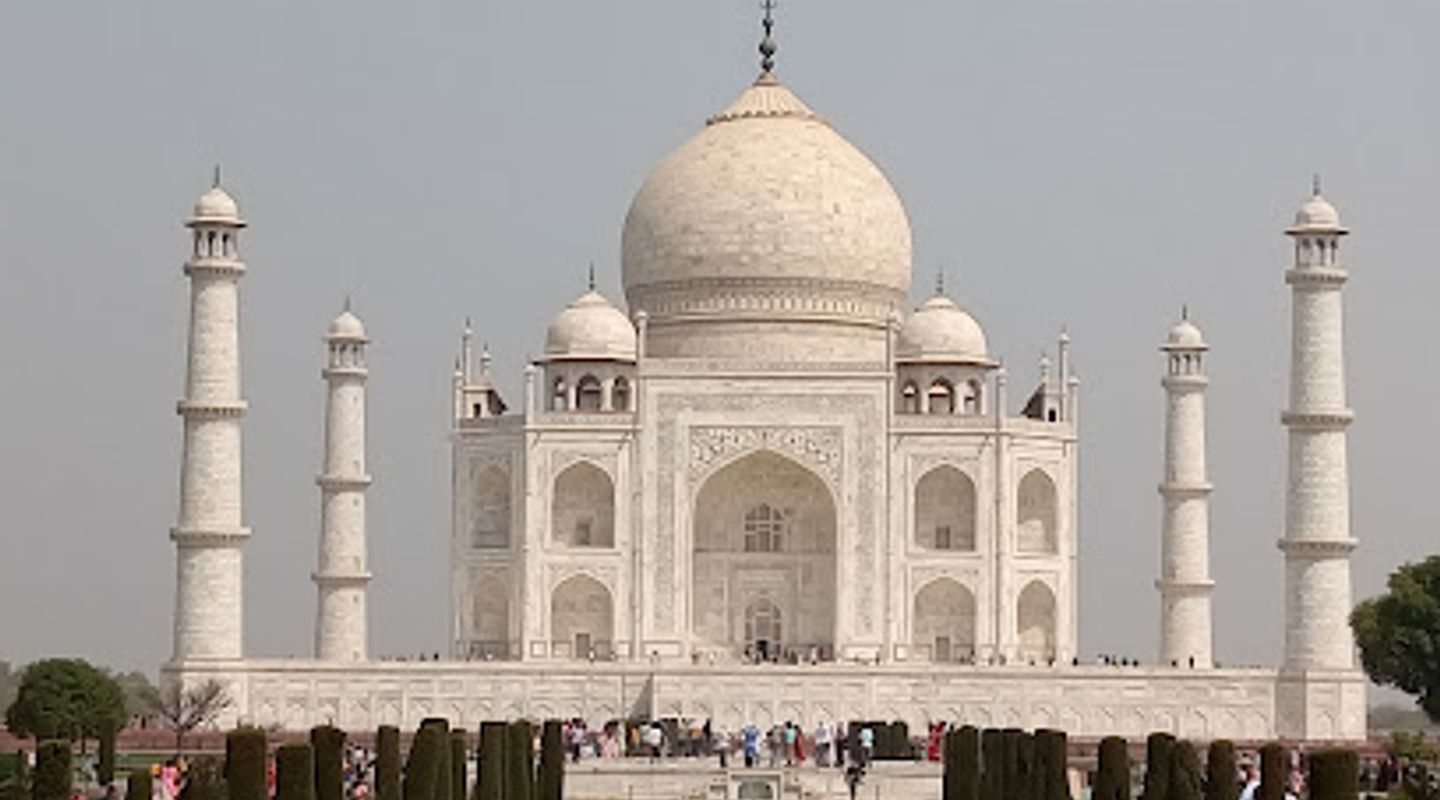
Taj Mahal, Agra Travel Guide
Experience the timeless beauty of the Taj Mahal, a UNESCO World Heritage Site and a symbol of eternal love in Agra, India.
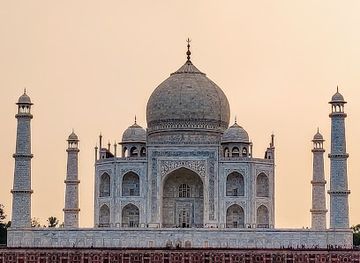
The Taj Mahal, a UNESCO World Heritage Site, is an ivory-white marble mausoleum on the bank of the Yamuna river in Agra, India. Commissioned in 1631 by the Mughal emperor, Shah Jahan, to house the tomb of his beloved wife, Mumtaz Mahal, it stands as a testament to their eternal love and is considered one of the most beautiful buildings in the world.
A brief summary to Taj Mahal
- Agra, Dharmapuri, Forest Colony, Tajganj, Uttar Pradesh, 282001, IN
- Click to display
- Click to display

Know before you go
Hi, I'm Eve. Here are a few practical things to know before exploring Taj Mahal.
- Visit early in the morning or late afternoon to avoid crowds and experience the best lighting for photography.
- Tickets can be purchased online to save time and avoid queues.
- Photography is prohibited inside the main mausoleum.
- Dress modestly, as the Taj Mahal is a religious site.
- Hire government-approved guides for accurate information and a richer experience.
Do you manage this location?
Take control to get all the benefits, like improved information, better appearance, and stronger visibility across AI-powered discovery. Learn more about listing your business on Evendo
Activate your presenceOther nearby places you may find interesting
The closest places of the same kind, if this one is not quite what you had in mind.
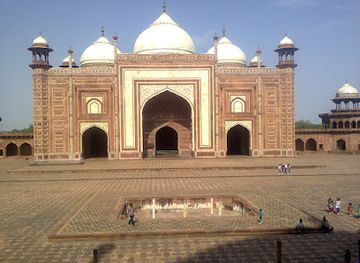

Explore Taj Mahal on the Map
A handpicked selection of must-see spots near Taj Mahal, mapped for you.
Unlock the Best of Taj Mahal
Buy tickets
Book tours with entry


Getting There
-
Walking
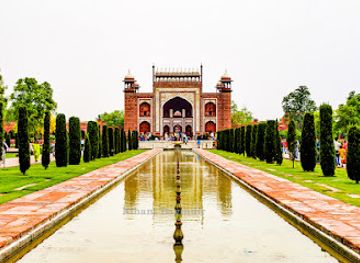
From the East Gate parking (Shilpgram) or West Gate parking (Amrood ka Teela), it's a walk to the respective gates. From there, follow the path through the outer courtyard and gateway to the Taj Mahal. Note that polluting vehicles are not allowed within 500 meters of the Taj Mahal; you must walk or take an electric bus from the parking area. Battery buses or golf carts are available from the parking to the gate. The walk from the gate to the Taj Mahal itself is approximately 15-20 minutes.
-
Public Transport
If arriving by train at Agra Cantt station, take a pre-paid taxi, auto-rickshaw, or cycle rickshaw to the Taj Mahal. From the Idgah bus stand, it is about 8 km to the Taj Mahal and can be reached via taxi or auto-rickshaw. Consider using app-based taxis like Uber or Ola for convenient and transparent pricing. Electric buses are available from the parking areas to the Taj Mahal.
Discover more about Taj Mahal













Your all‑in‑one travel companion app
Explore expert travel guides, compare and book tours, experiences, hotels, and more—all from the palm of your hand. Download now for seamless trip planning wherever your wanderlust takes you.


Explore More of Agra
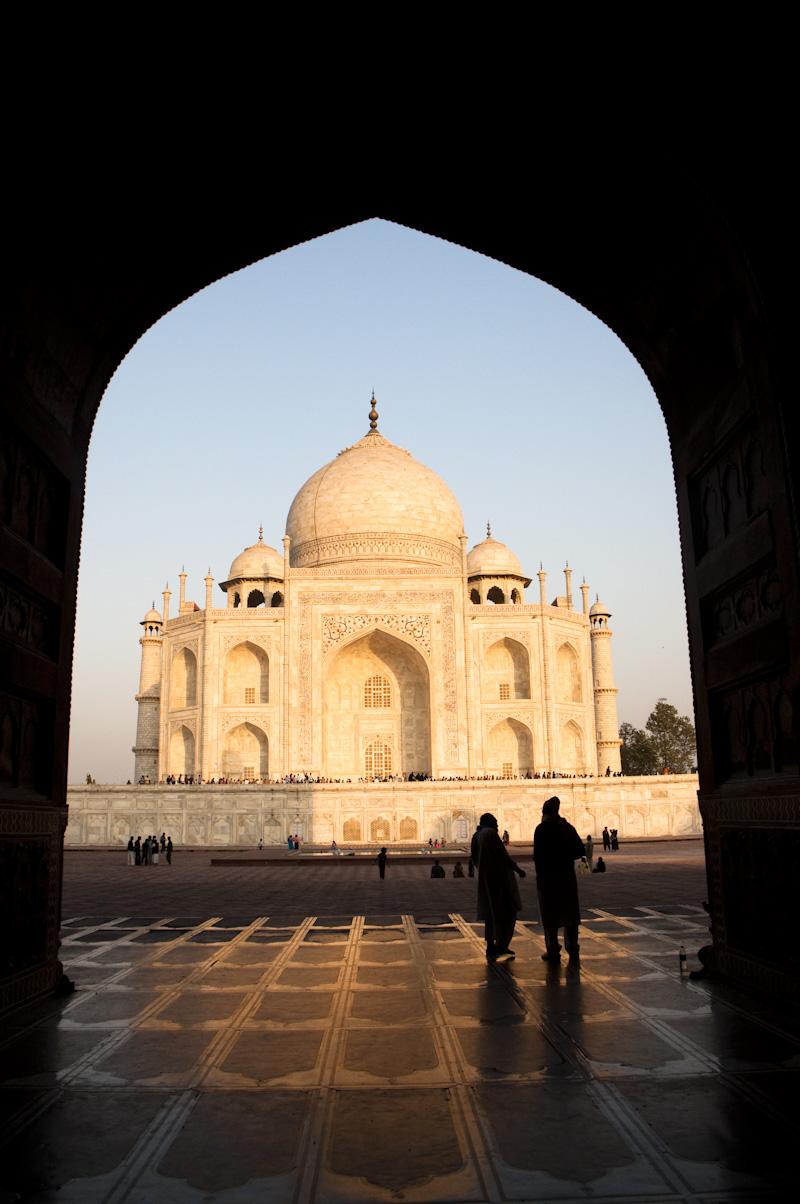
Looking beyond Taj Mahal? Discover Agra for broader travel guides, local hot-spots, and regional highlights.
Explore Agra