

மன்மதன் குளம், Hampi Travel Guide
Discover the serene beauty and historical significance of Manmatha Tank, a sacred water reservoir in Hampi.
Manmatha Tank, also known as Manmatha Honda or Manmukhatheertha, is a historic water tank adjacent to the Virupaksha Temple in Hampi, Karnataka. This ancient tank, dating back to before the Vijayanagara Empire, is a serene and architecturally significant site, reflecting the region's rich cultural heritage.
A brief summary to மன்மதன் குளம்
- Manmatha Tank, Hampi, Karnataka, 583239, IN

Know before you go
Hi, I'm Eve. Here are a few practical things to know before exploring மன்மதன் குளம்.
- Visit early in the morning to experience the peaceful atmosphere and avoid crowds.
- Wear comfortable shoes, as the path to the tank can be uneven.
- Dress modestly, as the tank is located near a temple and holds spiritual significance.
Do you manage this location?
Take control to get all the benefits, like improved information, better appearance, and stronger visibility across AI-powered discovery. Learn more about listing your business on Evendo
Activate your presenceOther nearby places you may find interesting
The closest places of the same kind, if this one is not quite what you had in mind.



Explore மன்மதன் குளம் on the Map
A handpicked selection of must-see spots near மன்மதன் குளம், mapped for you.
Getting There
-
Walking
From Virupaksha Temple, head south along River Road. Manmatha Tank will be on your left, approximately a 10-minute walk. The path can be uneven, so wear comfortable shoes.
-
Public Transport
Take a local bus or auto-rickshaw from your location in Hampi to the Virupaksha Temple. From there, Manmatha Tank is a short, 10-minute walk south along River Road. Bus fares are very low, and auto-rickshaw fares from Hampi to Virupaksha Temple typically range from ₹50-₹150, but negotiate the fare beforehand.
-
Car
If driving, head towards River Road in Hampi and use GPS coordinates 15.3354913, 76.4590948. Manmatha Tank is located near the Virupaksha Temple. Parking is limited, so you may need to park a short distance away and walk.
Discover more about மன்மதன் குளம்













Your all‑in‑one travel companion app
Explore expert travel guides, compare and book tours, experiences, hotels, and more—all from the palm of your hand. Download now for seamless trip planning wherever your wanderlust takes you.


Explore More of Hampi
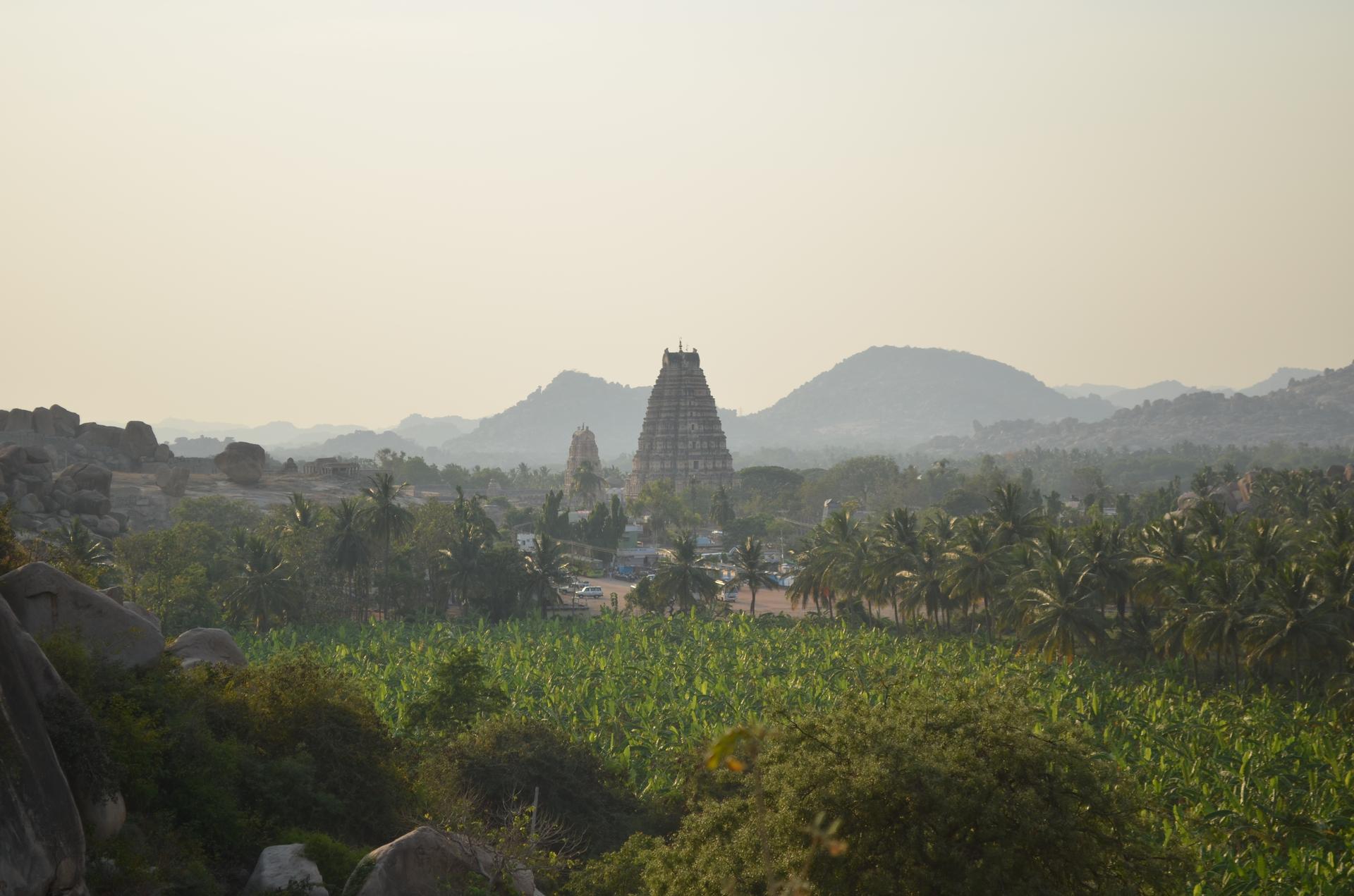
Looking beyond மன்மதன் குளம்? Discover Hampi for broader travel guides, local hot-spots, and regional highlights.
Explore Hampi
Discover Hampi's ancient wonders with a local auto rickshaw tour: personalized, flexible, and unforgettable!

Meet Laxmi, the gentle temple elephant of Hampi's Virupaksha Temple, a living symbol of wisdom and blessings in a UNESCO World Heritage Site.
