

Charminar (Hyderabad) Travel Guide - Free
Explore Charminar in Hyderabad with Evendo's free guide. Find the best shops, historic streets, restaurants, and gems on web or mobile.


Charminar, Hyderabad’s historic Old City quarter, combines Qutb Shahi architecture, Laad Bazaar bangles, Mecca Masjid, biryani and lively bazaars.
Monumental Centre
Charminar is the historic core of Hyderabad’s Old City, organised around the four-arched monument that has represented the city since 1591. Its busy streets extend through a dense quarter of mosques, bazaars, palaces, food stalls, jewellery shops and older commercial buildings, where the grandeur of the Qutb Shahi period meets the practical energy of everyday trade. The monument itself stands at the centre of a network of roads rather than in an isolated square, so visiting involves negotiating traffic, pedestrians and shopfronts as much as admiring its architecture.Read more about Charminar
Bazaars and Belief
Flavours of the Old City
Best attractions in Charminar
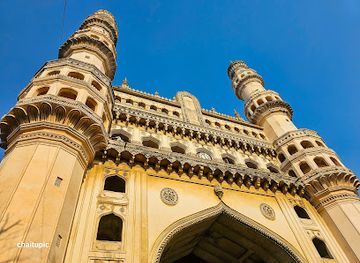
The principal attraction is Charminar itself, the 1591 monument whose four monumental arches and minarets form the visual and practical centre of the Old City. Depending on current access arrangements, visitors may be able to view the upper levels as well as the exterior, but the surrounding streets are part of the experience: Laad Bazaar provides a close look at traditional bangle retail, while the arcades of Pathergatti reveal the area’s historic commercial character. Mecca Masjid stands immediately beside Charminar and remains an important place of worship, so visitors should approach with appropriate dress and discretion. Chowmahalla Palace, a short walk away, adds royal context through its courtyards and surviving ceremonial spaces. The nearby lanes, food stalls and older shopfronts are attractions in their own right, showing how the historical centre continues to function as a living neighbourhood.
-
Monument
Charminar
Explore the iconic Charminar, a historical monument in Hyderabad showcasing stunning architecture and the vibrant culture of the city.
1 min walk · 0.1 km from neighbourhood centre
-
Tourist attraction
Chowmahalla Palace
Discover the opulence of Chowmahalla Palace, a historical landmark in Hyderabad, showcasing the grandeur of the Nizams with its stunning architecture and rich heritage.
7 min walk · 0.5 km from neighbourhood centre
-
Tourist attraction
Makkah Masjid
Explore Makkah Masjid, Hyderabad's largest mosque, renowned for its stunning architecture and rich historical significance in the heart of the city.
2 min walk · 0.2 km from neighbourhood centre
-
Tourist attraction
Gulzar Houz
Discover the charm of Gulzar Houz, an iconic fountain in Hyderabad that beautifully showcases the city's rich cultural heritage and vibrant atmosphere.
3 min walk · 0.2 km from neighbourhood centre


Best landmarks in Charminar
Charminar is the neighbourhood’s defining architectural landmark, a late-sixteenth-century Qutb Shahi monument built around four large arches and four corner minarets, with an upper mosque and prayer space. Immediately beside it, Mecca Masjid is one of Hyderabad’s most important religious buildings, recognised for its monumental scale and long construction history; non-worshippers should follow current access rules and behave discreetly. South-west of the monument, Chowmahalla Palace preserves the ceremonial world of the Nizams through its courtyards, audience spaces and palace architecture. The commercial arcades of Pathergatti, the bangle-lined frontage of Laad Bazaar and the dense historic street pattern complete the local landmark group, even where individual buildings are less formally celebrated. Together these places show Charminar’s development as a royal, religious and mercantile centre rather than as a monument standing apart from urban life.
-
 Monument
Charminar
Explore Charminar, a historic monument that symbolizes the rich heritage of Hyderabad, featuring stunning architecture and vibrant local culture.
1 min walk · 0.1 km from neighbourhood centre
-
Museum
Chowmahalla Palace
Discover the opulent history of Hyderabad at Chowmahalla Palace, a stunning architectural marvel and royal heritage site.
7 min walk · 0.5 km from neighbourhood centre
-
Fountain
Gulzar Houz
Discover Gulzar Houz, a stunning historical fountain in Hyderabad's Irani Galli, where the charm of the Nizam era meets vibrant local culture.
3 min walk · 0.2 km from neighbourhood centre
-
Hindu temple
Shri Bhagya Laxmi Mandir, Charminar
Discover the spiritual essence and architectural beauty of Shri Bhagya Laxmi Mandir, a must-visit Hindu temple nestled in the heart of Hyderabad.
1 min walk · 0.1 km from neighbourhood centre


Explore Charminar on the map
A handpicked selection of must-see spots in Charminar, mapped for you.
Best hotels in Charminar
Best restaurants in Charminar
Eating around Charminar is closely tied to Hyderabad’s Deccani Muslim culinary traditions and the everyday commerce of the Old City. Restaurants and modest cafés serve biryani, kebabs, nihari, marag, haleem in season and desserts such as double ka meetha, while Irani chai and osmania biscuits remain associated with the city’s older café culture. The streets around Charminar and Madina Building contain established eateries, bakeries and snack counters, including the well-known Nimrah Cafe near the monument, although conditions and opening arrangements can change. Laad Bazaar and the lanes towards Chowmahalla Palace offer further opportunities for quick snacks and sweet dishes rather than a single formal dining district. During Ramadan, evening food stalls and family dining become especially prominent. Visitors should distinguish busy local establishments from tourist-oriented stops, expect crowds at popular times and choose food outlets with good turnover and visible hygiene practices.
-
Hyderabadi
Hotel Shadab
Savor the rich flavors of Hyderabadi cuisine at Hotel Shadab, renowned for its delectable biryani and inviting family atmosphere.
10 min walk · 0.8 km from neighbourhood centre
-
Halal
Pista House Shahalibanda
Experience authentic Halal cuisine and delightful sweets at Pista House Shahalibanda - A culinary treasure in Hyderabad.
7 min walk · 0.6 km from neighbourhood centre
-
Indian
Hotel Nayaab
Discover authentic Hyderabadi cuisine at Hotel Nayaab – a must-visit destination for food lovers seeking flavorful Indian dishes.
12 min walk · 0.9 km from neighbourhood centre
-
Indian
Rumaan Restaurant
Experience authentic Indian cuisine at Rumaan Restaurant in Hyderabad - where tradition meets taste in every dish.
5 min walk · 0.4 km from neighbourhood centre


Best bars in Charminar
Charminar is not Hyderabad’s main bar or nightclub district, and alcohol-focused nightlife is limited in the historic core. Evening life instead centres on illuminated monuments, shopping in Laad Bazaar, tea shops, family restaurants, dessert counters and the informal sociability of the Old City streets. Food activity becomes particularly important after sunset during Ramadan, when temporary stalls and late dining create a different rhythm, though exact arrangements vary from year to year. Visitors seeking cocktails, live music or conventional clubs generally need to travel to other parts of Hyderabad rather than expect them around Charminar. The quarter can remain busy well into the evening, but its atmosphere is shaped by worship, retail and eating rather than loud entertainment; modest dress and respect for mosque surroundings remain appropriate after dark.
-
Hyderabadi
Hotel Shadab
Experience Authentic Hyderabadi Cuisine at Hotel Shadab, a Family-Friendly Restaurant near Charminar, Hyderabad.
10 min walk · 0.8 km from neighbourhood centre
-
Family-friendly
Paradise Biryani | Charminar
Experience the authentic taste of Hyderabad with Paradise Biryani at Charminar, where every bite is a culinary delight.
1 min walk · 0.1 km from neighbourhood centre
-
Indian
Y5 Restaurant& Bar
Discover the rich flavors of authentic Indian cuisine at Y5 Restaurant & Bar, a family-friendly gem in Hyderabad renowned for its Biryani and warm ambiance.
15 min walk · 1.2 km from neighbourhood centre
-
Bar
Tirumala Bar & Restaurant
Experience the vibrant dining scene at Tirumala Bar & Restaurant in Hyderabad, where traditional flavors meet a lively bar atmosphere.
7 min drive · 2.5 km from neighbourhood centre


Best nightclubs in Charminar
Charminar is not Hyderabad’s main bar or nightclub district, and alcohol-focused nightlife is limited in the historic core. Evening life instead centres on illuminated monuments, shopping in Laad Bazaar, tea shops, family restaurants, dessert counters and the informal sociability of the Old City streets. Food activity becomes particularly important after sunset during Ramadan, when temporary stalls and late dining create a different rhythm, though exact arrangements vary from year to year. Visitors seeking cocktails, live music or conventional clubs generally need to travel to other parts of Hyderabad rather than expect them around Charminar. The quarter can remain busy well into the evening, but its atmosphere is shaped by worship, retail and eating rather than loud entertainment; modest dress and respect for mosque surroundings remain appropriate after dark.
-
Night club
Graveyard
Experience the unique blend of culture and entertainment at the Graveyard Night Club in Hyderabad, where every night is a new adventure.
5 min drive · 1.8 km from neighbourhood centre
-
Night club
Daya home
Experience the vibrant nightlife at Daya Home, Hyderabad's premier night club, where music, dancing, and unforgettable moments await.
5 min drive · 1.6 km from neighbourhood centre
-
Night club
Saleha
Unleash your spirit at Saleha Night Club, a vibrant hotspot in Hyderabad blending music, dance, and local culture for an unforgettable night out.
1 min walk · 0.1 km from neighbourhood centre
-
Night club
Zahedamoodi
Experience the vibrant nightlife of Hyderabad at Zahedamoodi, a premier night club offering electrifying music and unforgettable entertainment.
3 min walk · 0.3 km from neighbourhood centre


Best shops in Charminar
Shopping is one of Charminar’s central daily activities, with Laad Bazaar the best-known retail stretch for lacquer bangles, bridal accessories, costume jewellery and colourful adornments. Nearby lanes and arcades extend the choice to textiles, scarves, traditional clothing, perfumes, imitation jewellery, footwear, household merchandise and Hyderabad-style pearl jewellery. Pathergatti and the streets around Madina Building have a more mixed commercial character, combining established shops, wholesale trade and small businesses that serve local residents as well as visitors. Bargaining may be part of the exchange in independent shops, but stock, quality and prices vary, so it is sensible to compare several outlets before buying. The appeal lies less in a polished shopping centre than in the relationship between retail, craft, religious calendars and street life. Narrow lanes can become crowded, and large bags are inconvenient when moving between shopfronts.
-
Designer Clothing Store
Pari The Designer Shop
Explore the exquisite collection of designer clothing at Pari The Designer Shop, where tradition meets contemporary style in the heart of Hyderabad.
1 min walk · 0.1 km from neighbourhood centre
-
Men's clothing store
MUSLIM MASALA MERCHANT
Explore the vibrant Muslim Masala Merchant in Hyderabad's Laad Bazar for an authentic men's clothing shopping experience steeped in local culture and tradition.
1 min walk · 0.1 km from neighbourhood centre
-
Boutique
Ahmad Bangles
Discover the exquisite craftsmanship of Ahmad Bangles, a boutique in Hyderabad's vibrant Chow Mohalla, perfect for jewelry lovers seeking unique treasures.
1 min walk · 0.1 km from neighbourhood centre
-
Gift shop
Decent Gift Emporium
Discover unique souvenirs and traditional crafts at Decent Gift Emporium, nestled in the vibrant Laad Bazaar of Hyderabad.
1 min walk · 0.1 km from neighbourhood centre


Charminar essentials
Getting There
Getting Around
Safety
Emergency Situations
Do's and Don'ts
Local Tips

From Eve
Local phrases worth knowing
You don't need to get them perfect. A few words go a long way, and locals appreciate the effort.
Basics
| English | Local | Say it |
|---|---|---|
| Hello | नमस्ते | [Namaste] |
| Goodbye | अलविदा | [Alvida] |
| Yes | हाँ | [Haan] |
| No | नहीं | [Nahi] |
| Please/You're welcome | कृपया | [Kripya] |
| Thank you | धन्यवाद | [Dhanyavad] |
| Excuse me/Sorry | माफ़ कीजिए | [Maaf kijiye] |
| How are you? | आप कैसे हैं? | [Aap kaise hain?] |
| Fine. And you? | ठीक हूँ। और आप? | [Theek hoon. Aur aap?] |
| Do you speak English? | क्या आप अंग्रेज़ी बोलते हैं? | [Kya aap angrezi bolte hain?] |
| I don't understand | मुझे समझ में नहीं आया | [Mujhe samajh me nahi aaya] |
Eating & Drinking
| English | Local | Say it |
|---|---|---|
| I'd like to see the menu, please | कृपया मेन्यू दिखाइए | [Kripya menu dikhaiye] |
| I don't eat meat | मैं मांस नहीं खाता/खाती | [Main maans nahi khaata/khaati] |
| Cheers! | चियर्स! | [Cheers!] |
| I would like to pay, please | कृपया मैं भुगतान करना चाहूँ | [Kripya main bhugtan karna chahoon] |
Emergencies
| English | Local | Say it |
|---|---|---|
| Help! | मदद! | [Madad!] |
| Go away! | चले जाइए! | [Chale jaiye!] |
| Call the Police! | पुलिस को बुलाओ! | [Police ko bulao!] |
| Call a doctor! | डॉक्टर को बुलाओ! | [Doctor ko bulao!] |
| I'm lost | मैं खो गया/गई हूँ | [Main kho gaya/gayi hoon] |
| I'm ill | मुझे बीमारी है | [Mujhe bimari hai] |
Shopping
| English | Local | Say it |
|---|---|---|
| I'd like to buy... | मुझे ... खरीदना है | [Mujhe ... kharidna hai] |
| I'm just looking | मैं बस देख रहा/रही हूँ | [Main bas dekh raha/rahi hoon] |
| How much is it? | यह कितने का है? | [Yeh kitne ka hai?] |
| That's too expensive | यह बहुत महंगा है | [Yeh bahut mehnga hai] |
| Can you lower the price? | क्या आप कीमत कम कर सकते हैं? | [Kya aap keemat kam kar sakte hain?] |
Time & Numbers
| English | Local | Say it |
|---|---|---|
| What time is it? | समय क्या है? | [Samay kya hai?] |
| It's one o'clock | एक बजे हैं | [Ek baje hain] |
| Half past (10) | दस बजकर पंद्रह मिनट हुए | [Das bajkar pandrah minute hue] |
| Morning | सुबह | [Subah] |
| Afternoon | दोपहर | [Dopahar] |
| Evening | शाम | [Shaam] |
| Yesterday | कल | [Kal] |
| Today | आज | [Aaj] |
| Tomorrow | कल | [Kal] |
| 1 | एक | [Ek] |
| 2 | दो | [Do] |
| 3 | तीन | [Teen] |
| 4 | चार | [Char] |
| 5 | पांच | [Paanch] |
| 6 | छह | [Chhah] |
| 7 | सात | [Saath] |
| 8 | आठ | [Aath] |
| 9 | नौ | [Nau] |
| 10 | दस | [Das] |
Transport & Directions
| English | Local | Say it |
|---|---|---|
| Where's a/the...? | ... कहाँ है? | [... kahan hai?] |
| What's the address? | पता क्या है? | [Pata kya hai?] |
| Can you show me (on the map)? | क्या आप मुझे दिखा सकते हैं (नक्शे पर)? | [Kya aap mujhe dikh sakte hain (naksha par)?] |
| When's the next (bus)? | अगली (बस) कब है? | [Agli (bus) kab hai?] |
| A ticket (to ....) | एक टिकट (.... के लिए) | [Ek ticket (.... ke liye)] |
History of Charminar
A New Capital at the Musi
Muhammad Quli Qutb Shah founded Hyderabad in 1591 on the northern bank of the Musi River, and Charminar was erected at the centre of the new city. The monument’s four minarets and elevated prayer space are associated with the foundation of the capital, although the precise symbolism attached to its construction has been interpreted in different ways. Its surrounding roads were planned as a central urban focus, linking the new settlement’s principal quarters and encouraging commerce. The area therefore began not simply as a ceremonial setting, but as the heart of a capital whose political, religious and mercantile life was concentrated around this landmark.
Qutb Shahi Urban and Religious Centre
Under the Qutb Shahi rulers, the Charminar quarter developed as part of Hyderabad’s courtly and religious centre. Mecca Masjid, immediately to the south-west, was begun during the Qutb Shahi period and completed under the Mughal governor and later Asaf Jahi ruler Muhammad Quli Qutb Shah’s successors. Palaces, mosques, caravan facilities and market streets grew around the central monument, connecting royal institutions with artisans and traders. The quarter’s enduring mixture of worship, administration, craft and exchange explains why Charminar remains both a symbolic image of Hyderabad and a functioning urban neighbourhood rather than a detached historical relic.
The Asaf Jahi Old City
After the Mughal conquest of Golconda in 1687, Hyderabad was ruled by the Asaf Jahi Nizams, whose court and administration shaped the Old City for more than two centuries. The nearby Chowmahalla Palace became an important royal complex, while markets around Charminar expanded their role in supplying the court and the wider city. Trade in textiles, jewellery, perfumes and food supported specialised streets and workshops, and the quarter acquired the layered Indo-Islamic and Deccani character still visible in its religious buildings, arcades and traditional commercial lanes. Its history was consequently sustained by ordinary commerce as much as by royal patronage.
Markets, Memory and Change
During the late nineteenth and twentieth centuries, the Charminar area remained the commercial and cultural centre of Hyderabad even as the city expanded beyond the Musi. Laad Bazaar became particularly associated with lacquer bangles and bridal shopping, while Pathergatti and surrounding streets developed distinctive retail and wholesale functions. Modern roads, motor traffic and later redevelopment altered the historic setting, but did not displace the dense mixture of shops, mosques, homes, food businesses and workshops. Conservation efforts have increasingly focused on the monument and its surrounding heritage precinct, while local traders and residents continue to shape how the Old City is used and understood.
Charminar in Photos
Browse through our photo collection highlighting the charm and character of the destination.
Neighbourhoods near Charminar
The closest neighbourhoods to Charminar, if you have time for more than one stop.
-

-

-

-

-


Swipe for more neighbourhoods
Explore more

Explore more of Hyderabad
Hyderabad blends Charminar heritage, Golconda history, biryani, bazaars and contemporary culture for memorable sightseeing in Telangana, India.
Explore Hyderabad