

Golconda Fort (Hyderabad) Travel Guide - Free
Explore Golconda Fort in Hyderabad with Evendo's free guide. Find the best shops, historic streets, restaurants, and gems on web or mobile.


Golconda Fort in Hyderabad reveals Qutb Shahi history, granite ramparts, royal ruins, panoramic views and nearby tombs in Telangana, India.
A Fort Above Hyderabad
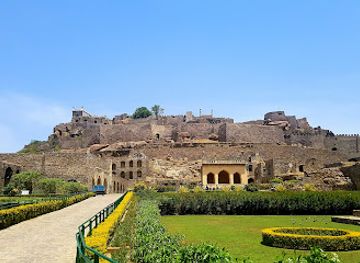
Golconda Fort occupies a granite hill on the western side of Hyderabad, where massive walls, steep approaches and weathered gateways preserve the outline of a medieval capital. The site is not a conventional residential neighbourhood but a historic precinct centred on one of the Deccan’s most important fortifications. Its elevated position brings wide views across the expanding city, while the stonework reveals how military architecture, courtly life and water management were combined within a fortified settlement.Read more about Golconda Fort
From Stronghold to Royal Capital
Stone, Sound and the Wider Heritage Landscape
Best attractions in Golconda Fort
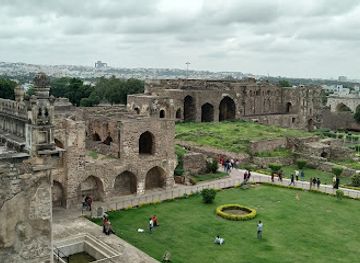
Golconda Fort is the defining attraction of this western Hyderabad precinct, with a succession of gateways, massive granite walls, courtyards, ruined palaces, mosques, audience spaces and the elevated Balahisar area to explore. Fateh Darwaza is associated with the fort’s well-known acoustic demonstration, while the long approaches show how the natural hill was incorporated into the defensive plan. The climb reveals changing views over Hyderabad and makes the scale of the former capital easier to understand than a quick circuit at ground level. Nearby, but separately administered, the Qutb Shahi Tombs provide a quieter sequence of domed mausoleums, gardens and funerary structures linked to the dynasty that ruled Golconda. The surrounding rocky landscape and scattered lines of fortification are also part of the experience, although visitors should remain on authorised paths and distinguish surviving fabric from later urban development.
-
Fortress
Golconda Fort
Discover the grandeur of Golconda Fort in Hyderabad, a historical landmark reflecting India's rich heritage and architectural prowess.
1 min walk · 0.1 km from neighbourhood centre
-
Amphitheater
Sound & Light Show
Immerse yourself in the enchanting Sound & Light Show at Golconda Fort, where history and storytelling create a magical evening experience in Hyderabad.
2 min walk · 0.2 km from neighbourhood centre
-
Tourist attraction
Bala Hissar Darwaza
Explore Bala Hissar Darwaza, the stunning gateway to Golconda Fort, and immerse yourself in Hyderabad's rich history and architectural beauty.
3 min walk · 0.2 km from neighbourhood centre
-
Tourist attraction
Hatiyan Jhad Baobab Tree
Discover the ancient Hatiyan Jhad Baobab Tree in Hyderabad – a living testament to history and natural beauty nestled in the iconic Golconda Fort area.
19 min walk · 1.5 km from neighbourhood centre


Best landmarks in Golconda Fort
Golconda’s most important landmark is its immense fortified hill, whose walls and gateways follow the contours of the granite outcrop rather than forming a regular geometric enclosure. Fateh Darwaza is a familiar architectural point, while the ascent towards Balahisar demonstrates the layered relationship between outer defences, inner courts and the citadel. Remains of royal buildings, mosques, halls and water infrastructure convey the complexity of a capital that had to support both courtly life and military resistance. The acoustic feature traditionally demonstrated near the entrance is part of the fort’s cultural identity, but the masonry, elevation and defensive planning are equally significant. The nearby Qutb Shahi Tombs are a separate landmark group associated with the dynasty’s rulers and nobles; their domes and garden setting complement, rather than form part of, the fort’s military architecture.
-
 Fortress
Golconda Fort
Discover the rich history and breathtaking architecture of Golconda Fort, a must-see landmark in Hyderabad, India, perfect for history enthusiasts.
1 min walk · 0.1 km from neighbourhood centre
-
Tomb
Qutub Shahi Tombs
Explore the Qutub Shahi Tombs, a stunning monument in Hyderabad that showcases the rich heritage and architectural beauty of the Qutub Shahi dynasty.
5 min drive · 1.6 km from neighbourhood centre
-
Tourist attraction
Bala Hissar Darwaza
Discover the grandeur of Bala Hissar Darwaza, a historic gateway that opens up to the rich tapestry of Golconda Fort's heritage in Hyderabad.
3 min walk · 0.2 km from neighbourhood centre
-
Historical place
Hatiyan Jhad Baobab Tree
Experience the awe of the Hatiyan Jhad Baobab Tree in Golconda Fort, a stunning blend of nature and history in Hyderabad, Telangana.
19 min walk · 1.5 km from neighbourhood centre

Explore Golconda Fort on the map
A handpicked selection of must-see spots in Golconda Fort, mapped for you.
Best hotels in Golconda Fort
Best restaurants in Golconda Fort
Dining immediately around Golconda Fort is more functional and local than destination-focused, so many visitors combine the monument with food in nearby Tolichowki, Mehdipatnam or the wider western Hyderabad area. These districts are useful for experiencing the city’s Deccani culinary traditions, including rice dishes, meat preparations, breads, haleem when seasonally available, and the Irani café culture associated with Hyderabad, though individual offerings vary by establishment. Small eateries and roadside stalls may provide quick refreshments on the approach, but visitors should choose busy, hygienic places and carry water for the fort itself. The Qutb Shahi heritage precinct is primarily an archaeological and funerary landscape rather than a restaurant quarter. Dining plans therefore work best when treated as a separate part of the day, with the fort visit scheduled around heat, walking and transport rather than expecting a concentrated café scene at the gates.
-
Biryani
Prince Hotel
Experience the best of Hyderabad's culinary heritage at Prince Hotel with its mouthwatering biryani and inviting atmosphere.
4 min walk · 0.3 km from neighbourhood centre
-
Cafe
Golconda Zeeshan Cafe
Discover authentic local flavors at Golconda Zeeshan Cafe near Golconda Fort - perfect for budget-conscious travelers seeking delicious meals.
7 min walk · 0.5 km from neighbourhood centre
-
Biryani
Fort Inn Restaurant
Experience authentic Hyderabadi biryani at Fort Inn Restaurant near Golconda Qila—where tradition meets flavor.
6 min walk · 0.5 km from neighbourhood centre
-
Takeout restaurant
Yousufain Fast Food
Experience authentic Hyderabad flavors at Yousufain Fast Food near Golconda Fort – a delightful culinary stop for every tourist.
7 min walk · 0.6 km from neighbourhood centre


Best bars in Golconda Fort
Golconda Fort itself is not a nightlife district, and the immediate surroundings become quiet and residential in character after the principal sightseeing period. Evening interest is centred on heritage visits and the atmosphere of the illuminated fort when officially scheduled, rather than on bars or clubs within the monument precinct. Visitors seeking Hyderabad’s broader nightlife generally travel elsewhere, particularly towards Banjara Hills, Jubilee Hills or the central city, where restaurants, lounges and music venues are more concentrated; these are separate areas and should not be presented as part of Golconda. As the fort contains religiously and historically significant structures, drinking, loud music and informal parties are inappropriate on site. Transport should be arranged in advance for late returns, since the immediate fort area is not designed as a pedestrian bar-hopping quarter.
-
Wine bar
Golconda Wine Mart
Experience the best of local and international wines at Golconda Wine Mart, a cozy wine bar in the heart of Hyderabad.
6 min drive · 1.9 km from neighbourhood centre
-
Restaurant
Distinct Crunch
Discover the flavors of Hyderabad at Distinct Crunch, where every bite offers a unique taste of culinary excellence near Golconda Fort.
5 min drive · 1.7 km from neighbourhood centre


Best shops in Golconda Fort
Shopping is limited around Golconda Fort itself, where the dominant land use is the protected monument and its approach roads rather than a specialist retail quarter. Small local vendors may sell refreshments and inexpensive souvenirs near visitor areas, but stock and operating arrangements change, so purchases should not be the main reason for visiting. For more substantial retail, visitors can travel towards Tolichowki and Mehdipatnam, or continue into Hyderabad’s established commercial districts for textiles, jewellery, bangles, handicrafts and food products. These nearby areas reflect the city’s wider commercial culture, but they are not part of the fort complex. The most meaningful local purchase is often connected to the broader Deccan heritage landscape rather than a particular shop: visitors can seek responsibly made crafts or regional foods while avoiding sellers who present unverified objects as historic fort material.
-
General store
Saleem Kirana & General Store
Discover Saleem Kirana & General Store at Golconda Fort, where local culture meets everyday convenience in Hyderabad.
10 min walk · 0.8 km from neighbourhood centre
-
Store
Al- BAHRAIN SUPER BAZAR
Experience the vibrant shopping scene at Al-Bahrain Super Bazar, where local fashion meets cultural charm in Hyderabad.
6 min walk · 0.5 km from neighbourhood centre
-
Bakery and Cake Shop
Fort View Bakars
Discover delightful baked goods at Fort View Bakars, a charming bakery near Golconda Fort, Hyderabad, perfect for sweet cravings and relaxation.
3 min walk · 0.2 km from neighbourhood centre
-
Clothing store
Khaja Cloth Store
Discover the vibrant world of textiles at Khaja Cloth Store, where tradition meets contemporary fashion in the heart of Hyderabad.
8 min walk · 0.7 km from neighbourhood centre


Golconda Fort essentials
Getting There
Getting Around
Safety
Emergency Situations
Do's and Don'ts
Local Tips

From Eve
Local phrases worth knowing
You don't need to get them perfect. A few words go a long way, and locals appreciate the effort.
Basics
| English | Local | Say it |
|---|---|---|
| Hello | नमस्कार | [Namaskar] |
| Goodbye | अलविदा | [Alvida] |
| Yes | हाँ | [Haan] |
| No | नहीं | [Nahi] |
| Please/You're welcome | कृपया | [Kripya] |
| Thank you | धन्यवाद | [Dhanyawad] |
| Excuse me/Sorry | माफ़ कीजिए | [Maaf kijiye] |
| How are you? | आप कैसे हैं? | [Aap kaise hain?] |
| Fine. And you? | ठीक हूँ। और आप? | [Theek hoon. Aur aap?] |
| Do you speak English? | क्या आप अंग्रेज़ी बोलते हैं? | [Kya aap angrezi bolte hain?] |
| I don't understand | मुझे समझ में नहीं आया | [Mujhe samajh mein nahi aaya] |
Eating & Drinking
| English | Local | Say it |
|---|---|---|
| I'd like to see the menu, please | कृपया मेनू देखना चाहूँ | [Kripya menu dekhna chahoon] |
| I don't eat meat | मैं मांस नहीं खाता | [Main maans nahi khaata] |
| Cheers! | जय हो! | [Jai ho!] |
| I would like to pay, please | कृपया मैं भुगतान करना चाहूँ | [Kripya main bhugtan karna chahoon] |
Emergencies
| English | Local | Say it |
|---|---|---|
| Help! | बचाओ! | [Bachao!] |
| Go away! | चले जाओ! | [Chale jao!] |
| Call the Police! | पुलिस को बुलाओ! | [Police ko bulao!] |
| Call a doctor! | डॉक्टर को बुलाओ! | [Doctor ko bulao!] |
| I'm lost | मैं खो गया हूँ | [Main kho gaya hoon] |
| I'm ill | मुझे बीमारी है | [Mujhe bimari hai] |
Shopping
| English | Local | Say it |
|---|---|---|
| I'd like to buy... | मैं ... खरीदना चाहूँ | [Main ... khareedna chahoon] |
| I'm just looking | मैं बस देख रहा हूँ | [Main bas dekh raha hoon] |
| How much is it? | यह कितना है? | [Yeh kitna hai?] |
| That's too expensive | यह बहुत महंगा है | [Yeh bahut mehnga hai] |
| Can you lower the price? | क्या आप कीमत कम कर सकते हैं? | [Kya aap keemat kam kar sakte hain?] |
Time & Numbers
| English | Local | Say it |
|---|---|---|
| What time is it? | अभी कितने बजे हैं? | [Abhi kitne baje hain?] |
| It's one o'clock | एक बजे हैं | [Ek baje hain] |
| Half past (10) | दस बजे के बाद आधे घंटे | [Das baje ke baad aadhe ghante] |
| Morning | सुबह | [Subah] |
| Afternoon | दोपहर | [Dopahar] |
| Evening | शाम | [Shaam] |
| Yesterday | कल | [Kal] |
| Today | आज | [Aaj] |
| Tomorrow | कल | [Kal] |
| 1 | एक | [Ek] |
| 2 | दो | [Do] |
| 3 | तीन | [Teen] |
| 4 | चार | [Char] |
| 5 | पाँच | [Paanch] |
| 6 | छह | [Chhah] |
| 7 | सात | [Saath] |
| 8 | आठ | [Aath] |
| 9 | नौ | [Nau] |
| 10 | दस | [Das] |
Transport & Directions
| English | Local | Say it |
|---|---|---|
| Where's a/the...? | ... कहाँ है? | [... kahan hai?] |
| What's the address? | पता क्या है? | [Pata kya hai?] |
| Can you show me (on the map)? | क्या आप मुझे दिखा सकते हैं (नक्शे पर)? | [Kya aap mujhe dikhha sakte hain (naksha par)?] |
| When's the next (bus)? | अगली (बस) कब है? | [Agli (bus) kab hai?] |
| A ticket (to ....) | एक टिकट (.... के लिए) | [Ek ticket (.... ke liye)] |
History of Golconda Fort
Kakatiya Hilltop Stronghold
Golconda’s earliest fortification is generally associated with the Kakatiya period, when a hilltop mud fort occupied the strategic granite outcrop west of present-day Hyderabad. The location offered natural defensive advantages and control over routes across the Deccan plateau. Later rulers expanded and strengthened the settlement, but the hill itself remained the foundation of the fort’s character. The name Golconda is commonly linked to the Telugu phrase meaning shepherd’s hill, though accounts of the name’s origin vary. Rather than beginning as a palace city, the site developed from a defensible stronghold into a major political and military centre.
Qutb Shahi Expansion
After the emergence of the Qutb Shahi dynasty in the sixteenth century, Golconda was substantially rebuilt in stone and enlarged into a fortified capital. Successive rulers added curtain walls, gateways, palaces, mosques, audience areas, reservoirs and systems for moving water through the hill complex. Its power rested not only on military position but also on the wider kingdom’s commerce, agriculture and diamond trade. The surviving architecture reflects a court that combined Persianate forms with Deccani building practices, while the settlement around the citadel supported soldiers, officials, craftspeople and palace life.
The Capital Before Hyderabad
Golconda remained the Qutb Shahi capital until Muhammad Quli Qutb Shah founded Hyderabad in 1591, traditionally associated with the development of a new urban centre around the Charminar. The change did not make Golconda irrelevant: the fort continued to carry military and dynastic importance, while the Qutb Shahi rulers’ mausoleums were established nearby. The relationship between the old citadel, its tomb complex and the new city illustrates a shift from a defensive hill capital to a more expansive planned urban settlement on the plains.
Mughal Conquest and Ruins
In 1687, Mughal forces under Emperor Aurangzeb captured Golconda after a prolonged campaign, ending Qutb Shahi rule. The fort’s fall altered the political order of the region, and the complex gradually lost its role as a functioning capital. Buildings were damaged, abandoned or adapted over time, leaving the layered ruins visible today. Under later Hyderabad state administration and subsequent conservation, the fort became an important monument of Deccan history. Its present character is therefore shaped by both the grandeur of the Qutb Shahi period and the incomplete, weathered survival of a once-populated royal stronghold.
Golconda Fort in Photos
Browse through our photo collection highlighting the charm and character of the destination.
Neighbourhoods near Golconda Fort
The closest neighbourhoods to Golconda Fort, if you have time for more than one stop.
-

-

-
-

-



Swipe for more neighbourhoods
Explore more

Explore more of Hyderabad
Hyderabad blends Charminar heritage, Golconda history, biryani, bazaars and contemporary culture for memorable sightseeing in Telangana, India.
Explore Hyderabad