

Ancient Babylon Travel Guide
Free Guide: Discover Ancient Babylon: Explore the ruins of a Mesopotamian empire's capital, a cradle of civilization and UNESCO World Heritage Site.


A brief summary of Ancient Babylon
Discover Ancient Babylon: Explore the ruins of a Mesopotamian empire's capital, a cradle of civilization and UNESCO World Heritage Site.
Explore the ruins of Ancient Babylon, once a magnificent city and the heart of the Babylonian Empire. Wander through the remains of this historical landmark, imagining its glorious past as a center of culture, religion, and power in Mesopotamia.
Opening hours
- Mon9 am–9:30 pm
- Tue9 am–9:30 pm
- Wed9 am–9:30 pm
- Thu9 am–9:30 pm
- Fri9 am–9:30 pm
- Sat6 am–10:30 pm
- Sun6 am–10:30 pm
Opening hours as listed on the venue’s Google Business Profile. Hours can change for services and special events, so check with the venue before you go.
- Address
- GCRC+W96، سنجار, Babylon Governorate
Getting there
Taxi
Public Transport
Discover more about Ancient Babylon
Overview
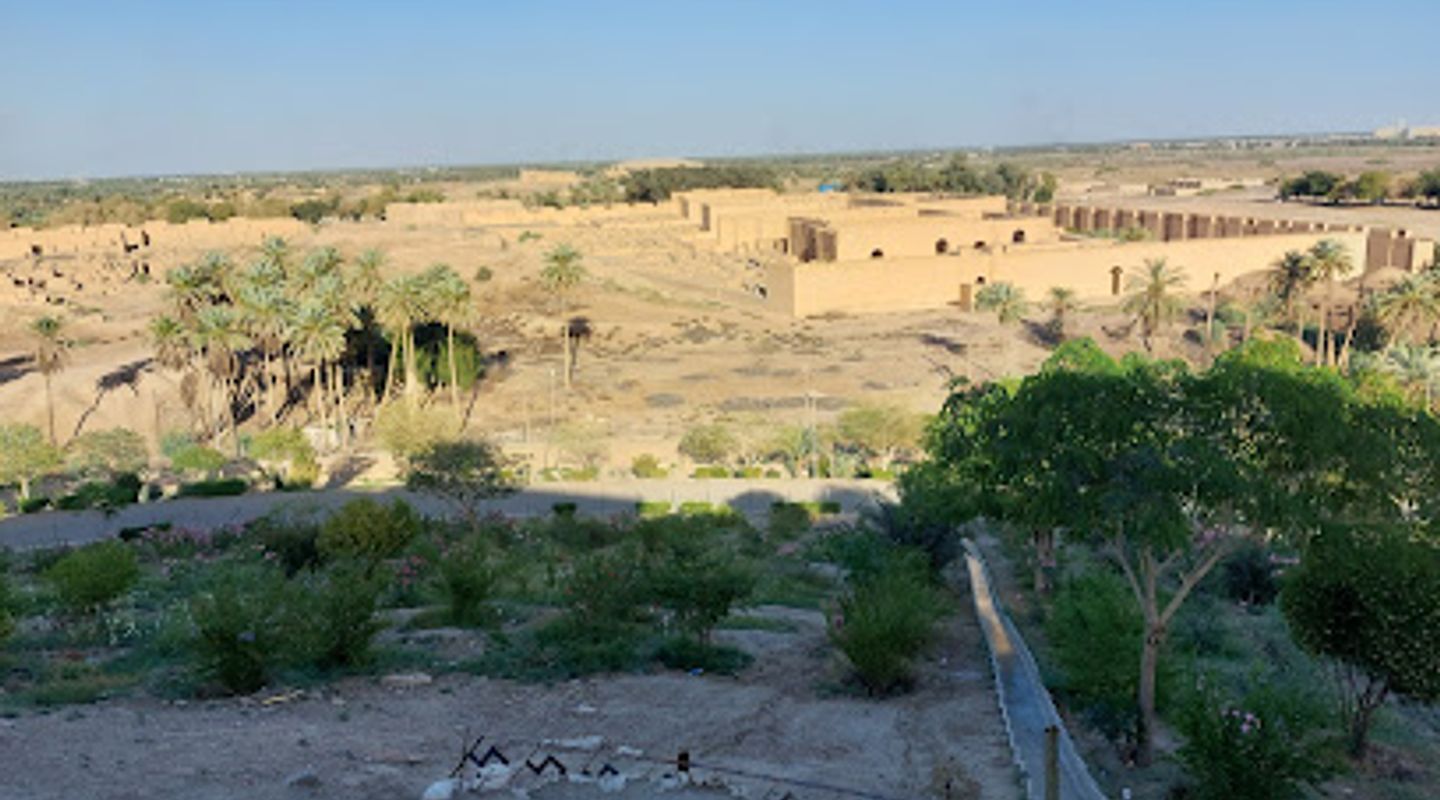
Step back in time and immerse yourself in the wonders of Ancient Babylon, a UNESCO World Heritage Site located in present-day Iraq, approximately 85 kilometers south of Baghdad. This archaeological site was once the capital of the Babylonian Empire and a significant cultural and religious center in Mesopotamia. Founded before the reign of Sargon of Akkad (2334-2279 BCE), Babylon rose to prominence under Hammurabi in the 18th century BC. The city reached its peak during the Neo-Babylonian Empire (626-539 BC) under King Nebuchadnezzar II, who initiated extensive construction projects, including the Ishtar Gate and potentially the Hanging Gardens.While exploring the ruins, you can visit the reconstructed Ishtar Gate, a symbol of Babylon's grandeur, adorned with blue glazed bricks and reliefs of dragons and bulls. Imagine the towering ziggurat of Etemenanki, dedicated to Marduk, the chief god of Babylon, and believed to be the inspiration for the Tower of Babel. Although the Hanging Gardens' exact location remains a mystery, envision this wonder of the ancient world gracing the city. Don't miss the Lion of Babylon, a basalt statue that stands as a symbol of Babylonian strength.Babylon's history is rich and complex, marked by periods of glory, destruction, and foreign rule. From its early days as a minor port city to its reign as the capital of a vast empire, Babylon has left an indelible mark on human civilization. Despite the damage caused by looting and military occupation, the ruins of Babylon continue to captivate visitors with their historical and cultural significance.
Evendo Review Centre
 Google
Guest reviews
Explore Ancient Babylon on the map
A handpicked selection of must-see spots near Ancient Babylon, mapped for you.
Get your free copy of our complete guide to Ancient Babylon, delivered straight to you.
Everything on this page, from opening hours and how to get there to Eve’s tips and the best time to go, in one PDF you can read offline, print or share.
Already have an account? Sign in
Your Ancient Babylon guide is ready.
We'll send it to · Not you? Sign out

Getting your guide ready…
We are putting together a fresh copy of the Ancient Babylon guide. This can take up to a minute.
This can take a few moments. If your browser asks, choose Allow so the download can start. You'll find the guide in your Downloads folder.
Nothing happened? Download it again
Sorry, the guide is taking longer than usual. Please try again in a minute, or get it by email instead.
Other nearby places you may find interesting
The closest places of the same kind, if this one is not quite what you had in mind.
-
-
-
-
-


Swipe for more places
More to explore near Ancient Babylon

 Best experiences near Ancient Babylon
 Best hotels near Ancient Babylon
 Best landmarks near Ancient Babylon
 Best attractions near Ancient Babylon
 Best shops near Ancient Babylon
 Best restaurants near Ancient Babylon
 Best bars near Ancient Babylon
Do you manage this location?
Take control to get all the benefits, like improved information, better appearance, and stronger visibility across AI-powered discovery.
Explore more

Explore more of Mesopotamia
Explore Mesopotamia in Iraq: Journey through ancient ruins, discover the cradle of civilization, and immerse yourself in rich cultural heritage.
Explore Mesopotamia
Explore more of Iraq
Explore the cradle of civilization in Iraq, where ancient history, rich culture, and diverse landscapes create an unforgettable travel experience.
Explore Iraq
