Catacombe di Porta d'Ossuna, Palermo Travel Guide
Free Guide: Uncover Palermo's ancient past in the eerie yet fascinating Catacombe di Porta d'Ossuna, an early Christian burial site.


A brief summary of Catacombe di Porta d'Ossuna
Uncover Palermo's ancient past in the eerie yet fascinating Catacombe di Porta d'Ossuna, an early Christian burial site.
Explore the Catacombe di Porta d'Ossuna in Palermo, an early Christian underground cemetery dating back to the 4th and 5th centuries AD. Discovered in 1739, these catacombs offer a glimpse into the early Christian community in Palermo, featuring loculi, galleries, and corridors adorned with faint traces of ancient paintings.
Opening hours
- MonClosed
- TueClosed
- WedClosed
- ThuClosed
- FriClosed
- Sat3 pm–6 pm
- Sun10 am–1 pm, 3 pm–6 pm
Opening hours as listed on the venue’s Google Business Profile. Hours can change for services and special events, so check with the venue before you go.
- Address
- Corso A. Amedeo, 110, 90138 Palermo PA
- Phone
- Website
Getting there
Public Transport
Walking
Taxi
Discover more about Catacombe di Porta d'Ossuna
Overview
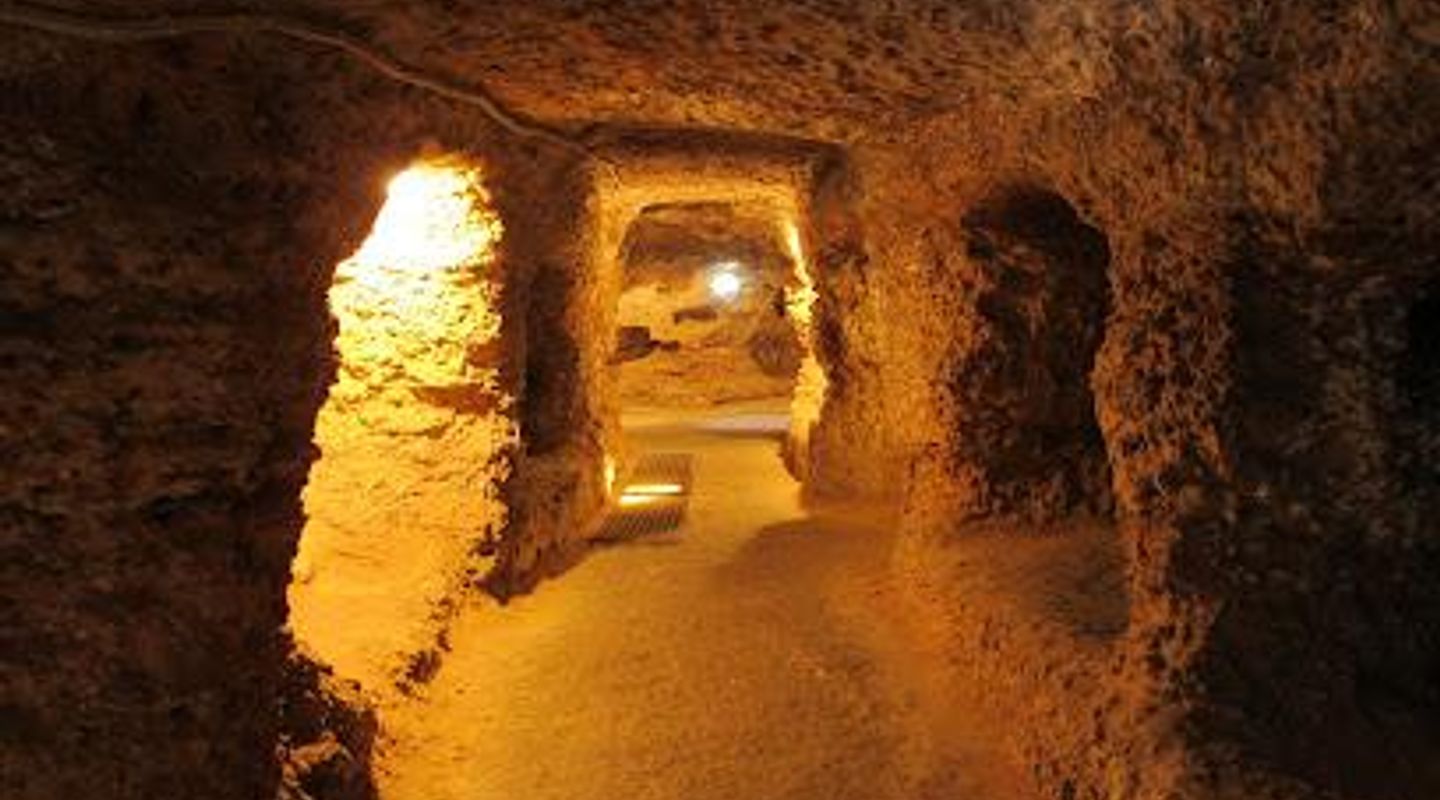
Venture beneath the bustling streets of Palermo to discover the Catacombe di Porta d'Ossuna, a significant early Christian hypogeum dating back to the 4th and 5th centuries AD. The catacombs derive their name from their proximity to Porta d'Ossuna, named after the Duke of Ossuna, Pietro Giron. Rediscovered in 1739 during construction work on the Convento delle Cappuccinelle, the site was explored by the Prince of Torremuzza and later studied by scholars in the early 20th century. During World War II, the catacombs served as a refuge for the population seeking shelter from bombings.The catacombs are structured along an east-west axis, featuring a network of intersecting corridors, burial chambers (cubicula), and recesses for sarcophagi (arcosoli). Though the walls were once painted, only fragments of the original plasterwork remain. The entrance today is on Corso Alberto Amedeo, marked by a circular vestibule erected in 1785 by Ferdinand I of Bourbon. Inside, discover the remains of a structure possibly used for funeral banquets, similar to those found in Malta. A notable funerary inscription dedicated to a young girl, discovered in the 18th century, is now housed in the Antonio Salinas Archaeological Museum.Guided tours, conducted by archaeologists, provide historical context about the catacombs in both English and Italian. Note that photography is prohibited inside the catacombs due to copyright regulations.
Evendo Review Centre
 Google
Guest reviews
Explore Catacombe di Porta d'Ossuna on the map
A handpicked selection of must-see spots near Catacombe di Porta d'Ossuna, mapped for you.
Get your free copy of our complete guide to Catacombe di Porta d'Ossuna, delivered straight to you.
Everything on this page, from opening hours and how to get there to Eve’s tips and the best time to go, in one PDF you can read offline, print or share.
Already have an account? Sign in
Your Catacombe di Porta d'Ossuna guide is ready.
We'll send it to · Not you? Sign out

Getting your guide ready…
We are putting together a fresh copy of the Catacombe di Porta d'Ossuna guide. This can take up to a minute.
This can take a few moments. If your browser asks, choose Allow so the download can start. You'll find the guide in your Downloads folder.
Nothing happened? Download it again
Sorry, the guide is taking longer than usual. Please try again in a minute, or get it by email instead.
Other nearby places you may find interesting
The closest places of the same kind, if this one is not quite what you had in mind.
-
-
-
-
-


Swipe for more places
More to explore near Catacombe di Porta d'Ossuna
-
 Best experiences near Catacombe di Porta d'Ossuna
-
 Best hotels near Catacombe di Porta d'Ossuna
-
 Best landmarks near Catacombe di Porta d'Ossuna
-
 Best attractions near Catacombe di Porta d'Ossuna
-
 Best shops near Catacombe di Porta d'Ossuna
-
 Best restaurants near Catacombe di Porta d'Ossuna
-
 Best bars near Catacombe di Porta d'Ossuna


Do you manage this location?
Take control to get all the benefits, like improved information, better appearance, and stronger visibility across AI-powered discovery.
Explore more

Explore more of Palermo
Discover Palermo, a vibrant city where ancient history, diverse cultures, and delicious cuisine come together to create an unforgettable experience in the heart of Sicily.
Explore Palermo
Explore more of Italy
Discover Italy: A land of ancient history, artistic marvels, and culinary delights; where every corner reveals a new story and every meal is a celebration.
Explore Italy