

Free Covington Travel Guide & Mobile App
Plan your Covington trip with Evendo. Get free guides to top attractions, restaurants, hotels, and bars. Web access or download the mobile app.


Covington, Kentucky pairs historic riverfront districts, Italianate architecture, MainStrasse culture and Cincinnati views with museums, parks and local dining.
Across the Ohio from Cincinnati
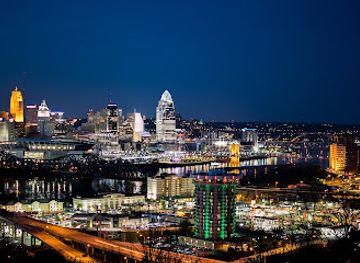
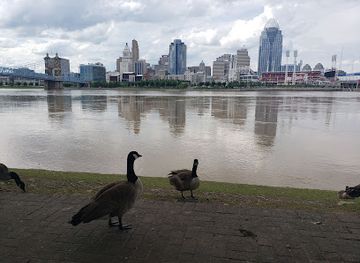
Covington occupies the Kentucky bank of the Ohio River, directly opposite downtown Cincinnati and linked to it by the John A. Roebling Suspension Bridge. Its position gives the city a distinctive outlook: Cincinnati’s skyline rises across the water, while Covington’s own streets retain a strong nineteenth-century character. Historic neighbourhoods spread south from the river through districts of brick row houses, churches, Italianate commercial buildings and carefully preserved residential architecture.Read more about Covington
Historic Streets and Neighbourhood Life
Parks, Museums and Local Culture
When is the best time to visit Covington?
Best: May, September–October · 20–26°C| Month | High (°C) | Rainfall (mm) |
|---|---|---|
| January | 5 | 75 |
| February | 6 | 67 |
| March | 13 | 95 |
| April | 19 | 100 |
| May (best) | 25 | 104 |
| June | 29 | 107 |
| July | 32 | 116 |
| August | 31 | 97 |
| September (best) | 26 | 84 |
| October (best) | 20 | 82 |
| November | 13 | 86 |
| December | 7 | 86 |
Getting to and around Covington
How to get there
Transportation
Best attractions in Covington
Covington’s attractions bring together river views, historic streets, museums and green space. MainStrasse Village is the principal sightseeing district, with restored nineteenth-century buildings, Goebel Park and its distinctive clock tower, and a concentration of places to eat and browse. The John A. Roebling Suspension Bridge offers a memorable pedestrian crossing between Covington and Cincinnati, with views along the Ohio River and towards the Cincinnati skyline. The Carnegie, a former public library, presents visual art and performing arts in an architecturally significant setting. In Devou Park, the Behringer-Crawford Museum interprets Northern Kentucky’s natural environment, Indigenous and settlement history, transport and local culture. The park’s wooded roads, trails and overlooks provide a change of pace from the urban grid, while the Mutter Gottes Church area adds religious and immigrant history to a wider walk through Covington’s historic neighbourhoods.
-
Tourist attraction
Devou Park
Discover the beauty and recreational offerings of Devou Park, a stunning urban park in Covington, Kentucky, with picturesque views and family-friendly activities.
17 min drive · 5.6 km from city centre
-
Tourist attraction
Devou Park
Explore the breathtaking views and recreational activities at Devou Park in Covington, Kentucky, a perfect getaway for nature lovers and adventurers alike.
17 min drive · 5.6 km from city centre
-
Park
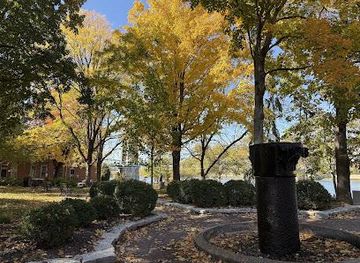
George Rogers Clark Park
Experience the beauty and history of George Rogers Clark Park, a tranquil riverside escape in Covington, Kentucky, perfect for nature lovers and history enthusiasts.
19 min drive · 6.5 km from city centre
-
Tourist attraction
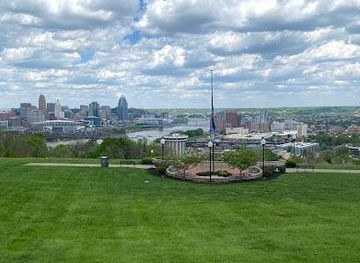
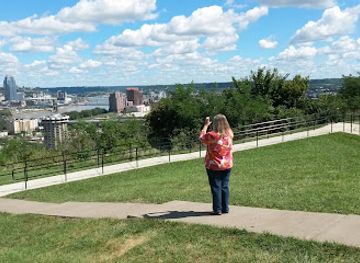
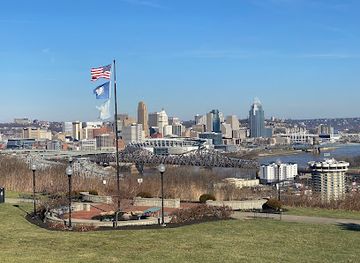
Scenic Overlook at Devou Park
Experience stunning panoramic views of Cincinnati and the Ohio River at Devou Park's Scenic Overlook, a perfect blend of nature and recreation.
16 min drive · 5.5 km from city centre
Best landmarks in Covington
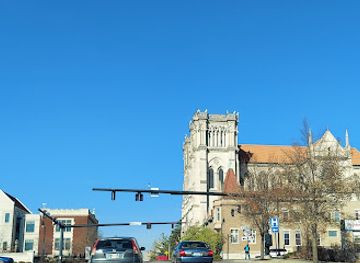
The John A. Roebling Suspension Bridge is Covington’s most recognisable structure, completed in 1866 and designed by John A. Roebling as an important early wire-suspension bridge across the Ohio River. In the city centre, the former Covington Library, now The Carnegie, represents the civic ambition of the late nineteenth and early twentieth centuries and remains a notable cultural building. Mutter Gottes Kirche, or Church of the Mother of God, reflects the religious life of Covington’s German Catholic community and anchors one of the city’s most distinctive historic areas. Goebel Park’s clock tower is a familiar MainStrasse landmark, while the surrounding Italianate and Victorian commercial buildings convey the scale of the old town. Historic homes, churches and streetscapes in districts such as Licking-Riverside and Mutter Gottes complete the architectural record of a river city shaped by immigration, trade and metropolitan connections.
-
Park
Devou Park
Explore the breathtaking views, lush landscapes, and family-friendly activities at Devou Park, Covington's premier outdoor destination.
17 min drive · 5.6 km from city centre
-
German
Wunderbar!
Experience the taste of Germany at Wunderbar! in Covington, offering traditional dishes, a vibrant atmosphere, and a wide selection of drinks.
15 min drive · 4.8 km from city centre
-
Park
George Rogers Clark Park
Discover tranquility and history at George Rogers Clark Park, a scenic retreat along the Ohio River in Covington, Kentucky, perfect for outdoor enthusiasts and families.
19 min drive · 6.5 km from city centre
-
Catholic cathedral
Cathedral Basilica of the Assumption
Explore the Cathedral Basilica of the Assumption, a stunning Gothic Revival masterpiece in Covington, KY, renowned for its exquisite stained glass and serene atmosphere.
15 min drive · 5.0 km from city centre
Explore Covington on the map
Plan your Covington trip on one map. See where the top attractions, landmarks, restaurants, bars and hotels are, find what's near where you're staying, and book hotels and experiences in a few clicks.
Best hotels in Covington
Best restaurants in Covington
Covington’s dining scene is concentrated around MainStrasse Village, Madison Avenue and the historic streets near the river, where restored commercial buildings accommodate independent restaurants, cafés, bars and bakeries. The city’s food culture reflects Northern Kentucky’s position within the Cincinnati metropolitan area, so Cincinnati-style chilli, goetta and other regional traditions appear alongside American comfort food, German-influenced specialities and contemporary cooking. Goetta, a savoury mixture of pork or sometimes other meat with pinhead oats, is especially associated with the German-American heritage of the Ohio Valley and is commonly encountered at breakfast or brunch. MainStrasse provides a sociable setting for casual dining, while Madison Avenue has a more neighbourhood-oriented collection of eateries. Seasonal farmers’ markets and local food events add opportunities to encounter regional produce and prepared foods without reducing Covington’s culinary identity to a single dish.
-
Restaurant
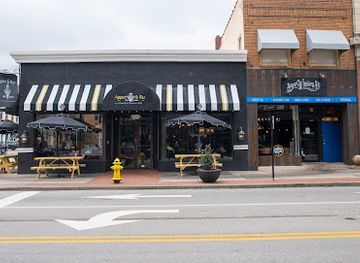
Agave & Rye Covington
Experience vibrant Mexican flavors at Agave & Rye in Covington – where gourmet tacos meet artisanal cocktails in a lively atmosphere.
17 min drive · 5.6 km from city centre
-
Hamburger
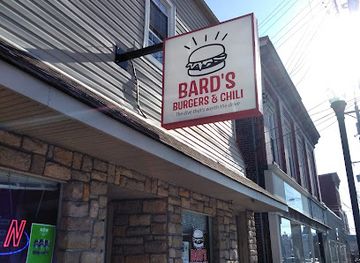
Bard's Burgers & Chili
Savor mouthwatering burgers and chili at Bard's Burgers & Chili in Covington – where flavor meets friendly service.
6 min drive · 2.0 km from city centre
-
Pizza
Goodfellas Pizzeria - Mainstrasse Village
Experience the best pizza and cocktails in Covington at Goodfellas Pizzeria - where flavor meets fun in Mainstrasse Village.
17 min drive · 5.6 km from city centre
-
Irish
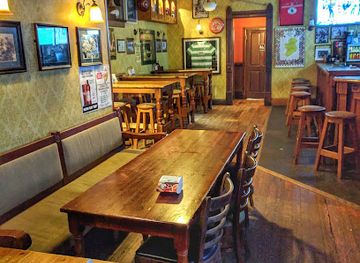
Molly Malone's Irish Pub & Restaurant
Discover authentic Irish cuisine and vibrant nightlife at Molly Malone's Irish Pub & Restaurant in Covington - where every visit feels like home.
18 min drive · 6.1 km from city centre
Best bars in Covington
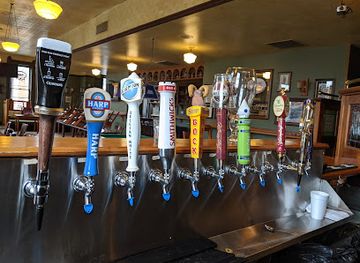
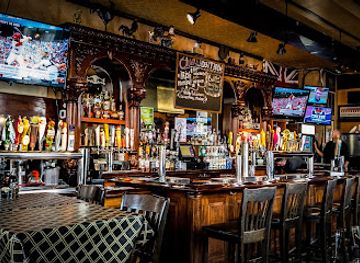
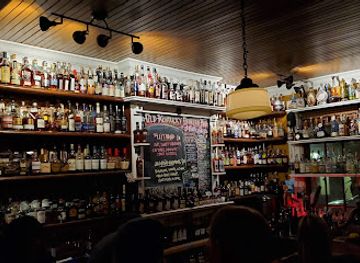
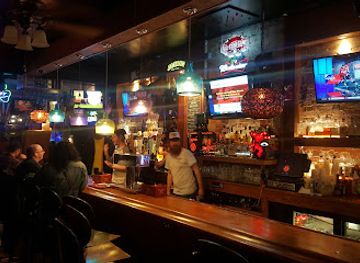
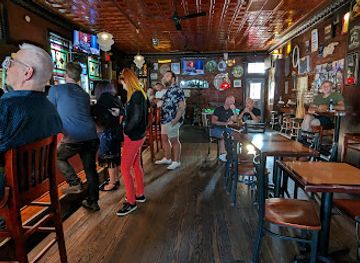
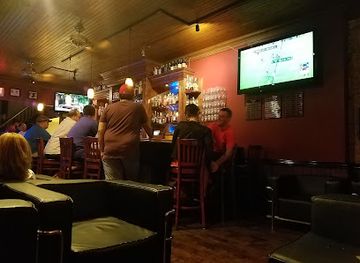
Evenings in Covington are centred mainly on MainStrasse Village and Madison Avenue rather than on a large, club-focused nightlife district. MainStrasse’s historic buildings house pubs, cocktail bars, breweries and restaurants where visitors can spend a relaxed evening within walking distance of Goebel Park. Braxton Brewing, founded in Covington, is part of the city’s contemporary craft-beer identity, while other venues and event spaces contribute live music, performances and seasonal programming. The Carnegie presents cultural events that offer an alternative to bar-based nightlife, and Cincinnati’s larger concert, theatre and sports scene lies immediately across the river. Activity varies by night and by event calendar, so the atmosphere can range from quiet neighbourhood socialising to busier festival evenings. Visitors should observe United States drinking-age laws and use a taxi, ride-hailing service or designated driver when travelling between venues.
-
Irish
Molly Malone's Irish Pub & Restaurant
Discover authentic Irish cuisine and lively entertainment at Molly Malone's Irish Pub & Restaurant in Covington, KY.
18 min drive · 6.1 km from city centre
-
American
Cock & Bull Public House Mainstrasse Village
Discover Cock & Bull Public House: a vibrant American restaurant in Covington, KY, offering unique dishes and a welcoming atmosphere.
17 min drive · 5.6 km from city centre
-
Bar
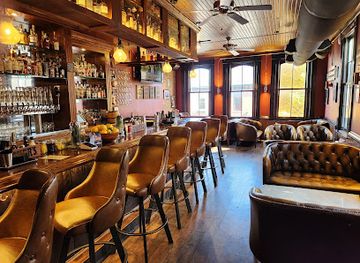
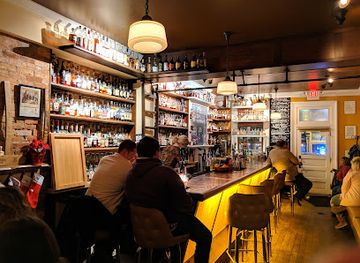
Old Kentucky Bourbon Bar
Discover the essence of Kentucky at Old Kentucky Bourbon Bar, where tradition meets taste in a warm and inviting atmosphere.
17 min drive · 5.5 km from city centre
-
Pub
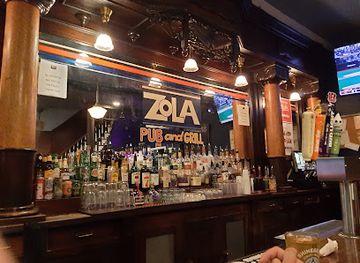
Zola Pub and Grill
Discover Zola Pub and Grill in Covington for an unforgettable blend of classic and innovative dishes in a vibrant atmosphere.
17 min drive · 5.6 km from city centre
Best nightclubs in Covington
Evenings in Covington are centred mainly on MainStrasse Village and Madison Avenue rather than on a large, club-focused nightlife district. MainStrasse’s historic buildings house pubs, cocktail bars, breweries and restaurants where visitors can spend a relaxed evening within walking distance of Goebel Park. Braxton Brewing, founded in Covington, is part of the city’s contemporary craft-beer identity, while other venues and event spaces contribute live music, performances and seasonal programming. The Carnegie presents cultural events that offer an alternative to bar-based nightlife, and Cincinnati’s larger concert, theatre and sports scene lies immediately across the river. Activity varies by night and by event calendar, so the atmosphere can range from quiet neighbourhood socialising to busier festival evenings. Visitors should observe United States drinking-age laws and use a taxi, ride-hailing service or designated driver when travelling between venues.
-
Bar
Old Kentucky Bourbon Bar
Discover the rich bourbon heritage at Old Kentucky Bourbon Bar in Covington, where every sip tells a story of tradition and craftsmanship.
17 min drive · 5.5 km from city centre
-
Bar
Gypsy's Mainstrasse
Discover the lively vibe and eclectic drink selection at Gypsy's Mainstrasse, a premier bar in Covington, Kentucky, perfect for a fun night out.
17 min drive · 5.5 km from city centre
-
Bar
Rosie's Tavern
Discover the lively atmosphere and delicious pub fare at Rosie's Tavern, Covington's favorite spot for drinks and entertainment.
16 min drive · 5.5 km from city centre
-
Bar
Wiseguy Lounge - Mainstrasse
Discover the vibrant nightlife of Covington at Wiseguy Lounge - a perfect blend of craft cocktails, gourmet pizzas, and live entertainment.
17 min drive · 5.6 km from city centre
Best shops in Covington
Shopping in Covington is mostly independent and neighbourhood-based, with the strongest concentration in MainStrasse Village and along parts of Madison Avenue. Historic shopfronts accommodate boutiques, gifts, art, vintage goods and locally oriented small businesses, making the experience more about browsing characterful streets than visiting a large enclosed shopping centre. MainStrasse’s restaurants and public spaces make it easy to combine shopping with a walk through the district, while seasonal farmers’ markets provide regional produce, prepared foods and handmade goods when operating. Visitors may also find Ohio Valley food products and locally produced craft items in independent shops and brewery-related spaces. Retail availability changes as small businesses evolve, so Covington is best approached as a compact district of local enterprises rather than a destination for major-brand shopping.
-
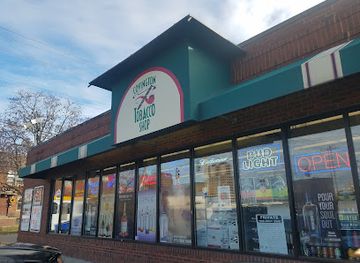
Tobacco shop
Covington Tobacco And Liquor
Discover Covington Tobacco and Liquor - Your go-to destination for premium cigars and a wide selection of spirits in Covington, Kentucky.
18 min drive · 5.9 km from city centre
-
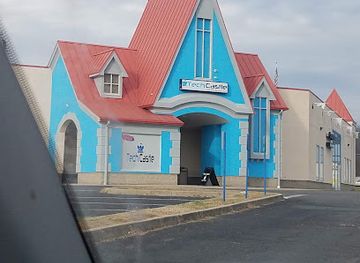
Shopping mall
Latonia Centre
Explore the Latonia Centre, Covington's premier shopping destination, offering diverse retail, dining, and entertainment experiences for every traveler.
13 min walk · 1.0 km from city centre
-
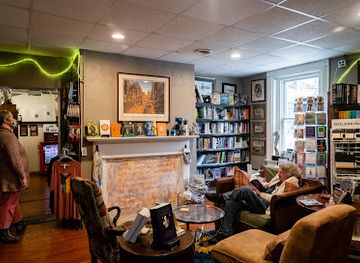
Coffee shop
Roebling Books & Coffee - Covington
Discover a cozy literary escape at Roebling Books & Coffee in Covington, where coffee and books come together for a delightful experience.
19 min drive · 6.2 km from city centre
-
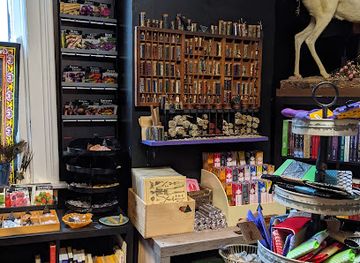
Gift shop
HAIL - RECORDS & ODDITIES
Explore HAIL - Records & Oddities, a unique gift shop in Covington, KY, filled with antiques, collectibles, and vintage treasures waiting to be discovered.
16 min drive · 5.4 km from city centre
Get your free copy of our complete guide to Covington, delivered straight to you.
Everything on this page, from attractions and restaurants to essentials and local phrases, in one PDF you can read offline, print or share.
Already have an account? Sign in
Your Covington guide is ready.
We'll send it to · Not you? Sign out

Getting your guide ready…
We are putting together a fresh copy of the Covington guide. This can take up to a minute.
This can take a few moments. If your browser asks, choose Allow so the download can start. You'll find the guide in your Downloads folder.
Nothing happened? Download it again
Sorry, the guide is taking longer than usual. Please try again in a minute, or get it by email instead.
Covington essentials
Currency and Payment
Safety
Emergency Situations
Do's and Don'ts
Local Tips
From Eve
Local phrases worth knowing
You don't need to get them perfect. A few words go a long way, and locals appreciate the effort.
Basics
| English | Local | Say it |
|---|---|---|
| Hello | Howdy | [haw-dee] |
| Goodbye | See ya | [see yuh] |
| Yes | Yep | [yep] |
| No | Nah | [nah] |
| Please/You're welcome | Please/No problem | [pleez/no prob-lem] |
| Thank you | Thanks | [thanks] |
| Excuse me/Sorry | Scuse me/Sorry | [skews me/sor-ee] |
| How are you? | How y'all doin'? | [how yawl doin'] |
| Fine. And you? | Fine. An' you? | [fine an' yuh?] |
| Do you speak English? | Y'all speak English? | [yawl speak ing-glish?] |
| I don't understand | I don't git it | [I don't git it] |
Eating & Drinking
| English | Local | Say it |
|---|---|---|
| I'd like to see the menu, please | Can I see the menu? | [kan I see the men-yoo?] |
| I don't eat meat | I don't eat meat | [I don't eat meat] |
| Cheers! | Cheers! | [cheers!] |
| I would like to pay, please | Check please | [chek pleez] |
Emergencies
| English | Local | Say it |
|---|---|---|
| Help! | Help! | [help!] |
| Go away! | Get outta here! | [get out-uh here!] |
| Call the Police! | Call the cops! | [call the cops!] |
| Call a doctor! | Get a doc! | [get a doc!] |
| I'm lost | I'm lost | [I'm lost] |
| I'm ill | I'm sick | [I'm sick] |
Shopping
| English | Local | Say it |
|---|---|---|
| I'd like to buy... | I wanna buy... | [I wanna buy...] |
| I'm just looking | I'm just browsin' | [I'm just brow-sin'] |
| How much is it? | How much? | [how much?] |
| That's too expensive | That's pricey | [that's pry-see] |
| Can you lower the price? | Can ya lower it? | [can yuh lower it?] |
Time & Numbers
| English | Local | Say it |
|---|---|---|
| What time is it? | What time is it? | [what time is it?] |
| It's one o'clock | It's one | [it's one] |
| Half past (10) | Half past ten | [half past ten] |
| Morning | Mornin' | [mornin'] |
| Afternoon | Afternoon | [after-noon] |
| Evening | Evenin' | [evenin'] |
| Yesterday | Yesterday | [yester-day] |
| Today | Today | [to-day] |
| Tomorrow | Tomorrow | [to-mor-row] |
| 1 | One | [wun] |
| 2 | Two | [too] |
| 3 | Three | [three] |
| 4 | Four | [four] |
| 5 | Five | [five] |
| 6 | Six | [six] |
| 7 | Seven | [seven] |
| 8 | Eight | [eight] |
| 9 | Nine | [nine] |
| 10 | Ten | [ten] |
Transport & Directions
| English | Local | Say it |
|---|---|---|
| Where's a/the...? | Where's the...? | [where's the...?] |
| What's the address? | What's the address? | [what's the address?] |
| Can you show me (on the map)? | Can ya show me (on the map)? | [can yuh show me (on the map)?] |
| When's the next (bus)? | When's the next (bus)? | [when's the next (bus)?] |
| A ticket (to ....) | A tick-et (to ....) | [a tick-et (to ....)] |
History of Covington
Indigenous Lands and River Geography
The land around present-day Covington lies within the wider Ohio Valley, a region inhabited and used by Indigenous peoples long before European-American settlement. The Ohio River was an important route through the landscape, supporting movement, exchange and access to fertile bottomlands. Later colonial and American expansion brought competing claims and changing patterns of settlement to northern Kentucky. Covington’s future location was shaped by its position opposite the established river town of Cincinnati, whose growth created demand for ferries, roads, warehouses and residential development on the Kentucky shore.
Founding and Early Development
Covington was founded in 1815 and named for General Leonard Covington, who had served in the War of 1812. Its planned streets and proximity to Cincinnati helped it develop as a commercial and residential community during the early nineteenth century. River transport, ferry crossings and regional roads connected the settlement to markets on both sides of the Ohio. As population increased, Covington became one of northern Kentucky’s principal towns, with civic institutions, churches and businesses reflecting the growing importance of the river corridor.
Bridges and Industrial Growth
The completion of the John A. Roebling Suspension Bridge in 1866 transformed movement between Covington and Cincinnati. Designed by John A. Roebling before his better-known Brooklyn Bridge project, it provided a dependable crossing for pedestrians, vehicles and commercial traffic. During the nineteenth century, Covington expanded through manufacturing, trade and river-related commerce, while rail connections strengthened its regional importance. The city’s surviving commercial blocks, worker housing and substantial residences date in large part from this period of urban and industrial growth.
German Immigration and Catholic Institutions
German-speaking immigrants made a lasting contribution to Covington’s population, commerce and religious life during the nineteenth century. Their influence is especially visible in the historic area around Mutter Gottes Kirche, whose name means Church of the Mother of God. The parish was established in the mid-nineteenth century to serve German Catholics, and the church became a prominent expression of the community’s faith and identity. German cultural traditions also shaped neighbourhood businesses, social organisations and the architectural character associated with parts of historic Covington.
A City of Historic Districts
Covington’s expansion produced distinct neighbourhoods with different social and architectural identities, including MainStrasse Village, the Mutter Gottes area and residential districts of nineteenth-century houses. Grand homes, narrow urban lots, churches and commercial buildings record the city’s growth during the Victorian era and the early twentieth century. Later changes in industry, transport and suburban development altered local commerce, but many historic structures survived. Preservation efforts have helped retain the scale and visual continuity that now distinguish Covington from the larger metropolitan landscape around it.
Revival Through Heritage and Culture
In the late twentieth and early twenty-first centuries, Covington increasingly built its civic identity around historic preservation, arts and neighbourhood renewal. MainStrasse Village developed as a cultural and entertainment district, while restored buildings accommodated independent businesses, galleries, restaurants and community activities. The Carnegie arts centre and the Behringer-Crawford Museum broaden the city’s cultural offer, and riverfront improvements have strengthened public access to the Ohio. Covington remains part of the Cincinnati metropolitan area, but its historic streets and local institutions continue to express a distinct Northern Kentucky character.
Covington in Photos
Browse through our photo collection highlighting the charm and character of the destination.
Cities near Covington
The closest cities to Covington, if you have time for more than one stop.
-

-

-

-

-


Swipe for more cities
Explore more

Explore more of Kentucky
Discover Kentucky, a land of natural wonders, historic landmarks, and rich cultural heritage. From horse racing to bourbon distilleries, this state has it all.
Explore Kentucky