

Free Newport Travel Guide & Mobile App
Plan your Newport trip with Evendo. Get free guides to top attractions, restaurants, hotels, and bars. Web access or download the mobile app.


Newport, Kentucky brings Ohio River views, Newport Aquarium, historic streets and easy access to Cincinnati for culture, dining and family sightseeing.
Riverfront Setting
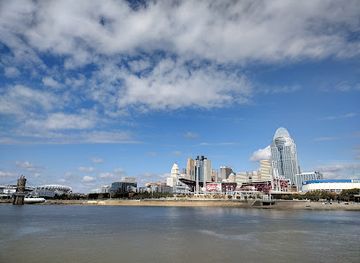
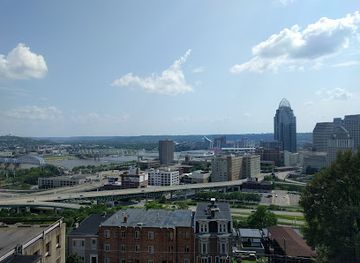
Newport occupies a compact stretch of northern Kentucky along the south bank of the Ohio River, directly across from Cincinnati. Its position gives the city a distinctive outlook: historic streets and older neighbourhoods lead towards an active riverfront, while the Cincinnati skyline forms a constant presence beyond the water. The city is part of the wider Northern Kentucky urban area, but it retains a character of its own, shaped by nineteenth-century commerce, river transport and close-knit residential districts.Read more about Newport
Historic Streets and Modern Attractions
Life Along the Ohio
When is the best time to visit Newport?
Best: May–June, September · 23–28°C| Month | High (°C) | Rainfall (mm) |
|---|---|---|
| January | 4 | 80 |
| February | 6 | 84 |
| March | 12 | 99 |
| April | 18 | 98 |
| May (best) | 23 | 116 |
| June (best) | 28 | 104 |
| July | 31 | 125 |
| August | 29 | 102 |
| September (best) | 26 | 91 |
| October | 19 | 87 |
| November | 12 | 95 |
| December | 7 | 99 |
Getting to and around Newport
How to get there
Transportation
Best attractions in Newport
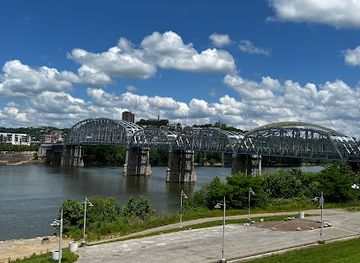
Newport Aquarium is the city's leading visitor attraction, with extensive aquatic exhibits and family-oriented interpretation that make it a substantial indoor stop in the riverfront district. Newport on the Levee provides restaurants, entertainment, public space and views towards Cincinnati, while the Ohio River promenade offers an easy way to experience the city's setting. The Southbank pedestrian bridge is both a practical connection and a scenic walk, crossing to Covington and linking with Cincinnati beyond. On Monmouth Street, older commercial buildings and independent businesses offer a more local-scale experience than the redeveloped waterfront. The World Peace Bell, housed in a prominent riverside structure, is an unusual civic attraction with an international message. Visitors interested in regional history can also explore the area's older streets, churches and surviving nineteenth-century buildings, which reveal Newport's past as a river, industrial and military community.
-
Cruise line company
BB Riverboats
Discover the beauty of the Ohio River with BB Riverboats, offering scenic cruises and delicious dining experiences perfect for all travelers.
5 min drive · 1.5 km from city centre
-
Tourist attraction
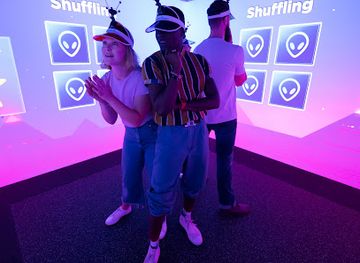
Immersive Gamebox - Newport
Experience the thrill of immersive gaming at Immersive Gamebox in Newport, where adventure meets technology in a fun-filled environment!
16 min walk · 1.3 km from city centre
-
Tourist attraction
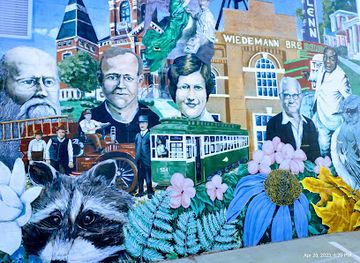
Artworks Newport History Mural
Discover the Artworks Newport History Mural, a stunning tribute to the heritage of Newport, Kentucky, where art and history come alive.
2 min walk · 0.1 km from city centre
Best landmarks in Newport
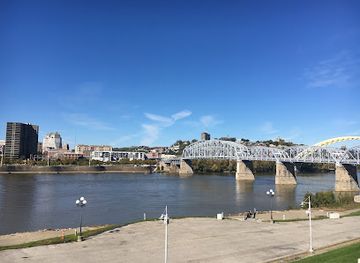
The World Peace Bell is Newport's most distinctive symbolic landmark, housed in a riverside structure where its scale and international message make it more than a conventional civic monument. The Southbank pedestrian bridge, formerly the Newport Southbank Bridge, is a defining piece of the modern riverfront and frames views of the Ohio River, Cincinnati and the surrounding hills. Newport on the Levee represents the city's late twentieth-century effort to reconnect urban life with the waterfront, while the Newport Aquarium has become an important contemporary landmark through its prominent riverfront presence. Away from the newer development, Monmouth Street and nearby residential blocks preserve the scale of Newport's nineteenth- and early twentieth-century commercial city. Older churches, civic buildings and surviving streetscapes provide physical evidence of the communities, industry and river trade that shaped northern Kentucky.
-
Aquarium
Newport Aquarium
Discover the underwater wonders at Newport Aquarium, a top tourist attraction in Kentucky showcasing marine life and conservation.
17 min walk · 1.3 km from city centre
-
Shopping mall
Newport on the Levee
Discover the best of shopping, dining, and entertainment at Newport on the Levee, a must-visit destination in Newport, Kentucky.
16 min walk · 1.3 km from city centre
-
Shopping mall
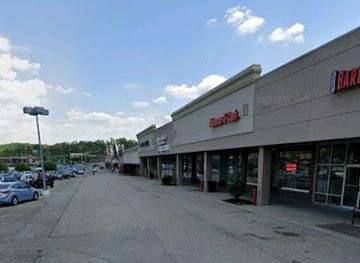
Newport Pavilion
Discover the ultimate shopping experience at Newport Pavilion, where shopping, dining, and entertainment come together in Newport, Kentucky.
12 min walk · 0.9 km from city centre
-
German
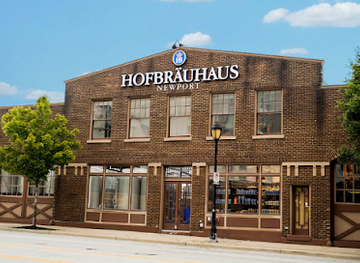
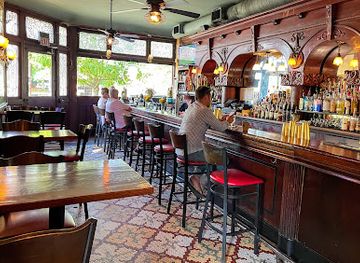
Hofbräuhaus - Newport
Experience authentic Bavarian culture at Hofbräuhaus Newport, where delicious German cuisine meets fresh-brewed beer in a lively atmosphere.
15 min walk · 1.2 km from city centre
Explore Newport on the map
Plan your Newport trip on one map. See where the top attractions, landmarks, restaurants, bars and hotels are, find what's near where you're staying, and book hotels and experiences in a few clicks.
Best hotels in Newport
Best restaurants in Newport
Newport's dining identity belongs to the wider Cincinnati and Northern Kentucky region, where local menus reflect German-American traditions, Ohio River commerce and a strong modern interest in bourbon and craft beverages. Goetta, a seasoned mixture of meat and grains, is a regional breakfast staple, while Cincinnati-style chilli is commonly served over spaghetti or hot dogs and differs from chilli traditions elsewhere in the United States. Newport on the Levee contains a concentrated selection of restaurants with river views and a broad range of familiar cuisines, while Monmouth Street offers a more neighbourhood-oriented setting. Casual cafés, bars with food and independent restaurants sit alongside regional specialities, and visitors will find further dining choices across the bridges in Covington and Cincinnati. Portions, service styles and tipping customs vary, so menus and payment practices are best checked at individual establishments.
-
German
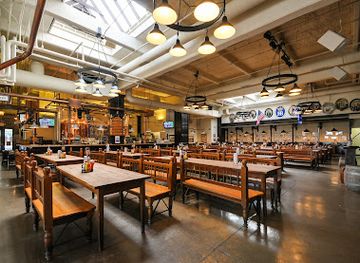
Hofbräuhaus - Newport
Discover Hofbräuhaus Newport: A Family-Friendly German Brewery Offering Authentic Cuisine & Lively Entertainment Along the Ohio River.
15 min walk · 1.2 km from city centre
-
Mexican
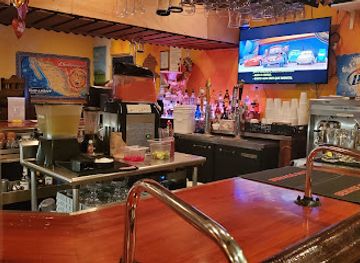
El Rio Grande Mexican Restaurant
Discover delicious authentic Mexican cuisine at El Rio Grande Restaurant in Newport - where every meal is a fiesta!
8 min walk · 0.6 km from city centre
-
Italian
Pompilios
Discover the essence of authentic Italian cuisine at Pompilios in Newport—where tradition meets taste in every delightful dish.
11 min walk · 0.9 km from city centre
-
Fast Food
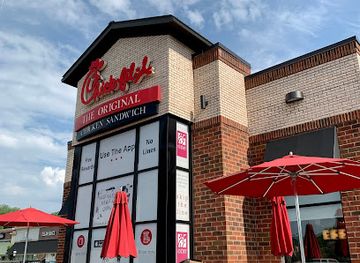
Chick-fil-A
Discover the taste of Chick-fil-A in Newport - delicious chicken meals perfect for families on the go.
10 min walk · 0.8 km from city centre
Best bars in Newport
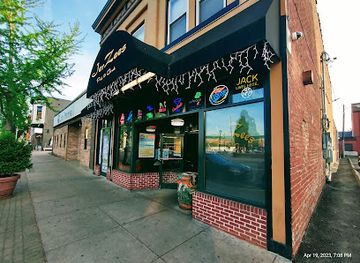
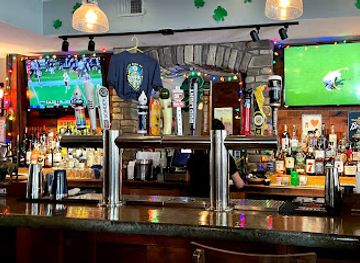
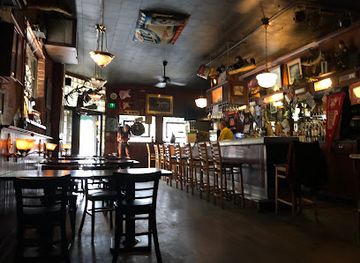
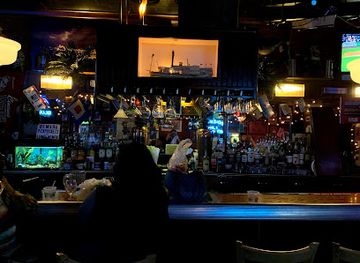
Newport's evening scene is centred on restaurants, bars, entertainment venues and riverfront activity rather than a large, standalone nightclub district. Newport on the Levee provides a convenient concentration of places to eat, meet friends and enjoy views across the Ohio, while Monmouth Street has a more local bar-and-restaurant atmosphere. The city's proximity to Covington and Cincinnati greatly expands the choice of live music, cocktail bars, breweries, theatres and larger evening events, with the Southbank pedestrian bridge providing a memorable connection between the communities when conditions and access allow. River cruises and seasonal public events can add an organised evening experience, although schedules vary. Visitors should arrange transport responsibly after drinking, observe venue age requirements and remember that the atmosphere changes considerably between ordinary weeknights and major sports, concert or festival dates.
-
Grill
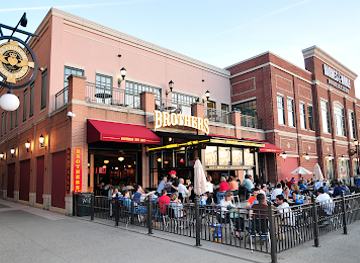
Brothers Bar & Grill
Experience the vibrant energy and delicious flavors at Brothers Bar & Grill, a top spot for food and sports in Newport, Kentucky.
17 min walk · 1.3 km from city centre
-
Sports bar
JerZees Pub
Experience Newport's vibrant nightlife at JerZees Pub, where delicious food, live music, and sports come together in a welcoming atmosphere.
8 min walk · 0.7 km from city centre
-
Grill
O'Bryon's Bar & Grill
Experience the vibrant flavors and welcoming atmosphere at O'Bryon's Bar & Grill, Newport's favorite spot for chicken wings and sports.
7 min walk · 0.6 km from city centre
-
Restaurant
Mansion Hill Tavern
Discover Mansion Hill Tavern, a lively restaurant and live music bar in Newport, KY, blending delicious food with vibrant entertainment for an unforgettable night.
12 min walk · 1.0 km from city centre
Best nightclubs in Newport
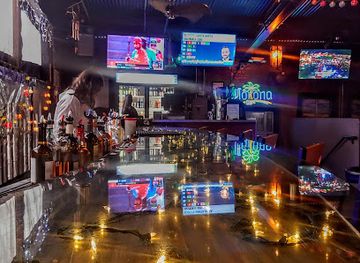
Newport's evening scene is centred on restaurants, bars, entertainment venues and riverfront activity rather than a large, standalone nightclub district. Newport on the Levee provides a convenient concentration of places to eat, meet friends and enjoy views across the Ohio, while Monmouth Street has a more local bar-and-restaurant atmosphere. The city's proximity to Covington and Cincinnati greatly expands the choice of live music, cocktail bars, breweries, theatres and larger evening events, with the Southbank pedestrian bridge providing a memorable connection between the communities when conditions and access allow. River cruises and seasonal public events can add an organised evening experience, although schedules vary. Visitors should arrange transport responsibly after drinking, observe venue age requirements and remember that the atmosphere changes considerably between ordinary weeknights and major sports, concert or festival dates.
-
Sports bar
JerZees Pub
Discover the lively atmosphere of JerZees Pub in Newport, KY, where delicious food, live music, and sports come together for an unforgettable night.
8 min walk · 0.7 km from city centre
-
Restaurant
Mansion Hill Tavern
Experience the best of Newport at Mansion Hill Tavern, where delicious food meets vibrant live music in a charming setting.
12 min walk · 1.0 km from city centre
-
Bar
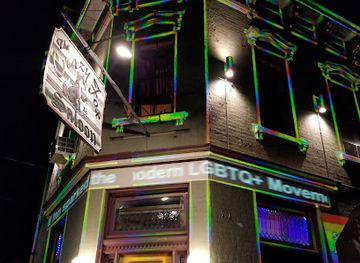
Crazy Fox Saloon
Discover the lively Crazy Fox Saloon in Newport, KY, where great drinks, delicious food, and vibrant nightlife create unforgettable experiences.
5 min walk · 0.4 km from city centre
-
Bar
Gangsters Dueling Piano Bar
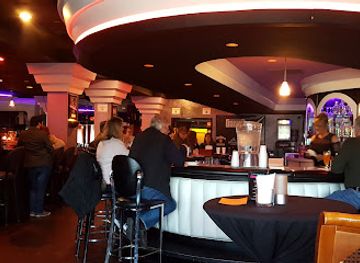
Discover live music and entertainment at Gangsters Dueling Piano Bar, an exciting destination for nightlife in Newport, KY.
12 min walk · 1.0 km from city centre
Best shops in Newport
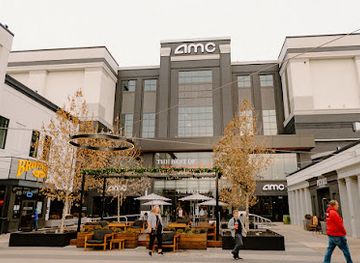
Shopping in Newport is concentrated around Newport on the Levee and Monmouth Street, offering two contrasting experiences. The Levee has a modern, entertainment-led setting with national retailers, specialist businesses and places to browse between meals or attractions. Monmouth Street and nearby older blocks provide a more independent atmosphere, where small businesses and local services reflect the city's established commercial identity. Visitors looking for regional gifts may find Kentucky-made bourbon products, food specialities, crafts and Cincinnati-area souvenirs, although product ranges vary by shop and season. The wider Northern Kentucky and Cincinnati area adds larger retail centres, antique shops and specialist stores within a short drive. Shopping here is therefore less about a single traditional market than about moving between a redeveloped riverfront quarter, an older main street and the broader metropolitan retail network.
-
Store
Newport on the Levee
Experience the best of shopping, dining, and entertainment at Newport on the Levee, a vibrant riverside destination in Kentucky.
16 min walk · 1.3 km from city centre
-
Shopping mall
Newport Pavilion
Experience shopping, dining, and entertainment at Newport Pavilion in Newport, Kentucky – a vibrant destination for all your needs.
12 min walk · 0.9 km from city centre
-
Shopping mall
Newport Plaza II
Experience shopping, dining, and entertainment like never before at Newport Plaza II, the heart of Newport, Kentucky.
3 min walk · 0.2 km from city centre
-
Candy store
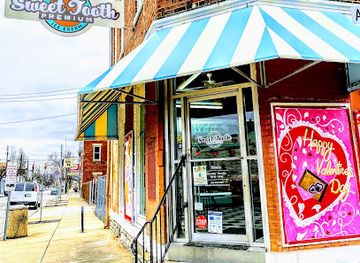
Sweet Tooth Candies
Discover Sweet Tooth Candies in Newport, KY, where delightful chocolates and creamy ice creams create a sweet escape for all candy lovers.
6 min walk · 0.5 km from city centre
Get your free copy of our complete guide to Newport, delivered straight to you.
Everything on this page, from attractions and restaurants to essentials and local phrases, in one PDF you can read offline, print or share.
Already have an account? Sign in
Your Newport guide is ready.
We'll send it to · Not you? Sign out

Getting your guide ready…
We are putting together a fresh copy of the Newport guide. This can take up to a minute.
This can take a few moments. If your browser asks, choose Allow so the download can start. You'll find the guide in your Downloads folder.
Nothing happened? Download it again
Sorry, the guide is taking longer than usual. Please try again in a minute, or get it by email instead.
Newport essentials
Currency and Payment
Safety
Emergency Situations
Do's and Don'ts
Local Tips
From Eve
Local phrases worth knowing
You don't need to get them perfect. A few words go a long way, and locals appreciate the effort.
Basics
| English | Local | Say it |
|---|---|---|
| Hello | Howdy | [haw-dee] |
| Goodbye | See ya | [see-yuh] |
| Yes | Yup | [yuhp] |
| No | Nah | [nuh] |
| Please/You're welcome | Please/No problem | [pleez/no prob-lem] |
| Thank you | Thanks | [thanks] |
| Excuse me/Sorry | Pardon me/My bad | [par-dun mee/my bad] |
| How are you? | How ya doin'? | [how yuh doin'] |
| Fine. And you? | Good. And you? | [good. and yuh?] |
| Do you speak English? | Ya speak English? | [ya speak ing-glish?] |
| I don't understand | I ain't gettin' it | [I aint get-tin it] |
Eating & Drinking
| English | Local | Say it |
|---|---|---|
| I'd like to see the menu, please | Lemme check out the menu, please | [lem-ee check out the menu, please] |
| I don't eat meat | I don't do meat | [I don't do meat] |
| Cheers! | Cheers! | [cheers!] |
| I would like to pay, please | I wanna settle up, please | [I wanna set-tle up, please] |
Emergencies
| English | Local | Say it |
|---|---|---|
| Help! | Help! | [help!] |
| Go away! | Get lost! | [get lost!] |
| Call the Police! | Call the cops! | [call the cops!] |
| Call a doctor! | Get a doc! | [get a doc!] |
| I'm lost | I'm turned around | [I'm turned around] |
| I'm ill | I ain't feelin' good | [I aint feelin good] |
Shopping
| English | Local | Say it |
|---|---|---|
| I'd like to buy... | I wanna buy... | [I wanna buy...] |
| I'm just looking | Just browsin' | [just brow-sin] |
| How much is it? | How much does it cost? | [how much duz it cost?] |
| That's too expensive | That's steep | [that's steep] |
| Can you lower the price? | Can ya knock the price down? | [can ya knock the price down?] |
Time & Numbers
| English | Local | Say it |
|---|---|---|
| What time is it? | What's the time? | [what's the time?] |
| It's one o'clock | It's one | [it's one] |
| Half past (10) | 10:30 | [ten-thur-tee] |
| Morning | Mornin' | [mornin'] |
| Afternoon | Afternoon | [aft-er-noon] |
| Evening | Evenin' | [evenin'] |
| Yesterday | Yest'day | [yest-day] |
| Today | Today | [to-day] |
| Tomorrow | Tomorrah | [tom-or-rah] |
| 1 | One | [wun] |
| 2 | Two | [too] |
| 3 | Three | [three] |
| 4 | Four | [four] |
| 5 | Five | [five] |
| 6 | Six | [six] |
| 7 | Seven | [seven] |
| 8 | Eight | [eight] |
| 9 | Nine | [nine] |
| 10 | Ten | [ten] |
Transport & Directions
| English | Local | Say it |
|---|---|---|
| Where's a/the...? | Where's the...? | [where's the...?] |
| What's the address? | What's the address? | [what's the address?] |
| Can you show me (on the map)? | Ya show me (on the map)? | [ya show me (on the map)?] |
| When's the next (bus)? | When's the next (bus)? | [when's the next (bus)?] |
| A ticket (to ....) | A ticket (to ....) | [a ticket (to ....)] |
History of Newport
Founding on the Ohio River
Newport was established in the 1790s by settlers moving into northern Kentucky, a region whose position on the Ohio River made it attractive for trade and transport. The town was incorporated in 1795 and was named Newport, reflecting connections with Newport, Rhode Island, rather than any direct association with the more famous coastal resort. Its early development was closely tied to the river, nearby agricultural areas and the growing settlement of Cincinnati across the water. Streets and lots developed on the river terrace, creating the foundations of the compact urban pattern that still distinguishes Newport from the surrounding hills.
A Regional Military Centre
Newport became an important military location in the early nineteenth century through Newport Barracks, established by the United States Army near the Ohio River in 1803. The installation supported military activity on the western frontier and later served changing national needs, including recruitment and mobilisation during the Civil War era. Although the barracks eventually closed in 1894, the military presence influenced the city's economy and civic identity for much of the nineteenth century. Newport's position opposite Cincinnati also made it part of a wider river corridor in which commerce, transport and federal infrastructure developed together.
Industry, Commerce and Immigration
During the nineteenth and early twentieth centuries, Newport grew through river commerce, manufacturing, retail trade and the movement of people across the Ohio River. German-speaking immigrants and other communities helped shape the area's religious institutions, social organisations and food traditions, while industrial employment contributed to dense neighbourhoods and busy commercial streets. Monmouth Street became a central spine of local business, and the city developed alongside Covington and Cincinnati as part of an increasingly interconnected metropolitan economy. The mixture of modest houses, commercial blocks and civic buildings visible in older parts of Newport reflects this period of urban expansion.
Twentieth-Century Change
Newport experienced the pressures that affected many older American river cities during the twentieth century, including industrial restructuring, suburban growth and the increasing importance of motor traffic. Some traditional businesses and river-related activities declined, while parts of the historic urban fabric survived through continued residential use. The city's proximity to Cincinnati remained an important asset even as economic patterns changed. Newport's story during this period was therefore one of adjustment rather than complete transformation: older neighbourhoods, churches and commercial streets endured alongside new roads, changing employment and evolving regional connections.
Riverfront Revitalisation
From the late twentieth century onwards, Newport's riverfront underwent major redevelopment, helping reconnect the city with the Ohio River and attract new leisure uses. Newport on the Levee opened in 2001, and the Newport Aquarium, which opened in 1999, became a major regional attraction. Public spaces, pedestrian links and the Southbank pedestrian bridge strengthened connections with Covington and Cincinnati. The redevelopment did not erase Newport's older identity; instead, it placed new entertainment and visitor facilities beside historic streets and established neighbourhoods, creating the layered city experienced today.
Newport in Photos
Browse through our photo collection highlighting the charm and character of the destination.
Cities near Newport
The closest cities to Newport, if you have time for more than one stop.
-

-

-

-

-


Swipe for more cities
Explore more

Explore more of Kentucky
Discover Kentucky, a land of natural wonders, historic landmarks, and rich cultural heritage. From horse racing to bourbon distilleries, this state has it all.
Explore Kentucky