

Free Line Islands Travel Guide & Mobile App
Explore Line Islands with free travel guides. Discover regional history, expert tips, proposed trips, and audio guides on web or mobile app.


Explore Kiribati's Line Islands for remote atolls, bird-rich lagoons, bonefishing, Polynesian heritage and quiet Pacific landscapes.
Read more about Line Islands
When is the best time to visit Line Islands?
Best: July–September · 31°C| Month | High (°C) | Rainfall (mm) |
|---|---|---|
| January | 30 | 220 |
| February | 30 | 200 |
| March | 30 | 180 |
| April | 31 | 160 |
| May | 31 | 140 |
| June | 31 | 120 |
| July (best) | 31 | 110 |
| August (best) | 31 | 100 |
| September (best) | 31 | 110 |
| October | 31 | 130 |
| November | 30 | 150 |
| December | 30 | 190 |
Getting to and around Line Islands
How to get there
Transportation
Best landmarks in Line Islands
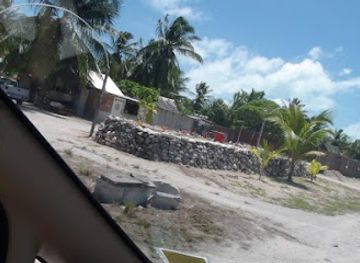
The most recognisable landmarks of the Line Islands are largely natural. Kiritimati's immense low-lying atoll, broad lagoon systems and scattered salt ponds express the scale and fragility of coral-island geography, while its long reef coast creates a powerful sense of open Pacific space. London, the island's administrative centre, is the main point of reference for visitors, although its buildings are modest rather than monumental. The historic airfield and surviving traces of military infrastructure recall the island's wartime strategic role, while Malden Island and parts of Kiritimati are associated with the nuclear-testing era; these remote locations are not ordinary sightseeing stops. Tabuaeran's encircling lagoon and settlement landscape form its defining visual landmark, contrasting with Teraina's freshwater lake and greener vegetation. Caroline Island, officially Millennium Island, is one of the world's easternmost land areas and is valued for its isolation and natural setting, but it is uninhabited and difficult to reach. Together, these places illustrate the Line Islands' significance through geography, maritime history, ecology and the material traces of twentieth-century military activity.
-
Atoll
Kiritimati
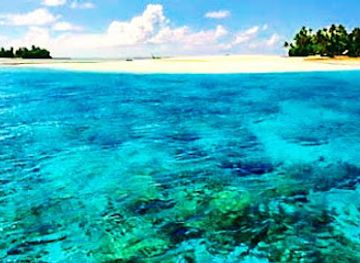
Explore Kiritimati, the world's largest coral atoll, where unspoiled beauty meets rich culture in a secluded tropical paradise.
Explore Line Islands on the map
Plan your trip on one map. See where the top cities, national parks and sights are, and book hotels and experiences in a few clicks.
Best hotels in Line Islands
Best restaurants in Line Islands
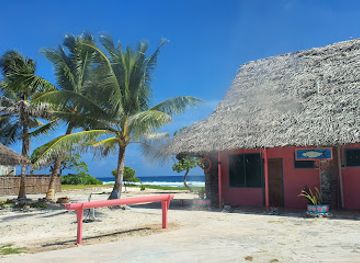
Dining in the Line Islands is simple, locally influenced and shaped by supply logistics. Freshly caught fish, tuna and other seafood are central to many meals, alongside rice, noodles, breadfruit, coconut, taro and imported tinned or packaged foods. Kiritimati has the broadest choice, with modest guesthouse meals, family-run food services, small cafés and practical eateries concentrated around settlements and accommodation. On Tabuaeran and Teraina, visitors should expect fewer options and should arrange meals with their hosts rather than depend on spontaneous restaurant-hopping. Coconut and fish remain important to local food culture, while fresh produce can be seasonal and expensive because much is brought across the ocean. There is little reason to expect an extensive fine-dining scene, but shared meals can offer a more useful introduction to atoll life than formal menus. Carrying snacks and suitable drinking water is sensible, particularly when travelling away from the main settlements or undertaking a full-day lagoon or fishing trip.
-
Atoll
Kiritimati
Discover Kiritimati: A breathtaking atoll offering pristine beaches, vibrant marine life, and rich cultural experiences in the heart of the Pacific.
-
Hotel
Captain Cook Hotel
Discover comfort and local flavors at Captain Cook Hotel in Banana, where relaxation meets authentic seafood dining experiences.
-
Restaurant
Bistro de Myrko
Experience culinary delights at Bistro de Myrko - where vibrant flavors meet cozy ambiance in the heart of Poland.
-
 Hotel
HotelSunset Horizon Fishing Lodge
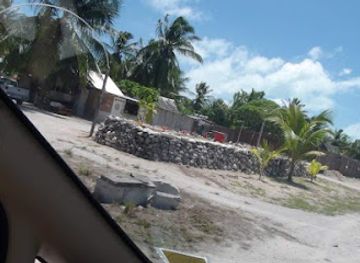
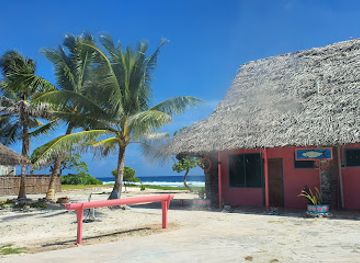
Experience unparalleled tranquility and adventure at Sunset Horizon Fishing Lodge in beautiful Kiribati.
Best bars in Line Islands
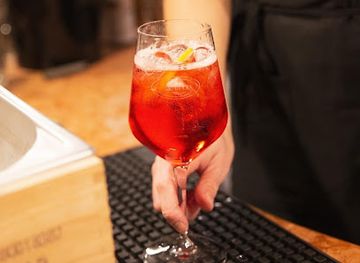
Nightlife in the Line Islands is quiet and community-oriented. Kiritimati has the greatest concentration of places to meet in the evening, including casual hotel or guesthouse bars, small local meeting places and occasional music or social events, but it does not have a substantial nightclub district. On Tabuaeran and Teraina, evening life generally centres on family gatherings, churches, community activities and conversation rather than late-night commercial entertainment. Alcohol availability varies and should never be assumed on the outer islands. Visitors should dress and behave discreetly around villages and religious activities, and should follow the arrangements of their accommodation. The absence of a large nightlife scene is part of the region's remote character: evenings are better suited to watching the sky, listening to the lagoon and learning about island life than searching for a scheduled programme of bars and clubs.
-
Atoll
Kiritimati
Explore Kiritimati Atoll: A Tropical Paradise of Pristine Beaches, Vibrant Marine Life, and Rich Cultural Heritage.
-
Hotel
Captain Cook Hotel
Discover the serene comforts and local flavors at Captain Cook Hotel in Banana, Kiribati – your perfect getaway in paradise.
-
Restaurant
Bistro de Myrko
Discover the rich flavors and cozy ambiance at Bistro de Myrko, a culinary gem perfect for unforgettable dining experiences.
-
Resort hotel
Lagoon View Resort
Discover tranquility and natural beauty at Lagoon View Resort, the perfect getaway for tourists seeking relaxation and adventure in London.
Best nightclubs in Line Islands
Nightlife in the Line Islands is quiet and community-oriented. Kiritimati has the greatest concentration of places to meet in the evening, including casual hotel or guesthouse bars, small local meeting places and occasional music or social events, but it does not have a substantial nightclub district. On Tabuaeran and Teraina, evening life generally centres on family gatherings, churches, community activities and conversation rather than late-night commercial entertainment. Alcohol availability varies and should never be assumed on the outer islands. Visitors should dress and behave discreetly around villages and religious activities, and should follow the arrangements of their accommodation. The absence of a large nightlife scene is part of the region's remote character: evenings are better suited to watching the sky, listening to the lagoon and learning about island life than searching for a scheduled programme of bars and clubs.
-
International airport
Cassidy International Airport
Discover the beauty of Kiribati through Cassidy International Airport, your gateway to breathtaking islands and rich cultural experiences in the Pacific.
-
Resort hotel
Lagoon View Resort
Discover the serene beauty of Kiritimati at Lagoon View Resort, where relaxation meets adventure in a tropical paradise.
-
Yacht club
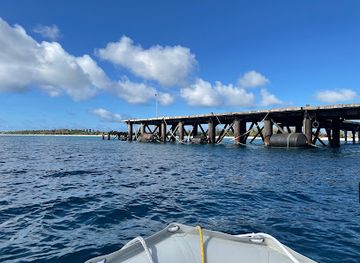
Kiritimati Yacht Klub
Discover the charm of Kiritimati Yacht Klub, where relaxation meets adventure in the heart of the Pacific Ocean.

Best shops in Line Islands
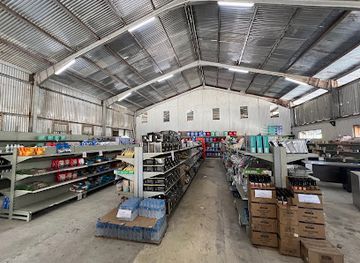
Shopping in the Line Islands is limited and practical, with the widest selection found on Kiritimati. Small shops and market-style stalls may carry food, drinks, toiletries, clothing and basic household goods, but stock depends on shipping and flights rather than a constant retail supply. Visitors may find locally made woven items, pandanus products, shell work or other handicrafts through community contacts, although availability varies and designs are not standardised. On Tabuaeran and Teraina, shopping opportunities are considerably smaller, so bring specialist equipment, medicines, reef supplies and personal necessities from the main gateway. Local fish and coconut products can sometimes be obtained through informal arrangements, but visitors should agree prices and respect customary ownership. Do not buy coral, archaeological material, protected wildlife products or shells taken from sensitive habitats. Souvenirs are best chosen from responsibly made crafts or durable locally produced items, while the most valuable purchase is often a better understanding of island skills and atoll life rather than a commercial product.
-
Supermarket
Wishing Star
Discover the vibrant offerings of Wishing Star, London's premier supermarket for fresh, local, and international products.
-
Bakery
Kiritimati ben
Discover the taste of Kiritimati at Kiritimati Ben, a bakery offering fresh pastries and breads in a charming atmosphere.
-
Home goods store
Set Vsat internet Shopping
Discover the heart of local shopping at Set Vsat Internet Shopping in Tabwakea, where unique home goods meet Kiribati's vibrant culture.
-
Store
Buokam Store
Explore the local treasures at Buokam Store in Kiritimati, offering a unique selection of goods and a glimpse into island culture.

Get your free copy of our complete guide to Line Islands, delivered straight to you.
Everything on this page, from attractions and restaurants to essentials and local phrases, in one PDF you can read offline, print or share.
Already have an account? Sign in
Your Line Islands guide is ready.
We'll send it to · Not you? Sign out

Getting your guide ready…
We are putting together a fresh copy of the Line Islands guide. This can take up to a minute.
This can take a few moments. If your browser asks, choose Allow so the download can start. You'll find the guide in your Downloads folder.
Nothing happened? Download it again
Sorry, the guide is taking longer than usual. Please try again in a minute, or get it by email instead.
Line Islands essentials
Currency and Payment
Safety
Emergency Situations
Do's and Don'ts
Local Tips
From Eve
Local phrases worth knowing
You don't need to get them perfect. A few words go a long way, and locals appreciate the effort.
Basics
| English | Local | Say it |
|---|---|---|
| Hello | Mauri | [Mow-ree] |
| Goodbye | Aere raoi | [Ah-reh rah-oy] |
| Yes | Ae | [Ay] |
| No | Kaua | [Kow-ah] |
| Please/You're welcome | Tama ne | [Tah-mah neh] |
| Thank you | Maurin te kabu | [Mow-reen teh kah-boo] |
| Excuse me/Sorry | Tama te mauri | [Tah-mah teh mow-ree] |
| How are you? | Te taetae? | [Teh tie-tie?] |
| Fine. And you? | Iko na. Ko na? | [Ee-koh nah. Koh nah?] |
| Do you speak English? | E na te taetae e English? | [Eh nah teh tie-tie eh English?] |
| I don't understand | Nara te taetae | [Nah-rah teh tie-tie] |
Eating & Drinking
| English | Local | Say it |
|---|---|---|
| I'd like to see the menu, please | E riki n te menua, tama ne | [Eh ree-kee nah teh meh-nu-ah, tah-mah neh] |
| I don't eat meat | Nara te kai i te mea | [Nah-rah teh kah-ee ee teh meh-ah] |
| Cheers! | Kia orana! | [Kee-ah oh-rah-nah!] |
| I would like to pay, please | E riki n te tebu, tama ne | [Eh ree-kee nah teh teh-boo, tah-mah neh] |
Emergencies
| English | Local | Say it |
|---|---|---|
| Help! | Tama te raoi! | [Tah-mah teh rah-oy!] |
| Go away! | Tama ni! | [Tah-mah nee!] |
| Call the Police! | E taetae n te Police! | [Eh tie-tie nah teh Poh-lees!] |
| Call a doctor! | E taetae n te dokita! | [Eh tie-tie nah teh doh-kee-tah!] |
| I'm lost | E na te manman | [Eh nah teh mahn-mahn] |
| I'm ill | E na te mauri | [Eh nah teh mow-ree] |
Shopping
| English | Local | Say it |
|---|---|---|
| I'd like to buy... | E riki n te raoi... | [Eh ree-kee nah teh rah-oy...] |
| I'm just looking | E na te raoi | [Eh nah teh rah-oy] |
| How much is it? | Te aoti aei? | [Teh ow-tee ah-eh?] |
| That's too expensive | Te aei e aei raoi | [Teh ah-eh eh ah-eh rah-oy] |
| Can you lower the price? | E na te meitaki aei? | [Eh nah teh may-tah-kee ah-eh?] |
Time & Numbers
| English | Local | Say it |
|---|---|---|
| What time is it? | Te aei i te taime? | [Teh ah-eh ee teh tie-meh?] |
| It's one o'clock | Te aei e aitu o'clock | [Teh ah-eh eh eye-too oh-clock] |
| Half past (10) | Te aei e aiti riki | [Teh ah-eh eh eye-tee ree-kee] |
| Morning | Mauri | [Mow-ree] |
| Afternoon | Te tiku | [Teh tee-koo] |
| Evening | Te kapu | [Teh kah-poo] |
| Yesterday | I te aei | [Ee teh ah-eh] |
| Today | I te aei | [Ee teh ah-eh] |
| Tomorrow | I te aei riki | [Ee teh ah-eh ree-kee] |
| 1 | Toru | [Toh-roo] |
| 2 | Rua | [Roo-ah] |
| 3 | Toru | [Toh-roo] |
| 4 | Biri | [Bee-ree] |
| 5 | Nai | [Nigh] |
| 6 | Nai riki | [Nigh ree-kee] |
| 7 | Toru riki | [Toh-roo ree-kee] |
| 8 | Biri riki | [Bee-ree ree-kee] |
| 9 | Nai riki | [Nigh ree-kee] |
| 10 | Nai riki | [Nigh ree-kee] |
Transport & Directions
| English | Local | Say it |
|---|---|---|
| Where's a/the...? | Te kairi a...? | [Teh kye-ree ah...?] |
| What's the address? | Te aei n te adires? | [Teh ah-eh nah teh ah-deer-es?] |
| Can you show me (on the map)? | E na te taetae n te map? | [Eh nah teh tie-tie nah teh map?] |
| When's the next (bus)? | Te aei n te bus? | [Teh ah-eh nah teh bus?] |
| A ticket (to ....) | E ticket (n ...) | [Eh ticket (nah ...)] |
History of Line Islands
Early Polynesian Settlement
The Line Islands were reached by Polynesian navigators during the wider eastward settlement of the Pacific, although the timing and permanence of occupation varied between islands. Knowledge of currents, stars, reef passages and seasonal winds made these low atolls navigable despite their isolation. Archaeological traces and oral traditions indicate that voyaging, fishing and the management of coconut and other useful plants shaped early life. Some islands were later uninhabited or only intermittently visited, reflecting the difficulty of sustaining communities on atolls with limited freshwater and soil.
European Exploration and Island Naming
European voyagers charted several Line Islands from the sixteenth century onwards, adding names that remain familiar alongside their Gilbertese and traditional names. Captain James Cook sighted Christmas Island in 1777, naming it for the date of his visit. European mapping gradually incorporated the islands into Pacific shipping knowledge, though their remoteness limited sustained settlement. Names such as Christmas, Fanning and Washington reflect this period, while contemporary Kiribati usage increasingly restores or preserves local names including Kiritimati, Tabuaeran and Teraina.
British Administration and the Gilbert and Ellice Islands
Britain declared a protectorate over the Gilbert and Ellice Islands in the late nineteenth century, bringing the Line Islands into a colonial administrative framework. The group was later administered as part of the Gilbert and Ellice Islands Colony, despite the great ocean distances separating its atolls. Colonial influence was visible in copra production, Christian mission activity, schools, shipping arrangements and imported administration. The islands remained small and remote communities rather than densely settled colonial centres, with local custom and family organisation continuing to shape daily life.
Coconut Production and Ocean Transport
For much of the colonial period, copra made from dried coconut meat was the main commercial resource of the inhabited Line Islands. Coconut palms provided food, construction material and fuel as well as an export crop, while ships connected isolated communities with administrative centres and markets. The trade encouraged settlement around landing places and reinforced the importance of lagoon and reef knowledge. Its legacy remains visible in coconut groves and in the continued importance of small-scale fishing, subsistence cultivation and maritime supply routes.
The Second World War and Strategic Airfields
The Second World War increased the strategic importance of Kiritimati, whose broad, flat atoll could support military aviation and logistical activity. Airfield development and wartime infrastructure altered the island's transport links and left traces of the period in its built environment, although much has weathered or disappeared in the tropical climate. The war also demonstrated how an apparently remote atoll could become significant because of its position across Pacific air and sea routes.
Nuclear Testing at Malden and Kiritimati
The Line Islands became part of the history of atmospheric nuclear testing during the 1950s and 1960s. Britain conducted Operation Grapple tests at Malden Island and later at Christmas Island in 1957 and 1958; the United States carried out further tests in the central Pacific in 1962. The operations brought military personnel, construction and air traffic to otherwise isolated atolls, while exposure, environmental effects and the experiences of local and former island workers remain subjects of enduring concern. Access to testing sites is limited and conditions are remote.
Independence and the Modern Republic of Kiribati
The Gilbert Islands and associated Line and Phoenix Islands became the independent Republic of Kiribati in 1979. The new country inherited a scattered territory extending across a huge area of the Pacific, making transport, public services and environmental management especially challenging. The Line Islands have since developed as a small outer-island region centred on Kiritimati, with Tabuaeran and Teraina retaining distinct community identities. Contemporary concerns include freshwater security, climate change, coastal erosion, waste management and the protection of marine and bird habitats.
Line Islands in Photos
Browse through our photo collection highlighting the charm and character of the destination.
Neighbouring regions of Line Islands
The closest regions to Line Islands, if you have time for more than one.
-

-

-


Swipe for more regions
Explore more

Explore more of Kiribati
Discover Kiribati: A Pacific paradise with breathtaking beaches, rich culture, and vibrant marine life. Perfect for those seeking tranquility and adventure off the beaten path.
Explore Kiribati