

Wat Luang Travel Guide
Free Guide: Discover Wat Luang in Pakse: A historic temple blending Lao and French architecture, offering a serene glimpse into local Buddhist culture.


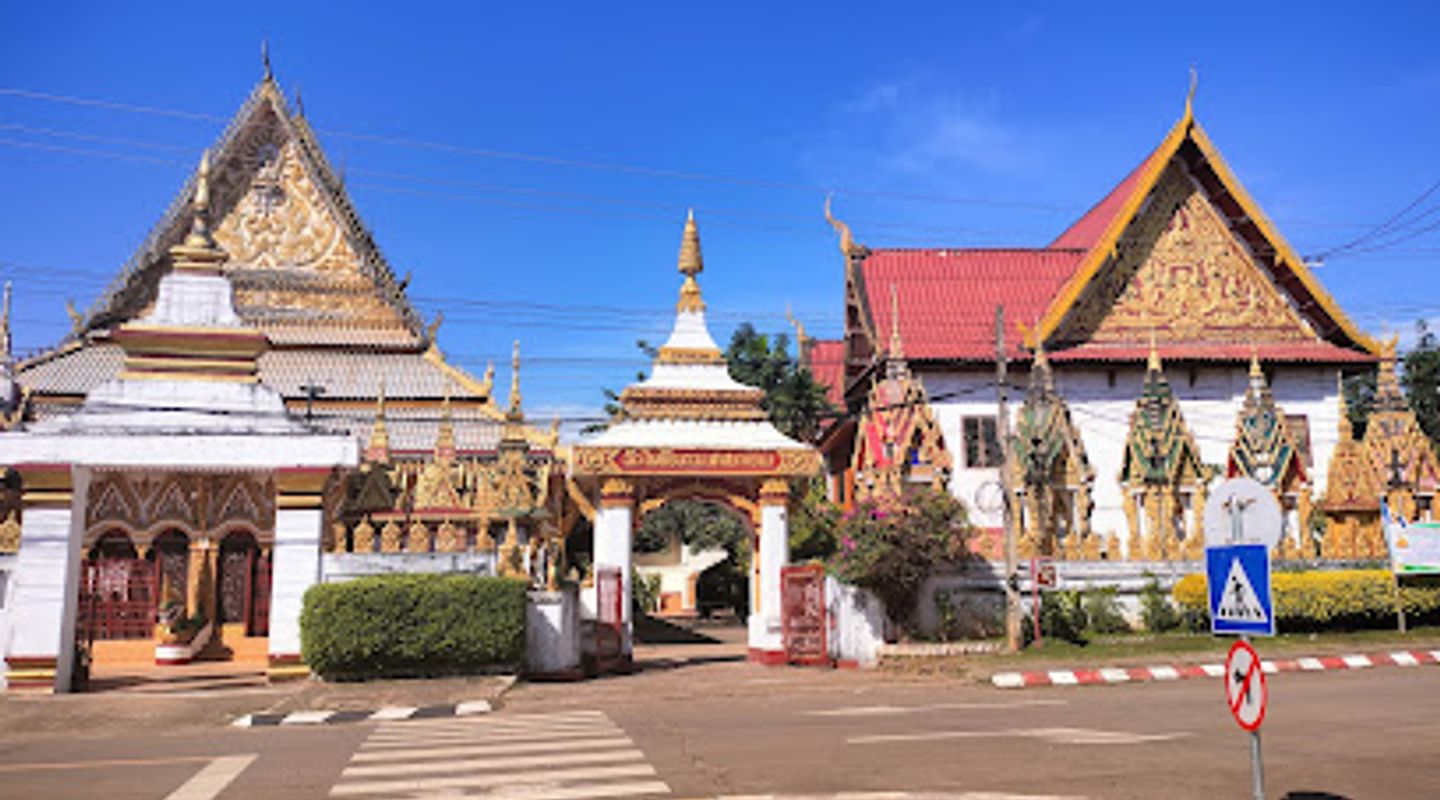
A brief summary of Wat Luang
Discover Wat Luang in Pakse: A historic temple blending Lao and French architecture, offering a serene glimpse into local Buddhist culture.
Wat Luang, the oldest and most significant temple in Pakse, was established in 1935 and stands as a testament to Lao Buddhist traditions. Serving as a center for worship, education, and community activities, its architecture showcases a blend of Lao and French colonial influences.
- Address
- 4QCX+P42, 13, Pakse
- Phone
Getting there
Walking
Tuk-tuk
Discover more about Wat Luang
Overview
Wat Luang, considered the most sacred temple in Pakse, is a prominent religious site reflecting the cultural heritage of Southern Laos. Established in 1935 during the French colonial period, the temple initially served as a Buddhist school, teaching English, business, and cultural studies to monks. Today, it remains a vital center for Buddhist worship and community activities in Pakse.The temple's architecture features a traditional Lao style, evident in its tiled roofs, concrete pillars, and wooden doors. The walls are adorned with murals depicting the life of Buddha and various myths. Inside the congregation hall, or "sim," a large golden Buddha image is displayed in the "Calling the Earth to Witness" mudra. Local belief holds that Buddha's footprint can be found on the temple grounds, attracting devotees.Visitors can explore the temple grounds, admire treasured artifacts, and discover remarkable items from the area. The temple also houses funerary shrines containing ashes of the Lao royal family and a former prime minister. The temple is situated near the Xe Don River, offering opportunities for scenic river cruises.
Evendo Review Centre
 Google
Guest reviews
Explore Wat Luang on the map
A handpicked selection of must-see spots near Wat Luang, mapped for you.
Get your free copy of our complete guide to Wat Luang, delivered straight to you.
Everything on this page, from opening hours and how to get there to Eve’s tips and the best time to go, in one PDF you can read offline, print or share.
Already have an account? Sign in
Your Wat Luang guide is ready.
We'll send it to · Not you? Sign out

Getting your guide ready…
We are putting together a fresh copy of the Wat Luang guide. This can take up to a minute.
This can take a few moments. If your browser asks, choose Allow so the download can start. You'll find the guide in your Downloads folder.
Nothing happened? Download it again
Sorry, the guide is taking longer than usual. Please try again in a minute, or get it by email instead.
Other nearby places you may find interesting
The closest places of the same kind, if this one is not quite what you had in mind.
-
-
-
-
-


Swipe for more places
More to explore near Wat Luang

 Best experiences near Wat Luang
 Best hotels near Wat Luang
 Best landmarks near Wat Luang
 Best attractions near Wat Luang
 Best shops near Wat Luang
 Best restaurants near Wat Luang
 Best bars near Wat Luang
Do you manage this location?
Take control to get all the benefits, like improved information, better appearance, and stronger visibility across AI-powered discovery.
Explore more

Explore more of Golden Triangle
Discover the Golden Triangle in Laos: A Cultural Crossroads of History, Nature, and Adventure in Southeast Asia.
Explore Golden Triangle
Explore more of Laos
Discover Laos: A tranquil escape with breathtaking landscapes, rich culture, and warm hospitality. Perfect for adventure seekers and those craving serene beauty.
Explore Laos
