

Free Ganta Travel Guide & Mobile App
Plan your Ganta trip with Evendo. Get free guides to top attractions, restaurants, hotels, and bars. Web access or download the mobile app.


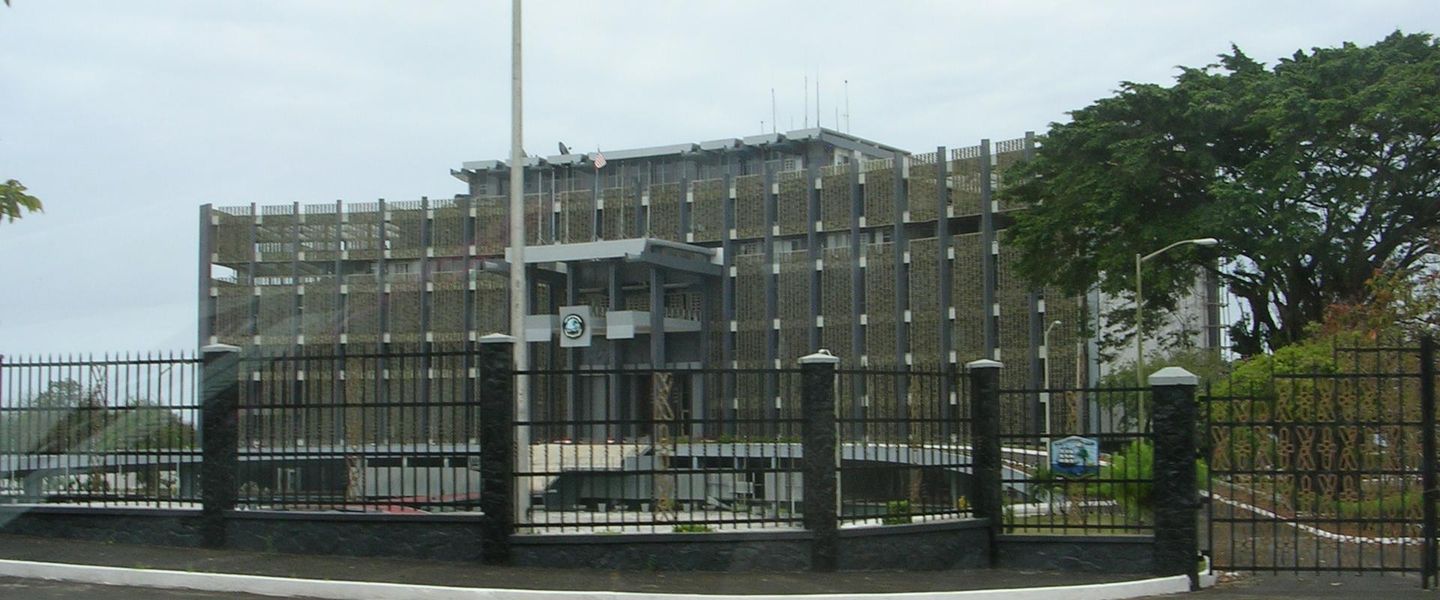


Ganta, Liberia brings together Mano and Gio heritage, busy markets, red-earth roads and access to Nimba County’s forests, farms and mountain landscapes.
A Commercial Crossroads
Ganta lies in Liberia’s north-east, in Nimba County, roughly 170 kilometres from Monrovia by road. Its position near major routes linking the capital with Guinea and Côte d’Ivoire has shaped the city’s character: Ganta is less a conventional sightseeing centre than a busy regional crossroads where trade, transport and everyday life meet. The town’s markets, roadside stalls and small businesses serve communities across the surrounding countryside, while red-earth verges and humid greenery provide a distinctly West African setting.Read more about Ganta
Mano and Gio Cultural Landscapes
From Town to Forest Country
When is the best time to visit Ganta?
Best: December–February · 30°C| Month | High (°C) | Rainfall (mm) |
|---|---|---|
| January (best) | 30 | 3 |
| February (best) | 30 | 3 |
| March | 31 | 3 |
| April | 31 | 4 |
| May | 31 | 8 |
| June | 30 | 16 |
| July | 30 | 24 |
| August | 29 | 23 |
| September | 30 | 19 |
| October | 30 | 10 |
| November | 30 | 5 |
| December (best) | 30 | 4 |
Getting to and around Ganta
How to get there
Transportation
Explore Ganta on the map
Plan your Ganta trip on one map. See where the top attractions, landmarks, restaurants, bars and hotels are, find what's near where you're staying, and book hotels and experiences in a few clicks.
Best hotels in Ganta
Best restaurants in Ganta
Ganta’s food scene is informal, local and closely tied to the market economy. Rice is the everyday staple, often served with cassava leaves, potato greens, okra, pepper sauces, fish, chicken or meat, while fried plantain, roasted maize and cassava-based snacks appear at roadside stalls. Beans, grilled meat and simple one-pot dishes are common in small eateries, where meals are generally served in an unhurried, practical setting. Market traders and modest cafés provide a better sense of local eating habits than a formal restaurant district, although menus and opening patterns can vary. The surrounding agricultural region supplies much of the produce, and seasonal availability influences what is offered. Visitors should choose busy, clean-looking food stalls, carry drinking water and ask about ingredients when necessary, particularly if unfamiliar with strong chilli, palm oil or locally prepared sauces.
-
Anhui restaurant
Samuka Kromah
Discover authentic Anhui cuisine at Samuka Kromah in Kahnple, Liberia - where tradition meets flavor in every dish.
14 min drive · 4.7 km from city centre

Get your free copy of our complete guide to Ganta, delivered straight to you.
Everything on this page, from attractions and restaurants to essentials and local phrases, in one PDF you can read offline, print or share.
Already have an account? Sign in
Your Ganta guide is ready.
We'll send it to · Not you? Sign out

Getting your guide ready…
We are putting together a fresh copy of the Ganta guide. This can take up to a minute.
This can take a few moments. If your browser asks, choose Allow so the download can start. You'll find the guide in your Downloads folder.
Nothing happened? Download it again
Sorry, the guide is taking longer than usual. Please try again in a minute, or get it by email instead.
Ganta essentials
Currency and Payment
Safety
Emergency Situations
Do's and Don'ts
Local Tips
From Eve
Local phrases worth knowing
You don't need to get them perfect. A few words go a long way, and locals appreciate the effort.
Basics
| English | Local | Say it |
|---|---|---|
| Hello | Kia | [kee-ah] |
| Goodbye | Tata | [tah-tah] |
| Yes | Ee | [ee] |
| No | Ney | [nay] |
| Please/You're welcome | Ngi | [ngi] |
| Thank you | Nga to | [ngah toh] |
| Excuse me/Sorry | Nya kpo | [nyah kpo] |
| How are you? | Yoo na leh? | [yoh nah lay] |
| Fine. And you? | Nyo. You? | [nyoh. yoo] |
| Do you speak English? | Ee to gie Gbee kee? | [ee toh gee-beh kee] |
| I don't understand | Nga to leh | [ngah toh lay] |
Eating & Drinking
| English | Local | Say it |
|---|---|---|
| I'd like to see the menu, please | Nga leh zay menu, ndo | [ngah lay zay meh-noo, ndoh] |
| I don't eat meat | Nga to kai nyama | [ngah toh kai nyah-mah] |
| Cheers! | Noi | [noy] |
| I would like to pay, please | Nga leh zay pay, ndo | [ngah lay zay pay, ndoh] |
Emergencies
| English | Local | Say it |
|---|---|---|
| Help! | Gba! | [gba] |
| Go away! | Wuleh! | [woo-lay] |
| Call the Police! | Kai police! | [kai police] |
| Call a doctor! | Kai doctor! | [kai doctor] |
| I'm lost | Nga leh won | [ngah lay wohn] |
| I'm ill | Nga leh sick | [ngah lay sick] |
Shopping
| English | Local | Say it |
|---|---|---|
| I'd like to buy... | Nga to gba... | [ngah toh gba] |
| I'm just looking | Nga to leh zay go | [ngah toh lay zay goh] |
| How much is it? | Nga to zay kia? | [ngah toh zay kee-ah] |
| That's too expensive | Zay wuleh | [zay woo-lay] |
| Can you lower the price? | Ee to kai yoo price? | [ee toh kai yoo price] |
Time & Numbers
| English | Local | Say it |
|---|---|---|
| What time is it? | Kia tah yah? | [kee-ah tah yah] |
| It's one o'clock | Yah leh one | [yah lay one] |
| Half past (10) | Half past (10) | [Half past (10)] |
| Morning | Morning | [Morning] |
| Afternoon | Afternoon | [Afternoon] |
| Evening | Evening | [Evening] |
| Yesterday | Yesterday | [Yesterday] |
| Today | Today | [Today] |
| Tomorrow | Tomorrow | [Tomorrow] |
| 1 | 1 | [1] |
| 2 | 2 | [2] |
| 3 | 3 | [3] |
| 4 | 4 | [4] |
| 5 | 5 | [5] |
| 6 | 6 | [6] |
| 7 | 7 | [7] |
| 8 | 8 | [8] |
| 9 | 9 | [9] |
| 10 | 10 | [10] |
Transport & Directions
| English | Local | Say it |
|---|---|---|
| Where's a/the...? | Way gba...? | [way gba] |
| What's the address? | Kia tah address? | [kee-ah tah address] |
| Can you show me (on the map)? | Ee to kai yoo (on the map)? | [ee toh kai yoo (on the map)] |
| When's the next (bus)? | Tah yah next (bus)? | [tah yah next (bus)] |
| A ticket (to ....) | A ticket (to ....) | [A ticket (to ....)] |
History of Ganta
Mano and Gio Homelands
The area around present-day Ganta forms part of a long-established cultural landscape associated particularly with Mano and Gio communities. Before the development of the modern town, settlement and movement were organised through villages, farms, kinship networks and regional exchange rather than a single urban centre. Rice cultivation, cassava, plantains and other forest-zone crops supported local life, while paths connected communities across what is now Nimba County and neighbouring Guinea and Côte d’Ivoire. These societies had their own political authorities, social institutions and artistic traditions, and their influence remains visible in the languages, family connections and cultural practices of the region.
Trade Routes and Colonial-Era Change
During the nineteenth and early twentieth centuries, the interior of Liberia became increasingly connected to coastal political and commercial networks. Traders, officials, missionaries and migrants travelled between the coast and the forested north-east, bringing new goods, religious institutions and administrative relationships. Ganta developed as a settlement on these inland routes, benefiting from its position between communities and markets rather than from a single monumental foundation. The arrival of roads and more regular transport gradually increased the town’s importance, linking local agricultural production with larger commercial centres and strengthening its role as a gateway into Nimba.
Nimba County and Urban Growth
Nimba County was established in 1964, and its administrative and economic development helped consolidate Ganta’s regional role. The town expanded as a market and transport centre serving farms, villages and mining-related settlements farther north. Public institutions, churches, schools, health facilities and small businesses appeared alongside older trading activity, creating the mixed urban form seen today. Ganta’s growth was also connected to Liberia’s wider efforts to extend roads and state services beyond the coastal capital. Its importance rests less on monumental architecture than on the movement of people, produce, information and commerce through the Nimba region.
War, Displacement and Reconstruction
Liberia’s civil wars deeply affected Nimba County and Ganta. The region experienced fighting, displacement, disruption to trade and the destruction or weakening of public services, while communities across the county endured profound social hardship. The town’s position on routes towards Guinea also made it part of wider regional movements of refugees and combatants. After the wars ended, reconstruction focused on restoring roads, markets, schools, health services and local commerce. Ganta’s contemporary atmosphere therefore reflects both recovery and continuity: old trading connections remain important, while newer businesses and institutions support a growing population.
A Contemporary Regional Hub
Today Ganta is one of the principal commercial centres of northern Liberia, even though it remains modest in scale and tourism infrastructure. Its markets connect rural producers with consumers, and its roads link the capital with Nimba’s interior and neighbouring countries. Mano and Gio cultural identities continue to shape social life, alongside Christian and Muslim communities and people who have moved to the town for work, education or trade. Ganta’s modern history is best understood through this combination of regional mobility, agricultural commerce, post-war rebuilding and cultural continuity rather than through a concentrated historic centre.
Ganta in Photos
Browse through our photo collection highlighting the charm and character of the destination.
Cities near Ganta
The closest cities to Ganta, if you have time for more than one stop.
-

-

-

-

-


Swipe for more cities
Explore more

Explore more of Liberia
Discover Liberia: where pristine beaches meet lush rainforests, and vibrant culture blends with rich history in the heart of West Africa.
Explore Liberia