

Free Grevenmacher Travel Guide & Mobile App
Plan your Grevenmacher trip with Evendo. Get free guides to top attractions, restaurants, hotels, and bars. Web access or download the mobile app.


Grevenmacher on Luxembourg’s Moselle blends vineyard walks, wine cellars, riverside views and historic streets with gentle cross-border charm.
Where the Moselle Shapes the Town
Grevenmacher lies on Luxembourg’s eastern border, where the Moselle forms a broad, tranquil boundary with Germany. Vineyards climb the slopes behind the town, while the riverfront opens into walking paths, cycle routes and views across the water. The compact centre is easy to explore on foot, with streets leading between traditional houses, small cafés and buildings that reflect the town’s long history as a trading and wine-producing settlement.Read more about Grevenmacher
Wine, Heritage and Everyday Life
Exploring the Moselle Valley
When is the best time to visit Grevenmacher?
Best: May–June, September · 23–28°C| Month | High (°C) | Rainfall (mm) |
|---|---|---|
| January | 5 | 60 |
| February | 6 | 50 |
| March | 11 | 50 |
| April | 19 | 40 |
| May (best) | 25 | 50 |
| June (best) | 28 | 60 |
| July | 30 | 70 |
| August | 30 | 70 |
| September (best) | 23 | 50 |
| October | 17 | 50 |
| November | 10 | 60 |
| December | 7 | 60 |
Getting to and around Grevenmacher
How to get there
Transportation
Best attractions in Grevenmacher
Grevenmacher’s principal attractions gather around the river, vineyards and local culture. The Moselle Museum presents the history of life and work along the river, with particular attention to wine-growing traditions and regional heritage. At the Butterfly Garden, free-flying tropical butterflies move among lush plants in a warm conservatory, creating a striking contrast with the surrounding Moselle landscape. The riverside promenade and cycle paths offer open views towards Germany, while the compact centre rewards a slow walk through older streets and small public spaces. Beyond the built-up area, vineyard lanes lead towards elevated views over the valley and provide an accessible introduction to Luxembourg’s wine country. The parish church of Saint Lawrence adds a historic and architectural focus, while local wine cellars connect sightseeing with the living agricultural culture of the region. Grevenmacher is not a city of blockbuster museums; its appeal lies in the relationship between modest urban heritage, the river and the cultivated hills.
-
Tourist attraction
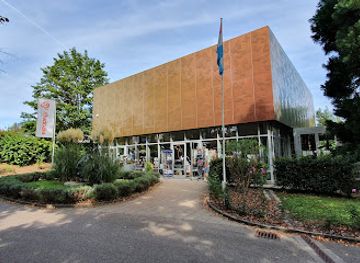
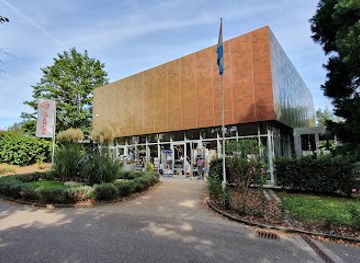
Butterfly Garden, Grevenmacher
Luxembourg’s Butterfly Garden in Grevenmacher offers a magical indoor rainforest filled with vibrant butterflies, tropical plants, and family-friendly experiences year-round.
8 min walk · 0.7 km from city centre
-
Winery
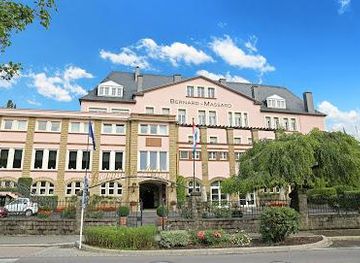
Caves Bernard-Massard
Discover Luxembourg's sparkling wine heritage at Caves Bernard-Massard, where historic cellars, scenic river views, and expert tastings await in Grevenmacher.
6 min walk · 0.5 km from city centre
-
Tourist attraction
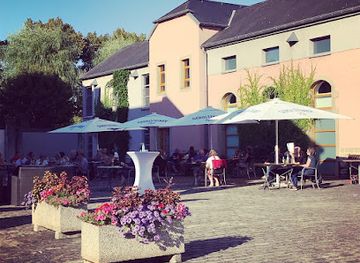
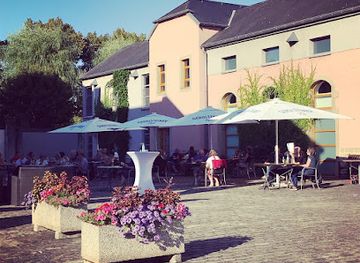
Kulturhuef Museum
Experience the artistry of printing and playing card history at Kulturhuef Museum, set in scenic Grevenmacher along Luxembourg’s famed Moselle valley.
7 min walk · 0.6 km from city centre
-
Tourist attraction
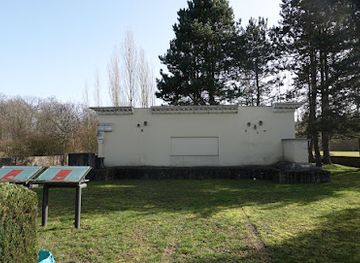
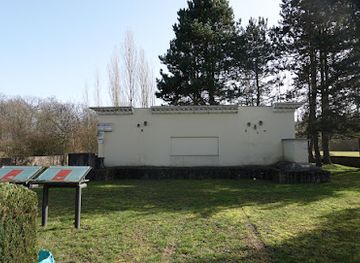
Römergrab
Discover Grevenmacher’s Römergrab, an ancient Roman tomb nestled amid Moselle vineyards, offering a fascinating glimpse into Luxembourg’s archaeological past.
11 min drive · 3.6 km from city centre
Best landmarks in Grevenmacher
The parish church of Saint Lawrence is Grevenmacher’s principal historic religious landmark, anchoring the older town and reflecting the importance of parish life in the Moselle community. The Moselle Museum is significant less for monumental architecture than for the way it preserves the material and social history of the river, wine production and local work. Along the waterfront, the promenade and river edge form a defining civic landscape, with the Moselle itself serving as Grevenmacher’s most important geographical landmark and a reminder of the town’s cross-border position. The compact historic centre contains traditional buildings and streets shaped by commerce, religion and domestic life rather than by grand palaces. Beyond them, the vineyard slopes are cultural landmarks in their own right: their ordered rows, paths and wine-growing estates express the agricultural history that has given Grevenmacher its identity.
-
Animal park
Butterfly Garden, Grevenmacher
Discover Luxembourg’s lush Butterfly Garden in Grevenmacher—an indoor tropical paradise where hundreds of vibrant butterflies soar through verdant greenery and blooming flowers.
9 min walk · 0.7 km from city centre
-
Museum
Kulturhuef Museum
Discover printing heritage and the art of playing cards at Grevenmacher’s Kulturhuef Museum, a dynamic cultural space set along Luxembourg’s scenic Moselle River.
7 min walk · 0.6 km from city centre
-
Tourist attraction
Römergrab
Explore Grevenmacher’s Römergrab, an atmospheric Roman tomb set amidst Moselle vineyards, offering a unique journey into Luxembourg’s ancient past for history buffs and explorers.
11 min drive · 3.6 km from city centre
-
Observation deck
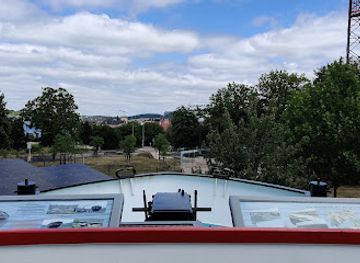
MACHERA / Schiffsbug
MACHERA / Schiffsbug delivers panoramic Moselle River views from a striking, ship-inspired observation deck in Grevenmacher—ideal for tranquil escapes and local encounters.
10 min walk · 0.8 km from city centre
Explore Grevenmacher on the map
Plan your Grevenmacher trip on one map. See where the top attractions, landmarks, restaurants, bars and hotels are, find what's near where you're staying, and book hotels and experiences in a few clicks.
Best hotels in Grevenmacher
Best restaurants in Grevenmacher
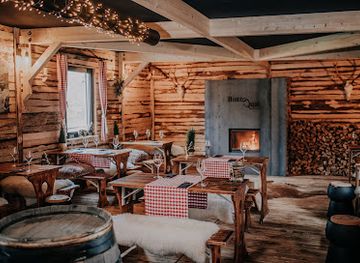
Grevenmacher’s dining culture is rooted in the Luxembourg Moselle, where local restaurants draw on river-valley produce, Luxembourgish home cooking and influences from neighbouring Germany and France. Regional menus may include hearty meat dishes, seasonal vegetables, freshwater fish and specialities such as Rieslingspaschtéit, a pastry filled with marinated meat and Riesling. Wine is central to the table: the surrounding vineyards produce Riesling, Auxerrois, Pinot Blanc, Pinot Gris and Crémant, Luxembourg’s sparkling wine. Restaurants and cafés in and around the centre provide the main places to eat, while cellar visits and producer tastings offer a more direct connection with local viticulture. The town’s food scene is relatively intimate rather than highly specialised, with menus and opening patterns that can reflect the season. Cross-border proximity also brings German and French influences without displacing the distinct Moselle wine tradition.
-
Restaurant
Bistro Quai
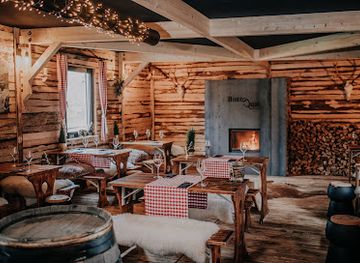
Discover Bistro Quai: A charming restaurant by the Moselle River serving delicious local cuisine in Grevenmacher.
5 min walk · 0.4 km from city centre
-
Italian
Ristorante Cento Vini
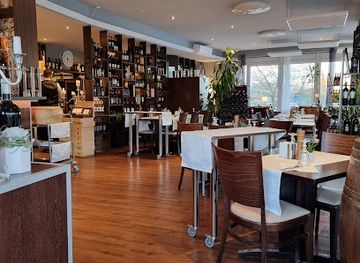
Experience authentic Italian cuisine at Ristorante Cento Vini in Grevenmacher – where each dish tells a story of tradition and flavor.
7 min walk · 0.6 km from city centre
-
Restaurant
Restaurant Savory
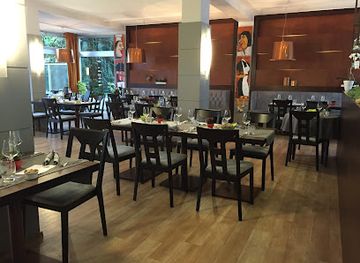
Experience exquisite modern European cuisine at Restaurant Savory in Grevenmacher – where culinary art meets warm hospitality.
5 min walk · 0.4 km from city centre
-
Italian
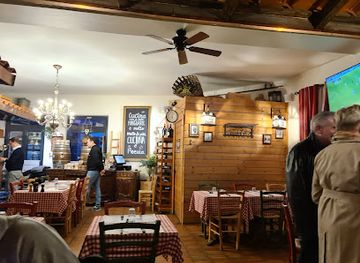
Ristorante - Pizzeria La Taverna
Experience authentic Italian flavors in the heart of Grevenmacher at Ristorante - Pizzeria La Taverna, where every meal is a celebration.
4 min walk · 0.3 km from city centre


Best bars in Grevenmacher
Grevenmacher has a restrained evening scene shaped by cafés, hotel bars, wine-focused venues and restaurants rather than large nightclubs. The most characteristic evening activity is a tasting of Moselle wines or Crémant, often in a cellar or hospitality setting where producers explain the vineyards and local varieties. Warmer months bring a more sociable atmosphere along the river and in outdoor seating areas, while cultural or seasonal events can provide additional evening entertainment. Traditional cafés and small bars serve as places for conversation, but opening patterns may be limited compared with Luxembourg City, and late-night transport is correspondingly less reliable. Visitors seeking live music, theatre or a broader club programme generally look towards the capital or larger regional centres. After dark, vineyard paths and quieter river stretches should be treated as rural routes rather than illuminated nightlife areas.
-
Restaurant
Bistro Quai
Discover Bistro Quai in Grevenmacher, where delightful culinary experiences and scenic views create the perfect dining escape.
5 min walk · 0.4 km from city centre
-
Italian
Ristorante Cento Vini
Experience authentic Italian cuisine at Ristorante Cento Vini in Grevenmacher, where every dish tells a story of tradition and flavor.
7 min walk · 0.6 km from city centre
-
Restaurant
Restaurant Savory
Experience the best of modern European cuisine at Restaurant Savory in Grevenmacher, where local ingredients meet culinary artistry.
5 min walk · 0.4 km from city centre
-
Italian
Ristorante - Pizzeria La Taverna
Experience authentic Italian cuisine and delicious pizzas at Ristorante - Pizzeria La Taverna in Grevenmacher, a must-visit for food lovers.
4 min walk · 0.3 km from city centre
Best nightclubs in Grevenmacher
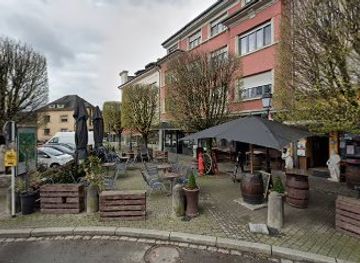
Grevenmacher has a restrained evening scene shaped by cafés, hotel bars, wine-focused venues and restaurants rather than large nightclubs. The most characteristic evening activity is a tasting of Moselle wines or Crémant, often in a cellar or hospitality setting where producers explain the vineyards and local varieties. Warmer months bring a more sociable atmosphere along the river and in outdoor seating areas, while cultural or seasonal events can provide additional evening entertainment. Traditional cafés and small bars serve as places for conversation, but opening patterns may be limited compared with Luxembourg City, and late-night transport is correspondingly less reliable. Visitors seeking live music, theatre or a broader club programme generally look towards the capital or larger regional centres. After dark, vineyard paths and quieter river stretches should be treated as rural routes rather than illuminated nightlife areas.
-
Bar
Maximus Lounge Sàrl
Discover Maximus Lounge Sàrl: a perfect blend of bar, café, and restaurant in the heart of Grevenmacher, inviting you to relax and indulge in local flavors.
4 min walk · 0.4 km from city centre
-
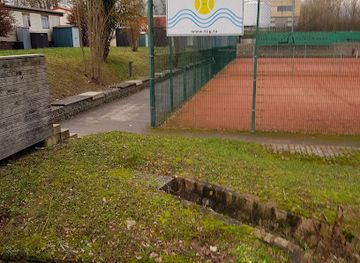
Tennis club
Tennis Club Grevenmacher
Experience the thrill of tennis in a picturesque setting at Tennis Club Grevenmacher, a perfect place for players of all levels.
9 min walk · 0.7 km from city centre
Best shops in Grevenmacher
Shopping in Grevenmacher is modest in scale and closely connected with everyday local life and the Moselle wine economy. The town centre provides small independent shops and practical services, while seasonal markets and local events may bring producers and craftspeople into public spaces. The most distinctive purchases are bottles of Luxembourgish Moselle wine and Crémant, alongside regional foods and gift items associated with the valley. Buying directly from a producer or cellar can provide more context than choosing a generic souvenir, although opening arrangements vary. Visitors may also find traditional Luxembourgish specialities in food shops and bakeries, with French and German influences reflecting the border setting. Grevenmacher is not a major fashion or department-store destination; for extensive retail, travellers generally look to Luxembourg City or larger commercial centres. Its shopping character is local, practical and agricultural rather than heavily commercialised.
-
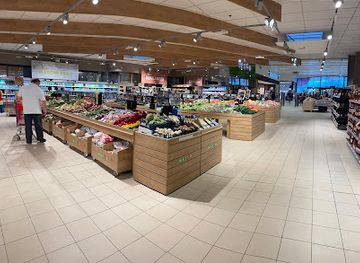
Supermarket
Match Grevenmacher
Explore Grevenmacher's Match Supermarket for fresh local produce, gourmet goods, and a taste of Luxembourg's culinary landscape.
14 min walk · 1.1 km from city centre
-
Pet supply store
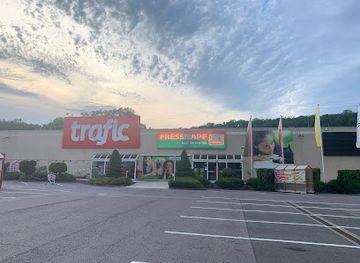
Fressnapf Grevenmacher
Explore Fressnapf Grevenmacher for the best pet supplies and accessories, where pet care meets community spirit and expert advice.
15 min walk · 1.2 km from city centre
-
Supermarket
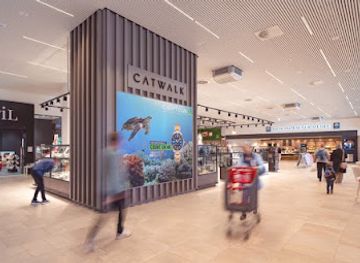
Copal Shopping-Center
Discover the vibrant Copal Shopping-Center in Grevenmacher, your one-stop destination for shopping, dining, and cultural experiences in Luxembourg.
14 min walk · 1.1 km from city centre
-
Supermarket
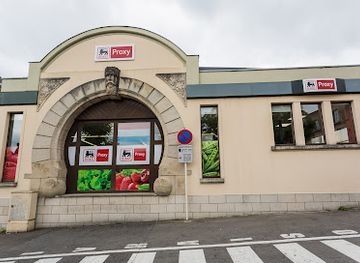
Proxy Delhaize Grevenmacher
Discover a delightful shopping experience at Proxy Delhaize in Grevenmacher, offering a wide selection of local and international products.
1 min walk · 0.1 km from city centre
Get your free copy of our complete guide to Grevenmacher, delivered straight to you.
Everything on this page, from attractions and restaurants to essentials and local phrases, in one PDF you can read offline, print or share.
Already have an account? Sign in
Your Grevenmacher guide is ready.
We'll send it to · Not you? Sign out

Getting your guide ready…
We are putting together a fresh copy of the Grevenmacher guide. This can take up to a minute.
This can take a few moments. If your browser asks, choose Allow so the download can start. You'll find the guide in your Downloads folder.
Nothing happened? Download it again
Sorry, the guide is taking longer than usual. Please try again in a minute, or get it by email instead.
Grevenmacher essentials
Currency and Payment
Safety
Emergency Situations
Do's and Don'ts
Local Tips
From Eve
Local phrases worth knowing
You don't need to get them perfect. A few words go a long way, and locals appreciate the effort.
Basics
| English | Local | Say it |
|---|---|---|
| Hello | Moien | [Moy-en] |
| Goodbye | Äddi | [A-dee] |
| Yes | Jo | [Yo] |
| No | Neen | [Nay-en] |
| Please/You're welcome | Gär gesch | [Gair gesh] |
| Thank you | Merci | [Mehr-see] |
| Excuse me/Sorry | Entschëllegt | [Ent-shell-egt] |
| How are you? | Wéi geet et dir? | [Way geet et deer?] |
| Fine. And you? | Gutt. A dir? | [Goot. Ah deer?] |
| Do you speak English? | Schwätzt dir Englesch? | [Shvetz deer Eng-lesh?] |
| I don't understand | Ech verstinn net | [Esh verst-inn net] |
Eating & Drinking
| English | Local | Say it |
|---|---|---|
| I'd like to see the menu, please | Ech géif gär d'Menü gesinn, w.e.g. | [Esh gayf gair de Menoo geseen, v.e.g.] |
| I don't eat meat | Ech iessen keng Fleesch | [Esh ee-sen kang Flay-sh] |
| Cheers! | Prost! | [Prost] |
| I would like to pay, please | Ech géif gär bezuelen, w.e.g. | [Esh gayf gair bez-oo-len, v.e.g.] |
Emergencies
| English | Local | Say it |
|---|---|---|
| Help! | Hëllef! | [Hell-eff] |
| Go away! | Gitt fort! | [Gitt fort] |
| Call the Police! | Rufft d'Polizei! | [Roof-t de Pol-it-zay] |
| Call a doctor! | Rufft engem Dokter! | [Roof-t en-ghem Dock-ter] |
| I'm lost | Ech hunn mech verluer | [Esh hoon mehk fair-loo-er] |
| I'm ill | Ech sinn krank | [Esh seen krank] |
Shopping
| English | Local | Say it |
|---|---|---|
| I'd like to buy... | Ech géif ... kafen | [Esh gayf ... kah-fen] |
| I'm just looking | Ech kuck just | [Esh kook yoost] |
| How much is it? | Wéi vill kascht et? | [Way feal kasht et?] |
| That's too expensive | Dat ass ze deier | [Dat ass tse deer] |
| Can you lower the price? | Kënnt dir de Präis erofsetzen? | [Kent deer de Pray ess-etzen?] |
Time & Numbers
| English | Local | Say it |
|---|---|---|
| What time is it? | Wéi vill Auer ass et? | [Way feal Oo-er ass et?] |
| It's one o'clock | Et ass e puer Auer | [Et ass e poo-er Oo-er] |
| Half past (10) | Halwer (10) | [Hal-ver (10)] |
| Morning | Muer | [Mur] |
| Afternoon | Nomëtteg | [No-met-teg] |
| Evening | Owend | [Oh-vend] |
| Yesterday | Gëschter | [Gesh-ter] |
| Today | Haut | [Howt] |
| Tomorrow | Muer | [Mur] |
| 1 | Eent | [Ent] |
| 2 | Zwee | [Zway] |
| 3 | Dräi | [Dry] |
| 4 | Veéier | [Vay-er] |
| 5 | Fënnef | [Fen-ef] |
| 6 | Sëchs | [Seh-s] |
| 7 | Siwwen | [Zee-ven] |
| 8 | Aacht | [Akht] |
| 9 | Néng | [Nang] |
| 10 | Zéng | [Zang] |
Transport & Directions
| English | Local | Say it |
|---|---|---|
| Where's a/the...? | Wou ass e(n) ...? | [Woo ass en ...?] |
| What's the address? | Wat ass d'Adress? | [Vat ass de Ad-ress?] |
| Can you show me (on the map)? | Kënnt dir mir (op der Kaart) weisen? | [Kent deer meer (op der Kart) vay-sen?] |
| When's the next (bus)? | Wéini ass de nächste(n) (Bus)? | [Way-knee ass de nesh-te (Boos)?] |
| A ticket (to ....) | E Billet (no ...) | [Ee Bil-et (no ...)] |
History of Grevenmacher
Early Settlement Along the Moselle
The Moselle corridor has attracted settlement since antiquity because the river provided water, fertile ground and a natural route through the region. Roman influence was strong across the Luxembourg Moselle, bringing roads, agricultural organisation and viticulture to the wider valley. Grevenmacher’s name is generally associated with the older place-name Macher, while the prefix refers to the town’s later connection with the counts of Luxembourg. Although little of the ancient settlement survives as a complete urban landscape, the riverine setting and long association with wine production reflect the conditions that made the area valuable from an early period.
Medieval Town and Market Life
Grevenmacher developed during the medieval period as a settlement linked to the river crossing, regional trade and the political territory of Luxembourg. Its position on the Moselle gave it practical importance beyond its modest size, connecting communities on both banks and supporting the movement of agricultural goods and wine. Medieval urban growth established the compact town pattern that can still be sensed in the centre, even though later rebuilding altered many individual buildings. Religious institutions, local administration and market activity gradually gave Grevenmacher the character of a small town rather than a purely rural wine village.
Under the Counts of Luxembourg
The town’s relationship with the counts and later rulers of Luxembourg shaped its name and political identity. As Luxembourg consolidated its territories, settlements along the Moselle became part of a wider system of administration, taxation and defence. Grevenmacher’s location at a frontier river also made it vulnerable to the consequences of regional power struggles, although its history was more closely tied to commerce and agriculture than to the grand military centres of the country. The parish church of Saint Lawrence and the surviving scale of the historic centre offer reminders of the religious and civic structures that organised local life.
River Trade and the Wine Economy
For centuries, Grevenmacher’s economy depended on the close relationship between the river, the vineyards and nearby rural communities. The Moselle supported transport and exchange, while the sunny slopes provided suitable conditions for grape growing. Wine was not simply an agricultural product but part of the town’s social and commercial identity, linking growers, merchants and consumers across the border region. In later centuries, improved roads and changing transport patterns reduced the river’s role as a working artery, yet wine production remained central. The Moselle Museum preserves aspects of this local relationship with the river and its traditions.
A Modern Border Town
The twentieth century brought war, changing borders and the wider economic transformations that affected every Luxembourgish community. Grevenmacher’s position beside Germany gave these events particular local significance, while post-war European integration gradually made cross-border movement easier and strengthened the Moselle’s shared regional identity. Contemporary Grevenmacher combines municipal services and everyday town life with tourism based on wine, cycling, river landscapes and cultural interpretation. The result is not a preserved historical enclave but a living border town in which older agricultural and trading traditions continue alongside modern Luxembourg’s open, international character.
Grevenmacher in Photos
Browse through our photo collection highlighting the charm and character of the destination.
Cities near Grevenmacher
The closest cities to Grevenmacher, if you have time for more than one stop.
-

-

-

-
-


Swipe for more cities
Explore more

Explore more of Luxembourg
Discover Luxembourg: A charming blend of historical wonders, breathtaking landscapes, and cultural vibrancy in the heart of Europe.
Explore Luxembourg