

Sankore Mosquee Travel Guide
Free Guide: Discover the legacy of the Sankore Mosque, a historic center of Islamic learning in the heart of Timbuktu.


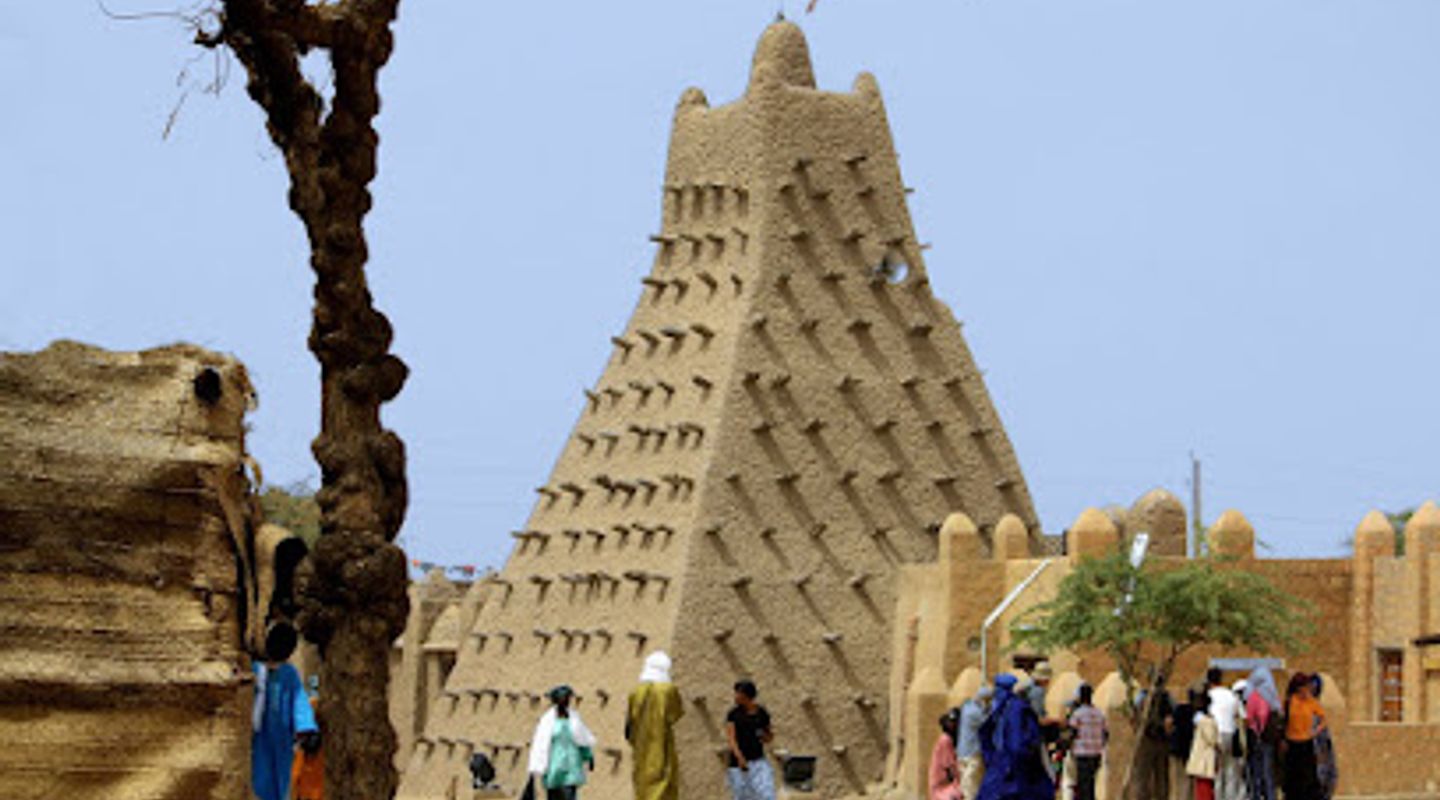
A brief summary of Sankore Mosquee
Discover the legacy of the Sankore Mosque, a historic center of Islamic learning in the heart of Timbuktu.
The Sankore Mosque, dating back to the 14th century, stands as a testament to Timbuktu's golden age as a prominent Islamic center of learning. Once the heart of the University of Sankore, it attracted scholars and students from across the Muslim world and beyond.
Opening hours
- Every dayOpen 24 hours
Opening hours as listed on the venue’s Google Business Profile. Hours can change for services and special events, so check with the venue before you go.
- Address
- QXGV+CQF, Timbuktu
Getting there
Walking
Taxi
Discover more about Sankore Mosquee
Overview
The Sankore Mosque, also known as Sankoré Madrasah or University of Sankore, is one of Timbuktu's three ancient centers of learning, with the others being Djinguereber and Sidi Yahya mosques. Founded in the 14th-15th centuries, its architecture reflects the traditional Sudano-Sahelian style. The mosque's origins trace back to a Tuareg woman's financial support.During the 16th century, the Sankore Mosque was at the heart of a thriving Islamic scholarly community. The University of Timbuktu, often called the University of Sankore, differed significantly from European universities of the time. It lacked a central administration, student registers, and set courses. Instead, individual scholars and imams ran independent schools within the mosque complex or in private residences. The focus was primarily on teaching the Koran, but broader subjects like logic, astronomy, and history were also taught.Imam Al-Aqib, the chief Qadi of Timbuktu, restored the mosque between 1578 and 1582, rebuilding the sanctuary to mirror the dimensions of the Kaaba in Mecca. At its peak, the university boasted a vast library with 400,000 to 700,000 manuscripts and accommodated as many as 25,000 students. The mosque played a vital role in Timbuktu's fame, serving as a venue for important decisions related to law, traditions, and city protection. Although the university declined after the Moroccan invasion in the 1590s, the mosque remains a symbol of Timbuktu's rich intellectual and cultural history.
Evendo Review Centre
 Google
Guest reviews
Explore Sankore Mosquee on the map
A handpicked selection of must-see spots near Sankore Mosquee, mapped for you.
Get your free copy of our complete guide to Sankore Mosquee, delivered straight to you.
Everything on this page, from opening hours and how to get there to Eve’s tips and the best time to go, in one PDF you can read offline, print or share.
Already have an account? Sign in
Your Sankore Mosquee guide is ready.
We'll send it to · Not you? Sign out

Getting your guide ready…
We are putting together a fresh copy of the Sankore Mosquee guide. This can take up to a minute.
This can take a few moments. If your browser asks, choose Allow so the download can start. You'll find the guide in your Downloads folder.
Nothing happened? Download it again
Sorry, the guide is taking longer than usual. Please try again in a minute, or get it by email instead.
Other nearby places you may find interesting
The closest places of the same kind, if this one is not quite what you had in mind.
-
-
-
-
-


Swipe for more places
More to explore near Sankore Mosquee

 Best experiences near Sankore Mosquee
 Best hotels near Sankore Mosquee
 Best landmarks near Sankore Mosquee
 Best attractions near Sankore Mosquee
 Best shops near Sankore Mosquee
 Best restaurants near Sankore Mosquee
 Best bars near Sankore Mosquee
Do you manage this location?
Take control to get all the benefits, like improved information, better appearance, and stronger visibility across AI-powered discovery.
Explore more

Explore more of Timbuktu Region
Discover the ancient city of Timbuktu, a UNESCO World Heritage Site in Mali, rich in history, culture, and unique desert landscapes.
Explore Timbuktu Region
Explore more of Mali
Discover Mali: A blend of ancient history, vibrant cultures, and breathtaking landscapes awaits you in this West African gem.
Explore Mali
