

Free Timbuktu Region Travel Guide & Mobile App
Explore Timbuktu Region with free travel guides. Discover regional history, expert tips, proposed trips, and audio guides on web or mobile app.


Explore Timbuktu Region’s Saharan landscapes, Niger River culture, earthen mosques and scholarly heritage through responsible, security-conscious travel planning.
Read more about Timbuktu Region
When is the best time to visit Timbuktu Region?
Best: December–February · 25–30°C| Month | High (°C) | Rainfall (mm) |
|---|---|---|
| January (best) | 26 | 0 |
| February (best) | 30 | 0 |
| March | 33 | 0 |
| April | 37 | 1 |
| May | 40 | 1 |
| June | 41 | 2 |
| July | 41 | 4 |
| August | 39 | 3 |
| September | 38 | 2 |
| October | 35 | 1 |
| November | 30 | 0 |
| December (best) | 25 | 0 |
Getting to and around Timbuktu Region
How to get there
Transportation
Destinations in Timbuktu Region
Resorts, valleys and scenic spots worth a trip of their own.

Swipe for more destinations
Best attractions in Timbuktu Region
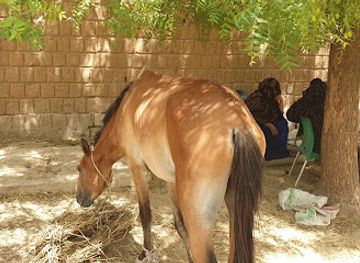
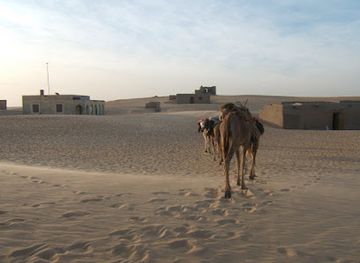
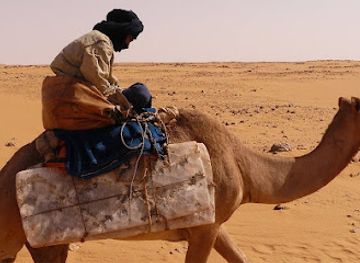
The Timbuktu Region’s attractions are primarily archaeological, scholarly, architectural and environmental, but most are not presently suitable for casual tourism. Timbuktu’s historic urban quarters contain the earthen mosques of Djinguereber, Sankoré and Sidi Yahya, alongside traditional houses and spaces associated with manuscript culture. The city’s manuscript heritage is especially important: collections preserve evidence of centuries of religious learning, law, science, literature and commerce, although access is restricted and collections require careful conservation. Outside the city, the Niger River, seasonal floodplains and the lake country around Goundam reveal a different landscape of fishing, farming, pasture and wetland ecology. The remote salt-mining area of Taoudenni, far to the north, illustrates an ancient Saharan trade economy but requires exceptional logistics and is not a realistic independent excursion. Historic sites, river settlements and desert routes are all affected by insecurity, displacement, climate variability and limited infrastructure. The region should therefore be understood through cultural study, local custodianship and carefully controlled future travel rather than through an ordinary sightseeing itinerary.
-
Museum
Ethnological Museum Timbuktu
Explore the Ethnological Museum Timbuktu, where the rich history and vibrant culture of Mali come alive through unique artifacts and insightful exhibits.
-
Tourist attraction
Araouane
Experience the rich culture and breathtaking landscapes of Araouane, a hidden gem in Mali perfect for adventurous travelers seeking authenticity.
-
Tourist attraction
Salt mining ,taoudani
Experience the captivating salt mining heritage in Taoudani, Agorgot, where tradition meets breathtaking landscapes.
Best landmarks in Timbuktu Region
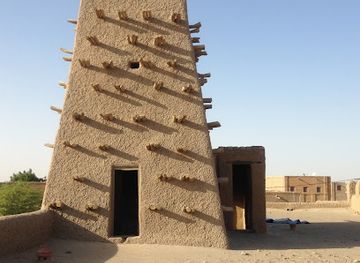
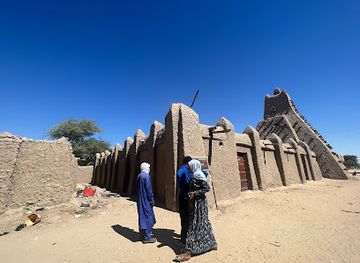
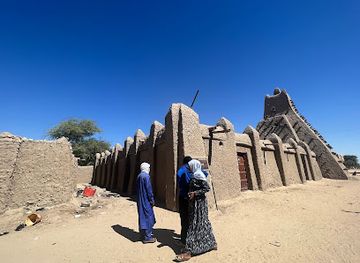
Timbuktu’s three historic mosques—Djinguereber, Sankoré and Sidi Yahya—are the region’s most recognisable architectural landmarks. Built and rebuilt in the earthen Sahelian tradition, they express the city’s religious, educational and commercial importance, while their monumental forms depend on regular maintenance with local mud-plaster techniques. The wider historic town, with its compact lanes, earthen houses and former scholarly quarters, is significant as a cultural landscape rather than simply a collection of individual monuments. The city’s mausoleums and manuscript repositories also represent the memory of saints, scholars and intellectual networks, although conflict has damaged some heritage and access remains restricted. Beyond Timbuktu, the Niger River and its changing floodplain are geographical landmarks that explain the region’s settlement pattern and economy. Far to the north, Taoudenni’s salt works are a powerful symbol of Saharan trade and endurance, but their remoteness and security conditions make them unsuitable for ordinary sightseeing.
-
Historical landmark
Djingareyber Mosque
Explore the Djingareyber Mosque in Timbuktu, a UNESCO World Heritage Site and a symbol of Mali's rich cultural heritage.
-
Mosque
Sidi Yahiya Mosque
Explore the historical Sidi Yahiya Mosque in Timbuktu, a UNESCO World Heritage Site and a symbol of Islamic learning and Sudano-Sahelian architecture.
-
Museum
Ethnological Museum Timbuktu
Explore Mali's cultural heritage at the Ethnological Museum Timbuktu, showcasing traditions, artifacts, and the city's rich history.
-
Real estate agency
Timbuktu Mali
Explore Timbuktu, Mali: Uncover the history of this ancient city, a legendary center of trade and Islamic scholarship in West Africa.

Explore Timbuktu Region on the map
Plan your trip on one map. See where the top cities, national parks and sights are, and book hotels and experiences in a few clicks.
Best hotels in Timbuktu Region
Best restaurants in Timbuktu Region
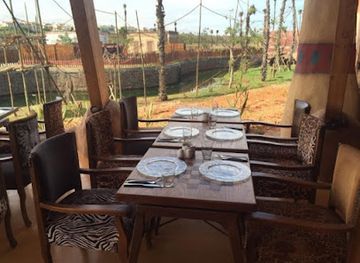
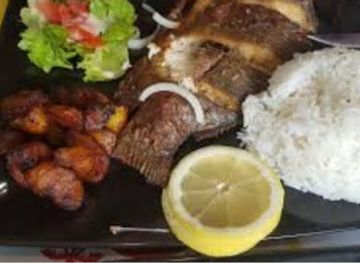
Timbuktu Region food reflects the contrast between riverine life, Sahelian farming and desert mobility. Rice, millet, sorghum, beans, vegetables, dried foods and freshwater fish from the Niger and its floodplain form important parts of local cooking, while meat may feature at communal meals and during special occasions. Dishes are commonly prepared with onions, peppers, ground ingredients and locally available herbs, with techniques adapted to scarce water and fuel. In Timbuktu city, traditional eateries and household-based meals have historically been more significant than a formal restaurant scene, and current insecurity means that dining options, supplies and opening arrangements cannot be assumed. Tea has an important social role across the wider Sahel, while dates and other durable provisions are associated with desert travel and trade. Visitors should not expect a developed tourist dining circuit, and any authorised journey would require advance arrangements for food, drinking water and dietary needs.
-
 Hotel
HotelHendrina Khan
Experience unmatched comfort and hospitality at Hendrina Khan while exploring the rich history of Timbuktu.
-
Restaurant
Pâtisserie Aco
Experience the delightful taste of Timbuktu at Pâtisserie Aco - where every pastry is crafted with love and tradition.
-
Restaurant
Poulet d'Or Restaurant
Experience authentic Malian flavors at Poulet d'Or Restaurant in Timbuktu - a culinary gem offering both local and international dishes.
-
Hotel
Hôtel du Désert
Experience comfort and culture at Hôtel du Désert - your gateway to exploring historic Timbuktu.
Best bars in Timbuktu Region
The Timbuktu Region does not have a conventional nightlife sector for international visitors. Evening social life has traditionally centred more on family gatherings, tea, conversation, religious and community occasions, and informal local hospitality than on nightclubs or cocktail bars. Timbuktu city has had modest cafés and eating places at different times, but insecurity, curfews, displacement and supply difficulties can change what is available and whether movement after dark is permitted. Alcohol may be inappropriate or unavailable in many settings because of local religious and social norms. Travellers should never seek out nightlife in defiance of security instructions, and any future authorised visit would require observing local restrictions, avoiding isolated areas and arranging evening movements through trusted local contacts.
-
Hotel
Hendrina Khan
Discover the charm of Timbuktu at Hendrina Khan, where comfort meets cultural heritage in a unique hotel experience.
-
Restaurant
Amanar Restaurant
Experience the rich flavors of Malian cuisine at Amanar Restaurant in Timbuktu, where culinary tradition meets vibrant culture.
-
Restaurant
Restaurant Favela
Experience the vibrant flavors of Timbuktu at Restaurant Favela, where local cuisine meets a warm, welcoming atmosphere.
-
Restaurant
Al Hayat Restaurant
Savor the flavors of Timbuktu at Al Hayat Restaurant, where local cuisine meets warm hospitality in a cultural dining experience.
Best nightclubs in Timbuktu Region
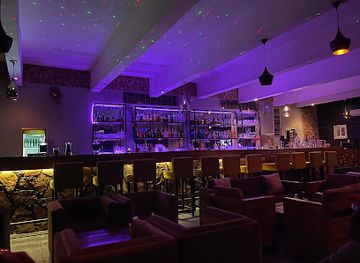
The Timbuktu Region does not have a conventional nightlife sector for international visitors. Evening social life has traditionally centred more on family gatherings, tea, conversation, religious and community occasions, and informal local hospitality than on nightclubs or cocktail bars. Timbuktu city has had modest cafés and eating places at different times, but insecurity, curfews, displacement and supply difficulties can change what is available and whether movement after dark is permitted. Alcohol may be inappropriate or unavailable in many settings because of local religious and social norms. Travellers should never seek out nightlife in defiance of security instructions, and any future authorised visit would require observing local restrictions, avoiding isolated areas and arranging evening movements through trusted local contacts.
-
Disco club
Le Byblos
Discover the vibrant nightlife of Bamako at Le Byblos, where dining, dancing, and entertainment unite for an unforgettable experience.
-
Bar
Bla Bla Bar
Discover the vibrant atmosphere of Bla Bla Bar in Bamako, a unique bar blending local artistry with lively entertainment.
-
Night club
IBIZA CLUB
Dive into the heart of Bamako's nightlife at Ibiza Club, where music, dance, and vibrant energy create unforgettable experiences.
-
Grill
Le Celtic
Discover the vibrant flavors of Bamako at Le Celtic, a top-rated grill restaurant offering a cozy atmosphere and delicious grilled delights.



Best shops in Timbuktu Region
Shopping in the Timbuktu Region has traditionally been connected to markets, caravan exchange, river commerce and locally made crafts rather than modern retail centres. In Timbuktu, visitors may encounter traditions of leatherwork, woven goods, metalwork, Tuareg-style silver jewellery, decorative objects and practical items shaped by desert and Sahelian life, although availability and provenance vary considerably. Markets in river towns serve local food production, including grain, rice, fish and livestock, while salt remains historically associated with the northern desert trade. Manuscripts and archaeological objects should never be purchased casually: cultural property may be protected, and illicit trade can damage the region’s heritage. Because insecurity has disrupted markets and supply chains, shops, craft stalls and market days cannot be assumed to operate normally. Responsible visitors should buy only lawful contemporary handicrafts through reputable local channels and avoid objects presented as ancient, excavated or of uncertain origin.
-
Mosque
Sidi Yahiya Mosque
Discover the rich history and architectural beauty of Sidi Yahiya Mosque, a UNESCO World Heritage Site in the heart of Timbuktu, Mali.
-
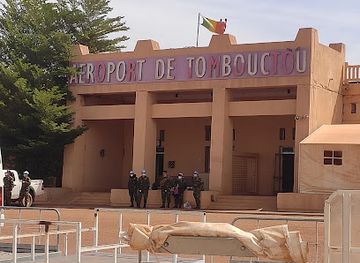
Airport
Aéroport de Tombouctou
Explore the rich history of Timbuktu through Aéroport de Tombouctou, your gateway to ancient wonders in Mali.
-
Real estate agency
Timbuktu Mali
Unveil the enchanting history and unique architecture of Timbuktu, Mali, a UNESCO World Heritage site and former center of trade and culture.
-
Restaurant
Le Souvenir
Discover the essence of Malian cuisine at Le Souvenir, a must-visit restaurant in the historic Timbuktu, where flavors and culture unite.

Get your free copy of our complete guide to Timbuktu Region, delivered straight to you.
Everything on this page, from attractions and restaurants to essentials and local phrases, in one PDF you can read offline, print or share.
Already have an account? Sign in
Your Timbuktu Region guide is ready.
We'll send it to · Not you? Sign out

Getting your guide ready…
We are putting together a fresh copy of the Timbuktu Region guide. This can take up to a minute.
This can take a few moments. If your browser asks, choose Allow so the download can start. You'll find the guide in your Downloads folder.
Nothing happened? Download it again
Sorry, the guide is taking longer than usual. Please try again in a minute, or get it by email instead.
Timbuktu Region essentials
Currency and Payment
Safety
Emergency Situations
Do's and Don'ts
Local Tips
From Eve
Local phrases worth knowing
You don't need to get them perfect. A few words go a long way, and locals appreciate the effort.
Basics
| English | Local | Say it |
|---|---|---|
| Hello | Ahalan | [A-ha-lan] |
| Goodbye | Bissalama | [Bi-sa-la-ma] |
| Yes | Iye | [Ee-ye] |
| No | La | [La] |
| Please/You're welcome | Min fadlak | [Min fad-lak] |
| Thank you | Shukran | [Shuk-ran] |
| Excuse me/Sorry | Afwan | [Af-wan] |
| How are you? | Kayfa halak? | [Kay-fa ha-lak] |
| Fine. And you? | Ana bikhayr, wa anta? | [A-na bi-khayr, wa an-ta] |
| Do you speak English? | Hal tatakallam al-ingliziya? | [Hal ta-ta-kal-lam al-in-gli-zi-ya] |
| I don't understand | Ana la afham | [A-na la af-ham] |
Eating & Drinking
| English | Local | Say it |
|---|---|---|
| I'd like to see the menu, please | Uridu an ara al-menu, min fadlik | [U-ri-du an a-ra al-me-nu, min fad-lik] |
| I don't eat meat | Ana la akul lahm | [A-na la a-kul lahm] |
| Cheers! | Sahha! | [Sah-ha] |
| I would like to pay, please | Uridu an adfa'a, min fadlik | [U-ri-du an ad-fa'a, min fad-lik] |
Emergencies
| English | Local | Say it |
|---|---|---|
| Help! | Ain al-najda! | [A-in al-naj-da] |
| Go away! | Izhab! | [Izh-ab] |
| Call the Police! | Ittasil bil-shurta! | [It-ta-sil bil-shur-ta] |
| Call a doctor! | Ittasil bi-tabeeb! | [It-ta-sil bi-ta-beeb] |
| I'm lost | Ana da'if | [A-na da-if] |
| I'm ill | Ana marid | [A-na ma-rid] |
Shopping
| English | Local | Say it |
|---|---|---|
| I'd like to buy... | Uridu an ashtari... | [U-ri-du an ash-ta-ri] |
| I'm just looking | Ana faqat an-nazhar | [A-na fa-qat an-naz-har] |
| How much is it? | Kam thamanuh? | [Kam tha-ma-nuh] |
| That's too expensive | Thalika ghalin jiddan | [Tha-li-ka gha-lin jid-dan] |
| Can you lower the price? | Hal yumkinuka khafdh as-sum? | [Hal yum-ki-nu-ka khaf-dh as-sum] |
Time & Numbers
| English | Local | Say it |
|---|---|---|
| What time is it? | Kam as-saa'a? | [Kam as-saa-a] |
| It's one o'clock | Al-saa'a wahida | [Al-saa-a wa-hi-da] |
| Half past (10) | Nisf al-‘ashra | [Nisf al-‘ash-ra] |
| Morning | Sabaah | [Sa-baah] |
| Afternoon | Ba'ad al-duhr | [Ba-ad al-duhr] |
| Evening | Masa' | [Ma-sa'] |
| Yesterday | Ams | [Ams] |
| Today | Al-yawm | [Al-yawm] |
| Tomorrow | Ghad | [Ghad] |
| 1 | Wahid | [Wa-hid] |
| 2 | Ithnain | [Ith-nain] |
| 3 | Thalatha | [Tha-la-tha] |
| 4 | Arba'a | [Ar-ba-a] |
| 5 | Khamsa | [Kham-sa] |
| 6 | Sitta | [Sit-ta] |
| 7 | Sab'a | [Sab-a] |
| 8 | Thamaniya | [Tha-ma-ni-ya] |
| 9 | Tis'a | [Tis-a] |
| 10 | Ashara | [A-sha-ra] |
Transport & Directions
| English | Local | Say it |
|---|---|---|
| Where's a/the...? | Ayna ...? | [Ay-na ...] |
| What's the address? | Ma huwa al-'unwan? | [Ma hu-wa al-'un-wan] |
| Can you show me (on the map)? | Hal yumkinuka an turini (ala al-kharta)? | [Hal yum-ki-nu-ka an tu-ri-ni (a-la al-khar-ta)] |
| When's the next (bus)? | Mata al-hafila al-qadima? | [Ma-ta al-ha-fi-la al-qa-di-ma] |
| A ticket (to ....) | Tazkara (ila ...) | [Taz-ka-ra (i-la ...)] |
History of Timbuktu Region
Early Saharan and Niger River Settlement
The Timbuktu Region has been shaped for millennia by changing relationships between desert, grassland and river. Archaeological remains and oral histories point to long-established communities engaged in fishing, farming, pastoralism and exchange around the Niger and its floodplains. Climate fluctuations repeatedly altered the distribution of water and pasture, encouraging mobility and connecting settlements across the Sahel. The region’s later historical importance grew from this ecological position: it lay between the productive middle Niger and the caravan corridors crossing the Sahara.
The Mali Empire and Trans-Saharan Exchange
From the thirteenth century, the wider middle Niger became closely connected to the Mali Empire, whose rulers benefited from gold, agricultural production and long-distance trade. Timbuktu developed as a commercial settlement near the river and desert routes, handling goods moving between West Africa and North Africa. Salt from Saharan workings, including the remote area around Taoudenni, became especially important. These exchanges also brought Arabic literacy, Islamic scholarship and political connections that would shape the city’s later identity.
Songhai Power and the Scholarly City
During the fifteenth and sixteenth centuries, Timbuktu flourished under the Songhai Empire, particularly during the reigns of Sunni Ali and Askia Muhammad. Its mosques and teaching circles attracted scholars, jurists and students from across the Islamic world of West Africa. Sankoré, Djinguereber and Sidi Yahya became associated with a broader scholarly culture that included law, theology, astronomy and literature. Manuscripts copied and collected during this era remain among the region’s most important cultural legacies.
The Moroccan Conquest of 1591
The Moroccan invasion of Songhai territory in 1591 transformed the political order of the middle Niger. The defeat of Songhai forces weakened the empire’s control over Timbuktu and other commercial centres, while Moroccan-appointed authorities governed parts of the region for a time. Long-distance trade patterns changed and political power became more fragmented. Timbuktu retained religious and commercial importance, but its position was increasingly shaped by competing local authorities, desert groups and the changing economics of Saharan exchange.
Nineteenth-Century Islamic Reform and Regional Powers
During the nineteenth century, the Timbuktu area was affected by the expansion and rivalry of Islamic states and reform movements in the western and central Sudan. Fulani, Tuareg, Arab and Songhai political forces competed and negotiated across the river, floodplain and desert zones. Religious networks remained influential, while caravan commerce and pastoral mobility continued to connect the region with the wider Sahel. This period left a complex political and social inheritance rather than a single uniform regional identity.
French Colonial Rule and the Road to Independence
French forces incorporated Timbuktu and surrounding territories into the colonial administration of French West Africa in the late nineteenth and early twentieth centuries. Colonial rule reorganised authority, taxation, transport and trade, while imposing new administrative boundaries over older networks of mobility. The region remained remote from the principal coastal centres and received limited infrastructure compared with southern Mali. After independence in 1960, Timbuktu became part of the Republic of Mali, with the Niger and Saharan routes continuing to shape its economy and administration.
Conflict, Occupation and Heritage Damage Since 2012
In 2012, an armed rebellion and the advance of Islamist groups brought northern Mali, including Timbuktu, under insurgent control for a period. Several historic mausoleums were destroyed or damaged, and restrictions were imposed on cultural and religious life. International and local efforts later supported the reconstruction of damaged monuments and the protection of manuscripts, but insecurity, displacement and economic disruption persisted. The region’s heritage remains internationally significant while also being vulnerable to renewed conflict, climate pressures and the loss of custodians and communities.
Timbuktu Region in Photos
Browse through our photo collection highlighting the charm and character of the destination.
Neighbouring regions of Timbuktu Region
The closest regions to Timbuktu Region, if you have time for more than one.
-

-

-

-

-


Swipe for more regions
Explore more

Explore more of Mali
Discover Mali: A blend of ancient history, vibrant cultures, and breathtaking landscapes awaits you in this West African gem.
Explore Mali