

Hondoq Bay, Malta Travel Guide
Discover the tranquility and natural beauty of Hondoq Bay in Malta, a hidden gem perfect for swimming, snorkeling, and relaxing amidst stunning coastal scenery.
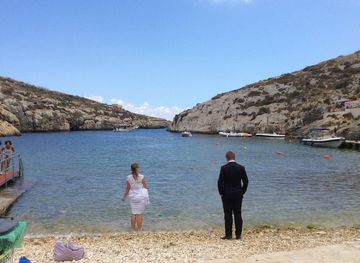
Hondoq Bay, located on the island of Gozo in Malta, is a hidden gem that offers a tranquil escape from the hustle and bustle of daily life. This picturesque bay is known for its crystal-clear turquoise waters, making it an ideal spot for swimming, snorkeling, and diving. The underwater scenery is breathtaking, with a variety of marine life and fascinating rock formations to explore. The bay is surrounded by rugged limestone cliffs and lush greenery, providing a stunning natural backdrop for visitors. Hondoq Bay is not just about the sea; the area also boasts beautiful walking trails that offer panoramic views of the surrounding countryside and the island of Comino in the distance. These paths are perfect for leisurely strolls or more vigorous hikes, allowing visitors to fully immerse themselves in the natural beauty of Gozo. The bay is also a popular spot for picnics, with several shaded areas where you can relax and enjoy a meal with family or friends. One of the unique features of Hondoq Bay is its small, sandy beach, which is a rarity in Malta. The beach is perfect for sunbathing and building sandcastles, making it a favorite among families with children. There are also a few kiosks nearby offering snacks and refreshments, ensuring you can stay hydrated and energized throughout your visit. Whether you're looking for adventure or relaxation, Hondoq Bay has something to offer everyone. Its serene atmosphere and stunning natural beauty make it a must-visit destination for anyone traveling to Malta.

Know before you go
Hi, I'm Eve. Here are a few practical things to know before exploring Hondoq Bay.
- Visit early in the morning or late afternoon to avoid crowds and enjoy the bay's serene atmosphere.
- Bring your own snorkeling gear to explore the underwater world teeming with marine life.
- Pack a picnic as there are limited dining options nearby, and the shaded areas are perfect for a relaxing meal.
- Wear sturdy shoes if you plan to hike the surrounding trails to fully appreciate the breathtaking views.
- Check the local weather forecast as the bay can be windy, affecting swimming and snorkeling conditions.
Explore Hondoq Bay: Things to Do, Places to Eat, Hotels & More
Handpicked recommendations for top attractions, local dining, accommodations, and more

Best attractions in Hondoq Bay
Top-rated picks
Best Attractions

Ramla Bay Resort
Experience luxury and adventure at Ramla Bay Resort, a stunning destination in Mellieħa, Malta, offering relaxation and exciting water sports.

The Red Tower
Discover the historical significance and stunning views of The Red Tower, a captivating landmark in Mellieħa, Malta, steeped in the legacy of the Knights of St. John.

Palazzo Parisio
Explore Palazzo Parisio: A historic palace in Naxxar, Malta, showcasing stunning gardens, exquisite interiors, and delectable dining options.

Torri ta' San Ġiljan
Discover the rich maritime history and stunning views of Torri ta' San Ġiljan, a must-visit historical landmark in Sliema, Malta, for culture and scenery.

Best landmarks in Hondoq Bay
Top-rated picks
Best Landmarks

Mdina Gate
Explore Mdina Gate, the historic entrance to the ancient city of Mdina, where Malta's rich heritage meets stunning architecture.

Mosta Rotunda
Discover the breathtaking Mosta Rotunda, Malta's architectural masterpiece and a symbol of faith and history in the heart of Mosta.

St Paul’s Catacombs
Discover the ancient history of Malta at St. Paul’s Catacombs, where the echoes of the past meet stunning archaeological wonders.

Bażilika Tal-Madonna Ta' Pinu Mill Gharb
Discover the breathtaking Basilica of Ta' Pinu in Gharb, Malta, a serene shrine with stunning architecture and rich spiritual history.

Best restaurants in Hondoq Bay
Top-rated picks
Best Restaurants

Qbajjar Restaurant Gozo
Experience the flavors of Gozo at Qbajjar Restaurant - where fresh seafood meets breathtaking coastal views.

Country Terrace Mgarr Gozo Malta
Experience authentic Maltese and Mediterranean cuisine with stunning views at Country Terrace in Gozo - a must-visit dining destination.

Il-Kartell Restaurant
Experience authentic Mediterranean cuisine at Il-Kartell Restaurant in Marsalforn with stunning sea views and a warm atmosphere.

Rexy Restaurant
Discover the essence of Maltese flavors at Rexy Restaurant in Għajnsielem – where every dish tells a story.

Best bars in Hondoq Bay
Top-rated picks
Best Bars

Hondoq Bay Cafe
Experience the best of Maltese cuisine at Hondoq Bay Cafe, where stunning coastal views meet delightful flavors in a relaxed atmosphere.

Zeppi's Pub
Discover the essence of Maltese hospitality at Zeppi's Pub in Qala, where every visit feels like coming home.

Ferdie's Restaurant & Cocktail Bar
Savor exquisite Mediterranean cuisine and refreshing cocktails at Ferdie's Restaurant & Cocktail Bar in Ghajnsielem, Gozo.

Front Bar
Discover the vibrant atmosphere and local charm of Front Bar in Munxar, Gozo, where every sip tells a story.

Best nightclubs in Hondoq Bay
Top-rated picks
Best Nightclubs

Zeppi's Pub
Discover the vibrant atmosphere and local charm of Zeppi's Pub in Qala, Malta, where great food and drinks meet warm hospitality.

La Grotta
Experience the electrifying nightlife at La Grotta, a premier disco club in Munxar, Malta, where music, dance, and fun come together.

Gleneagles Bar
Experience the charm of Gozo at Gleneagles Bar, a delightful retreat offering a wide selection of drinks and a cozy atmosphere for all.

Horatio's Upper Deck
Discover the lively charm of Horatio's Upper Deck, a pub in Għajnsielem offering delicious pizzas, cocktails, and a vibrant atmosphere for tourists.

Best shops in Hondoq Bay
Top-rated picks
Best Shops

The Duke Shopping Mall
Discover a unique shopping and dining experience at The Duke Shopping Mall in Victoria, Gozo, blending modern retail with local charm.

Hondoq Bay Cafe
Discover the flavors of Malta at Hondoq Bay Cafe, a charming seaside cafe offering delicious meals and stunning views in Qala.

Ta' Dbiegi Crafts Village
Experience the artistry and craftsmanship of Malta at Ta' Dbiegi Crafts Village, where handmade treasures await every visitor.

The Convenience Shop Xemxija
Discover The Convenience Shop Xemxija in St. Paul's Bay, Malta - your go-to supermarket for fresh produce and everyday essentials.

Explore Hondoq Bay on the Map
A handpicked selection of must-see spots in Hondoq Bay, mapped for you.
Hondoq Bay Essentials
-
Hondoq Bay is located on the island of Gozo, part of the Maltese archipelago. The nearest international airport is Malta International Airport (MLA) on the main island of Malta. From the airport, you can take a bus or taxi to Ċirkewwa Ferry Terminal. A ferry service operated by Gozo Channel Line runs frequently between Ċirkewwa and Mġarr Harbour in Gozo. From Mġarr, Hondoq Bay is a short drive or bus ride away.
-
Public transportation on Gozo is well-organized, with buses connecting major towns and tourist spots. Renting a car or scooter is also a popular option, offering flexibility to explore the island at your own pace. Taxis are available but may be more costly. If you're staying near Hondoq Bay, walking or cycling can be delightful ways to explore the immediate area.
-
The official currency in Malta is the Euro (€). Credit cards are widely accepted in hotels, restaurants, and shops. However, it is advisable to carry some cash, especially for smaller establishments and local markets. ATMs are available in key locations around Gozo, including near Mġarr Harbour and the town of Victoria.
-
Hondoq Bay and Gozo are generally safe for tourists. However, it is always wise to take standard precautions, such as not leaving your belongings unattended and being cautious in crowded areas. There are no specific high-crime areas targeting tourists, but always stay vigilant and aware of your surroundings, especially at night.
-
In case of an emergency, dial 112 for immediate assistance. Gozo General Hospital in Victoria is well-equipped for medical emergencies. Pharmacies are also available for minor health issues. It is recommended to have travel insurance that covers medical emergencies. Police stations are located in key areas, including Victoria and Mġarr.
-
Fashion: Do dress modestly, especially when visiting religious sites. Avoid wearing overly revealing clothing. Religion: Do respect local customs and traditions. When entering churches, ensure your shoulders and knees are covered. Public Transport: Do be respectful and give up your seat to elderly passengers. Don't eat or drink on public transport. Greetings: Do greet people with a handshake or a polite nod. Locals appreciate respectful behavior. Eating & Drinking: Do try local delicacies and accept food and drink offerings graciously. Don’t refuse hospitality, as it may be considered impolite.
-
To experience Hondoq Bay like a local, consider visiting during weekdays when it is less crowded. Engage with local fishermen and residents who can share stories and insights about the area’s history and culture. For a unique experience, try snorkeling in the clear waters or hiking along the coastal trails. Don’t miss the local culinary delights, such as fresh seafood and traditional Gozitan cheeselets.
When is the best time to visit Hondoq Bay?
Useful Local Phrases for Hondoq Bay
You don't need to speak the language perfectly. Even learning a few simple words can make conversations warmer—and locals usually appreciate the effort.
— Eve

Here are the phrases I use most often in Hondoq Bay. Try a few—you'll be surprised how far they go! 😊
❤️
-
- HelloMerħba
[mer-HBA] - GoodbyeĊaw
[chaw] - YesIva
[EE-va] - NoLe
[leh] - Please/You're welcomeJekk jogħġbok
[yekk yoh-kh-BOK] - Thank youGrazzi
[GRAT-see] - Excuse me/SorrySkuzi
[SKOO-zee] - How are you?Kif int?
[keef eent] - Fine. And you?Tajjeb. U int?
[TA-yeb. oo eent] - Do you speak English?Titkellem bl-Ingliz?
[tit-KELL-em bling-LEEZ] - I don't understandM'hemmx fahem
[mhemsh fah-hem]
- HelloMerħba
-
- I'd like to see the menu, pleaseNixtieq inara l-menu, jekk jogħġbok
[nix-TIEK ee-NAR-a l-MEN-oo, yekk yoh-kh-BOK] - I don't eat meatM'naqbilx laħam
[mnaq-BIL-sh la-HAM] - Cheers!Saħħa!
[sah-ha] - I would like to pay, pleaseNixtieq inħallas, jekk jogħġbok
[nix-TIEK in-HALL-ass, yekk yoh-kh-BOK]
- I'd like to see the menu, pleaseNixtieq inara l-menu, jekk jogħġbok
-
- Help!Għajjat!
[A-jjat] - Go away!Mur
[mur] - Call the Police!Ikellim il-Pulizija!
[i-KELL-im il-poo-lee-ZEE-ya] - Call a doctor!Ikellim tabib!
[i-KELL-im ta-BEEB] - I'm lostInqasart
[in-KA-sart] - I'm illJien malat
[yEEN ma-LAT]
- Help!Għajjat!
-
- I'd like to buy...Nixtieq inixtri...
[nix-TIEK ini-STREE] - I'm just lookingQed nara biss
[kwed NA-ra bees] - How much is it?Kemm huwa dan?
[kem HOO-wa dan] - That's too expensiveDan huwa wisq sħiħ
[dan HOO-wa wees-sh shiH] - Can you lower the price?Tista' taħbis il-prezz?
[tis-TA tah-BEES il-PREZZ]
- I'd like to buy...Nixtieq inixtri...
-
- What time is it?X'ħin huwa?
[ksheen HOO-wa] - It's one o'clockHuwa l-ewwel waħda
[hoo-wa lew-WEL wa-Hda] - Half past (10)Noqs ta' (10)
[noks ta] - MorningFilgħodu
[fil-GHO-doo] - AfternoonWarba'
[WAR-ba] - EveningFilgħaxija
[fil-GHA-shee-ya] - YesterdayIlbieraħ
[il-bi-YER-aH] - TodayIllum
[EE-lum] - TomorrowGħada
[a-HA-da] - 1Waħda
[wa-Hda] - 2Tnejn
[tnayn] - 3Tlieta
[tlee-eta] - 4Erba'
[er-Ba] - 5Ħamsa
[hahm-sa] - 6Sitta
[sit-ta] - 7Sebgħa
[seb-GHA] - 8Tmienja
[tmee-YEN-ya] - 9Dsata
[dsa-ta] - 10Għaxra
[a-GHA-shra]
- What time is it?X'ħin huwa?
-
- Where's a/the...?Fejn hemm...
[fayn hemm] - What's the address?X'inhu l-indirizz?
[ksin-hu l-in-di-REEZ] - Can you show me (on the map)?Tista' turijni (fuq il-mappa)?
[tis-TA toor-ee-nee fooq il-MAP-pa] - When's the next (bus)?Meta se jasal il-ġej (il-karozza)?
[me-ta se ya-SAL il-jay (il-ka-ROT-sa)] - A ticket (to ....)Biljett (għal ....)
[bil-YET (al)]
- Where's a/the...?Fejn hemm...
History of Hondoq Bay
-
The area surrounding Hondoq Bay is rich in prehistoric artifacts, indicating that it has been inhabited for thousands of years. Archaeological evidence suggests that early settlers were drawn to this coastal region for its abundant resources and strategic location.
-
Hondoq Bay was an important site during the Phoenician and Roman eras. The natural harbor provided a safe haven for ships and facilitated trade. It's believed that the Phoenicians established a settlement in the area, which was later taken over by the Romans. Remnants of Roman architecture and pottery have been discovered in the vicinity.
-
During the medieval period, Hondoq Bay was part of the extensive fiefdoms held by Maltese nobility. The bay's strategic location made it a valuable asset for controlling maritime routes. Various fortifications were built along the coast, some of which are still visible today.
-
In the 16th century, the Knights of St. John recognized the strategic importance of Hondoq Bay. They fortified the area to protect against Ottoman incursions. The Knights contributed significantly to the development of the bay, enhancing its defenses and infrastructure.
-
Under British rule, Hondoq Bay became a popular recreational spot for British soldiers stationed in Malta. The bay's clear waters and scenic surroundings made it an ideal location for leisure activities. Several structures from this era, such as old boathouses and piers, still stand as a testament to its past.
-
Today, Hondoq Bay is a beloved destination for both locals and tourists. It offers pristine beaches, crystal-clear waters, and a serene environment. Efforts have been made to preserve its natural beauty while accommodating the growing number of visitors. The bay remains a testament to Malta's rich and diverse history, attracting history buffs and nature lovers alike.
Neighbouring destination travel guides
Browse our curated selection of top destinations, scenic points, and must-visit spots in the area.


Your all‑in‑one travel companion app
Explore expert travel guides, compare and book tours, experiences, hotels, and more—all from the palm of your hand. Download now for seamless trip planning wherever your wanderlust takes you.


Explore More of Blue Lagoon

Looking beyond Hondoq Bay? Discover Blue Lagoon for broader travel guides, local hot-spots, and regional highlights.
Explore Blue LagoonExplore More of Malta
Looking beyond Hondoq Bay? Discover Malta for broader travel guides, local hot-spots, and regional highlights.
Explore MaltaHondoq Bay in Photos
Browse through our photo collection highlighting the charm and character of the destination.


Hondoq Bay: Malta's Hidden Coastal Gem
Hondoq Bay, located on the island of Gozo in Malta, is a hidden gem that offers a tranquil escape from the hustle and bustle of daily life. This picturesque bay is known for its crystal-clear turquoise waters, making it an ideal spot for swimming, snorkeling, and diving. The underwater scenery is breathtaking, with a variety of marine life and fascinating rock formations to explore. The bay is surrounded by rugged limestone cliffs and lush greenery, providing a stunning natural backdrop for visitors. Hondoq Bay is not just about the sea; the area also boasts beautiful walking trails that offer panoramic views of the surrounding countryside and the island of Comino in the distance. These paths are perfect for leisurely strolls or more vigorous hikes, allowing visitors to fully immerse themselves in the natural beauty of Gozo. The bay is also a popular spot for picnics, with several shaded areas where you can relax and enjoy a meal with family or friends. One of the unique features of Hondoq Bay is its small, sandy beach, which is a rarity in Malta. The beach is perfect for sunbathing and building sandcastles, making it a favorite among families with children. There are also a few kiosks nearby offering snacks and refreshments, ensuring you can stay hydrated and energized throughout your visit. Whether you're looking for adventure or relaxation, Hondoq Bay has something to offer everyone. Its serene atmosphere and stunning natural beauty make it a must-visit destination for anyone traveling to Malta.