

Popeye Village Travel Guide - Free Web & App
Your ultimate guide to Popeye Village. Discover top landmarks, proposed trips, and local tips. Free on the web or via the Evendo companion app.


Popeye Village in Malta is a colourful film set at Anchor Bay, offering coastal views, family attractions, movie history and access to Mellieħa.
A Film Set on Anchor Bay
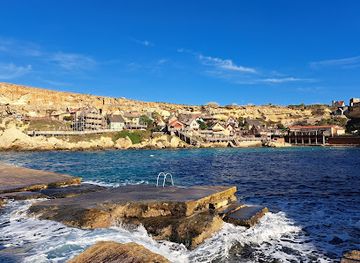
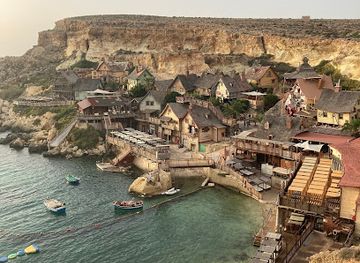
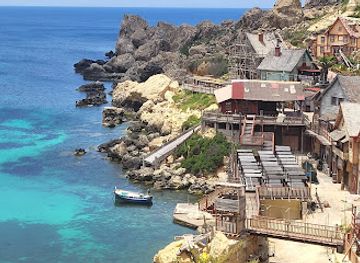
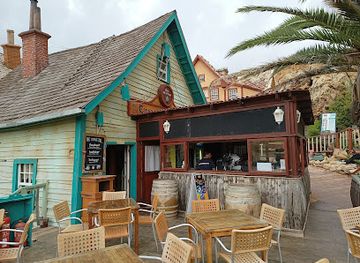
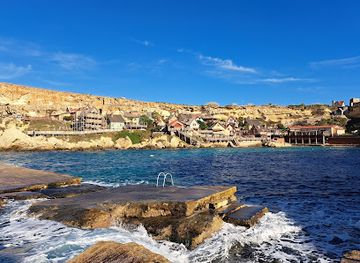
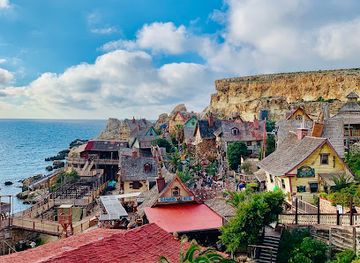
Popeye Village occupies a small, sheltered inlet at Anchor Bay on Malta’s north-western coast, where a cluster of brightly painted wooden buildings climbs the rocky shoreline above clear Mediterranean water. Built as the set for the 1980 musical film Popeye, starring Robin Williams, it has been preserved as a visitor attraction rather than dismantled after filming. The irregular timber structures, narrow lanes and exaggerated colours give the site a theatrical character unlike Malta’s limestone villages and fortified cities.Read more about Popeye Village
Coastal Scenery and Village Scale
Gateway to Malta’s North-West
When is the best time to visit Popeye Village?
Best: May–June, November · 24–31°C| Month | High (°C) | Rainfall (mm) |
|---|---|---|
| January | 18 | 80 |
| February | 18 | 60 |
| March | 19 | 50 |
| April | 21 | 40 |
| May (best) | 26 | 20 |
| June (best) | 31 | 10 |
| July | 33 | 10 |
| August | 34 | 10 |
| September | 32 | 20 |
| October | 29 | 40 |
| November (best) | 24 | 50 |
| December | 20 | 70 |
Getting to and around Popeye Village
How to get there
Transportation
Best attractions in Popeye Village
-
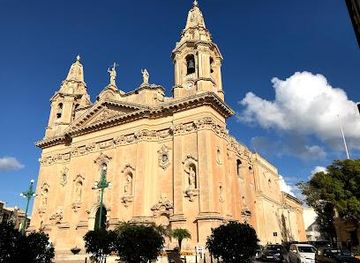
Catholic church
Knisja Parrokkjali tan-Naxxar - Natività tal-Madonna
Discover the stunning Knisja Parrokkjali tan-Naxxar, a beautiful Catholic church showcasing Malta's rich history and artistic heritage.
-
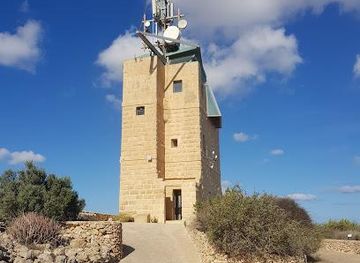
Historical landmark
Ta' Kenuna Tower
Explore the stunning Ta' Kenuna Botanical Garden in Nadur, Malta, a serene blend of vibrant flora and breathtaking views.
-
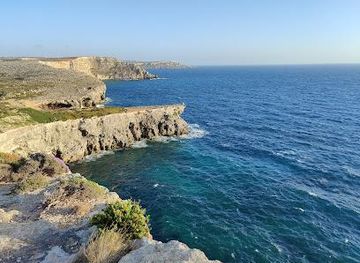
Scenic spot
Rdum il-Qammieħ Viewpoint
Experience stunning vistas and serene nature at the Rdum il-Qammieħ Viewpoint in Mellieħa, Malta. A must-see for all travelers.
-
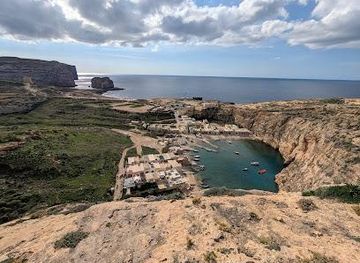
Tourist attraction
Inland Sea & Sunset View Point
Experience the breathtaking beauty of the Inland Sea & Sunset View Point, a must-visit attraction in San Lawrenz, Malta, perfect for nature lovers and sunset chasers.
Best landmarks in Popeye Village
The defining landmark is the brightly painted timber settlement at Anchor Bay, a purpose-built cinematic landscape that has become one of Malta’s most recognisable modern visitor sites. Its significance lies in the survival of a complete film environment: streets, façades and waterfront structures were designed to represent the fictional Sweethaven rather than to reproduce traditional Maltese architecture. Anchor Bay itself is equally important to the character of the place, forming a sheltered indentation in the island’s exposed north-western limestone coast. The surrounding pale rock, open Mediterranean horizon and compact inlet provide the natural setting against which the colourful buildings are read. In the wider Mellieħa landscape, the contrast between the artificial village and Malta’s dry coastal terrain is particularly clear, while nearby bays and rural country contribute to the area’s broader geographical identity without being landmarks within Popeye Village itself.
-
Scenic spot
Anchor Bay Viewpoint
Discover the mesmerizing views of Anchor Bay Viewpoint, where stunning scenery meets the charm of Popeye Village in Mellieħa, Malta.
Explore Popeye Village on the map
Plan your trip on one map. See where the top attractions, landmarks, restaurants and hotels are, and book hotels and experiences in a few clicks.
Best hotels in Popeye Village
Best restaurants in Popeye Village
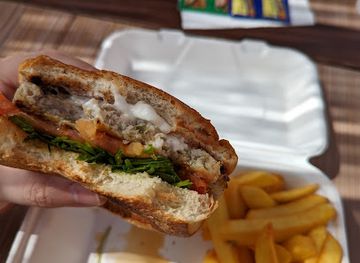
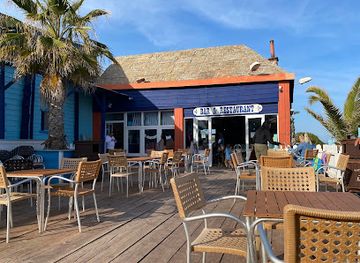
Dining at Popeye Village is centred on the attraction’s own visitor facilities and any current seasonal offerings, so visitors seeking a broader choice should look to Mellieħa and nearby settlements rather than expecting a large restaurant district at Anchor Bay. In the wider locality, menus reflect Malta’s Mediterranean setting and culinary heritage, with dishes commonly drawing on tomatoes, olives, capers, local vegetables, pasta, bread, rabbit and seafood. Maltese specialities such as pastizzi, a savoury pastry filled traditionally with ricotta or peas, are widely associated with casual eating across the island, while cafés and village restaurants provide more substantial meals. The north-west’s coastal position also makes fish and other seafood a familiar part of regional dining, though menus vary. Self-catering visitors can find provisions in Mellieħa before heading to the coast, where choices are more limited.
-
Hamburger
Seafarer
Discover Seafarer in Mellieħa: where delicious hamburgers meet stunning coastal views for an unforgettable dining experience.
-
Barbecue
Popeye Grill
Experience authentic Maltese barbecue at Popeye Grill in Mellieħa - where every bite takes you on a flavorful journey.
Best bars in Popeye Village
Popeye Village is primarily a daytime attraction and Anchor Bay is not a nightlife district. Evening options connected directly with the site may depend on private functions, seasonal programming or current operating arrangements, so visitors should not assume regular late-night entertainment. For a relaxed drink or meal, Mellieħa provides the nearest established concentration of cafés, bars, restaurants and traditional village hospitality, while larger resort areas elsewhere in Malta offer a broader evening scene. The north-west generally suits quiet evenings, coastal views and conversation more than clubbing, particularly outside the busier summer period. Visitors staying near Anchor Bay should plan their return transport in advance, as the coastal setting has fewer late services than Malta’s main urban and resort centres.
-
Hamburger
Seafarer
Experience the best hamburgers in Mellieħa at Seafarer, where Mediterranean flavors meet casual dining in a vibrant atmosphere.
-
Barbecue
Popeye Grill
Experience the authentic taste of barbecue at Popeye Grill in Mellieħa, where every dish is grilled to perfection and bursting with flavor.
-
Bar
Tipsy & Sons Winery
Experience the unique flavors of Malta at Tipsy & Sons Winery, where local wines and a charming atmosphere await every visitor.
Best shops in Popeye Village
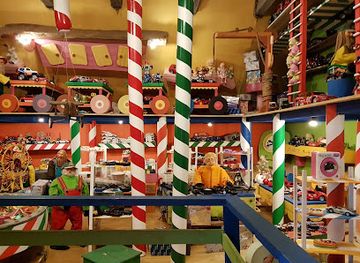
Shopping at Popeye Village is focused on attraction-related souvenirs and gifts rather than a broad retail scene. Visitors may find merchandise connected with Popeye, the film set and Malta, with the exact range depending on current operations. For food, practical supplies and a wider selection of locally produced goods, Mellieħa is the more useful nearby centre. Across Malta, visitors commonly encounter products such as honey, olive oil, preserves, wine, ceramics, lace, filigree jewellery and handmade decorative items, although particular products should not automatically be assumed to originate in the Popeye Village area. The attraction’s distinctive buildings and coastal setting offer better opportunities for photographs than for serious shopping, and visitors planning a picnic or self-catering stay should obtain provisions before travelling to Anchor Bay, where retail facilities are limited.
-
Theme park
Popeye Village
Discover the enchanting Popeye Village in Malta, where childhood memories meet stunning coastal views and family-friendly fun awaits!
-
Scenic spot
Anchor Bay Viewpoint
Discover the stunning coastal views and serene atmosphere at Anchor Bay Viewpoint, a must-visit scenic spot in Mellieħa, Malta.
-
Event ticket seller
Ticket house Popeye Village
Uncover the whimsical charm of Popeye Village in Malta, a vibrant amusement park that celebrates the beloved cartoon character with fun activities and stunning scenery.
Get your free copy of our complete guide to Popeye Village, delivered straight to you.
Everything on this page, from attractions and restaurants to essentials and local phrases, in one PDF you can read offline, print or share.
Already have an account? Sign in
Your Popeye Village guide is ready.
We'll send it to · Not you? Sign out

Getting your guide ready…
We are putting together a fresh copy of the Popeye Village guide. This can take up to a minute.
This can take a few moments. If your browser asks, choose Allow so the download can start. You'll find the guide in your Downloads folder.
Nothing happened? Download it again
Sorry, the guide is taking longer than usual. Please try again in a minute, or get it by email instead.
Popeye Village essentials
Currency and Payment
Safety
Emergency Situations
Do's and Don'ts
Local Tips
From Eve
Local phrases worth knowing
You don't need to get them perfect. A few words go a long way, and locals appreciate the effort.
Basics
| English | Local | Say it |
|---|---|---|
| Hello | Merħba | [mer-hba] |
| Goodbye | Saħħa | [sa-ha] |
| Yes | Iva | [ee-va] |
| No | Le | [leh] |
| Please/You're welcome | Jekk jogħġbok | [yekk yoj-bok] |
| Thank you | Grazzi | [grat-see] |
| Excuse me/Sorry | Skuzi | [skoo-zee] |
| How are you? | Kif int? | [keef int] |
| Fine. And you? | Tajjeb. U int? | [tai-yeb. oo int] |
| Do you speak English? | Titkellem bl-Ingliż? | [tit-kel-lem bl-ingliz] |
| I don't understand | M'hemmx fahem | [m-hemsh fa-hem] |
Eating & Drinking
| English | Local | Say it |
|---|---|---|
| I'd like to see the menu, please | Nixtieq inara l-menu, jekk jogħġbok | [nix-tyek inara l-menyoo, yekk yoj-bok] |
| I don't eat meat | M'naqbilx laħam | [m-nak-bilsh la-ham] |
| Cheers! | Saħħa | [sa-ha] |
| I would like to pay, please | Nixtieq inħallas, jekk jogħġbok | [nix-tyek in-hal-las, yekk yoj-bok] |
Emergencies
| English | Local | Say it |
|---|---|---|
| Help! | Għajjat! | [ay-yat] |
| Go away! | Mur! | [mur] |
| Call the Police! | Ilqajjmu l-Pulizija! | [il-ajj-moo l-poo-lee-zee-ya] |
| Call a doctor! | Ilqajjmu tabib! | [il-ajj-moo ta-beeb] |
| I'm lost | Inkejt | [ink-edge] |
| I'm ill | Ngħid li m'għandix ħsieb | [n-id lee m-gan-dix e-seb] |
Shopping
| English | Local | Say it |
|---|---|---|
| I'd like to buy... | Nixtieq inixtri... | [nix-tree in-ish-tree] |
| I'm just looking | Qed inħares biss | [ked in-ha-res biss] |
| How much is it? | Kemm huwa? | [kem hoo-wa] |
| That's too expensive | Dan huwa wisq sħiħ | [dan hoo-wa wees-sik shi] |
| Can you lower the price? | Tista' tnaqqas il-prezz? | [tis-ta tnak-kash il-prez] |
Time & Numbers
| English | Local | Say it |
|---|---|---|
| What time is it? | X'ħin huwa? | [shin hoo-wa] |
| It's one o'clock | Huwa l-ewwel siegħa | [hoo-wa l-ew-wel see-gha] |
| Half past (10) | Noqghod (10) | [noj-ghod] |
| Morning | Filgħodu | [fil-goh-doo] |
| Afternoon | Waranofsinhar | [wa-ra-nofs-in-har] |
| Evening | Flimkien | [fli-mkyen] |
| Yesterday | Ilbieraħ | [il-bier-ah] |
| Today | Illum | [il-lum] |
| Tomorrow | Għada | [ada] |
| 1 | Wieħed | [wee-hed] |
| 2 | Tnejn | [tnejn] |
| 3 | Tlieta | [tlee-ta] |
| 4 | Erba' | [er-ba] |
| 5 | Ħamsa | [hamsa] |
| 6 | Sitta | [sit-ta] |
| 7 | Seb'a | [seb-a] |
| 8 | Tmienja | [tmi-en-ja] |
| 9 | Disgħa | [dis-gha] |
| 10 | Għaxra | [ax-ra] |
Transport & Directions
| English | Local | Say it |
|---|---|---|
| Where's a/the...? | Fejn hemm... | [feyn hem] |
| What's the address? | X'inhu l-indirizz? | [shin-hoo l-in-di-rees] |
| Can you show me (on the map)? | Tista' terġa' turieni (fuq il-mappa)? | [tis-ta ter-ga tu-ree-nee fooq il-map-pa] |
| When's the next (bus)? | Meta se jasal in-niesa? | [me-ta se ya-sal in-nee-sa] |
| A ticket (to ....) | Biljett (għal ....) | [bil-yet tal] |
History of Popeye Village
The Limestone Coast of Anchor Bay
Popeye Village stands on Malta’s north-western coast, a landscape shaped by exposed limestone, shallow bays and Mediterranean weathering. Anchor Bay’s steep, rocky setting was important to the film project because it provided a natural enclosure for a purpose-built waterfront village. The location belongs to the wider Mellieħa area, whose rural and coastal character historically contrasted with Malta’s dense harbour settlements. Although the present buildings are modern, their setting reflects the island’s characteristic relationship between pale rock, open sea and compact development.
Construction for Popeye
The village was constructed in 1979 as the principal set for Popeye, the musical film released in 1980. Designed to represent the fictional seaside community of Sweethaven, it required a substantial collection of wooden buildings, façades and supporting structures at Anchor Bay. The production brought an international film crew and cast to Malta, while the unusual set became a recognisable feature of the island’s north-western coast. Unlike a temporary backdrop removed after filming, much of the set remained in place and later acquired a second life as a visitor attraction.
From Film Set to Attraction
After the film’s production, the surviving buildings were adapted for public visitation and developed as Popeye Village. Its identity has remained closely tied to cinema, with visitors able to see the constructed streetscape and the setting associated with the film rather than a traditional historic village. The attraction’s family-oriented presentation, coastal outlook and distinctive architecture made it part of Malta’s modern tourism landscape. Its history is therefore connected less with medieval Malta than with the island’s role as a filming location and an adaptable visitor destination.
Modern Coastal Tourism
Popeye Village now forms part of the wider visitor economy of Mellieħa and Malta’s north-west, where beaches, rural landscapes and sea excursions complement built attractions. Its continued operation illustrates how a media production can become a piece of cultural and architectural heritage, even when its buildings were originally created for fiction. The surrounding coast remains an active natural environment rather than a purely decorative backdrop, so access arrangements, weather and conservation responsibilities continue to shape how the site is experienced.
Popeye Village in Photos
Browse through our photo collection highlighting the charm and character of the destination.
Neighbouring destination travel guides
The closest destinations to Popeye Village, if you have time for more than one.
-

-
-

-

-


Swipe for more destinations
Explore more

Explore more of Mellieha Bay Area
Discover Mellieha Bay, Malta's largest sandy beach with crystal-clear waters, rich history, and vibrant natural beauty—perfect for families, nature lovers, and adventure seekers.
Explore Mellieha Bay Area
Explore more of Malta
Discover Malta's crystal-clear waters, rich history, and vibrant culture. From ancient temples to modern nightlife, this Mediterranean gem offers something for everyone.
Explore Malta