

Nan Madol, Micronesia Travel Guide
Discover the ancient city of Nan Madol in Micronesia, a mesmerizing blend of history, culture, and natural beauty on man-made islets connected by a network of canals.
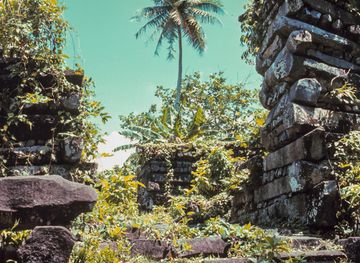
Nan Madol, often referred to as the Venice of the Pacific, is an archaeological wonder located in the Federated States of Micronesia. This ancient city, built on a series of small artificial islands linked by a network of canals, offers a glimpse into the ingenuity and mystique of the Saudeleur Dynasty that ruled the region from around 1100 to 1628 AD. The site is a testament to the impressive engineering skills of its creators, with massive basalt stones arranged in intricate formations that boggle the mind. Walking through the ruins of Nan Madol, visitors can explore the remnants of over 90 man-made islets, each with its own unique function in the ancient society. The city served as the political and ceremonial hub of the Saudeleur Dynasty, and its ruins include royal tombs, residential areas, and religious structures. The ambiance of the site is both eerie and awe-inspiring, with the dense jungle encroaching upon the stone structures, adding to the sense of ancient mystery. Nan Madol is not just a historical site; it is also a place of natural beauty. The surrounding waters are crystal clear, teeming with marine life, making it a fantastic spot for snorkeling and diving. The lush greenery and the serene environment provide a perfect backdrop for a day of exploration. Visiting Nan Madol is like stepping back in time, offering a unique blend of history, culture, and natural beauty that is sure to captivate any traveler.

Know before you go
Hi, I'm Eve. Here are a few practical things to know before exploring Nan Madol.
- Best visited during the dry season, from December to April, for pleasant weather and clear skies.
- Hire a local guide to gain deeper insights into the history and significance of the site.
- Bring snorkeling gear to explore the vibrant marine life around the islets.
- Wear sturdy shoes suitable for walking on uneven terrain and navigating through jungle paths.
- Respect the local customs and traditions, especially when visiting sacred sites within Nan Madol.
Explore Nan Madol: Things to Do, Places to Eat, Hotels & More
Handpicked recommendations for top attractions, local dining, accommodations, and more

Best attractions in Nan Madol
Top-rated picks
Best Attractions

Kepirohi Waterfall
Discover the enchanting beauty of Kepirohi Waterfall in Pohnpei, where adventure meets tranquility amidst lush tropical landscapes.

Fetus Falls
Discover the breathtaking beauty of Fetus Falls, a hidden gem in Pohnpei, where nature's splendor awaits you in tranquility and adventure.

鰻魚池
Explore the serene beauty and unique wildlife of the Eel Pools in Pohnpei, a hidden gem for nature lovers and adventure seekers alike.

Spanish Wall Park
Experience the serene beauty of Spanish Wall Park in Kolonia, Pohnpei - a tranquil escape into nature's embrace.

Best landmarks in Nan Madol
Top-rated picks
Best Landmarks
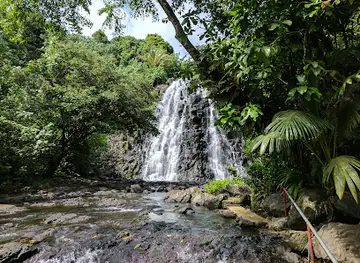
Kepirohi Waterfall
Explore the captivating natural beauty of Kepirohi Waterfall in Pohnpei, where lush landscapes meet tranquil waters for an unforgettable adventure.

Nan Madol Visitors Center
Discover the ancient marvels of the Nan Madol Visitors Center, the gateway to the breathtaking ruins on Pohnpei's enchanting landscapes.

Nan Douwas
Experience the untouched beauty of Nan Douwas Island in Pohnpei, where adventure meets relaxation amidst stunning landscapes and rich cultural heritage.
Nan Mwoluhsei
Explore Nan Mwoluhsei, an enchanting island in Pohnpei, where stunning landscapes meet rich cultural heritage and vibrant marine life for an unforgettable adventure.

Best restaurants in Nan Madol
Top-rated picks
Best Restaurants
Cliff Hotel & Restaurant
Discover culinary delights at Cliff Hotel & Restaurant in Kolonia, Pohnpei – where local flavors meet stunning views.
Joy Hotel & Restaurant
Savor authentic Japanese cuisine at Joy Hotel & Restaurant in Kolonia, Pohnpei - where great food meets warm hospitality.
Chinastar Hotel & Restaurant
Experience authentic Chinese cuisine and local hospitality at Chinastar Hotel & Restaurant in Kolonia, Pohnpei - your perfect travel retreat.
7 Stars Inn & Riverside Restaurant
Discover authentic Pohnpeian cuisine amidst stunning riverside views at 7 Stars Inn & Riverside Restaurant on beautiful Pohnpei Island.

Best bars in Nan Madol
Top-rated picks
Best Bars

Nan Madol
Discover the enchanting ruins of Nan Madol, an ancient city of stone, history, and mystery in the heart of Pohnpei.
7 Stars Inn & Riverside Restaurant
Experience the serene beauty of Pohnpei at 7 Stars Inn & Riverside Restaurant, where comfort meets local flavors amidst breathtaking landscapes.

Mangrove Bay Bar
Discover the lively ambiance and tropical drinks at Mangrove Bay Bar, the ultimate nightlife experience in Kolonia, Pohnpei.

Arnold's
Experience the vibrant flavors of Arnold's in Kolonia, Pohnpei – where local charm meets culinary delight.

Best nightclubs in Nan Madol
Top-rated picks
Best Nightclubs

Nan Madol
Discover the ancient city of Nan Madol, a historical landmark in Pohnpei, showcasing unique architecture and rich cultural heritage.
Chinastar Hotel & Restaurant
Discover the flavors of China and the comfort of hospitality at Chinastar Hotel & Restaurant in Kolonia, Pohnpei.
7 Stars Inn & Riverside Restaurant
Discover the enchanting 7 Stars Inn & Riverside Restaurant, where delightful dining meets serene riverside views on beautiful Pohnpei Island.

Pohnpei Surf and Dive Club
Discover the underwater wonders of Pohnpei at Pohnpei Surf and Dive Club, the ultimate destination for diving and marine exploration.

Best shops in Nan Madol
Top-rated picks
Best Shops

Nan Madol
Explore the ancient canals and stone ruins of Nan Madol, a UNESCO World Heritage site and a remarkable testament to the engineering brilliance of the Micronesian culture.

A-One Mart, Kolonia
Explore local flavors and everyday essentials at A-One Mart, a vibrant grocery store in Kolonia, Pohnpei.

Ace Commercial Center
Experience the vibrant local culture at Ace Commercial Center, your go-to grocery store in Kolonia, Pohnpei Island, featuring fresh produce and unique local goods.

Palm Terrace Market
Explore fresh local produce and authentic Pohnpeian culture at Palm Terrace Market, a vibrant hub in Kolonia.

Explore Nan Madol on the Map
A handpicked selection of must-see spots in Nan Madol, mapped for you.
Nan Madol Essentials
-
Nan Madol is located on the eastern shore of Pohnpei Island in the Federated States of Micronesia. The nearest airport is Pohnpei International Airport (PNI), which has regular flights from major hubs such as Guam and Honolulu. Upon arrival at Pohnpei International Airport, travelers can take a taxi or arrange for a hotel shuttle to reach their accommodations. From there, local tours and transportation services can be arranged to visit Nan Madol.
-
Transportation around Pohnpei, including to Nan Madol, is primarily by taxi or rental car. Taxis are readily available and are a convenient way to get around the island. Rental cars can be arranged through local agencies, providing flexibility for exploring at your own pace. Some tour operators also offer guided tours to Nan Madol, including transportation.
-
The official currency in Micronesia is the United States Dollar (USD). Credit cards are accepted in some hotels, restaurants, and larger shops, but it is advisable to carry cash, especially when visiting remote areas like Nan Madol. ATMs are available in Kolonia, the capital of Pohnpei, where you can withdraw cash.
-
Pohnpei is generally a safe destination for tourists, but it's advisable to take standard precautions. Avoid walking alone at night in unfamiliar areas and keep an eye on your belongings in crowded places. There are no specific high-crime areas targeting tourists, but staying vigilant and aware of your surroundings is always a good practice.
-
In case of an emergency, dial 911 for immediate assistance. Pohnpei has local police and medical facilities available. It is recommended to have travel insurance that covers medical emergencies. For minor health issues, there are pharmacies in Kolonia where you can purchase over-the-counter medications.
-
Fashion: Do dress modestly, especially when visiting cultural or religious sites. Avoid wearing revealing clothing. Religion: Do respect local customs and traditions. Always ask for permission before taking photos of people or sacred sites. Public Transport: Do be respectful and courteous to drivers and other passengers. Don't eat or drink on public transport. Greetings: Do greet people with a friendly 'hello' or 'kaoke.' A handshake is also acceptable. Eating & Drinking: Do try local dishes and accept food offerings graciously. Don't refuse hospitality, as it is considered impolite.
-
To experience Nan Madol like a local, consider hiring a local guide who can provide in-depth knowledge about the history and significance of the site. Visit during low tide for easier access to the ruins. Engage with the locals to learn about their culture and stories associated with Nan Madol. Don't miss the opportunity to explore other parts of Pohnpei, such as the stunning waterfalls and lush rainforests.
When is the best time to visit Nan Madol?
Useful Local Phrases for Nan Madol
You don't need to speak the language perfectly. Even learning a few simple words can make conversations warmer—and locals usually appreciate the effort.
— Eve

Here are the phrases I use most often in Nan Madol. Try a few—you'll be surprised how far they go! 😊
❤️
-
- HelloKaselel
[kah-seh-lehl] - GoodbyeKalahngan
[kah-lahng-gahn] - YesEhng
[ehng] - NoEnggaw
[ehng-gow] - Please/You're welcomePwehl
[pwehl] - Thank youKalangan
[kah-lahng-gahn] - Excuse me/SorryPwehl
[pwehl] - How are you?Kilisou met?
[kee-lee-soh meht] - Fine. And you?Kilisou. A anin?
[kee-lee-soh. ah ah-neen] - Do you speak English?Kaselel di naniti?
[kah-seh-lehl dee nah-nee-tee] - I don't understandKilisou me ak?
[kee-lee-soh meh ahk]
- HelloKaselel
-
- I'd like to see the menu, pleaseKilisou met sohng me menu, pwehl
[kee-lee-soh meht sohng meh meh-noo, pwehl] - I don't eat meatDiak kainim me kang
[dee-ahk kah-ee-neem meh kahng] - Cheers!Kalahngan!
[kah-lahng-gahn] - I would like to pay, pleaseKilisou met sohng me isis, pwehl
[kee-lee-soh meht sohng meh ee-sees, pwehl]
- I'd like to see the menu, pleaseKilisou met sohng me menu, pwehl
-
- Help!Sohng
[sohng] - Go away!Sohng
[sohng] - Call the Police!Sohng kan pohlees!
[sohng kahn poh-lees] - Call a doctor!Sohng kan dokta!
[sohng kahn dohk-tah] - I'm lostDiak sohng en sohng
[dee-ahk sohng ehn sohng] - I'm illDiak koapw me
[dee-ahk koh-ah-poo meh]
- Help!Sohng
-
- I'd like to buy...Kilisou met nuh...
[kee-lee-soh meht noo-ah...] - I'm just lookingDiak sohng nuh
[dee-ahk sohng noo-ah] - How much is it?Kilisou met sohng me solahng?
[kee-lee-soh meht sohng meh soh-lahng] - That's too expensiveDiak sohla solahng
[dee-ahk soh-lah soh-lahng] - Can you lower the price?Diak sohng solahng
[dee-ahk sohng soh-lahng]
- I'd like to buy...Kilisou met nuh...
-
- What time is it?Kilisou met sohng me tohk?
[kee-lee-soh meht sohng meh tohk] - It's one o'clockKilisou me tohk ahluk
[kee-lee-soh meh tohk ah-loo-k] - Half past (10)Ahluk sohng (10)
[ah-loo-k sohng (10)] - MorningDehngal
[dehng-ahl] - AfternoonPwud
[pwood] - EveningPwehl
[pwehl] - YesterdayEkal
[eh-kahl] - TodayAnei
[ah-nay] - TomorrowKapw
[kah-poo] - 1Ahluh
[ah-loo] - 2Ruhda
[roo-dah] - 3Tuhlu
[too-loo] - 4Wahlu
[wah-loo] - 5Lima
[lee-mah] - 6Onom
[oh-nom] - 7Fitu
[fee-too] - 8Waluu
[wah-loo] - 9Siwa
[see-wah] - 10Sapw
[sah-poo]
- What time is it?Kilisou met sohng me tohk?
-
- Where's a/the...?Kilisou met...
[kee-lee-soh meht...] - What's the address?Kilisou met sohng me adras?
[kee-lee-soh meht sohng meh ah-drahs] - Can you show me (on the map)?Diak sohng ngei (pwehl en map)?
[dee-ahk sohng ngeh-ee (pwehl ehn map)] - When's the next (bus)?Kilisou met sohng me nohng (bus)?
[kee-lee-soh meht sohng meh nohng (bus)] - A ticket (to ....)Sohng me tekid (to ....)
[sohng meh teh-keed (to ....)]
- Where's a/the...?Kilisou met...
History of Nan Madol
-
Nan Madol, often referred to as the 'Venice of the Pacific,' is an ancient city built on a series of artificial islets in a lagoon off the eastern shore of Pohnpei, in the Federated States of Micronesia. The city dates back to the early part of the 12th century, constructed by the Saudeleur Dynasty. The origins of Nan Madol remain shrouded in mystery, and its builders are believed to have transported massive basalt stones from the opposite side of Pohnpei Island using an unknown method.
-
The Saudeleur Dynasty ruled Nan Madol and the surrounding islands for several centuries, from approximately 1100 to 1628 AD. The Saudeleur were known for their centralized and hierarchical government. They imposed strict social and religious order, which included the construction of Nan Madol as a ceremonial and political center. The dynasty's reign is characterized by its unique blend of autocratic rule and theocratic governance, which left a lasting impact on Pohnpeian culture and society.
-
Nan Madol is renowned for its distinctive and sophisticated architecture. The city is composed of nearly 100 artificial islets, interconnected by a network of canals. The islets are made from large basalt stones, some weighing up to 50 tons. The construction techniques used to build Nan Madol, particularly the transport and placement of the massive stones, continue to baffle historians and archaeologists. Key structures include the royal mortuary, Nandowas, and the administrative center, Pahn Kadira.
-
Nan Madol served as a major religious and ceremonial center for the Saudeleur Dynasty. The city housed numerous temples, burial places, and sites for ritual activities. The islet of Nandowas, in particular, is believed to have been a royal mortuary where the Saudeleur rulers were laid to rest. The city's layout and structures reflect the importance of spiritual and religious practices in the Saudeleur society, and Nan Madol's religious significance continues to be acknowledged by modern-day Pohnpeians.
-
The Saudeleur Dynasty came to an end in the early 17th century due to internal strife and external pressures. According to oral traditions, the dynasty was overthrown by Isokelekel, a semi-divine warrior from Kosrae. Isokelekel led a successful rebellion against the Saudeleur rulers, marking the end of their reign and the beginning of a new era for Pohnpei. The fall of the Saudeleur Dynasty led to significant changes in the political and social structure of the island, and Nan Madol was gradually abandoned.
-
Nan Madol remained largely abandoned and shrouded in legend until it was rediscovered by Western explorers in the 19th century. Since then, the site has attracted the interest of archaeologists, historians, and adventurers. Numerous studies have been conducted to uncover the mysteries of Nan Madol, including its construction methods, purpose, and the daily lives of its inhabitants. Despite extensive research, many aspects of Nan Madol's history and significance remain enigmatic, adding to its allure as an archaeological marvel.
-
Today, Nan Madol is a UNESCO World Heritage Site and one of the most significant archaeological sites in the Pacific. Efforts are being made to preserve and protect the ruins from environmental threats and human impact. The site continues to hold cultural and historical importance for the people of Pohnpei, who regard it as a testament to their rich heritage. Nan Madol is a popular destination for travelers and researchers alike, offering a glimpse into the ancient and mysterious past of Micronesia.
Cities near Nan Madol
The closest cities to Nan Madol, if you have time for more than one stop.

Your all‑in‑one travel companion app
Explore expert travel guides, compare and book tours, experiences, hotels, and more—all from the palm of your hand. Download now for seamless trip planning wherever your wanderlust takes you.


Nan Madol in Photos
Browse through our photo collection highlighting the charm and character of the destination.


Nan Madol: The Venice of the Pacific
Nan Madol, often referred to as the Venice of the Pacific, is an archaeological wonder located in the Federated States of Micronesia. This ancient city, built on a series of small artificial islands linked by a network of canals, offers a glimpse into the ingenuity and mystique of the Saudeleur Dynasty that ruled the region from around 1100 to 1628 AD. The site is a testament to the impressive engineering skills of its creators, with massive basalt stones arranged in intricate formations that boggle the mind. Walking through the ruins of Nan Madol, visitors can explore the remnants of over 90 man-made islets, each with its own unique function in the ancient society. The city served as the political and ceremonial hub of the Saudeleur Dynasty, and its ruins include royal tombs, residential areas, and religious structures. The ambiance of the site is both eerie and awe-inspiring, with the dense jungle encroaching upon the stone structures, adding to the sense of ancient mystery. Nan Madol is not just a historical site; it is also a place of natural beauty. The surrounding waters are crystal clear, teeming with marine life, making it a fantastic spot for snorkeling and diving. The lush greenery and the serene environment provide a perfect backdrop for a day of exploration. Visiting Nan Madol is like stepping back in time, offering a unique blend of history, culture, and natural beauty that is sure to captivate any traveler.
Explore More of Pohnpei Island

Looking beyond Nan Madol? Discover Pohnpei Island for broader travel guides, local hot-spots, and regional highlights.
Explore Pohnpei IslandExplore More of Micronesia

Looking beyond Nan Madol? Discover Micronesia for broader travel guides, local hot-spots, and regional highlights.
Explore Micronesia