

Free Biloxi Travel Guide & Mobile App
Plan your Biloxi trip with Evendo. Get free guides to top attractions, restaurants, hotels, and bars. Web access or download the mobile app.


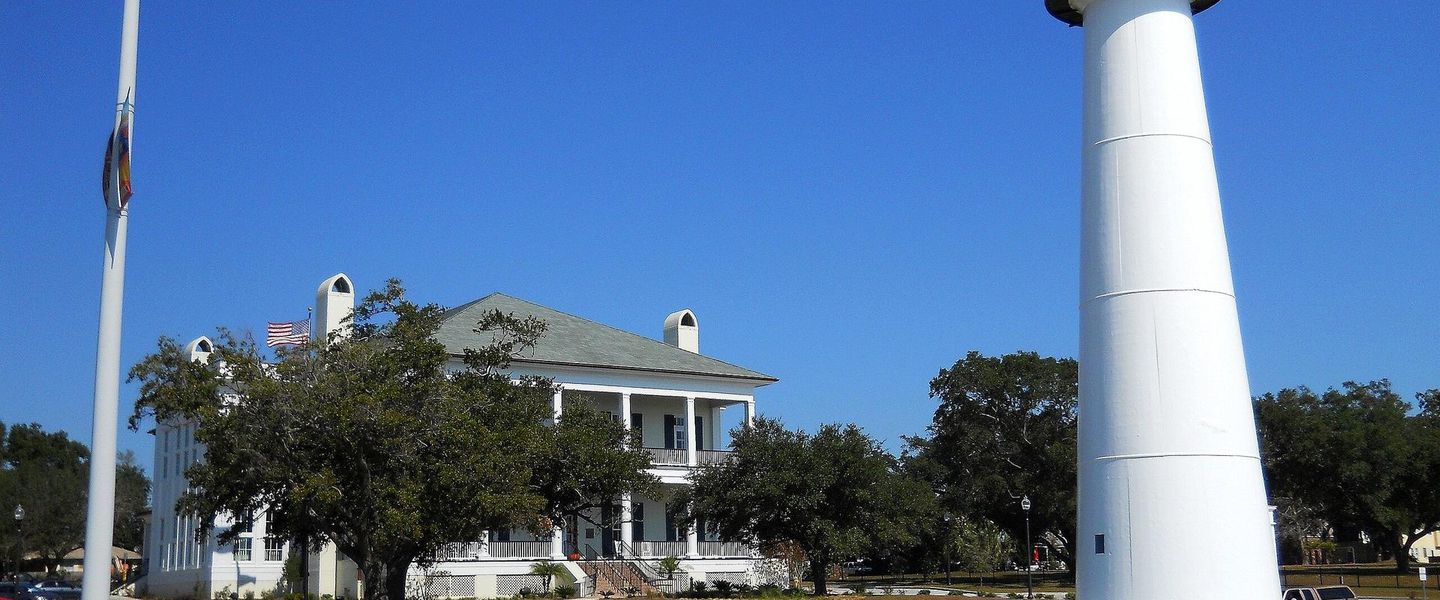


Biloxi, Mississippi blends Gulf Coast beaches, seafood, casinos, maritime history and historic landmarks with easy access to the Mississippi Sound.
Gulf Coast Setting
Biloxi stretches along Mississippi’s Gulf Coast between the mainland and the shallow waters of the Mississippi Sound, where barrier islands soften the horizon and live oaks shade streets shaped by centuries of maritime life. Its beaches, seafood restaurants and casino resorts draw visitors, but the city’s character reaches well beyond tourism: Biloxi remains closely tied to fishing, boatbuilding, coastal ecology and a complex French, Spanish, African American, Vietnamese and Native American heritage.Read more about Biloxi
History Along the Water
Coastal City Life
When is the best time to visit Biloxi?
Best: April, October–November · 22–27°C| Month | High (°C) | Rainfall (mm) |
|---|---|---|
| January | 16 | 130 |
| February | 19 | 120 |
| March | 22 | 130 |
| April (best) | 24 | 120 |
| May | 29 | 120 |
| June | 33 | 150 |
| July | 34 | 170 |
| August | 34 | 180 |
| September | 33 | 150 |
| October (best) | 27 | 110 |
| November (best) | 22 | 120 |
| December | 18 | 130 |
Getting to and around Biloxi
How to get there
Transportation
Best attractions in Biloxi
Biloxi’s principal attractions combine Gulf scenery with an unusually strong maritime and cultural offering. The Biloxi Lighthouse, standing beside Beach Boulevard, provides a recognisable introduction to the shoreline, while the nearby Biloxi Visitors Center explains the city’s history and coastal environment. At Point Cadet, the Maritime and Seafood Industry Museum traces shrimping, oystering, boatbuilding and the communities that made the sound their livelihood. The Ohr-O’Keefe Museum of Art presents the inventive ceramics of George Ohr alongside contemporary exhibitions in distinctive buildings designed by Frank Gehry. Beauvoir, the preserved home and estate of Jefferson Davis, offers insight into the nineteenth-century South, though its interpretation should be read within the wider context of slavery and the Confederacy. Casino resorts, beach parks and boat excursions add modern entertainment and access to the water, while the Mississippi Sound and nearby barrier islands provide a scenic counterpoint to the developed waterfront.
-
Casino
Hard Rock Hotel & Casino Biloxi
Discover the ultimate entertainment experience at Hard Rock Hotel & Casino Biloxi, where luxury meets excitement on the Gulf Coast.
17 min drive · 5.7 km from city centre
-
Casino
Hard Rock Hotel & Casino Biloxi
Experience the thrill of gaming, dining, and entertainment at Hard Rock Hotel & Casino Biloxi, the premier destination on the Gulf Coast.
17 min drive · 5.7 km from city centre
-
Tourist attraction
Davis Bayou Area Gulf Islands National Seashore
Discover the breathtaking landscapes and rich biodiversity of Davis Bayou Area in Gulf Islands National Seashore, Mississippi's hidden gem.
34 min drive · 14 km from city centre
-
Casino
Treasure Bay Casino and Hotel
Experience gaming, dining, and relaxation at Treasure Bay Casino and Hotel in Biloxi, Mississippi, where fun meets the beautiful Gulf coast.
13 min drive · 4.2 km from city centre


Best landmarks in Biloxi
Biloxi’s landmarks record successive layers of coastal history. The Biloxi Lighthouse, completed in 1848, is a brick navigation aid and one of the city’s most recognisable symbols, standing as a reminder of the waterway’s importance to commerce and travel. Beauvoir, the former home of Jefferson Davis, is a nineteenth-century Gulf Coast estate whose historic interpretation is inseparable from Davis’s role as president of the Confederacy and from the history of slavery. The Cathedral of the Nativity of the Blessed Virgin Mary reflects Biloxi’s long Catholic presence and diocesan importance, while the Biloxi Visitors Center’s architecture and position on the shoreline make it a useful civic gateway. The Biloxi-Ocean Springs bridge site also carries modern significance: the original bridge was destroyed by Hurricane Katrina, and the replacement road connection embodies the extensive reconstruction of the coast after 2005.
-
Casino
Beau Rivage Resort & Casino
Discover luxury and excitement at Beau Rivage Resort & Casino in Biloxi, Mississippi—your ultimate destination for gaming, dining, and entertainment.
16 min drive · 5.4 km from city centre
-
Casino
Hard Rock Hotel & Casino Biloxi
Discover the excitement of gaming, gourmet dining, and live entertainment at Hard Rock Hotel & Casino Biloxi, your ultimate Gulf Coast escape.
17 min drive · 5.7 km from city centre
-
Casino
Golden Nugget Biloxi Hotel & Casino
Discover unparalleled luxury and excitement at Golden Nugget Biloxi, your ultimate Gulf Coast destination for gaming, dining, and entertainment.
24 min drive · 7.9 km from city centre
-
 Resort hotel
Margaritaville Resort Biloxi
Experience the vibrant blend of relaxation and adventure at Margaritaville Resort Biloxi, a tropical paradise on the Gulf Coast.
23 min drive · 7.8 km from city centre


Explore Biloxi on the map
Plan your Biloxi trip on one map. See where the top attractions, landmarks, restaurants, bars and hotels are, find what's near where you're staying, and book hotels and experiences in a few clicks.
Best hotels in Biloxi
Best restaurants in Biloxi
Biloxi’s food culture is rooted in the Gulf, with shrimp, oysters, crab, fish and local catches appearing in fried platters, po’boys, seafood gumbo and other Southern preparations. Casual seafood houses, oyster bars, fish markets and restaurants near the waterfront reflect the city’s working maritime economy, while casino resorts offer a broader range of dining styles. Biloxi’s history of migration is particularly visible in its Vietnamese-American community, whose restaurants contribute dishes and flavours that sit naturally alongside Gulf Coast cooking. Crawfish and other shellfish are often associated with the wider Mississippi and Louisiana region, but availability is seasonal and menus change with weather and catch conditions. Visitors will find the greatest concentration of varied dining around the beachfront commercial strip, casino areas and nearby Gulf Coast communities, with bakeries, cafés and family-run restaurants adding less formal alternatives.
-
Seafood
Shaggy's Biloxi Beach
Savor delicious seafood with stunning Gulf views at Shaggy's Biloxi Beach - your go-to destination for coastal dining.
11 min drive · 3.8 km from city centre
-
Seafood
The Reef
Experience the best seafood dining at The Reef in Biloxi – where fresh flavors meet stunning beach views.
11 min drive · 3.8 km from city centre
-
Seafood
Half Shell Oyster House
Experience the freshest oysters and delectable seafood dishes at Half Shell Oyster House in Biloxi - a true culinary treasure on the Gulf Coast.
17 min drive · 5.6 km from city centre
-
Restaurant
McElroy's Harbor House
Discover fresh seafood delights at McElroy's Harbor House in Biloxi – where coastal flavors meet breathtaking views.
18 min drive · 6.0 km from city centre


Best bars in Biloxi
Biloxi’s evening scene is shaped by casino resorts, waterfront restaurants, hotel lounges and live entertainment rather than by a single dense nightclub district. The major casinos provide bars, gaming floors, music and staged performances, with activity often continuing later than in the quieter residential parts of the city. Along Beach Boulevard and around the resort areas, visitors can find relaxed places for cocktails, beer, sport and Gulf views, while seasonal festivals and concerts bring additional entertainment to public spaces. The atmosphere varies considerably by neighbourhood: casino precincts are brightly lit and organised for visitors, whereas Point Cadet and other waterfront areas can be subdued outside events. Alcohol service and casino access follow United States and Mississippi age restrictions, and arranged transport is sensible after drinking because distances between venues can be considerable.
-
Family-friendly
Mugshots Grill and Bar - Biloxi. MS
Discover the family-friendly Mugshots Grill and Bar in Biloxi, where delicious American cuisine meets a lively sports bar atmosphere for all ages.
17 min drive · 5.7 km from city centre
-
Bar
Adventures Pub & Spirits
Experience the vibrant atmosphere and delicious seafood at Adventures Pub & Spirits in Biloxi, a true taste of the Gulf Coast.
17 min drive · 5.6 km from city centre
-
Grill
The Project Lounge
Experience the best of Mississippi grill cuisine at The Project Lounge, a lively destination for delicious food and drinks in Biloxi.
9 min drive · 3.1 km from city centre
-
Bar
Fat Tuesday at Boomtown Casino
Discover the vibrant nightlife of Biloxi at Fat Tuesday, where delectable dishes and signature cocktails create an unforgettable experience.
16 min drive · 5.3 km from city centre


Best nightclubs in Biloxi
Biloxi’s evening scene is shaped by casino resorts, waterfront restaurants, hotel lounges and live entertainment rather than by a single dense nightclub district. The major casinos provide bars, gaming floors, music and staged performances, with activity often continuing later than in the quieter residential parts of the city. Along Beach Boulevard and around the resort areas, visitors can find relaxed places for cocktails, beer, sport and Gulf views, while seasonal festivals and concerts bring additional entertainment to public spaces. The atmosphere varies considerably by neighbourhood: casino precincts are brightly lit and organised for visitors, whereas Point Cadet and other waterfront areas can be subdued outside events. Alcohol service and casino access follow United States and Mississippi age restrictions, and arranged transport is sensible after drinking because distances between venues can be considerable.
-
Night club
Just Us Lounge
Discover the vibrant nightlife at Just Us Lounge in Biloxi, featuring live music, karaoke, and an inclusive atmosphere for everyone.
14 min drive · 4.6 km from city centre
-
Lounge
Chill Ultra Lounge
Experience Biloxi's nightlife at Chill Ultra Lounge, where great cocktails and vibrant music create unforgettable nights out.
13 min drive · 4.3 km from city centre
-
Bar
Pub Lounge
Enjoy an unforgettable night at Pub Lounge Biloxi, where great drinks meet lively ambiance in the heart of Mississippi.
11 min drive · 3.7 km from city centre
-
Lounge
Eight 75
Unwind in style at Eight 75 Lounge, a premier nightlife destination in Biloxi with signature cocktails and a vibrant atmosphere.
16 min drive · 5.4 km from city centre


Best shops in Biloxi
Shopping in Biloxi centres on practical coastal retail, regional food products, local art and souvenirs rather than a historic bazaar district. Edgewater Mall provides the area’s main enclosed shopping environment, while the casinos and beachfront commercial areas contain gift shops, clothing retailers and specialist outlets aimed at visitors. Museums and independent galleries are useful places to find ceramics, prints and Gulf-themed work, with George Ohr’s influence lending local relevance to pottery and contemporary craft. Seafood markets and speciality food shops offer another expression of the coast’s identity, although products and opening patterns vary with the season and catch. Nearby Gulf Coast communities add antique shops, boutiques and additional galleries, but these are separate excursions rather than part of one compact Biloxi shopping quarter. Visitors should distinguish locally made crafts from generic imported souvenirs when choosing gifts.
-
Shopping mall
Edgewater Mall
Explore Edgewater Mall in Biloxi for an unmatched shopping experience with a variety of stores, dining options, and entertainment for everyone.
20 min drive · 6.7 km from city centre
-
Gift shop
Sharkheads
Discover unique souvenirs, delicious chocolates, and creative airbrushing at Sharkheads in Biloxi, where coastal charm meets shopping delight.
11 min drive · 3.7 km from city centre
-
Shopping mall
The Promenade
Explore The Promenade in D'Iberville, MS, for a diverse shopping experience with dining and entertainment options that cater to all tastes.
14 min drive · 4.5 km from city centre
-
Gift shop
Souvenir City
Explore Souvenir City in Biloxi for unique gifts, local treasures, and stylish swimwear that capture the essence of your Gulf Coast adventure.
13 min drive · 4.4 km from city centre


Get your free copy of our complete guide to Biloxi, delivered straight to you.
Everything on this page, from attractions and restaurants to essentials and local phrases, in one PDF you can read offline, print or share.
Already have an account? Sign in
Your Biloxi guide is ready.
We'll send it to · Not you? Sign out

Getting your guide ready…
We are putting together a fresh copy of the Biloxi guide. This can take up to a minute.
This can take a few moments. If your browser asks, choose Allow so the download can start. You'll find the guide in your Downloads folder.
Nothing happened? Download it again
Sorry, the guide is taking longer than usual. Please try again in a minute, or get it by email instead.
Biloxi essentials
Currency and Payment
Safety
Emergency Situations
Do's and Don'ts
Local Tips
From Eve
Local phrases worth knowing
You don't need to get them perfect. A few words go a long way, and locals appreciate the effort.
Basics
| English | Local | Say it |
|---|---|---|
| Hello | Howdy | [h-OW-dee] |
| Goodbye | See ya | [see yah] |
| Yes | Yeah | [yEH] |
| No | Nah | [nAH] |
| Please/You're welcome | Please/No problem | [pleez / no PROB-lum] |
| Thank you | Thanks | [thANKS] |
| Excuse me/Sorry | Pardon me/My bad | [pAHr-dn mee / mah BAHD] |
| How are you? | How y'all doin'? | [h-OW y'all DOH-in'] |
| Fine. And you? | Fine. How 'bout you? | [fAHn. how 'bout yOU?] |
| Do you speak English? | Y'all speak English? | [y'all speak ING-lish?] |
| I don't understand | I ain't gettin' it | [aihnt GEH-tin' it] |
Eating & Drinking
| English | Local | Say it |
|---|---|---|
| I'd like to see the menu, please | Can I see the menu, please | [kan ai see thuh MEH-nyoo, pleez] |
| I don't eat meat | I don't eat meat | [aih d-ownt eet meet] |
| Cheers! | Cheers! | [cheers] |
| I would like to pay, please | I wanna pay now, please | [ai WAW-nuh pay now, pleez] |
Emergencies
| English | Local | Say it |
|---|---|---|
| Help! | Help! | [help] |
| Go away! | Get outta here! | [get OWT-uh here] |
| Call the Police! | Call the cops! | [call thuh cops] |
| Call a doctor! | Call a doc! | [call uh dok] |
| I'm lost | I'm lost | [aim lost] |
| I'm ill | I'm sick | [aim sik] |
Shopping
| English | Local | Say it |
|---|---|---|
| I'd like to buy... | I wanna buy... | [ai WAW-nuh buy...] |
| I'm just looking | I'm just lookin' | [aim just LOOK-in'] |
| How much is it? | How much? | [how MUHCH?] |
| That's too expensive | That's too much | [thats too MUHCH] |
| Can you lower the price? | Can ya do any better? | [kan yuh doh en-nee BET-ter?] |
Time & Numbers
| English | Local | Say it |
|---|---|---|
| What time is it? | What time is it? | [wut time is it] |
| It's one o'clock | It's one | [its wun] |
| Half past (10) | Half past ten | [haf past ten] |
| Morning | Morning | [mornin'] |
| Afternoon | Afternoon | [afterNOON] |
| Evening | Evenin' | [evenin'] |
| Yesterday | Yesterday | [yestuhday] |
| Today | Today | [tuhday] |
| Tomorrow | Tomorrow | [tuh-MOR-ow] |
| 1 | One | [wun] |
| 2 | Two | [too] |
| 3 | Three | [three] |
| 4 | Four | [four] |
| 5 | Five | [fahv] |
| 6 | Six | [siks] |
| 7 | Seven | [sev-un] |
| 8 | Eight | [ayt] |
| 9 | Nine | [nain] |
| 10 | Ten | [ten] |
Transport & Directions
| English | Local | Say it |
|---|---|---|
| Where's a/the...? | Where's the...? | [wheres thuh] |
| What's the address? | What's the address? | [whats thuh uh-DRESS] |
| Can you show me (on the map)? | Can ya show me (on the map)? | [kan yuh show me (on thuh map)] |
| When's the next (bus)? | When's the next (bus)? | [whens thuh nekst (buss)] |
| A ticket (to ....) | A ticket (to ....) | [uh TICK-it (tuh)] |
History of Biloxi
Native Coast and French Arrival
Before European colonisation, the Mississippi Gulf Coast was home to Indigenous peoples, including communities associated with the Biloxi people and other regional Native nations whose lives depended on coastal waters, forests and wetlands. In 1699, French explorer Pierre Le Moyne d’Iberville reached the Gulf and established Fort Maurepas at nearby Old Biloxi, now within Ocean Springs, marking the beginning of a French colonial presence in the region. The settlement was strategically placed to support France’s claims along the Gulf and to connect maritime activity with the wider Mississippi Valley. Although the administrative centre moved elsewhere, the early French presence gave Biloxi a foundational place in the colonial history of the Gulf Coast.
Colonial Rule and Coastal Exchange
During the eighteenth century, the Biloxi area passed through French and Spanish control before becoming part of the United States. The coast’s shallow bays, islands and sheltered waters encouraged fishing, small-scale trade and maritime movement rather than the development of a large inland commercial city. European colonists, enslaved Africans, Indigenous communities and later migrants shaped the region’s economy and culture, while the port connected local activity with New Orleans and other Gulf settlements. Spanish rule left enduring traces in the broader Gulf Coast’s political and architectural history, even as Biloxi remained a comparatively small coastal community whose fortunes depended on access to the water.
American Incorporation and Growth
Biloxi became part of the United States with the transfer of Spanish Florida and adjacent Gulf territories in the early nineteenth century, and Mississippi achieved statehood in 1817. Over the following decades, Biloxi developed as a resort, fishing and maritime centre. Visitors were drawn by the coast’s mild climate, while families involved in shrimping, oystering, boatbuilding and seafood processing established traditions that remain central to the city’s identity. The Biloxi Lighthouse, completed in 1848, symbolised the growing importance of navigation along the shoreline. By the late nineteenth and early twentieth centuries, rail connections and coastal tourism helped link Biloxi more closely with the wider American South.
War, Reconstruction and Maritime Industry
The Civil War disrupted Gulf Coast commerce and brought military pressure to Mississippi’s coastal settlements, followed by the political and economic upheaval of Reconstruction. Biloxi gradually rebuilt around fishing, seafood processing, tourism and transport. The arrival of immigrant communities, including people from Croatia and later Vietnam, expanded the workforce and added new culinary and cultural influences to the city. Commercial seafood became especially important, with shrimping and oyster harvesting defining both local employment and public identity. These industries relied on knowledge of tides, weather and coastal waters, creating a maritime culture that is interpreted today at the Maritime and Seafood Industry Museum.
Tourism, Culture and the Casino Era
During the twentieth century, Biloxi balanced its established seaside-resort identity with the growth of commercial fishing, military activity and cultural institutions. The city became associated with seafood festivals, coastal recreation and the work of George Ohr, an inventive ceramic artist born in Biloxi in 1857. Mississippi’s decision to permit dockside casino gaming in the 1990s transformed the waterfront economy, bringing large resort complexes and new employment while adding a more conspicuous entertainment dimension to the city. Museums, restored buildings and public heritage projects continued to preserve older narratives alongside this modern development.
Hurricane Katrina and Coastal Renewal
Hurricane Katrina struck the Mississippi Gulf Coast on 29 August 2005, causing catastrophic flooding, wind damage and loss of life across Biloxi and neighbouring communities. The storm damaged homes, businesses, historic structures, casinos and maritime facilities, while the destruction of the old Biloxi-Ocean Springs bridge altered travel along the coast. Recovery brought reconstruction of roads, public buildings and visitor facilities, but also renewed debate about coastal protection, evacuation and the vulnerability of barrier-island communities. Biloxi’s present landscape therefore reflects both long-term rebuilding and the continuing need to adapt a low-lying city to hurricanes, erosion and changing Gulf conditions.
Biloxi in Photos
Browse through our photo collection highlighting the charm and character of the destination.
Cities near Biloxi
The closest cities to Biloxi, if you have time for more than one stop.
-

-

-

-

-
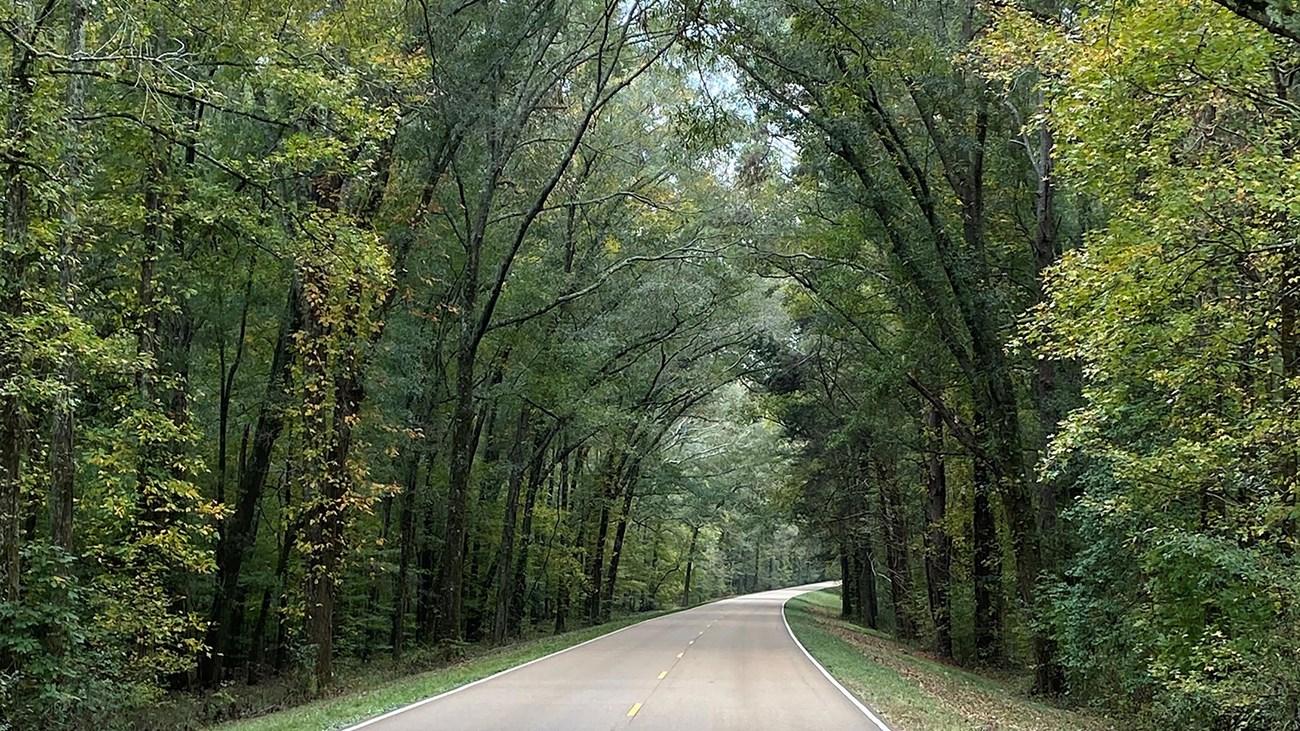 Natchez
, Mississippi pairs grand antebellum homes, river views, Civil War history and Southern food with thoughtful sightseeing along the Mississippi.
4 h 47 min drive · 267 km from city centre


Swipe for more cities
Explore more

Explore more of Mississippi
Discover Mississippi: A treasure trove of Southern culture, blues music heritage, and stunning natural landscapes perfect for every kind of traveler.
Explore Mississippi