

Free Les Moneghetti Travel Guide & Mobile App
Plan your Les Moneghetti trip with Evendo. Get free guides to top attractions, restaurants, hotels, and bars. Web access or download the mobile app.


Les Moneghetti, Monaco, offers steep Mediterranean streets, Riviera views and easy access to Monte-Carlo, La Condamine, historic landmarks and local life.
A Hillside Neighbourhood Above the Port
Les Moneghetti occupies a steep hillside in central Monaco, rising between the harbour district of La Condamine and the glamorous avenues of Monte-Carlo. Its name is generally associated with the Italian word for “little monks”, a reminder of the Ligurian and Italian influences that have long shaped Monaco’s language, migration and built environment. Rather than presenting a single monumental centre, the neighbourhood is experienced through stairways, winding roads, apartment blocks and terraces opening towards the Mediterranean and Port Hercule.Read more about Les Moneghetti
Monaco Between Everyday Life and Grandeur
Streets, Gardens and Coastal Light
When is the best time to visit Les Moneghetti?
Best: June–July, September · 25–28°C| Month | High (°C) | Rainfall (mm) |
|---|---|---|
| January | 14 | 70 |
| February | 14 | 60 |
| March | 15 | 60 |
| April | 18 | 50 |
| May | 21 | 40 |
| June (best) | 25 | 30 |
| July (best) | 28 | 20 |
| August | 29 | 20 |
| September (best) | 26 | 30 |
| October | 23 | 50 |
| November | 19 | 60 |
| December | 16 | 70 |
Getting to and around Les Moneghetti
How to get there
Transportation
Best attractions in Les Moneghetti
Les Moneghetti is best explored as part of a compact circuit through central Monaco. Its elevated streets create changing views over Port Hercule and make the walk between La Condamine and Monte-Carlo feel more layered than a map suggests. Nearby La Condamine Market brings together everyday produce, cafés and the social life of the port district, while the Prince’s Palace on Monaco-Ville introduces the principality’s ruling history and ceremonial landscape. The Oceanographic Museum, built on the face of the Rock, combines marine collections with a dramatic coastal setting, and Monaco Cathedral provides a quieter encounter with the country’s religious and dynastic heritage. In Monte-Carlo, the Casino de Monte-Carlo and its surrounding square offer an ornate contrast to Les Moneghetti’s residential streets. The appeal lies in connecting these places on foot, by lift and by bus, observing how steep topography continually changes the view and atmosphere.
-
Catholic church
Église de Sainte-Dévote
Discover the serene Église de Sainte-Dévote, a historical chapel in Monaco, rich in culture and spiritual heritage, perfect for a peaceful retreat.
5 min walk · 0.4 km from city centre

Best landmarks in Les Moneghetti
Les Moneghetti’s principal significance is its position among Monaco’s landmarks rather than a concentration of monumental buildings within the neighbourhood itself. Close by, Monaco-Monte-Carlo railway station represents the transport infrastructure that helped connect the principality with the Riviera, while Port Hercule below illustrates Monaco’s long relationship with maritime trade, travel and yachting. On the Rock, the Prince’s Palace remains the ceremonial centre of the Grimaldi state, and Monaco Cathedral is associated with the principality’s religious and dynastic history. The Oceanographic Museum is a distinctive early twentieth-century building dramatically attached to the cliff face, combining civic ambition with marine science. In Monte-Carlo, the Casino de Monte-Carlo and Hôtel de Paris embody the nineteenth-century resort architecture that transformed Monaco’s fortunes. Together, these landmarks show how fortress, harbour, railway, palace and casino shaped the modern principality.
-
Train station
Monaco-Monte-Carlo station
Discover luxury and beauty at the Monaco-Monte-Carlo Station, your gateway to the glamorous lifestyle of Monaco.
4 min walk · 0.3 km from city centre
-
Catholic church
Église de Sainte-Dévote
Explore the Église de Sainte-Dévote, a serene Catholic church in Monaco, rich in history and stunning architecture, perfect for cultural immersion.
5 min walk · 0.4 km from city centre
-
Parking garage
Parking of Agaves
Discover the convenience of Parking of Agaves in Monaco, your ideal parking solution for exploring this luxurious Mediterranean destination.
2 min walk · 0.2 km from city centre
-
Holiday apartment rental
Monaco
Discover the opulence of Monaco, a luxurious haven on the French Riviera with stunning views, world-class dining, and exclusive shopping experiences.
2 min walk · 0.2 km from city centre


Explore Les Moneghetti on the map
Plan your Les Moneghetti trip on one map. See where the top attractions, landmarks, restaurants, bars and hotels are, find what's near where you're staying, and book hotels and experiences in a few clicks.
Best hotels in Les Moneghetti
Best restaurants in Les Moneghetti
Les Moneghetti itself is primarily residential, so its dining options blend into the broader culinary scene of Monaco rather than forming a separate restaurant quarter. A short descent brings visitors to La Condamine, where the market and surrounding streets offer Provençal and Ligurian influences, seasonal produce, socca-style Niçoise traditions and casual Mediterranean meals. The port and Monte-Carlo add cafés, bakeries, polished hotel dining rooms and international restaurants, while Italian cooking remains especially natural in a principality historically connected with Liguria. Seafood, vegetables, olive oil and Riviera herbs recur across menus, alongside Monaco’s best-known local speciality, barbajuan, a fried pastry filled with Swiss chard and other savoury ingredients. Dining atmospheres range from informal market tables to highly formal rooms, and prices generally reflect Monaco’s international resort status, particularly around the casino and waterfront.
-
Pizza
Apero Pizza Etc
Discover Apero Pizza Etc in Monaco: where authentic Italian pizza meets charming ambiance in a vibrant setting.
4 min walk · 0.3 km from city centre
-
Thai
Tiny Thaï
Discover authentic Thai flavors at Tiny Thaï in Monaco - where tradition meets taste in a charming atmosphere.
5 min walk · 0.4 km from city centre
-
Restaurant
Spicy Bamboo
Discover Spicy Bamboo: Monaco's premier destination for exquisite Asian cuisine in an inviting atmosphere.
4 min walk · 0.3 km from city centre
-
Restaurant
Au Petit Marché
Discover authentic Monégasque cuisine at Au Petit Marché, where every dish tells a story in the heart of beautiful Monaco.
1 min walk · 0.1 km from city centre


Best bars in Les Moneghetti
Evenings around Les Moneghetti are relatively quiet and residential, but the neighbourhood is within easy reach of Monaco’s principal nightlife areas. La Condamine offers relaxed cafés and wine-led evenings around the port, while Monte-Carlo concentrates the principality’s more formal bars, hotel lounges and late-night venues. The Casino de Monte-Carlo provides a traditional evening setting governed by its own dress and access requirements, and the surrounding hotels add cocktail bars and live entertainment with an international atmosphere. Port Hercule can feel more animated during major events, especially when the Monaco Grand Prix or other calendar highlights bring visitors into the streets. For a calmer night, the illuminated harbour, hillside viewpoints and restaurant terraces provide an alternative to clubbing. Visitors should expect smart dress in many upscale venues and should check current entry arrangements before planning a late evening.
-
Bar
Slammer's
Discover Slammer's, Monaco's hidden gem piano bar, where exquisite cocktails and live music create an unforgettable nightlife experience.
4 min walk · 0.4 km from city centre
-
Bar tabac
Bar Azur
Experience the vibrant atmosphere of Bar Azur, Monaco's hidden gem for exquisite Mediterranean cuisine and stunning views.
1 min walk · 0.1 km from city centre


Best nightclubs in Les Moneghetti
Evenings around Les Moneghetti are relatively quiet and residential, but the neighbourhood is within easy reach of Monaco’s principal nightlife areas. La Condamine offers relaxed cafés and wine-led evenings around the port, while Monte-Carlo concentrates the principality’s more formal bars, hotel lounges and late-night venues. The Casino de Monte-Carlo provides a traditional evening setting governed by its own dress and access requirements, and the surrounding hotels add cocktail bars and live entertainment with an international atmosphere. Port Hercule can feel more animated during major events, especially when the Monaco Grand Prix or other calendar highlights bring visitors into the streets. For a calmer night, the illuminated harbour, hillside viewpoints and restaurant terraces provide an alternative to clubbing. Visitors should expect smart dress in many upscale venues and should check current entry arrangements before planning a late evening.
-
Night club
MAMARIMBING ISLAND
Discover the vibrant nightlife at Mamarimbing Island, a premier night club in the heart of Monaco, perfect for unforgettable nights out.
4 min walk · 0.4 km from city centre
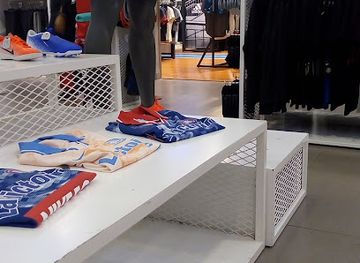
Best shops in Les Moneghetti
Shopping in Les Moneghetti is mainly practical and residential, with the most characteristic browsing found a short walk away in La Condamine and Monte-Carlo. Around Place d’Armes and the market district, visitors can find food shops, bakeries, fresh produce and everyday goods connected to Monaco’s Mediterranean cooking traditions. The streets near Monte-Carlo offer a more polished mix of fashion, jewellery, watches, beauty retailers and international luxury brands, while the port area includes specialist nautical and lifestyle businesses. Typical edible gifts include regional olive products, confectionery and Riviera ingredients, although visitors should distinguish Monaco-branded souvenirs from goods sourced more broadly from the French and Italian coast. The retail atmosphere changes quickly with the terrain: local commerce is strongest around transport and market streets, whereas the grand avenues near the casino are oriented towards luxury shopping and hotel clientele.
-
Bakery
Boutique COSTA Monaco - Jardin Exotique
Discover the exquisite flavors of Monaco at Boutique COSTA Monaco - Jardin Exotique, where every pastry tells a story.
1 min walk · 0.1 km from city centre
-
Organic food store
The Organic Shop - Monaco’s Organic Food Market
Explore The Organic Shop in Monaco for fresh, locally sourced organic produce and gourmet products in a vibrant market setting.
4 min walk · 0.3 km from city centre
-
Gift basket store
Monaco Store
Explore the Monaco Store for exquisite gifts, local beverages, and unique souvenirs that embody the glamour of Monaco.
4 min walk · 0.3 km from city centre
-
Tobacco shop
Tabac Presse des Moneghetti
Discover the heart of Monaco at Tabac Presse des Moneghetti, a charming tobacco shop offering local products and a taste of Monégasque culture.
1 min walk · 0.1 km from city centre


Get your free copy of our complete guide to Les Moneghetti, delivered straight to you.
Everything on this page, from attractions and restaurants to essentials and local phrases, in one PDF you can read offline, print or share.
Already have an account? Sign in
Your Les Moneghetti guide is ready.
We'll send it to · Not you? Sign out

Getting your guide ready…
We are putting together a fresh copy of the Les Moneghetti guide. This can take up to a minute.
This can take a few moments. If your browser asks, choose Allow so the download can start. You'll find the guide in your Downloads folder.
Nothing happened? Download it again
Sorry, the guide is taking longer than usual. Please try again in a minute, or get it by email instead.
Les Moneghetti essentials
Currency and Payment
Safety
Emergency Situations
Do's and Don'ts
Local Tips
From Eve
Local phrases worth knowing
You don't need to get them perfect. A few words go a long way, and locals appreciate the effort.
Basics
| English | Local | Say it |
|---|---|---|
| Hello | Bonjour | [bon-zhoor] |
| Goodbye | Au revoir | [oh re-vwah] |
| Yes | Oui | [wee] |
| No | Non | [noh] |
| Please/You're welcome | S'il vous plaît / De rien | [seel voo pleh / deh ree-ehn] |
| Thank you | Merci | [mehr-see] |
| Excuse me/Sorry | Excusez-moi / Désolé | [ex-kew-zay mwah / day-zo-lay] |
| How are you? | Comment ça va? | [koh-mohn sah vah] |
| Fine. And you? | Bien. Et vous? | [byehn. ay voo] |
| Do you speak English? | Parlez-vous anglais? | [par-leh voo ahn-glay] |
| I don't understand | Je ne comprends pas | [zhuh nuh kohm-prahn pah] |
Eating & Drinking
| English | Local | Say it |
|---|---|---|
| I'd like to see the menu, please | Je voudrais voir le menu, s'il vous plaît | [zhuh voo-dray vwahr luh meh-new, seel voo pleh] |
| I don't eat meat | Je ne mange pas de viande | [zhuh nuh mahn zhuh pah deh vee-ahnd] |
| Cheers! | Santé! | [sahn-tay] |
| I would like to pay, please | Je voudrais payer, s'il vous plaît | [zhuh voo-dray pay-yay, seel voo pleh] |
Emergencies
| English | Local | Say it |
|---|---|---|
| Help! | Au secours! | [oh seh-coor] |
| Go away! | Allez-vous en! | [al-leh vooz ahn] |
| Call the Police! | Appelez la police! | [ah-peh-lay lah poh-lees] |
| Call a doctor! | Appelez un médecin! | [ah-peh-lay uh may-deh-sahn] |
| I'm lost | Je suis perdu | [zhuh swee pair-doo] |
| I'm ill | Je suis malade | [zhuh swee mah-lahd] |
Shopping
| English | Local | Say it |
|---|---|---|
| I'd like to buy... | Je voudrais acheter... | [zhuh voo-dray ah-shet-ay] |
| I'm just looking | Je regarde juste | [zhuh ruh-gahrd zhuhst] |
| How much is it? | Combien ça coûte? | [kohm-byen sah koot] |
| That's too expensive | C'est trop cher | [say troh shair] |
| Can you lower the price? | Pouvez-vous baisser le prix? | [poo-vez voo beh-say luh pree] |
Time & Numbers
| English | Local | Say it |
|---|---|---|
| What time is it? | Quelle heure est-il? | [kel uhr eh-teel] |
| It's one o'clock | Il est une heure | [eel eh oon uhr] |
| Half past (10) | Dix et demi | [dees ay dem-ee] |
| Morning | Matin | [mah-tahn] |
| Afternoon | Après-midi | [ah-pray-mee-dee] |
| Evening | Soir | [swahr] |
| Yesterday | Hier | [ee-ehr] |
| Today | Aujourd'hui | [oh-zhoor-dwee] |
| Tomorrow | Demain | [duh-mahn] |
| 1 | Un | [uhn] |
| 2 | Deux | [duh] |
| 3 | Trois | [twah] |
| 4 | Quatre | [katr] |
| 5 | Cinq | [sank] |
| 6 | Six | [sees] |
| 7 | Sept | [sept] |
| 8 | Huit | [weet] |
| 9 | Neuf | [nurf] |
| 10 | Dix | [dees] |
Transport & Directions
| English | Local | Say it |
|---|---|---|
| Where's a/the...? | Où est le/la...? | [oo eh luh/lah] |
| What's the address? | Quelle est l'adresse? | [kel eh lah-dress] |
| Can you show me (on the map)? | Pouvez-vous me montrer (sur la carte)? | [poo-vez voo muh mohn-tray (soor lah kart)] |
| When's the next (bus)? | Quand est le prochain (bus)? | [kahnd eh luh proh-shahn (bus)] |
| A ticket (to ....) | Un billet (pour ...) | [uhn bee-yay (poor)] |
History of Les Moneghetti
Ligurian Roots and the House of Grimaldi
Les Moneghetti forms part of Monaco’s historic urban territory, whose deepest cultural connections are with the Ligurian coast of north-western Italy. Monaco’s political history is closely linked to the Grimaldi family, who seized the fortress on the Rock in 1297 and gradually consolidated their rule over the principality. For centuries, settlement was concentrated around the fortified Rock, the harbour and the cultivated slopes behind them. The hills that later became Les Moneghetti were shaped by this compact geography, with paths, terraces and small-scale rural activity connecting the densely occupied coast to higher ground.
From Rural Slopes to Urban Territory
Before Monaco’s nineteenth-century transformation into an international resort, the slopes beyond the old rock were less intensively developed than they are today. Olive groves, gardens and small estates occupied parts of the uneven terrain, while routes between the Rock, La Condamine and the eastern plateau followed the contours of the land. Les Moneghetti’s position made it a natural transitional area: close to the port and commercial activity, yet elevated above the waterfront. The neighbourhood’s later character reflects the wider conversion of Monaco’s limited land from agricultural and semi-rural use into tightly planned residential urban space.
The Resort Era Reaches the Hillside
Monaco’s fortunes changed dramatically during the nineteenth century. The establishment of the casino at Monte-Carlo in 1863, followed by the development of hotels, gardens and transport links, brought visitors, investment and a growing resident population. The railway, opened in 1868, strengthened the principality’s connection with the wider Riviera and encouraged building beyond the original fortified settlement. Les Moneghetti developed within this expanding urban landscape, its slopes increasingly occupied by roads, apartment buildings and services supporting Monaco’s resort economy. The neighbourhood was not the stage for the casino spectacle, but it benefited directly from the infrastructure and population growth that spectacle created.
Modern Monaco and Vertical Development
During the twentieth century, Monaco continued to urbanise under severe geographical pressure. The principality’s narrow coastal strip and steep hinterland encouraged apartment construction, retaining walls, tunnels, lifts and carefully engineered roads. Les Moneghetti became part of the continuous built-up area linking Monte-Carlo, La Condamine and the approaches to the Exotic Garden district. Residential development altered the visual balance of the hillside, replacing much of the older open land while preserving the underlying pattern of terraces and changing elevations. The neighbourhood’s present form is therefore a product of Monaco’s long response to scarce space.
A Residential Quarter in the Contemporary Principality
Today, Les Moneghetti is one of Monaco’s established residential quarters rather than a separate historic town. Its streets reflect the principality’s contemporary identity: dense but orderly, internationally connected yet still shaped by local daily routines. Public transport, pedestrian lifts and links to adjacent districts allow the neighbourhood to function as part of Monaco’s compact urban network. Its historical significance lies less in a single surviving monument than in the way it records the principality’s transformation from a fortified Ligurian settlement into a vertically developed Mediterranean state, where residential life, tourism and infrastructure occupy the same limited terrain.
Les Moneghetti in Photos
Browse through our photo collection highlighting the charm and character of the destination.
Cities near Les Moneghetti
The closest cities to Les Moneghetti, if you have time for more than one stop.
-

-

-

-

-


Swipe for more cities
Explore more

Explore more of Monaco
Explore Monaco: A glamorous principality on the French Riviera, known for its luxury casinos, stunning Mediterranean views, cultural landmarks, and vibrant nightlife.
Explore Monaco