

Free Monaco-Ville Travel Guide & Mobile App
Plan your Monaco-Ville trip with Evendo. Get free guides to top attractions, restaurants, hotels, and bars. Web access or download the mobile app.


Monaco-Ville combines Grimaldi history, palace squares, cathedral heritage, ocean views and the Oceanographic Museum on Monaco's historic Rock.
The Old Town on the Rock
Monaco-Ville occupies the historic rocky promontory that rises above Port Hercule and the Fontvieille district, forming the oldest and most characterful quarter of the Principality of Monaco. Its narrow, largely pedestrian streets lead through pastel façades, small squares and vaulted passages towards the Prince's Palace, while the cliffs open onto broad views of the Mediterranean and the French Riviera coast. Although compact, the neighbourhood carries the political and ceremonial importance of Monaco's 700-year-old Grimaldi story.Read more about Monaco-Ville
Palace, Cathedral and Ocean Views
When is the best time to visit Monaco-Ville?
Best: June–August · 27–28°C| Month | High (°C) | Rainfall (mm) |
|---|---|---|
| January | 14 | 89 |
| February | 15 | 74 |
| March | 16 | 71 |
| April | 20 | 64 |
| May | 23 | 52 |
| June (best) | 27 | 31 |
| July (best) | 28 | 16 |
| August (best) | 28 | 25 |
| September | 27 | 58 |
| October | 24 | 104 |
| November | 19 | 126 |
| December | 16 | 110 |
Getting to and around Monaco-Ville
How to get there
Transportation
Best attractions in Monaco-Ville
Monaco-Ville's principal attractions are concentrated on and around the historic Rock. The Prince's Palace introduces the living centre of Grimaldi rule, with ceremonial rooms and a square associated with the changing of the guard when interior access is available. Saint Nicholas Cathedral combines Romanesque-Byzantine architecture with the burial place of several members of the princely family, including Princess Grace. Built into the cliff face, the Oceanographic Museum joins aquariums and marine displays with the scientific legacy of Prince Albert I. The narrow lanes of the old town are attractions in their own right, leading to small squares, views across Port Hercule and the colourful facades of the Place de la Mairie. Saint-Martin Gardens add Mediterranean planting and sea-facing paths, while the nearby Chapiteau and Fontvieille districts reveal the principality's newer urban landscape.
-
Museum
Musée océanographique de Monaco
Explore the stunning Musée Océanographique de Monaco, where marine life meets breathtaking architecture in a captivating journey through the ocean's wonders.
1 min walk · 0.1 km from city centre
-
Castle
Prince's Palace of Monaco
Explore the opulent history and stunning architecture of the Prince's Palace of Monaco, a must-see cultural landmark with breathtaking views.
4 min walk · 0.4 km from city centre
-
Marina
Port de Fontvieille
Explore the captivating beauty of Port de Fontvieille, a serene marina in Monaco known for its stunning views and vibrant local culture.
4 min walk · 0.4 km from city centre
-
City park
Jardins Saint-Martin
Explore the serene Jardins Saint-Martin in Monaco, a lush city park offering stunning coastal views and a touch of history.
1 min walk · 0.1 km from city centre


Best landmarks in Monaco-Ville
The Prince's Palace is Monaco-Ville's central landmark, occupying the fortified summit where the Grimaldi dynasty established its power and continuing to serve as the official residence of the sovereign. Saint Nicholas Cathedral, built largely in the late nineteenth century on the site of earlier churches, is a major religious and dynastic monument, known for its white stone interior and princely tombs. The Oceanographic Museum is an architectural landmark as well as a scientific institution, dramatically built against the southern cliff above the Mediterranean. Nearby, the Palace Square, the old ramparts and the Place de la Mairie express the civic structure of the historic town. Fort Antoine, originally an eighteenth-century fortress on the Rock's eastern side and now an open-air theatre, illustrates how military architecture has been adapted for cultural use.
-
Museum
Musée océanographique de Monaco
Dive into the depths of the ocean at the Musée océanographique de Monaco, an educational and captivating experience for all marine enthusiasts.
1 min walk · 0.1 km from city centre
-
Cultural landmark
Prince's Palace of Monaco
Discover the grandeur of the Prince's Palace of Monaco, a cultural landmark rich in history with stunning views of the Mediterranean and Monaco's skyline.
4 min walk · 0.4 km from city centre
-
Cathedral
Saint Nicholas Cathedral
Discover the exquisite beauty and rich history of Saint Nicholas Cathedral, a stunning architectural masterpiece in the heart of Monaco.
2 min walk · 0.2 km from city centre
-
Marina
Port of Fontvieille
Discover the stunning Port of Fontvieille in Monaco, where luxurious yachts and vibrant culture meet breathtaking Mediterranean views.
4 min walk · 0.4 km from city centre


Explore Monaco-Ville on the map
Plan your Monaco-Ville trip on one map. See where the top attractions, landmarks, restaurants, bars and hotels are, find what's near where you're staying, and book hotels and experiences in a few clicks.
Best hotels in Monaco-Ville
Best restaurants in Monaco-Ville
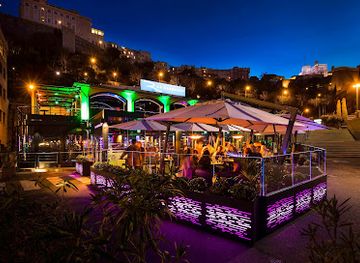
Dining in Monaco-Ville centres on small restaurants, cafés and snack counters within the old town, where terraces and compact lanes create a more intimate setting than the grand dining rooms of Monte-Carlo. Local cooking reflects the Ligurian and Provençal traditions of the surrounding coast: olive oil, vegetables, seafood, herbs, socca and Mediterranean-style pasta are recurring influences across Monaco and the Riviera. Barbagiuàn, a fried pastry filled with Swiss chard, ricotta and other savoury ingredients, is one of the principality's best-known specialities, while fougasse de Monaco is a sweet, brightly decorated biscuit associated with local identity. For broader choice, La Condamine's market area and the waterfront districts offer cafés, bakeries and international restaurants, though prices generally rise in locations with harbour or casino views.
-
Italian
Bella Vita
Experience the best of Italian cuisine at Bella Vita in Monaco – where every meal is a celebration of flavor and tradition.
6 min walk · 0.4 km from city centre
-
Steak
Beefbar
Experience unparalleled luxury dining at Beefbar in Monaco, where every steak is crafted to perfection amidst breathtaking coastal views.
5 min walk · 0.4 km from city centre
-
French
Quai des Artistes
Discover exquisite French cuisine and breathtaking waterfront views at Quai des Artistes in Monaco.
3 min walk · 0.3 km from city centre
-
Restaurant
La Tavernetta
Discover authentic Italian cuisine at La Tavernetta in Monaco – where flavor meets affordability in a cozy atmosphere.
2 min walk · 0.2 km from city centre


Best bars in Monaco-Ville
Monaco-Ville itself is quieter after the main sightseeing hours, with evening activity focused on traditional restaurants, hotel bars and relaxed terraces rather than a dense club scene. The principality's more formal nightlife is concentrated elsewhere, particularly around Monte-Carlo, where casino bars, cocktail lounges, hotel venues and occasional live entertainment create a polished evening atmosphere. La Condamine offers a more local, harbour-oriented setting, while Port Hercule becomes a scenic place for a late walk beside illuminated yachts. Cultural evenings may include concerts, theatre, ballet or performances at established institutions, depending on the programme. Dress expectations can be more formal in casino and luxury-hotel settings, and visitors should carry identification where age or access controls apply. Monaco's compact size makes it possible to move between districts by bus, taxi or on foot, although the hills affect the journey.
-
Brewpub
Monaco Brewery
Discover the vibrant flavors of Monaco at the Monaco Brewery, where craft beer meets Mediterranean culinary delights in a lively atmosphere.
5 min walk · 0.4 km from city centre
-
Bar
La Rascasse
Experience the best of Monaco at La Rascasse, where exquisite dining meets vibrant nightlife in a stunning waterfront setting.
3 min walk · 0.3 km from city centre
-
Bar
Jack Monaco
Experience the elegance of Monaco at Jack Monaco, where exquisite cocktails and gourmet small plates create unforgettable moments.
5 min walk · 0.4 km from city centre
-
Bistro
Le Petit Bar Monaco
Discover the charm of Monaco at Le Petit Bar, a delightful bistro offering exquisite cuisine and a warm, inviting atmosphere.
2 min walk · 0.1 km from city centre


Best nightclubs in Monaco-Ville
Monaco-Ville itself is quieter after the main sightseeing hours, with evening activity focused on traditional restaurants, hotel bars and relaxed terraces rather than a dense club scene. The principality's more formal nightlife is concentrated elsewhere, particularly around Monte-Carlo, where casino bars, cocktail lounges, hotel venues and occasional live entertainment create a polished evening atmosphere. La Condamine offers a more local, harbour-oriented setting, while Port Hercule becomes a scenic place for a late walk beside illuminated yachts. Cultural evenings may include concerts, theatre, ballet or performances at established institutions, depending on the programme. Dress expectations can be more formal in casino and luxury-hotel settings, and visitors should carry identification where age or access controls apply. Monaco's compact size makes it possible to move between districts by bus, taxi or on foot, although the hills affect the journey.
-
Bar
La Rascasse
Experience the vibrant nightlife of Monaco at La Rascasse, where Mediterranean dining meets exhilarating disco beats, all with stunning waterfront views.
3 min walk · 0.3 km from city centre
-
Disco club
MK Club Monaco
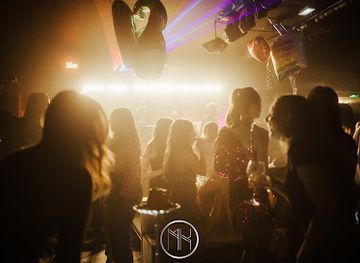
Dive into the electrifying atmosphere of MK Club Monaco, a premier disco club renowned for its vibrant nightlife and unforgettable dance experiences.
5 min walk · 0.4 km from city centre
-
Night club
Giulia Oancea
Discover the pulsating heart of Monaco's nightlife at Giulia Oancea, a premier night club where music, drinks, and vibrant energy collide.
6 min walk · 0.5 km from city centre

Best shops in Monaco-Ville
Shopping in Monaco-Ville is concentrated along the pedestrian lanes around the palace, where visitors find souvenir shops, postcards, local food products, art, crafts and small boutiques rather than large department stores. The old town's retail character is closely tied to its historic setting, with shopfronts occupying ground floors beneath pastel façades and vaulted passages. Monaco-themed gifts, postcards, ceramics and regional delicacies are common, while speciality foods connected with Mediterranean and Riviera cooking make more useful purchases than generic souvenirs. For broader retail choice, visitors can continue to La Condamine, with its market traditions and everyday shops, or Monte-Carlo, where luxury fashion, jewellery and international brands are more prominent. Travellers should check customs rules before carrying food, alcohol or other products across international borders.
-
Market
Le Marché de la Condamine
Discover the vibrant Le Marché de la Condamine, where fresh produce, artisanal foods, and the spirit of Monaco come together in a lively market experience.
5 min walk · 0.4 km from city centre
-
Chocolate shop
Chocolaterie de Monaco
Discover the exquisite world of fine chocolates at Chocolaterie de Monaco, a delightful gem in the heart of the principality.
2 min walk · 0.1 km from city centre
-
Gift basket store
Souvenirs Shop Monaco
Discover unique gifts and local delicacies at Souvenirs Shop Monaco, your go-to destination for memorable keepsakes from the heart of the Riviera.
4 min walk · 0.3 km from city centre
-
Gift shop
Les 5 saveurs
Explore the charm of Les 5 Saveurs in Monaco, where unique gifts and luxurious finds await every traveler.
3 min walk · 0.2 km from city centre


Get your free copy of our complete guide to Monaco-Ville, delivered straight to you.
Everything on this page, from attractions and restaurants to essentials and local phrases, in one PDF you can read offline, print or share.
Already have an account? Sign in
Your Monaco-Ville guide is ready.
We'll send it to · Not you? Sign out

Getting your guide ready…
We are putting together a fresh copy of the Monaco-Ville guide. This can take up to a minute.
This can take a few moments. If your browser asks, choose Allow so the download can start. You'll find the guide in your Downloads folder.
Nothing happened? Download it again
Sorry, the guide is taking longer than usual. Please try again in a minute, or get it by email instead.
Monaco-Ville essentials
Currency and Payment
Safety
Emergency Situations
Do's and Don'ts
Local Tips
From Eve
Local phrases worth knowing
You don't need to get them perfect. A few words go a long way, and locals appreciate the effort.
Basics
| English | Local | Say it |
|---|---|---|
| Hello | Bonjour | [bon-zhoor] |
| Goodbye | Au revoir | [oh re-vwar] |
| Yes | Oui | [wee] |
| No | Non | [nohn] |
| Please/You're welcome | S'il vous plaît / De rien | [seel voo pleh / deh ryen] |
| Thank you | Merci | [mehr-see] |
| Excuse me/Sorry | Excusez-moi / Désolé | [ex-kew-zay mwah / dey-zoh-lay] |
| How are you? | Comment ça va? | [ko-mohn sah va] |
| Fine. And you? | Bien. Et vous? | [byen. ey voo] |
| Do you speak English? | Parlez-vous anglais? | [par-lay voo ahn-glay] |
| I don't understand | Je ne comprends pas | [zhuh nuh kohm-prahnd pah] |
Eating & Drinking
| English | Local | Say it |
|---|---|---|
| I'd like to see the menu, please | Je voudrais voir la carte, s'il vous plaît | [zhuh voo-dray vwar lah kart, seel voo pleh] |
| I don't eat meat | Je ne mange pas de viande | [zhuh nuh mahnj pah duh vee-ahnd] |
| Cheers! | Santé! | [sahn-tay] |
| I would like to pay, please | Je voudrais payer, s'il vous plaît | [zhuh voo-dray pay-ay, seel voo pleh] |
Emergencies
| English | Local | Say it |
|---|---|---|
| Help! | Au secours! | [oh se-coor] |
| Go away! | Allez-vous en! | [ah-lay voo zahn] |
| Call the Police! | Appelez la police! | [ah-peh-lay lah poh-lees] |
| Call a doctor! | Appelez un médecin! | [ah-peh-lay un may-duh-sahn] |
| I'm lost | Je suis perdu | [zhuh swee pair-doo] |
| I'm ill | Je suis malade | [zhuh swee mah-lahd] |
Shopping
| English | Local | Say it |
|---|---|---|
| I'd like to buy... | Je voudrais acheter... | [zhuh voo-dray zash-tay...] |
| I'm just looking | Je regarde juste | [zhuh ruh-gard zhewst] |
| How much is it? | Combien ça coûte? | [kohm-byen sah koot] |
| That's too expensive | C'est trop cher | [say troh shair] |
| Can you lower the price? | Pouvez-vous baisser le prix? | [poo-veh voo beh-say luh pree] |
Time & Numbers
| English | Local | Say it |
|---|---|---|
| What time is it? | Quelle heure est-il? | [kell er ay-teel] |
| It's one o'clock | Il est une heure | [eel ay tun er] |
| Half past (10) | Dix et demi | [dees ay dem-ee] |
| Morning | Matin | [mah-tahn] |
| Afternoon | Après-midi | [ah-prey mee-dee] |
| Evening | Soir | [swahr] |
| Yesterday | Hier | [ee-air] |
| Today | Aujourd'hui | [oh-zhoor dew-ee] |
| Tomorrow | Demain | [duh-man] |
| 1 | Un | [uhn] |
| 2 | Deux | [duh] |
| 3 | Trois | [twah] |
| 4 | Quatre | [kah-truh] |
| 5 | Cinq | [sank] |
| 6 | Six | [sees] |
| 7 | Sept | [sept] |
| 8 | Huit | [weet] |
| 9 | Neuf | [nuhf] |
| 10 | Dix | [dees] |
Transport & Directions
| English | Local | Say it |
|---|---|---|
| Where's a/the...? | Où est...? | [oo ay...] |
| What's the address? | Quelle est l'adresse? | [kell ay lah-dress] |
| Can you show me (on the map)? | Pouvez-vous me montrer (sur la carte)? | [poo-veh voo muh mohn-tray (soor lah kart)] |
| When's the next (bus)? | Quand est le prochain (bus)? | [kahn ay luh proh-shahn (boos)] |
| A ticket (to ....) | Un billet (pour ...) | [uhn bee-yay (poor ...)] |
History of Monaco-Ville
The Ligurian Coast Before Monaco
The territory around present-day Monaco belonged to a long-settled Ligurian Mediterranean world before the emergence of the modern principality. Its steep Rock offered a defensible position above the coast, while maritime routes connected the settlement with neighbouring communities along what is now the French and Italian Riviera. Greek and Roman influence reached the wider region, and the ancient port at the foot of the Rock helped give the site continuing strategic value. Local tradition associates the name Monaco with the Greek hero Heracles, although the modern town developed through medieval political and religious institutions rather than from a single clearly documented foundation. The promontory's geography remained decisive: a small, elevated area offered protection, visibility and control over a valuable coastal passage.
The Grimaldi Seizure of 1297
Monaco's defining dynasty became established on 8 January 1297, when François Grimaldi, known as il Malizia or 'the Cunning', is traditionally said to have entered the fortress disguised as a Franciscan friar and seized the Rock. The event belongs to the formative struggles among Genoese powers and factions, and the Grimaldi hold was not continuously secure at first. Nevertheless, it created the dynastic claim around which Monaco's later political identity developed. The medieval fortress occupied the strategic summit that is now Monaco-Ville, and the settlement grew within and around its defensive enclosure. The famous image of the disguised Grimaldi survives in public memory, although the principality's later history was shaped by negotiation, military pressure and international diplomacy as much as by this celebrated episode.
Fortress, Lords and Sovereignty
During the late medieval and early modern periods, the Grimaldi rulers consolidated authority over Monaco while navigating the rival ambitions of Genoa, Savoy, France and Spain. The Rock's fortress was expanded and adapted as artillery changed warfare, and the settlement developed the civic and religious buildings that still define Monaco-Ville. Monaco's sovereignty was repeatedly tested: its rulers sought protection through treaties and alliances, including close relations with Spain and later France. In 1612, Honoré II adopted the title of Prince of Monaco, marking a more formal expression of princely status. The old town's compact layout, defensive position and palace complex reflect this period, when the principality had to maintain independence despite its tiny territory and exposed location.
Revolution, Annexation and Restoration
The French Revolution transformed Monaco's political circumstances. In 1793, revolutionary France annexed the principality, and Monaco was incorporated into the French state for more than two decades. The Grimaldi family lost its sovereignty, while the territory was administered under French authority and experienced the upheavals affecting neighbouring regions. After Napoleon's defeat, the Treaty of Paris in 1814 restored Monaco to the Grimaldis, with the settlement confirmed within the post-Napoleonic diplomatic order. The Congress of Vienna subsequently placed Monaco under the protection of the Kingdom of Sardinia. These changes left the small state dependent on larger powers, but they also established the diplomatic framework that allowed the Grimaldi dynasty and the historic community on the Rock to continue.
The Nineteenth-Century Transformation
Monaco's modern transformation accelerated in the nineteenth century. In 1848, the towns of Menton and Roquebrune, then part of the principality, broke away amid political and economic disputes; their eventual transfer to France in 1861 greatly reduced Monaco's territory but was accompanied by financial compensation. The same period saw the development of Monte-Carlo under Prince Charles III, whose casino, railway connection and new resort economy attracted international visitors. Monaco-Ville remained the administrative and ceremonial centre, while new districts grew around the Rock and along the coast. This division between the historic princely town and the newer resort quarters explains much of Monaco's present character, in which medieval streets coexist with grand nineteenth-century architecture and engineered waterfronts.
Science, Culture and the Modern Principality
The twentieth century brought new cultural and scientific dimensions to Monaco's identity. Prince Albert I, who ruled from 1889 to 1922, was an accomplished oceanographer and sponsored the Oceanographic Museum and Institute, linking the principality with marine research and public education. Under Prince Rainier III, Monaco experienced extensive urban development, including land reclamation and the creation of Fontvieille, while the marriage of Rainier and American actor Grace Kelly in 1956 gave the principality renewed international visibility. Monaco's constitutional and administrative life remains centred on the Rock, where the palace, cathedral and government institutions stand among historic streets. Today, Monaco-Ville preserves the dynastic and civic core of a sovereign state whose modern economy extends far beyond its medieval walls.
Monaco-Ville in Photos
Browse through our photo collection highlighting the charm and character of the destination.
Cities near Monaco-Ville
The closest cities to Monaco-Ville, if you have time for more than one stop.
-

-

-

-

-


Swipe for more cities
Explore more

Explore more of Monaco
Explore Monaco: A glamorous principality on the French Riviera, known for its luxury casinos, stunning Mediterranean views, cultural landmarks, and vibrant nightlife.
Explore Monaco