

Todra Gorge Travel Guide - Free Web & App
Your ultimate guide to Todra Gorge. Discover top landmarks, proposed trips, and local tips. Free on the web or via the Evendo companion app.


Todra Gorge, Morocco, pairs towering limestone cliffs with oasis palms, Berber villages, canyon walks and Atlas landscapes near Tinghir in southern Morocco.
A River Canyon in the High Atlas
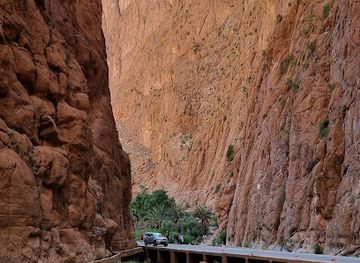
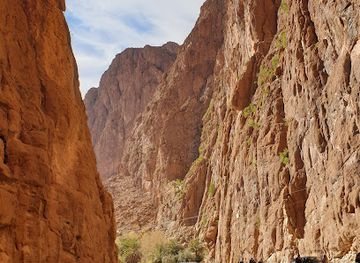
Todra Gorge cuts through the eastern High Atlas near Tinghir in south-eastern Morocco, where the Todra River has carved a narrow passage through pale limestone. The most dramatic section is reached at the head of the gorge, where sheer rock walls rise on either side of the road and the canyon floor becomes a cool, shaded corridor compared with the surrounding plateau. Beyond the celebrated walls, the Todra valley opens into a broad oasis of date palms, cultivated plots and Amazigh villages linked by traditional irrigation channels.Read more about Todra Gorge
Oasis Communities and Mountain Scenery
Walking, Climbing and Cultural Discovery
When is the best time to visit Todra Gorge?
Best: December–February · 23–26°C| Month | High (°C) | Rainfall (mm) |
|---|---|---|
| January (best) | 23 | 1 |
| February (best) | 25 | 0 |
| March | 29 | 0 |
| April | 32 | 0 |
| May | 37 | 0 |
| June | 41 | 0 |
| July | 44 | 0 |
| August | 44 | 0 |
| September | 41 | 0 |
| October | 35 | 0 |
| November | 30 | 0 |
| December (best) | 26 | 1 |
Getting to and around Todra Gorge
How to get there
Transportation
Best attractions in Todra Gorge
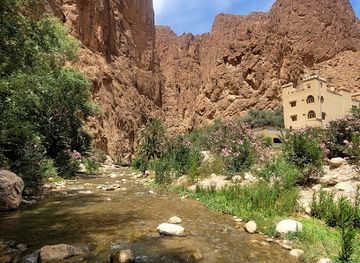
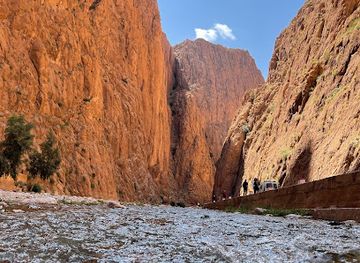
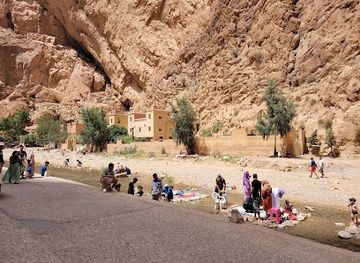
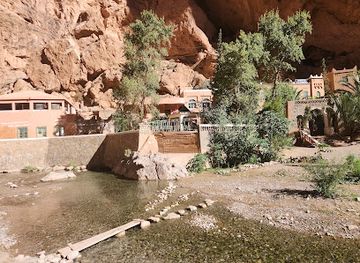
The central attraction is the narrow section of Todra Gorge, where pale limestone walls rise steeply beside the Todra River and the road passes through a dramatic natural corridor. Short walks along the canyon reveal changing light, rock textures and small stretches of riverine vegetation, while established climbing sectors draw experienced climbers to the surrounding cliffs. South towards Tinghir, the Todra oasis offers a very different experience: date palms, gardens, irrigation channels and villages form a green band beneath dry mountain slopes. The town itself is useful for exploring the valley’s markets, streets and traditional architecture, while nearby rural settlements provide glimpses of everyday Amazigh life. Longer excursions can follow the wider Atlas roads towards high plateaux and neighbouring valleys, although these are regional journeys rather than attractions within the narrow gorge. The contrast between canyon, cultivated oasis and arid mountain terrain is the area’s defining visual experience.
-
Tourist attraction
Todgha Gorge
Experience the breathtaking cliffs and serene landscapes of Todgha Gorge, a must-visit natural wonder in Morocco's High Atlas Mountains.
-
Tourist attraction
Gorges Toudgha
Discover the breathtaking beauty of Gorges Toudgha, a must-visit natural wonder in the heart of the Moroccan Atlas Mountains.
-
Hiking area
via ferrata Todra
Discover the breathtaking adventure of Via Ferrata Todra in Tinghir, Morocco - a perfect blend of thrilling climbing and stunning natural beauty.

Best landmarks in Todra Gorge
Todra Gorge is the defining natural landmark, formed where the Todra River cuts through imposing limestone walls in the eastern High Atlas. Its narrowest passage is notable for the scale of the cliffs and the sudden transition from open, arid mountain terrain to a confined river corridor. The Todra oasis around Tinghir is an equally important cultural landscape: dense palms, irrigated gardens and earthen settlements demonstrate how communities have adapted to scarce water. Traditional kasbahs and ksour in the wider valley express the region’s Amazigh architectural heritage, although individual buildings vary in condition and access. The river itself links the geological and human stories of the destination, sustaining cultivation before continuing through a landscape that becomes increasingly dry towards the pre-Saharan regions.
-
Tourist attraction
Todgha Gorge
Discover the breathtaking beauty of Todgha Gorge, a stunning natural formation in Morocco perfect for adventure seekers and nature lovers.
-
Spring
Source Aghbalou et les Gorges de Toudgha
Explore Source Aghbalou and the Toudgha Gorges, a captivating destination in Tinghir, Morocco, showcasing stunning landscapes and rich cultural experiences.
-
Mountain pass
Gorges du Todgha
Explore the breathtaking Gorges du Todgha, a natural marvel in Morocco featuring stunning cliffs, vibrant landscapes, and thrilling outdoor adventures.
-
Campground
Camp todra gorges
Discover the breathtaking beauty of Camp Todra Gorges in Morocco, a perfect haven for outdoor enthusiasts and nature lovers.
Explore Todra Gorge on the map
Plan your trip on one map. See where the top attractions, landmarks, restaurants and hotels are, and book hotels and experiences in a few clicks.
Best hotels in Todra Gorge
Best restaurants in Todra Gorge
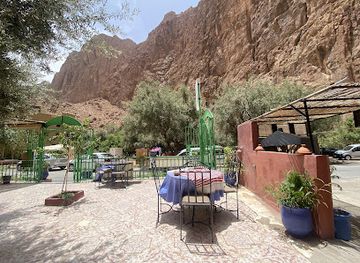
Dining around Todra Gorge is modest and closely connected to local accommodation, while Tinghir offers the widest choice of cafés, small restaurants and food shops. Menus commonly reflect Moroccan home cooking, with dishes such as tajines, couscous, soups, salads, brochettes and bread served according to the establishment and season. Mint tea is central to hospitality, and dates, almonds and other produce associated with oasis agriculture may appear in local meals or provisions. Guesthouses near the gorge often provide pre-arranged meals, which can be practical in an area where independent dining is limited. In Tinghir, travellers can stock up for walks or longer road journeys, but should not expect a concentrated restaurant district or extensive late-night service. Asking accommodation hosts about current local options is useful, particularly outside busier travel periods.
-
Restaurant
Gorges Toudgha
Experience breathtaking views and exquisite Moroccan cuisine at Gorges Toudgha—an unforgettable blend of nature and gastronomy.
Best shops in Todra Gorge
Shopping opportunities are concentrated in Tinghir and the villages rather than at the gorge itself. Small shops and local markets provide practical supplies, food for excursions and everyday goods, while visitors may encounter dates, almonds, spices, woven textiles, leather items, pottery or decorative objects associated with southern Moroccan craft traditions. Selection and availability vary, and not every product sold in a tourist setting will have been made locally, so asking about provenance is sensible. The oasis’s agricultural character is reflected in its produce, while the broader region is known for earthen architecture and Amazigh design motifs. Near the canyon, shopping is limited and generally tied to small accommodation businesses or casual souvenir sales rather than a permanent retail district.
-
 Gift shop
Shop traditionnel berbère todgha gorge ayt baha
Explore the enchanting Berber craftsmanship in the heart of Todgha Gorge, offering unique handcrafted gifts and a glimpse into local culture.
Get your free copy of our complete guide to Todra Gorge, delivered straight to you.
Everything on this page, from attractions and restaurants to essentials and local phrases, in one PDF you can read offline, print or share.
Already have an account? Sign in
Your Todra Gorge guide is ready.
We'll send it to · Not you? Sign out

Getting your guide ready…
We are putting together a fresh copy of the Todra Gorge guide. This can take up to a minute.
This can take a few moments. If your browser asks, choose Allow so the download can start. You'll find the guide in your Downloads folder.
Nothing happened? Download it again
Sorry, the guide is taking longer than usual. Please try again in a minute, or get it by email instead.
Todra Gorge essentials
Currency and Payment
Safety
Emergency Situations
Do's and Don'ts
Local Tips
From Eve
Local phrases worth knowing
You don't need to get them perfect. A few words go a long way, and locals appreciate the effort.
Basics
| English | Local | Say it |
|---|---|---|
| Hello | Salam | [Sa-lam] |
| Goodbye | Beslama | [Bes-la-ma] |
| Yes | Ih | [Eeh] |
| No | La | [La] |
| Please/You're welcome | Afak | [A-fak] |
| Thank you | Shukran | [Shook-ran] |
| Excuse me/Sorry | Smahti | [Smahti] |
| How are you? | Labas? | [La-bas] |
| Fine. And you? | Labas. Winti? | [La-bas. Win-tee] |
| Do you speak English? | Tehder inglizi? | [Te-dehr in-glee-zi] |
| I don't understand | Ma fhemtch | [Ma femtsh] |
Eating & Drinking
| English | Local | Say it |
|---|---|---|
| I'd like to see the menu, please | Bghit nchuf lmenu, min fadlik | [B-ghit en-chuf el-me-nu, meen fad-lik] |
| I don't eat meat | Maakulsh lkhodar | [Ma-akulsh el-kho-dar] |
| Cheers! | Saha | [Sa-ha] |
| I would like to pay, please | Bghit naddfa, min fadlik | [B-ghit nad-dfa, meen fad-lik] |
Emergencies
| English | Local | Say it |
|---|---|---|
| Help! | Aidez-moi! | [Aid-ez-moi] |
| Go away! | Dkhel bladk! | [D-khel bla-dk] |
| Call the Police! | Sift lbulis! | [Sift el-bu-lis] |
| Call a doctor! | Sift doctor! | [Sift doc-tor] |
| I'm lost | Ghadiin | [Gha-deen] |
| I'm ill | Ana marid | [A-na mar-id] |
Shopping
| English | Local | Say it |
|---|---|---|
| I'd like to buy... | Bghit nmri... | [B-ghit en-mri...] |
| I'm just looking | Ana fakr | [A-na fakr] |
| How much is it? | Chhal kayn? | [Sh-hal kayn] |
| That's too expensive | Hadshi ghali | [Had-shi gha-li] |
| Can you lower the price? | Wach kayn taksir? | [Wa-sh kayn tak-seer] |
Time & Numbers
| English | Local | Say it |
|---|---|---|
| What time is it? | Chhal wakt? | [Sh-hal wakt] |
| It's one o'clock | Saat wahid | [Sa-at wa-hid] |
| Half past (10) | Nus l'ashra | [Nus lash-ra] |
| Morning | Sbah | [S-bah] |
| Afternoon | Dhor | [D-hor] |
| Evening | Msa | [M-sa] |
| Yesterday | Hier | [Hi-er] |
| Today | Lyuma | [L-yu-ma] |
| Tomorrow | Ghadan | [Gha-dan] |
| 1 | Waahid | [Wa-hid] |
| 2 | Jouj | [Jouj] |
| 3 | Tlata | [Tla-ta] |
| 4 | Arba | [Ar-ba] |
| 5 | Khamsa | [Kham-sa] |
| 6 | Setta | [Set-ta] |
| 7 | Saba | [Sa-ba] |
| 8 | Tamania | [Ta-ma-nia] |
| 9 | Tassia | [Ta-ssia] |
| 10 | Ashra | [Ash-ra] |
Transport & Directions
| English | Local | Say it |
|---|---|---|
| Where's a/the...? | Fein...? | [Fein...?] |
| What's the address? | Chno wadres? | [Sh-no wa-dres] |
| Can you show me (on the map)? | Wach kayn ndiro (ala lkhari-ta)? | [Wa-sh kayn en-di-ro (ala el-kha-ri-ta)] |
| When's the next (bus)? | Mata kayn lbus? | [Ma-ta kayn el-bus] |
| A ticket (to ....) | Tikit (ila ....) | [Ti-kit (i-la ....)] |
History of Todra Gorge
River, Limestone and the Atlas Landscape
The physical setting of Todra Gorge belongs to the long geological development of the Atlas mountain system. The Todra River has progressively cut through resistant limestone, producing a confined canyon before emerging into the wider valley around Tinghir. Erosion, seasonal water flow and the contrast between elevated arid slopes and the irrigated valley explain the destination’s distinctive structure. The gorge is therefore both a dramatic natural passage and part of a larger mountain-and-oasis landscape extending across Morocco’s eastern High Atlas.
Amazigh Settlement in the Valley
The Todra valley has long been shaped by Amazigh communities whose settlements developed around dependable water and cultivable ground. In an otherwise dry environment, the river and traditional irrigation systems enabled the cultivation of date palms, fruit trees and smaller agricultural plots. Villages and fortified earthen compounds were established along the oasis margins, while movement through the gorge connected communities between the mountain valleys and the desert-facing plains. Oral traditions, local architecture and the continuing use of Amazigh languages remain important aspects of regional identity.
Oasis Agriculture and Earthen Architecture
For centuries, life around Tinghir depended on careful management of scarce water. Palm groves provided shade for lower crops, while channels distributed river water to gardens and fields. This layered cultivation helped create the green ribbon that contrasts so sharply with the surrounding rock and gravel slopes. Kasbahs and ksour, built largely from earth and traditionally associated with family, community and defensive functions, developed within this agricultural landscape. Many structures have weathered or changed as settlement patterns and building materials evolved, but the relationship between water, palms and village life remains visible.
Road Access and a Changing Region
Modern roads brought the Todra valley into closer connection with Tinghir, Ouarzazate, Errachidia and the wider routes across southern Morocco. Improved access changed the movement of people and goods and made the gorge more familiar to travellers crossing the Atlas and pre-Saharan regions. At the same time, migration, new construction and pressure on water resources have altered parts of the traditional oasis economy. The gorge’s cultural landscape is consequently not frozen in the past: farming, local commerce and contemporary settlement continue alongside older buildings and irrigation practices.
Climbing, Tourism and Conservation Awareness
Todra Gorge became increasingly known to visitors through overland travel, hiking and rock climbing, with its high limestone walls providing a natural focus for adventure tourism. Guesthouses and small hospitality businesses developed around the gorge and in Tinghir, while the palm oasis and nearby villages broadened the area’s cultural appeal. Tourism provides income but also requires care in a fragile environment where litter, water use, erosion and insensitive access can affect both the canyon and cultivated land. Respect for local communities and established routes is central to preserving the destination’s character.
Todra Gorge in Photos
Browse through our photo collection highlighting the charm and character of the destination.
Neighbouring destination travel guides
The closest destinations to Todra Gorge, if you have time for more than one.
-

-

-

-

-


Swipe for more destinations
Explore more
Explore more of Saharan Morocco
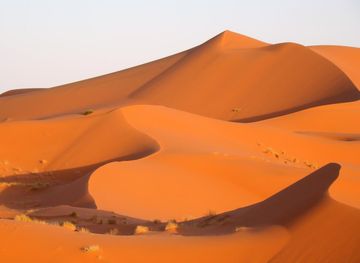
Explore Saharan Morocco through kasbahs, palm oases, caravan towns, Atlantic desert landscapes and guided journeys across the dunes.
Explore Saharan Morocco
Explore more of Morocco
Discover Morocco: A land of rich history, vibrant culture, and stunning landscapes, where ancient traditions meet modern allure.
Explore Morocco