

Free Mariental Travel Guide & Mobile App
Plan your Mariental trip with Evendo. Get free guides to top attractions, restaurants, hotels, and bars. Web access or download the mobile app.


Mariental, Namibia offers Hardap Dam, wildlife, birdwatching and wide southern landscapes between Windhoek, the Kalahari and the Namibian south.
A Town Shaped by Water and Distance
Mariental lies in Namibia’s Hardap Region, along the B1 between Windhoek and Keetmanshoop. Its setting is characteristic of the country’s southern interior: broad horizons, dry grassland, thorn trees and long stretches of open road. The town is modest in scale, but its position beside the Fish River and close to Hardap Dam gives it importance as an agricultural, transport and visitor centre in an otherwise sparsely settled landscape.Read more about Mariental
Hardap Dam and the Southern Interior
Life Along the B1
Getting to and around Mariental
How to get there
Transportation
Best attractions in Mariental
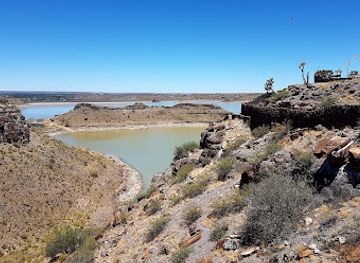
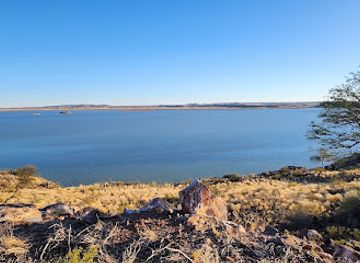
Mariental’s principal attraction is the Hardap Dam area, around 20 kilometres north-west of town, where a large reservoir contrasts with the dry plains of the Hardap Region. The surrounding recreation resort and nature reserve provide opportunities for birdwatching, wildlife observation, scenic drives and quiet walks, with the best conditions often found in the cooler hours of the day. Within town, the railway setting and modest civic streets offer a glimpse of Mariental’s role as a transport and farming centre rather than a traditional sightseeing city. Visitors can also explore the irrigated agricultural landscapes around the Fish River, where cultivated fields create an unusual green counterpoint to thornveld and open gravel country. Nearby farms and lodges extend the experience into wide horizons and dark skies, while the B1 provides access to the broader southern Namibian landscape. Hardap is outside the town itself, and conditions and available facilities can vary with season and water level.
-
Tourist attraction
Hardap Game Park
Experience the beauty of Namibia's wildlife and stunning landscapes at Hardap Game Park, a must-visit destination for nature lovers and adventure seekers.
42 min drive · 22 km from city centre
-
Tourist attraction
Hardapdam
Explore Hardap Dam, a stunning natural gem in Namibia, perfect for relaxation, adventure, and breathtaking landscapes.
39 min drive · 19 km from city centre
-
 Tourist attraction
Aimablaagde Community Hall
Immerse yourself in the rich culture of Mariental at Aimablaagde Community Hall, a vibrant hub for local events and gatherings.
4 min walk · 0.4 km from city centre
-
Animal park
Farmstall
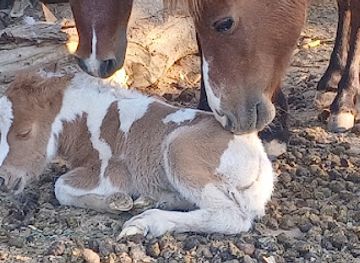
Experience the charm of Farmstall in Mariental, a captivating animal park where nature and wildlife come together for an unforgettable adventure.
18 min walk · 1.5 km from city centre
Best landmarks in Mariental
Hardap Dam is Mariental’s defining regional landmark, a major engineered reservoir on the Fish River whose scale and irrigated surroundings reveal how water management shapes life in southern Namibia. The dam’s embankment, water surface and surrounding hills form a distinctive landscape beyond the town, while the adjacent recreation area connects infrastructure with conservation and leisure. In Mariental itself, the railway corridor and station setting represent the transport network that enabled the town to develop as a service centre between central and southern Namibia. Local church buildings and civic structures, including the town’s established Protestant and public institutions, reflect the modest architectural history of a small regional settlement rather than a monumental urban centre. The Fish River and the irrigated fields around it are landmarks in a broader geographical sense: together they explain why a town exists here and why its appearance differs so sharply from the surrounding dry plains.
-
Lodge
Kalahari Anib Lodge, Gondwana Collection Namibia
Experience the magic of the Kalahari Desert at Kalahari Anib Lodge, your gateway to adventure and serenity in Namibia.
46 min drive · 26 km from city centre
-
Hotel
Bagatelle Kalahari Game Ranch
Discover the unparalleled beauty of Namibia at Bagatelle Kalahari Game Ranch, where adventure meets tranquility in the heart of the Kalahari Desert.
58 min drive · 38 km from city centre
-
Lodge
Lapa Lange Game Lodge
Experience the beauty of Namibia at Lapa Lange Game Lodge, where luxury meets adventure in a stunning natural setting.
50 min drive · 30 km from city centre
-
Self-catering accommodation
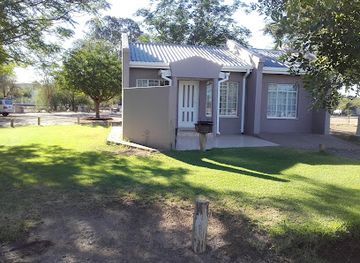
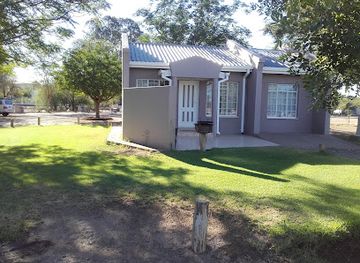
River Chalets, Mariental
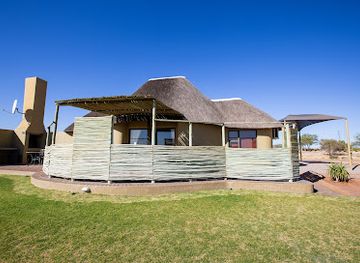
Experience the perfect blend of comfort and nature at River Chalets in Mariental, your ideal self-catering retreat in beautiful Namibia.
5 min drive · 1.5 km from city centre
Explore Mariental on the map
Plan your Mariental trip on one map. See where the top attractions, landmarks, restaurants, bars and hotels are, find what's near where you're staying, and book hotels and experiences in a few clicks.
Best hotels in Mariental
Best restaurants in Mariental
Mariental’s dining scene is shaped by its role as a small service town on the B1, with practical cafés, hotel and guesthouse dining rooms, takeaway counters and shops supplying provisions for road journeys. Menus commonly reflect Namibian and southern African influences, including grilled meat, game where legally and commercially available, chicken, fresh vegetables and simple hearty plates suited to a farming region. The town is also a useful place to buy drinks, snacks and picnic supplies before travelling to Hardap Dam or more remote accommodation. Dining is generally informal rather than destination-led, and opening patterns may follow local business hours rather than a late-night restaurant culture. Visitors should ask accommodation staff about current independent eateries, as small-town businesses can change over time. Outside town, farm and lodge meals may offer regional ingredients and traditional braai-style cooking, usually arranged through the accommodation rather than selected spontaneously.
-
Restaurant
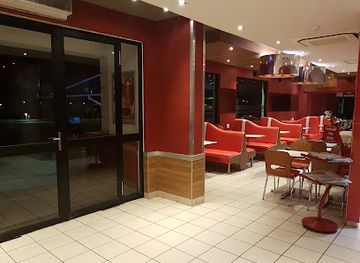
Wimpy Mariental
Discover delightful dining at Wimpy Mariental – where local flavors meet warm hospitality in the heart of Namibia.
17 min walk · 1.3 km from city centre
-
Hamburger
Spur Grill & Go Mariental
Experience delicious grilled meals and hearty hamburgers at Spur Grill & Go Mariental - your perfect pit stop on the Fish River Truck Port.
17 min walk · 1.4 km from city centre
-
Self-catering accommodation
River Chalets, Mariental
Discover tranquility at River Chalets in Mariental – your perfect self-catering escape surrounded by nature's beauty.
5 min drive · 1.5 km from city centre
-
Family-friendly
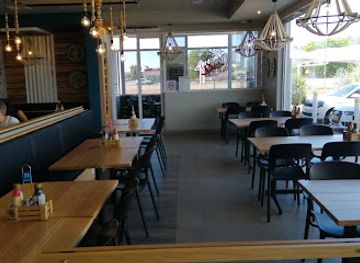
Padlangs Padstal Mariental
Experience authentic Namibian cuisine at Padlangs Padstal in Mariental - perfect for families seeking delicious food in a welcoming atmosphere.
18 min walk · 1.5 km from city centre
Best bars in Mariental
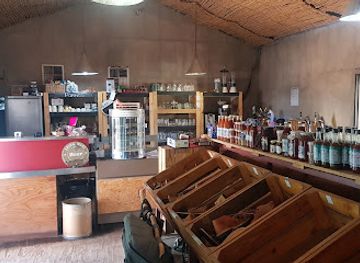
Mariental has a restrained evening scene centred on hotel bars, guesthouse lounges, local pubs and informal social venues rather than a concentration of nightclubs. Evenings are often shaped by the rhythms of road travel, farming and the hot climate, with residents and visitors meeting for a drink or meal before the town becomes quiet. Accommodation venues may provide the most convenient setting for an evening, while lodge properties outside town can offer open-air seating and exceptionally clear views of the southern sky. There is little reason to expect a dense late-night entertainment quarter, and visitors should confirm current opening arrangements locally rather than rely on fixed assumptions. The most distinctive after-dark activity is often simply stargazing, listening to the quiet of the surrounding plains and experiencing the dramatic transition from sunlit desert-edge landscape to a dark, spacious night.
-
Supermarket
Spar Supermarket
Explore the local flavors and essentials at Spar Supermarket in Mariental, your go-to destination for groceries and Namibian delicacies.
5 min drive · 1.5 km from city centre
-
Hamburger
Spur Grill & Go Mariental
Discover the best hamburgers and grill delights at Spur Grill & Go in Mariental, where comfort food meets a friendly atmosphere.
17 min walk · 1.4 km from city centre
-
Family-friendly
Padlangs Padstal Mariental
Experience the vibrant flavors of Namibia at Padlangs Padstal, the ultimate family-friendly dining destination in Mariental.
18 min walk · 1.5 km from city centre
-
Guest house
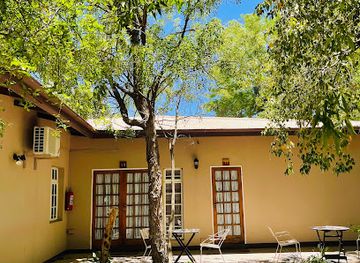
Anandi Guesthouse Mariental
Experience warm hospitality and cozy comfort at Anandi Guesthouse in Mariental, the perfect base for exploring Namibia's stunning landscapes.
15 min walk · 1.2 km from city centre


Best nightclubs in Mariental
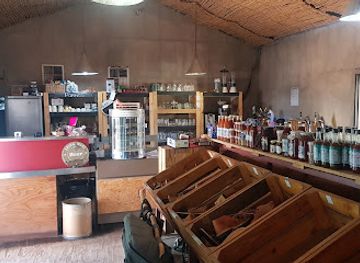
Mariental has a restrained evening scene centred on hotel bars, guesthouse lounges, local pubs and informal social venues rather than a concentration of nightclubs. Evenings are often shaped by the rhythms of road travel, farming and the hot climate, with residents and visitors meeting for a drink or meal before the town becomes quiet. Accommodation venues may provide the most convenient setting for an evening, while lodge properties outside town can offer open-air seating and exceptionally clear views of the southern sky. There is little reason to expect a dense late-night entertainment quarter, and visitors should confirm current opening arrangements locally rather than rely on fixed assumptions. The most distinctive after-dark activity is often simply stargazing, listening to the quiet of the surrounding plains and experiencing the dramatic transition from sunlit desert-edge landscape to a dark, spacious night.
-
Bar
TSARAS, MARIENTAL
Discover the vibrant nightlife at Tsaras in Mariental, a bar that blends local culture with a lively atmosphere for an unforgettable experience.
4 min walk · 0.3 km from city centre
-
Night club
The Pallet
Dive into the electrifying nightlife at The Pallet, Mariental's premier night club, where unforgettable experiences await every night.
8 min walk · 0.6 km from city centre

Best shops in Mariental
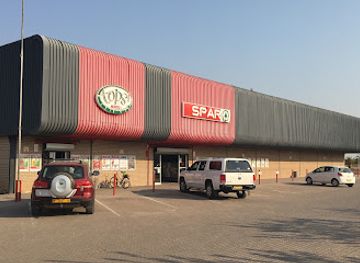
Shopping in Mariental is practical and locally focused, serving residents, surrounding farms and travellers on the B1 rather than functioning as a specialist retail destination. The central area and larger food shops are useful for groceries, drinks, road provisions, toiletries and basic outdoor supplies, while fuel stations cater to the needs of long-distance motorists. Visitors may find locally made curios, craft items or regional products through accommodation providers and informal sellers, but availability is not guaranteed and changes with season and supply. The town is a sensible place to replenish essentials before visiting Hardap Dam, farm lodges or remote areas, where retail choices are sparse. Shopping reflects Mariental’s position in an agricultural region: everyday food, practical household goods and travel necessities are more prominent than designer boutiques or large malls. As elsewhere in Namibia, ask before photographing people or craft displays and support legitimate local sellers when purchasing handmade goods.
-
Supermarket
Spar Supermarket
Discover the best of local and international groceries at Spar Supermarket in Mariental, your one-stop shop for all essentials.
5 min drive · 1.5 km from city centre
-
Supermarket
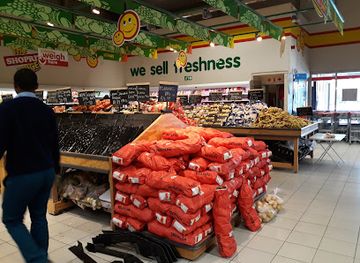
Shoprite Mariental
Discover the heart of Mariental shopping at Shoprite, where local flavors meet international variety in a friendly atmosphere.
8 min walk · 0.7 km from city centre
-
Shopping mall
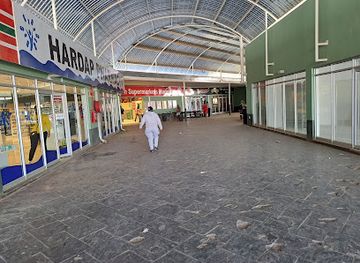
WB Supermarkets Mariental
Explore the vibrant WB Supermarkets Mariental for a unique shopping experience filled with local flavors and cultural treasures.
10 min walk · 0.8 km from city centre
-
Butcher shop deli
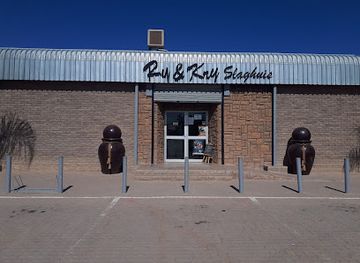
Ry & Kry Slaghuis/Butchery
Discover the taste of Namibia at Ry & Kry Slaghuis/Butchery, your go-to butcher shop deli for authentic meats and local flavors.
8 min walk · 0.6 km from city centre
Get your free copy of our complete guide to Mariental, delivered straight to you.
Everything on this page, from attractions and restaurants to essentials and local phrases, in one PDF you can read offline, print or share.
Already have an account? Sign in
Your Mariental guide is ready.
We'll send it to · Not you? Sign out

Getting your guide ready…
We are putting together a fresh copy of the Mariental guide. This can take up to a minute.
This can take a few moments. If your browser asks, choose Allow so the download can start. You'll find the guide in your Downloads folder.
Nothing happened? Download it again
Sorry, the guide is taking longer than usual. Please try again in a minute, or get it by email instead.
Mariental essentials
Currency and Payment
Safety
Emergency Situations
Do's and Don'ts
Local Tips
From Eve
Local phrases worth knowing
You don't need to get them perfect. A few words go a long way, and locals appreciate the effort.
Basics
| English | Local | Say it |
|---|---|---|
| Hello | Hallo | [ha-lo] |
| Goodbye | Totsiens | [to-tseens] |
| Yes | Ja | [ya] |
| No | Nee | [nee] |
| Please/You're welcome | Asseblief | [ah-se-blief] |
| Thank you | Dankie | [dan-kee] |
| Excuse me/Sorry | Jammer | [ya-mer] |
| How are you? | Hoe gaan dit met jou? | [hu guhn dit met yoh] |
| Fine. And you? | Goed. En met jou? | [gut en met yoh] |
| Do you speak English? | Kan jy Engels praat? | [kan y eng-els praht] |
| I don't understand | Ek verstaan nie | [ek verstahn nee] |
Eating & Drinking
| English | Local | Say it |
|---|---|---|
| I'd like to see the menu, please | Ek wil asseblief die spyskaart sien | [ek vil ah-se-blief dee spays-kart seen] |
| I don't eat meat | Ek eet nie vleis nie | [ek eet nee flay-s nee] |
| Cheers! | Gesondheid! | [guh-sund-hate] |
| I would like to pay, please | Ek wil asseblief betaal | [ek vil ah-se-blief buh-tahl] |
Emergencies
| English | Local | Say it |
|---|---|---|
| Help! | Help! | [help] |
| Go away! | Gaan weg! | [gahn vehg] |
| Call the Police! | Bel die Polisie! | [bel dee poh-lee-see] |
| Call a doctor! | Bel 'n dokter! | [bel un dohk-tuh] |
| I'm lost | Ek is verlore | [ek is fehr-loh-ruh] |
| I'm ill | Ek is siek | [ek is seek] |
Shopping
| English | Local | Say it |
|---|---|---|
| I'd like to buy... | Ek wil koop... | [ek vil kohp] |
| I'm just looking | Ek kyk net | [ek kuhk neht] |
| How much is it? | Hoeveel kos dit? | [hu-vayl kohs dit] |
| That's too expensive | Dit is te duur | [dit is te doo-er] |
| Can you lower the price? | Kan jy die prys laat sak? | [kan y dee prees laat sahk] |
Time & Numbers
| English | Local | Say it |
|---|---|---|
| What time is it? | Hoe laat is dit? | [hu laht is dit] |
| It's one o'clock | Dit is een uur | [dit is ain oor] |
| Half past (10) | Half tien | [hahlf teeyn] |
| Morning | Oggend | [o-khent] |
| Afternoon | Middag | [mid-dahkh] |
| Evening | Aand | [ahnt] |
| Yesterday | Gister | [kis-tuh] |
| Today | Vandag | [fahn-dahkh] |
| Tomorrow | Môre | [moh-ruh] |
| 1 | Een | [ain] |
| 2 | Twee | [twee] |
| 3 | Drie | [dree] |
| 4 | Vier | [feer] |
| 5 | Vyf | [fayf] |
| 6 | Ses | [sehs] |
| 7 | Sewe | [seh-veh] |
| 8 | Agt | [aht] |
| 9 | Nege | [nee-ye] |
| 10 | Tien | [teen] |
Transport & Directions
| English | Local | Say it |
|---|---|---|
| Where's a/the...? | Waar is die...? | [vahr is dee] |
| What's the address? | Wat is die adres? | [vaht is dee ah-dres] |
| Can you show me (on the map)? | Kan jy my wys (op die kaart)? | [kan y may vis (op dee kart)] |
| When's the next (bus)? | Wanneer is die volgende (bus)? | [vahn-neer is dee fohl-uh-nde (bus)] |
| A ticket (to ....) | 'n Kaartjie (na ....) | [uhn kahrt-chee (na)] |
History of Mariental
An Older Pastoral Landscape
Long before the modern town developed, the plains around present-day Mariental formed part of a wider southern Namibian landscape used by pastoral communities, including Nama and other Khoekhoe-speaking groups. Movement followed seasonal water and grazing rather than fixed urban boundaries, and the Fish River valley provided an important environmental corridor through the dry interior. The region’s history is therefore inseparable from limited rainfall, access to springs and wells, and the changing routes linking the central plateau with the south. Later colonial boundaries and transport infrastructure were imposed upon this older geography, but pastoralism, livestock farming and the search for dependable water continued to shape local life.
Railway and Colonial Expansion
Mariental grew during the German colonial period as railway construction extended through what was then German South West Africa. The southward railway linked settlements and military as well as commercial interests, making water points and stations strategically important in a region where distances were formidable. The line helped establish Mariental as a service point for surrounding farms and as a place where travellers, goods and livestock could be exchanged. Colonial expansion brought profound disruption and violence to communities across Namibia, particularly during the German war against the Herero and Nama from 1904 to 1908. Mariental’s later transport-oriented identity developed within this broader, contested colonial history.
A Regional Service Centre
During the twentieth century, Mariental consolidated its role as a small administrative and commercial centre for the surrounding farming districts. The railway and the north–south road corridor supported movement between Windhoek and settlements in southern Namibia, while shops, schools, churches and public services gave the town a local institutional character. Livestock farming remained central to the regional economy, although the harsh climate made production highly dependent on rainfall, boreholes and careful land management. The town’s growth was gradual rather than metropolitan, and its urban form continued to reflect the distances and low population density of the Hardap interior.
Hardap Dam Transforms the Region
The construction of Hardap Dam on the Fish River in the early 1960s introduced a major new element into Mariental’s regional economy and landscape. Completed in 1963, the reservoir was designed to secure water supplies and support irrigation in one of Namibia’s driest agricultural areas. Fields established below and around the dam created an unexpected patchwork of green within the surrounding semi-arid plains, while the reservoir also became a centre for recreation and wildlife conservation. Hardap’s presence strengthened Mariental’s importance as a service town and made water management a visible part of its modern identity.
Mariental in Independent Namibia
Since Namibian independence in 1990, Mariental has remained the principal urban centre of the Hardap Region and a key stop on the B1. Its contemporary story is shaped by the opportunities and pressures of an arid environment: farming and tourism depend on reliable water, while drought can reduce reservoir levels and strain agricultural activity. Heavy rainfall elsewhere in the catchment can also bring sudden flooding, as demonstrated by major Fish River floods in the early twenty-first century. Today, the town combines regional administration, transport services and access to Hardap’s recreational landscape, retaining a distinctly southern Namibian character.
Mariental in Photos
Browse through our photo collection highlighting the charm and character of the destination.
Cities near Mariental
The closest cities to Mariental, if you have time for more than one stop.
-

-
-

-

-


Swipe for more cities

