

Free Laughlin Travel Guide & Mobile App
Plan your Laughlin trip with Evendo. Get free guides to top attractions, restaurants, hotels, and bars. Web access or download the mobile app.


Laughlin, Nevada pairs Colorado River scenery with casino resorts, desert adventures, water recreation and easy access to Arizona’s Mojave landscapes.
River, Desert and Resort Life
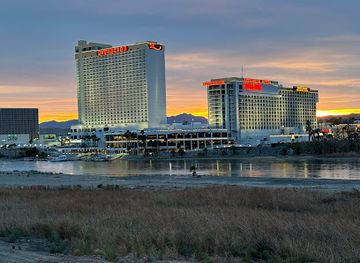
Laughlin occupies a narrow stretch of southern Nevada beside the Colorado River, where rust-coloured desert hills frame a resort town shaped by sunshine, gaming and water-based recreation. Its casino resorts line the riverfront, their promenades and terraces looking across the water towards Bullhead City, Arizona. The setting gives Laughlin a different character from Las Vegas: the scale is smaller, the pace generally more relaxed and the landscape is always close at hand.Read more about Laughlin
A Young Town with a Longer Landscape
Evenings by the Water
When is the best time to visit Laughlin?
Best: March–April, November · 21–29°C| Month | High (°C) | Rainfall (mm) |
|---|---|---|
| January | 16 | 12 |
| February | 20 | 12 |
| March (best) | 24 | 12 |
| April (best) | 29 | 6 |
| May | 35 | 3 |
| June | 40 | 2 |
| July | 42 | 12 |
| August | 41 | 12 |
| September | 37 | 6 |
| October | 30 | 6 |
| November (best) | 21 | 6 |
| December | 17 | 12 |
Getting to and around Laughlin
How to get there
Transportation
Best attractions in Laughlin
Laughlin's principal attractions combine river scenery with resort entertainment and desert access. The Laughlin Riverwalk provides a pedestrian route beside the Colorado, linking views of the water with casino-front promenades and bridges towards Bullhead City. The Colorado River itself is the area's defining outdoor attraction, supporting boating, fishing, personal watercraft and seasonal river excursions. North of town, Davis Dam offers a striking encounter with the infrastructure that created Lake Mohave, while the reservoir opens into broad desert landscapes suited to water recreation and scenic drives. Within the resort district, casino properties offer gaming, swimming pools, arcades, restaurants and rotating entertainment rather than a conventional museum quarter. The Laughlin Labyrinths, a set of stone labyrinths in the desert near the river, provide a quieter and more contemplative stop. Nearby Oatman, an historic former mining settlement in Arizona, is a regional road excursion rather than a Laughlin attraction itself.
-
Casino
Golden Nugget Laughlin Hotel & Casino
Experience the ultimate blend of luxury and excitement at Golden Nugget Laughlin, where gaming, dining, and entertainment come together in a stunning riverside setting.
14 min drive · 4.6 km from city centre
-
Tourist attraction
Bullhead City Rotary Park
Explore Bullhead City Rotary Park, a scenic paradise featuring athletic fields, picnic spots, and beautiful river views in Arizona.
16 min drive · 5.3 km from city centre
-
Tourist attraction
Bullhead City Community Park
Explore Bullhead City Community Park, a scenic oasis for outdoor fun and relaxation along the Colorado River in Arizona.
14 min drive · 4.5 km from city centre
-
Sightseeing tour agency
Laughlin River Tours
Discover breathtaking views and gourmet dining at Laughlin River Tours, your gateway to unforgettable adventures on the Colorado River.
15 min drive · 5.1 km from city centre
Best landmarks in Laughlin
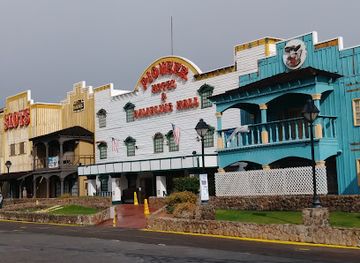
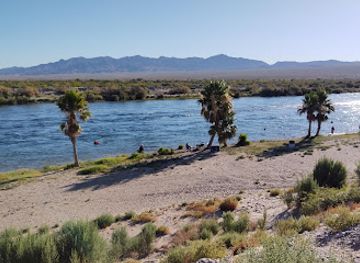
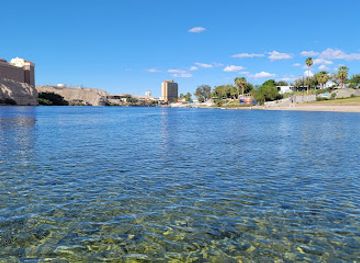
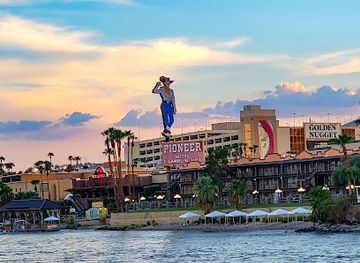
Laughlin's most important landmarks are tied to the Colorado River and the town's brief but distinctive resort history. The Laughlin Riverwalk is a contemporary public feature that frames the waterway and connects the casino corridor with views towards Bullhead City. The Riverside Resort, founded by Don Laughlin, represents the beginning of modern Laughlin's casino development and remains closely associated with the town's name. North of the settlement, Davis Dam is the region's major engineering landmark, holding back Lake Mohave and demonstrating how the Colorado was reshaped for water storage, power and recreation. The river itself is a natural landmark, its green channel sharply contrasting with the surrounding Mojave Desert. Across the water, the Bullhead City riverfront forms a useful visual counterpart, although it belongs to Arizona rather than Nevada.
-
Resort hotel
Don Laughlin's Riverside Resort Hotel and Casino
Discover the ultimate blend of relaxation and excitement at Don Laughlin's Riverside Resort Hotel and Casino, a premier destination in Laughlin, Nevada.
16 min drive · 5.4 km from city centre
-
 Resort hotel
Aquarius Casino Resort
Discover the ultimate getaway at Aquarius Casino Resort in Laughlin, Nevada, where luxury meets excitement along the beautiful Colorado River.
15 min drive · 5.1 km from city centre
-
Hotel
Tropicana Laughlin
Discover the vibrant Tropicana Laughlin, where comfort meets excitement amidst stunning river views and endless entertainment options.
14 min drive · 4.5 km from city centre
-
Resort hotel
Edgewater Casino Resort
Discover the thrill of gaming and relaxation at Edgewater Casino Resort, a premier destination in Laughlin, Nevada, perfect for every traveler.
15 min drive · 5.0 km from city centre

Explore Laughlin on the map
Plan your Laughlin trip on one map. See where the top attractions, landmarks, restaurants, bars and hotels are, find what's near where you're staying, and book hotels and experiences in a few clicks.
Best hotels in Laughlin
Best restaurants in Laughlin
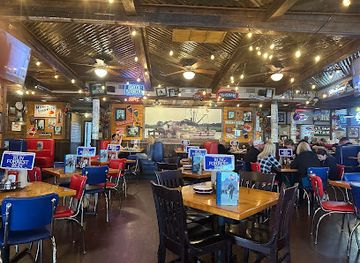
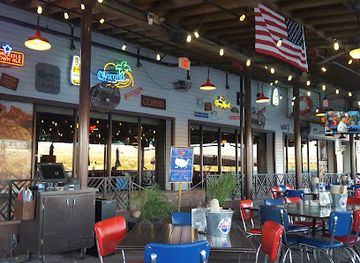
Laughlin's dining scene is concentrated in its casino resorts, where visitors find buffets, cafés, steakhouses, casual American menus and restaurants serving the large visitor population. The river setting and proximity to Arizona and southern California also bring Southwestern influences to the broader area, including Mexican dishes, grilled meats and familiar desert-road fare. Casino food courts and all-day cafés are practical for flexible meals, while resort dining rooms tend to provide more formal surroundings. Across the river, Bullhead City adds independent restaurants and everyday local dining, making it useful for travellers seeking alternatives to resort menus. Food shopping is oriented towards convenience stores, supermarkets and resort outlets rather than a major public market tradition. Dining times, restaurant availability and payment policies can vary by property, so current information is best checked locally.
-
Hamburger
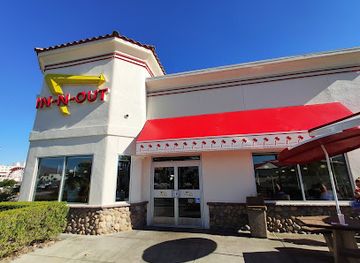
In-N-Out Burger
Experience iconic American fast food at In-N-Out Burger in Laughlin - famous for fresh ingredients and delicious flavors.
14 min drive · 4.6 km from city centre
-
Steak
Saltgrass Steak House
Experience delectable steaks and American cuisine at Saltgrass Steak House in Laughlin - a culinary gem for every tourist.
14 min drive · 4.7 km from city centre
-
Seafood
Bubba Gump Shrimp Co.
Experience delicious seafood and vibrant decor at Bubba Gump Shrimp Co., where every meal tells a story inspired by 'Forrest Gump'.
14 min drive · 4.6 km from city centre
-
American
Bumbleberry Flats
Savor hearty American breakfasts at Bumbleberry Flats – where every meal is a delightful start to your Laughlin adventure!
14 min drive · 4.7 km from city centre
Best bars in Laughlin
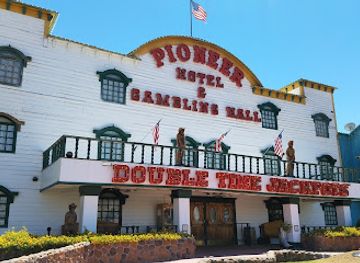
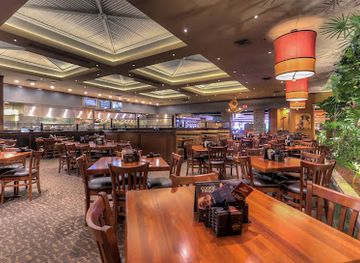
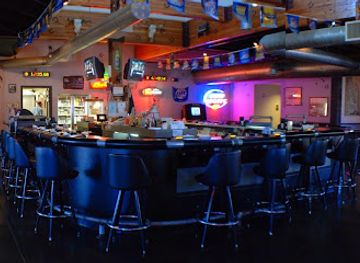
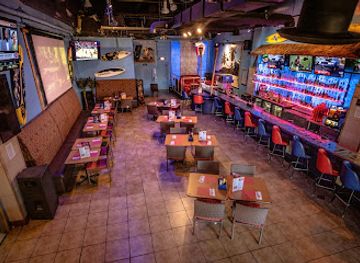
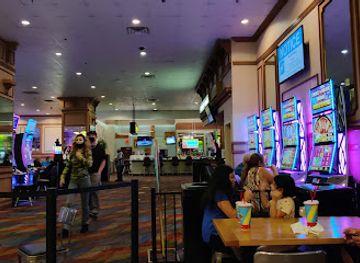
After dark, Laughlin's social life centres on casino resorts rather than a separate downtown nightlife district. Casino lounges and bars provide places for drinks, televised sport, conversation and live music, while larger properties periodically host concerts, comedy, tribute performances and touring entertainment. The Laughlin Event Center and resort theatres have helped make organised shows part of the town's evening identity, although programmes change. Some venues offer a lively gaming-room atmosphere, whereas river-facing lounges and hotel bars are generally more relaxed. Traditional clubbing is less prominent than in Las Vegas, and the town's scale means late-night options are concentrated in a few properties rather than spread across many streets. Visitors should observe venue age limits, gaming-area rules and local restrictions on smoking and alcohol, which differ between establishments.
-
Bar
Claim Jumper Restaurants
Savor the flavors of America at Claim Jumper Restaurants in Laughlin, where hearty dishes and a lively bar create the perfect dining experience.
14 min drive · 4.6 km from city centre
-
Bar
Bikini Bay Sports Bar & Grill
Discover Bikini Bay Sports Bar & Grill, your ultimate destination for food, drinks, and non-stop entertainment in Laughlin, NV.
14 min drive · 4.8 km from city centre
-
Restaurant
The Brew Brothers
Experience the vibrant culinary scene at The Brew Brothers in Laughlin, NV, where delicious American dishes and craft beers come together for a memorable dining experience.
14 min drive · 4.6 km from city centre
-
Bar
Old Town Saloon
Experience the vibrant atmosphere and delicious cocktails at Old Town Saloon, Laughlin's top destination for a night out.
12 min drive · 3.9 km from city centre
Best nightclubs in Laughlin
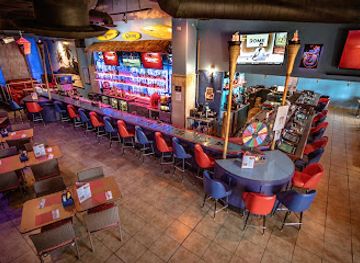
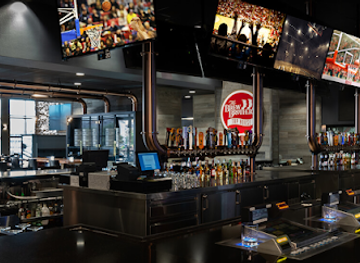
After dark, Laughlin's social life centres on casino resorts rather than a separate downtown nightlife district. Casino lounges and bars provide places for drinks, televised sport, conversation and live music, while larger properties periodically host concerts, comedy, tribute performances and touring entertainment. The Laughlin Event Center and resort theatres have helped make organised shows part of the town's evening identity, although programmes change. Some venues offer a lively gaming-room atmosphere, whereas river-facing lounges and hotel bars are generally more relaxed. Traditional clubbing is less prominent than in Las Vegas, and the town's scale means late-night options are concentrated in a few properties rather than spread across many streets. Visitors should observe venue age limits, gaming-area rules and local restrictions on smoking and alcohol, which differ between establishments.
-
Night club
Bikini Bay Sports Bar & Grill
Experience a vibrant blend of nightlife, delicious grilled dishes, and gaming excitement at Bikini Bay Sports Bar & Grill in Laughlin, Nevada.
14 min drive · 4.8 km from city centre
-
Bar
Hideout
Discover Hideout, a vibrant bar in Laughlin, NV, offering a lively atmosphere, diverse drinks, and unforgettable entertainment for every visitor.
13 min drive · 4.5 km from city centre
-
Lounge
Tango's Lounge
Experience vibrant nightlife at Tango's Lounge in Laughlin, NV, offering live music, delicious cocktails, and a welcoming atmosphere.
14 min drive · 4.6 km from city centre
-
Bar
Fat Tuesday at The South Tower Bar
Discover Laughlin's vibrant nightlife at Fat Tuesday, where refreshing frozen margaritas and a lively atmosphere await you.
16 min drive · 5.4 km from city centre
Best shops in Laughlin
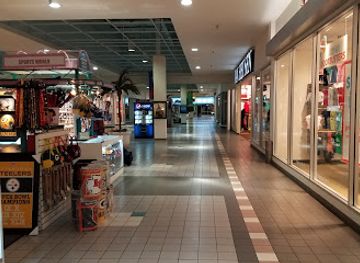
Shopping in Laughlin is primarily practical and visitor-oriented, with resort gift shops, convenience outlets, casino retail spaces and the Laughlin Outlet Center providing the main organised options. Travellers can look for clothing, souvenirs, luggage, jewellery, snacks and resort merchandise, while larger grocery and everyday shopping choices are available across the river in Bullhead City. The retail scene is not built around a historic market quarter or a major local craft tradition, but the desert setting influences the kinds of goods visitors seek, including outdoor equipment, swimwear, hats and sun protection. Souvenirs often reflect Nevada gaming culture, the Colorado River and the wider Southwest. Trading across the Nevada-Arizona state line can affect tax treatment and opening patterns, so visitors should check current details before making a dedicated shopping trip.
-
Outlet mall
Laughlin Outlet Center
Explore Laughlin Outlet Center for unbeatable shopping deals and a vibrant atmosphere in the heart of Laughlin, Nevada.
14 min drive · 4.7 km from city centre
-
Cannabis store
Nevada Made Marijuana
Experience the vibrant world of cannabis at Nevada Made Marijuana in Laughlin, where quality meets knowledge in a welcoming atmosphere.
14 min drive · 4.8 km from city centre
-
Shopping mall
City Square Shopping Center
Explore the vibrant City Square Shopping Center in Bullhead City, Arizona, where shopping, dining, and entertainment come together for an unforgettable experience.
13 min drive · 4.5 km from city centre
-
Beauty supply store
Bath & Body Works
Explore Bath & Body Works in Laughlin, NV for a delightful array of beauty products, candles, and fragrances that encapsulate luxury and self-care.
14 min drive · 4.7 km from city centre


Get your free copy of our complete guide to Laughlin, delivered straight to you.
Everything on this page, from attractions and restaurants to essentials and local phrases, in one PDF you can read offline, print or share.
Already have an account? Sign in
Your Laughlin guide is ready.
We'll send it to · Not you? Sign out

Getting your guide ready…
We are putting together a fresh copy of the Laughlin guide. This can take up to a minute.
This can take a few moments. If your browser asks, choose Allow so the download can start. You'll find the guide in your Downloads folder.
Nothing happened? Download it again
Sorry, the guide is taking longer than usual. Please try again in a minute, or get it by email instead.
Laughlin essentials
Currency and Payment
Safety
Emergency Situations
Do's and Don'ts
Local Tips
From Eve
Local phrases worth knowing
You don't need to get them perfect. A few words go a long way, and locals appreciate the effort.
Basics
| English | Local | Say it |
|---|---|---|
| Hello | Howdy | [haw-dee] |
| Goodbye | See ya | [see yuh] |
| Yes | Yup | [yuhp] |
| No | Nope | [nohp] |
| Please/You're welcome | Please/You're welcome | [pleez/yur wel-kuhm] |
| Thank you | Thanks | [thangks] |
| Excuse me/Sorry | Pardon me/My bad | [pahr-dun mee/my bad] |
| How are you? | How's it goin'? | [hows it go-in] |
| Fine. And you? | Good. You? | [good. yuh?] |
| Do you speak English? | Ya speak English? | [yah speak ing-glish] |
| I don't understand | I don't get it | [eye dohnt get it] |
Eating & Drinking
| English | Local | Say it |
|---|---|---|
| I'd like to see the menu, please | Can I check out the menu? | [kan eye chek out the men-yoo] |
| I don't eat meat | I don't do meat | [eye dohnt doh meet] |
| Cheers! | Cheers! | [cheerz] |
| I would like to pay, please | I'm ready to settle up | [eye-em red-ee too set-ul up] |
Emergencies
| English | Local | Say it |
|---|---|---|
| Help! | Help! | [help] |
| Go away! | Beat it! | [beet it] |
| Call the Police! | Get the cops! | [get the cops] |
| Call a doctor! | Get a doc! | [get uh doc] |
| I'm lost | I'm turned around | [eye-em turnd uh-round] |
| I'm ill | I'm feelin' off | [eye-em feel-in off] |
Shopping
| English | Local | Say it |
|---|---|---|
| I'd like to buy... | I wanna pick up... | [eye wah-nuh pick up] |
| I'm just looking | Just browsin' | [just brow-zin] |
| How much is it? | What's the damage? | [wuts the dam-ij] |
| That's too expensive | That's a bit steep | [thats uh bit steep] |
| Can you lower the price? | Can ya knock it down? | [kan yuh nok it down] |
Time & Numbers
| English | Local | Say it |
|---|---|---|
| What time is it? | What's the time? | [wuts the time] |
| It's one o'clock | It's one | [its one] |
| Half past (10) | Ten-thirty | [ten-thur-tee] |
| Morning | Mornin' | [morn-in] |
| Afternoon | Afternoon | [after-noon] |
| Evening | Evenin' | [even-in] |
| Yesterday | Yest'day | [yest-dey] |
| Today | Today | [to-day] |
| Tomorrow | Tomorrah | [tom-or-uh] |
| 1 | One | [wun] |
| 2 | Two | [too] |
| 3 | Three | [three] |
| 4 | Four | [four] |
| 5 | Five | [five] |
| 6 | Six | [six] |
| 7 | Seven | [sev-un] |
| 8 | Eight | [ate] |
| 9 | Nine | [nine] |
| 10 | Ten | [ten] |
Transport & Directions
| English | Local | Say it |
|---|---|---|
| Where's a/the...? | Where's the...? | [wheres the] |
| What's the address? | Where's it at? | [wheres it at] |
| Can you show me (on the map)? | Can ya point it out (on the map)? | [kan yuh point it out on the map] |
| When's the next (bus)? | When's the next one (bus)? | [whens the next one bus] |
| A ticket (to ....) | A ticket (to ....) | [uh ticket to] |
History of Laughlin
The Colorado River’s Indigenous Heritage
Long before the resort town appeared, the lower Colorado River was an important cultural and travel corridor for Indigenous peoples, including communities associated with the Mojave people. The river provided water, food, transport and connections through an otherwise arid landscape. Modern Laughlin stands within a wider region whose history cannot be separated from the Colorado, although the present settlement itself is comparatively young. Nearby river communities, archaeological traces and continuing Indigenous presence provide a deeper context for a town often known primarily for casinos and recreation.
Mining and River Transport
During the nineteenth century, American expansion brought surveyors, miners, ranchers and military activity to the lower Colorado region. Mining settlements developed in the surrounding desert, while the river became a route for supplies and trade. Bullhead City, across the river in Arizona, takes its name from the Bullhead Rock navigation landmark used by steamboats before the construction of modern dams. These regional movements created the transport and settlement patterns that later helped connect the river communities, even though Laughlin itself had not yet emerged as a town.
Davis Dam and a Changed River
The construction of Davis Dam, completed in 1953 north of present-day Laughlin, transformed the lower Colorado landscape. The dam created Lake Mohave, regulated water flows and supported hydroelectric generation, while also encouraging boating and other forms of recreation. It helped make the riverbank more attractive for planned development and linked the area to the wider water infrastructure of the American Southwest. The dam and reservoir remain important to the region's geography, supplying the dramatic contrast between irrigated waterway and dry Mojave terrain that defines the visitor experience.
Don Laughlin and the Riverside Resort
The modern settlement began when casino entrepreneur Don Laughlin acquired riverfront land and opened the Riverside Resort in the 1960s. The property, initially a modest operation, established the commercial model that would shape the area: accommodation, gaming, dining and entertainment concentrated beside the Colorado River. As more resorts followed, the settlement became known as South Pointe before taking the name Laughlin in honour of the developer. Growth was driven less by traditional urban industries than by tourism, road access and the appeal of a Nevada gaming destination close to Arizona and California.
From Casino Outpost to River Resort
From the late twentieth century onward, Laughlin expanded its resort district and developed a broader leisure identity encompassing concerts, conventions, golf, boating and river excursions. Its casinos remain central to the local economy, but the Colorado River and surrounding public desert lands have become equally important to the town's image. Laughlin grew as an unincorporated community within Clark County rather than as an independent municipality, and its built environment continues to reflect that history: a linear resort corridor, large visitor properties and a landscape where development quickly gives way to open desert.
Laughlin in Photos
Browse through our photo collection highlighting the charm and character of the destination.
Cities near Laughlin
The closest cities to Laughlin, if you have time for more than one stop.
-

-

-

-

-


Swipe for more cities
Explore more

Explore more of Nevada
Discover Nevada: From the bright lights of Las Vegas to the tranquil beauty of Lake Tahoe, Nevada offers a unique blend of excitement and natural wonder.
Explore Nevada