

Free Las Vegas Travel Guide & Mobile App
Plan your Las Vegas trip with Evendo. Get free guides to top attractions, restaurants, hotels, and bars. Web access or download the mobile app.


Las Vegas combines Strip landmarks, desert landscapes, live entertainment, distinctive museums, local culture and round-the-clock dining in southern Nevada.
The Strip and Beyond
Las Vegas rises from the Mojave Desert in southern Nevada, a city defined by theatrical architecture, ambitious entertainment and a landscape of extraordinary openness. The Las Vegas Strip, technically a section of Las Vegas Boulevard mostly outside the municipal city boundary, forms the visitor centrepiece, where vast resort complexes recreate fragments of Paris, Venice, New York and ancient Rome in an ever-changing corridor of lights. Beyond the resorts, Downtown Las Vegas offers a more locally rooted atmosphere around Fremont Street, while the Arts District brings galleries, studios, independent shops and neighbourhood restaurants to former commercial streets.Read more about Las Vegas
Desert Landscapes and Urban Spectacle
When is the best time to visit Las Vegas?
Best: March–April, October · 22–27°C| Month | High (°C) | Rainfall (mm) |
|---|---|---|
| January | 15 | 9 |
| February | 18 | 8 |
| March (best) | 22 | 8 |
| April (best) | 26 | 4 |
| May | 31 | 3 |
| June | 37 | 2 |
| July | 40 | 10 |
| August | 40 | 11 |
| September | 36 | 8 |
| October (best) | 27 | 7 |
| November | 18 | 8 |
| December | 14 | 9 |
Getting to and around Las Vegas
How to get there
Transportation
Best attractions in Las Vegas
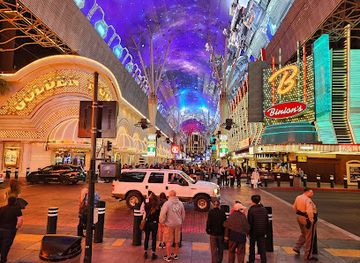
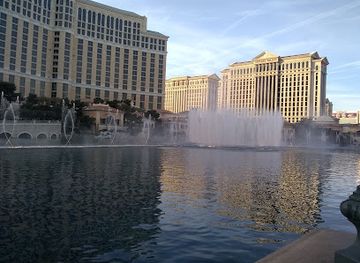
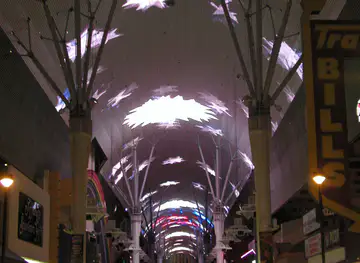
Las Vegas sightseeing ranges from the vast resort scenery of the Strip to the more grounded districts beyond it. The Bellagio Conservatory and Botanical Gardens changes its elaborate displays seasonally, while the Fountains of Bellagio turn the resort frontage into a choreographed water spectacle. At the northern end, the Neon Museum preserves historic signs in an outdoor collection that traces the city's visual language. Downtown's Fremont Street Experience presents a pedestrian entertainment zone beneath a vast illuminated canopy, surrounded by older casinos and live performances. The Mob Museum examines organised crime and law enforcement through artefacts, testimony and interpretation in a former federal courthouse. In the Arts District, independent galleries, studios and restaurants occupy a walkable grid south of Downtown. For a change of scale, Red Rock Canyon National Conservation Area lies west of the urban area, offering desert geology and trails rather than resort spectacle.
-
Tourist attraction
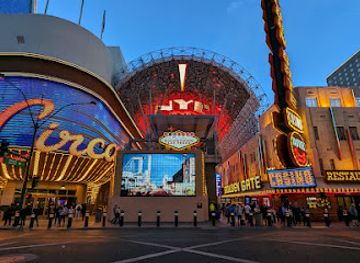
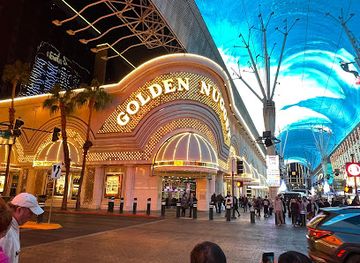
Fremont Street Experience
Explore the vibrant Fremont Street Experience in Downtown Las Vegas, where dazzling lights, live music, and unique shopping await.
5 min walk · 0.4 km from city centre
-
Tourist attraction
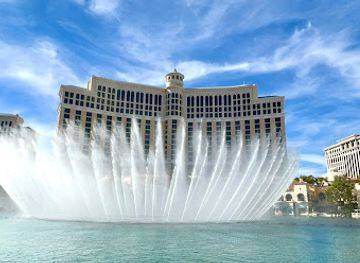
Fountains of Bellagio
Experience the magical choreography of water, light, and music at the iconic Fountains of Bellagio in Las Vegas, a breathtaking free attraction.
21 min drive · 7.1 km from city centre
-
Tourist attraction
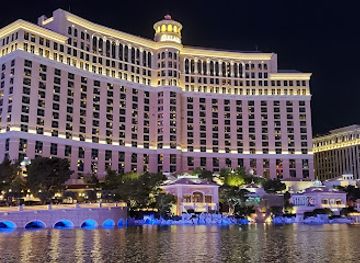
Bellagio Conservatory & Botanical Gardens
Experience the breathtaking beauty of nature at the Bellagio Conservatory & Botanical Gardens, a stunning floral paradise in Las Vegas.
22 min drive · 7.2 km from city centre
-
Tourist attraction
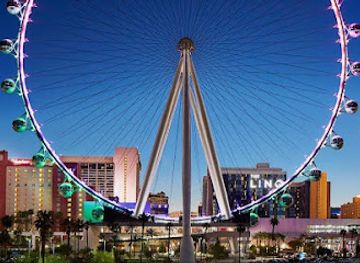
High Roller
Experience breathtaking views of Las Vegas from the world's tallest observation wheel, the High Roller, located at The LINQ Promenade.
19 min drive · 6.4 km from city centre
Best landmarks in Las Vegas
Las Vegas landmarks express the city's history through both historic remnants and highly theatrical resort architecture. The Welcome to Fabulous Las Vegas sign, erected in 1959 near the southern Strip, has become one of the best-known symbols of the resort era. The Golden Gate Hotel and Casino on Fremont Street dates to the early Downtown period, while the nearby El Cortez preserves another chapter of old Las Vegas casino history. The Bellagio's lake and fountains form a major contemporary landmark, and the Eiffel Tower replica at Paris Las Vegas illustrates the themed architecture that reshaped the Strip from the late 20th century onwards. The Old Las Vegas Mormon Fort marks the valley's early settlement history, while the Hoover Dam, outside the city near Boulder City, represents the public works that transformed the region's water, power and transport infrastructure.
-
 Casino hotel
Bellagio Hotel & Casino
Experience the luxury and excitement of Bellagio Hotel & Casino, featuring iconic fountains, exquisite dining, and world-class entertainment in Las Vegas.
21 min drive · 7.1 km from city centre
-
Hotel
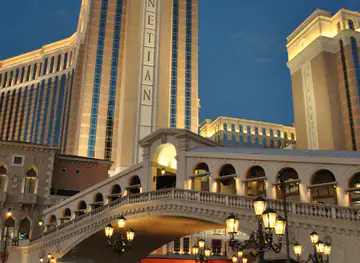
The Venetian Las Vegas
Discover the romantic allure of Venice at The Venetian Las Vegas, a luxurious hotel and casino experience with gondola rides and exquisite dining.
18 min drive · 6.0 km from city centre
-
Shopping mall
Fremont Street Experience
Explore the vibrant Fremont Street Experience, a fusion of entertainment, shopping, and nightlife in the heart of Las Vegas, showcasing unforgettable light shows and live music.
5 min walk · 0.4 km from city centre
-
Scenic spot
Fountains of Bellagio
Experience the mesmerizing Fountains of Bellagio in Las Vegas – a breathtaking display of water, light, and music that enchants every visitor.
21 min drive · 7.1 km from city centre
Explore Las Vegas on the map
Plan your Las Vegas trip on one map. See where the top attractions, landmarks, restaurants, bars and hotels are, find what's near where you're staying, and book hotels and experiences in a few clicks.
Neighbourhoods in Las Vegas
-
-

-


Swipe for more neighbourhoods
Best hotels in Las Vegas
Best restaurants in Las Vegas
Las Vegas dining reflects the city's role as a destination for migration, tourism and large-scale hospitality. Resort restaurants range from tasting-menu dining and steakhouses to Italian, Japanese, Chinese, Korean, Mexican and contemporary Californian cooking, while long-established buffet culture remains part of the city's identity. The classic Las Vegas shrimp cocktail, once a defining casino snack, belongs to the history of the resort era, and diners will also find all-day breakfasts, burgers, bakeries and late-night meals throughout the metropolitan area. The Arts District has independent restaurants and cafés in converted commercial buildings, while Chinatown and the Spring Mountain Road corridor are known for broad Asian dining choices. Downtown combines casino restaurants with newer bars and casual eateries, and food halls provide a variety of options under one roof without requiring a formal resort setting.
-
American
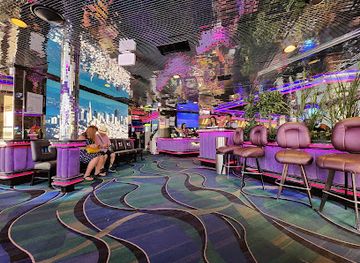
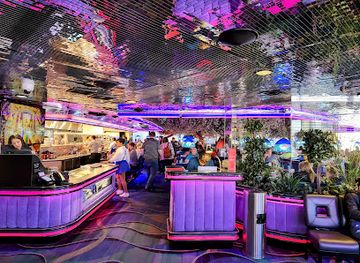
Peppermill Restaurant and Fireside Lounge
Discover the vibrant atmosphere and generous portions at Peppermill Restaurant & Fireside Lounge - an iconic Las Vegas dining experience.
14 min drive · 4.5 km from city centre
-
Pizza
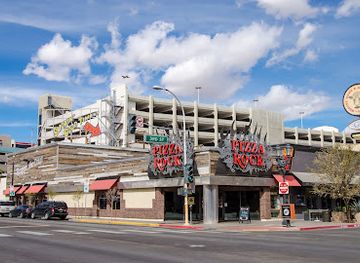
Pizza Rock
Experience delicious artisan pizzas and vibrant nightlife at Pizza Rock in Downtown Las Vegas - where every slice is a celebration!
4 min walk · 0.3 km from city centre
-
Mexican
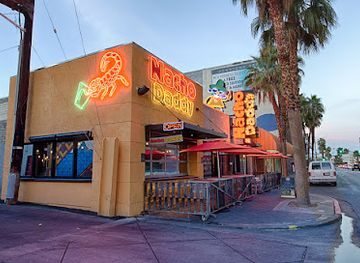
Nacho Daddy - Downtown
Discover the ultimate nacho experience at Nacho Daddy in Downtown Las Vegas – where vibrant flavors meet festive atmosphere!
2 min walk · 0.2 km from city centre
-
Steak
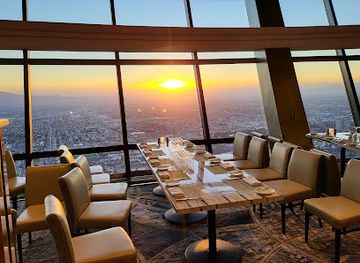
Top of the World
Top of the World: A Premier Steakhouse Offering Breathtaking Views and Culinary Excellence in Las Vegas.
9 min drive · 2.9 km from city centre
Best bars in Las Vegas
Las Vegas after dark is dominated by resort entertainment, but its nightlife is more varied than casino floors alone. The Strip contains cocktail lounges, high-energy clubs, poolside venues, sports bars, piano bars and theatres presenting resident productions, concerts and comedy. Downtown offers a more compact evening circuit around Fremont Street, with live music and casino bars, while the Arts District has smaller cocktail rooms, breweries, lounges and performance spaces with a less monumental setting. Nightlife often begins late and may be tied to a particular show, club or hotel, so dress codes and entry arrangements differ between venues. Beyond drinking and gambling, evening options include headline concerts, stand-up comedy, magic, cabaret and outdoor visual displays. Visitors should plan transport after midnight, particularly when moving between the Strip and Downtown.
-
American
Peppermill Restaurant and Fireside Lounge
Experience the vibrant atmosphere and classic American cuisine at the Peppermill Restaurant and Fireside Lounge, a true Vegas icon.
14 min drive · 4.5 km from city centre
-
Bar
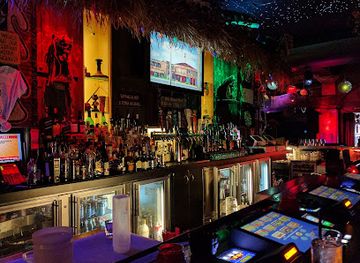
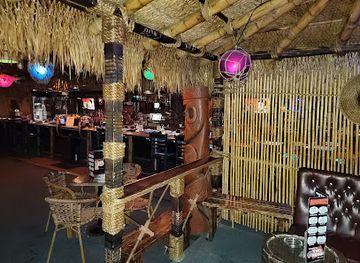
The Golden Tiki
Experience the vibrant atmosphere and exotic cocktails at The Golden Tiki, Las Vegas’ premier tropical bar destination.
20 min drive · 6.8 km from city centre
-
Tiki bar
Frankie's Tiki Room
Discover the ultimate tiki experience at Frankie's Tiki Room, offering exotic cocktails and a vibrant atmosphere in Las Vegas.
8 min drive · 2.5 km from city centre
-
Bar
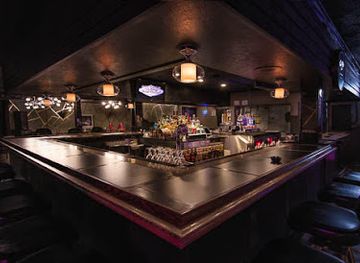
The Sand Dollar Lounge
Discover the energetic vibe of The Sand Dollar Lounge in Las Vegas, where exceptional cocktails and live music create an unforgettable nightlife experience.
19 min drive · 6.4 km from city centre
Best nightclubs in Las Vegas
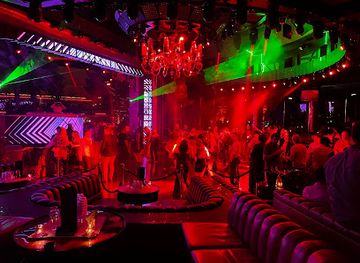
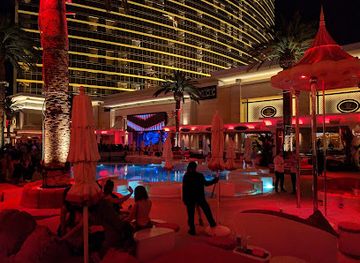
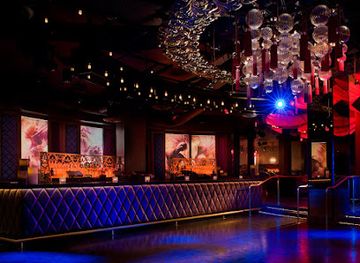
Las Vegas after dark is dominated by resort entertainment, but its nightlife is more varied than casino floors alone. The Strip contains cocktail lounges, high-energy clubs, poolside venues, sports bars, piano bars and theatres presenting resident productions, concerts and comedy. Downtown offers a more compact evening circuit around Fremont Street, with live music and casino bars, while the Arts District has smaller cocktail rooms, breweries, lounges and performance spaces with a less monumental setting. Nightlife often begins late and may be tied to a particular show, club or hotel, so dress codes and entry arrangements differ between venues. Beyond drinking and gambling, evening options include headline concerts, stand-up comedy, magic, cabaret and outdoor visual displays. Visitors should plan transport after midnight, particularly when moving between the Strip and Downtown.
-
Night club
OMNIA Nightclub
Discover the electrifying nightlife at OMNIA Nightclub, where stunning design meets world-class entertainment in the heart of Las Vegas.
20 min drive · 6.6 km from city centre
-
Night club
XS Nightclub
Experience the ultimate nightlife at XS Nightclub, where world-class DJs and an opulent atmosphere meet in the heart of Las Vegas.
16 min drive · 5.3 km from city centre
-
Night club
EBC at Night
Experience the dazzling nightlife of EBC at Night in Las Vegas, where every evening promises unforgettable music, vibrant energy, and stunning views.
15 min drive · 5.1 km from city centre
-
Night club
Marquee Nightclub
Marquee Nightclub: Where the Rhythm of Las Vegas Comes Alive with Unforgettable Nights of Dance, Music, and Celebration.
22 min drive · 7.4 km from city centre
Best shops in Las Vegas
Shopping in Las Vegas ranges from luxury retail integrated into major resorts to independent businesses in older neighbourhoods. The Forum Shops at Caesars and the Grand Canal Shoppes use elaborate interiors and themed architecture to create destination shopping environments, while Fashion Show Las Vegas provides a large conventional mall setting on the Strip. Downtown and the Arts District are better suited to vintage clothing, art, design objects, independent boutiques and locally made goods, with First Friday events adding a cultural dimension on selected evenings. Visitors seeking regional products can look for Nevada-made foodstuffs, desert-inspired art, jewellery and craftwork, although authenticity varies among souvenir outlets. The Downtown Container Park mixes small retailers with food and public space, while Las Vegas North Premium Outlets offers an outlet-centre format away from the main resort frontage.
-
Gift shop
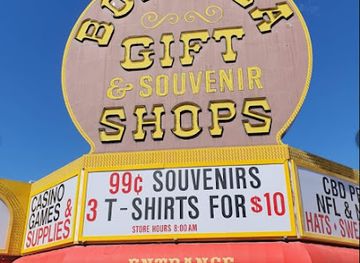
Bonanza Gift Shop
Explore the wonders of Bonanza Gift Shop in Las Vegas, offering a vast selection of souvenirs, clothing, and unique gifts for every traveler.
10 min drive · 3.2 km from city centre
-
Shopping mall
Neonopolis
Explore the vibrant Neonopolis in Las Vegas, where shopping, dining, and entertainment come together in a dazzling display of lights and excitement.
1 min walk · 0.1 km from city centre
-
Toy store
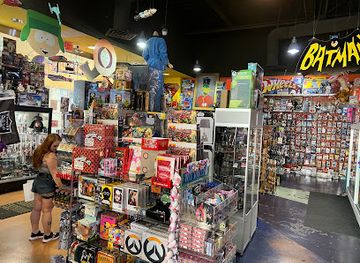
Toy Shack
Explore the enchanting world of Toy Shack in Las Vegas, where nostalgia meets adventure with a treasure trove of toys and collectibles.
1 min walk · 0.1 km from city centre
-
Antique store
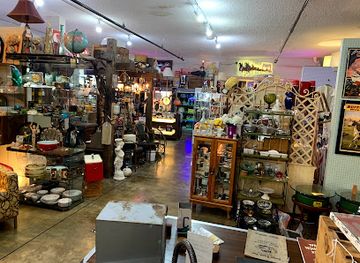
Antique Alley Mall
Discover unique antiques and vintage treasures at Antique Alley Mall in Downtown Las Vegas, a must-visit for treasure hunters and nostalgia enthusiasts.
6 min drive · 1.9 km from city centre
Get your free copy of our complete guide to Las Vegas, delivered straight to you.
Everything on this page, from attractions and restaurants to essentials and local phrases, in one PDF you can read offline, print or share.
Already have an account? Sign in
Your Las Vegas guide is ready.
We'll send it to · Not you? Sign out

Getting your guide ready…
We are putting together a fresh copy of the Las Vegas guide. This can take up to a minute.
This can take a few moments. If your browser asks, choose Allow so the download can start. You'll find the guide in your Downloads folder.
Nothing happened? Download it again
Sorry, the guide is taking longer than usual. Please try again in a minute, or get it by email instead.
Las Vegas essentials
Currency and Payment
Safety
Emergency Situations
Do's and Don'ts
Local Tips
From Eve
Local phrases worth knowing
You don't need to get them perfect. A few words go a long way, and locals appreciate the effort.
Basics
| English | Local | Say it |
|---|---|---|
| Hello | Howdy | [haw-dee] |
| Goodbye | See ya later | [see yuh lay-tur] |
| Yes | Yup | [yuhp] |
| No | Nope | [nohp] |
| Please/You're welcome | Please/No problem | [pleez/no problem] |
| Thank you | Thanks | [thanks] |
| Excuse me/Sorry | Pardon | [par-dun] |
| How are you? | How's it going? | [hows it go-in?] |
| Fine. And you? | Good. How about you? | [good. how a-bout yuh?] |
| Do you speak English? | You speak English? | [yuh speak ing-lish?] |
| I don't understand | I'm lost | [ahm lost] |
Eating & Drinking
| English | Local | Say it |
|---|---|---|
| I'd like to see the menu, please | Menu, please | [men-yoo, please] |
| I don't eat meat | No meat for me | [noh meet for mee] |
| Cheers! | Cheers! | [cheers!] |
| I would like to pay, please | Check, please | [chek, please] |
Emergencies
| English | Local | Say it |
|---|---|---|
| Help! | Help! | [help!] |
| Go away! | Get lost! | [get lost!] |
| Call the Police! | Call the cops! | [call the cops!] |
| Call a doctor! | Get a doctor! | [get a doctor!] |
| I'm lost | I'm lost | [ahm lost] |
| I'm ill | I'm sick | [ahm sik] |
Shopping
| English | Local | Say it |
|---|---|---|
| I'd like to buy... | I wanna buy... | [ah wah-nuh buy...] |
| I'm just looking | Just browsing | [just brows-ing] |
| How much is it? | How much? | [how much?] |
| That's too expensive | Too pricey | [too prye-see] |
| Can you lower the price? | Can you do better? | [can yuh do bet-tur?] |
Time & Numbers
| English | Local | Say it |
|---|---|---|
| What time is it? | What's the time? | [whats the time?] |
| It's one o'clock | It's one | [its one] |
| Half past (10) | Ten thirty | [ten thur-tee] |
| Morning | Morning | [morn-ing] |
| Afternoon | Afternoon | [af-ter-noon] |
| Evening | Evening | [ee-ven-ing] |
| Yesterday | Yesterday | [yes-ter-day] |
| Today | Today | [to-day] |
| Tomorrow | Tomorrow | [to-mor-row] |
| 1 | One | [wun] |
| 2 | Two | [too] |
| 3 | Three | [three] |
| 4 | Four | [four] |
| 5 | Five | [five] |
| 6 | Six | [six] |
| 7 | Seven | [sev-en] |
| 8 | Eight | [ayt] |
| 9 | Nine | [nine] |
| 10 | Ten | [ten] |
Transport & Directions
| English | Local | Say it |
|---|---|---|
| Where's a/the...? | Where's the...? | [wheres the...?] |
| What's the address? | What's the address? | [whats the address?] |
| Can you show me (on the map)? | Show me (on the map) | [show mee (on the map)] |
| When's the next (bus)? | When's the next (bus)? | [whens the next (bus)?] |
| A ticket (to ....) | Ticket (to ...) | [tick-et (to ...)] |
History of Las Vegas
Paiute Homelands and Desert Water
The Las Vegas Valley lies within the traditional homeland of the Southern Paiute, whose communities understood and travelled through the Mojave Desert long before the modern city appeared. The valley's name derives from the Spanish phrase Las Vegas, meaning the meadows, referring to the springs and lush areas encountered by the 19th-century Mexican trader Antonio Armijo's expedition in 1829. Water remained the decisive factor in later settlement. In 1855, Mormon missionaries established a short-lived fort beside the springs, and the surviving Old Las Vegas Mormon Fort State Historic Park marks the importance of that early outpost. The springs themselves have since been largely altered or covered by urban development, but their presence explains why this seemingly arid location became a trading and settlement point.
Railroad Town and County Seat
Las Vegas became a more permanent town after the San Pedro, Los Angeles and Salt Lake Railroad reached the valley in 1905. Land was auctioned around the new railway station, establishing the settlement's original commercial core and connecting it to wider markets. Las Vegas was incorporated in 1911 and became the seat of Clark County, gaining administrative importance as well as its railway role. The railroad encouraged migration, freight movement and businesses serving workers and travellers. Downtown Las Vegas developed around Fremont Street, whose later casinos and neon signs would become emblematic, while the surrounding desert remained sparsely settled. The city's early growth therefore depended less on tourism than on transport, water infrastructure, agricultural activity and its strategic position between larger centres in California and Utah.
Hoover Dam and a New Economy
The construction of Boulder Dam, now Hoover Dam, on the Colorado River between 1931 and 1936 transformed the region. Thousands of workers came to southern Nevada, and Las Vegas benefited from the associated construction economy, improved infrastructure and expanding access to electricity and water. The dam also created Lake Mead, while the federal project helped make the desert southwest more closely connected to national economic development. In 1931, Nevada legalised wide-open gambling and reduced residency requirements for divorce, decisions that supported a growing visitor economy during the Depression era. Las Vegas was still a small city, but these changes established the regulatory and infrastructural conditions from which its later resort industry would develop.
From Downtown Casinos to the Strip
The first major resort on what became the Las Vegas Strip was El Rancho Vegas, which opened in 1941, followed by establishments such as the Last Frontier and Flamingo. The Flamingo, associated with Benjamin Siegel and opened in 1946, helped introduce a more expansive resort model, combining casino gambling with hotel rooms, restaurants and entertainment. Downtown remained important, particularly along Fremont Street, but the Strip's large sites allowed increasingly ambitious properties to emerge. Mid-century Las Vegas was shaped by entertainers, corporate investment, organised-crime associations and the construction of large hotels designed to attract visitors from across the United States. The city's public image became inseparable from neon, celebrity performances and the promise of a concentrated escape from ordinary life.
Corporate Resorts and Mega-Entertainment
From the 1980s onwards, investment by major corporations accelerated the transformation of Las Vegas into a global resort and convention centre. Properties such as The Mirage, opened in 1989, encouraged a wave of themed mega-resorts, while later developments added shopping promenades, large theatres, restaurants and family-oriented attractions alongside casinos. The city increasingly diversified its economy through conventions, sporting events, dining and resident entertainment, even as gambling remained central. Downtown's Fremont Street Experience, created in the 1990s, brought a pedestrian canopy and large-scale visual displays to the historic casino district. These changes also intensified debates over water use, rapid suburban growth and the relationship between the tourist corridor and established local communities.
A Diversifying Contemporary City
Modern Las Vegas extends far beyond its resort corridor, with extensive suburban districts, a growing arts and food scene, professional sports and a major convention economy. The Arts District has developed as a cultural quarter of galleries, studios, performance spaces and independent businesses, while Downtown's revitalisation has added new hospitality and creative enterprises around its historic core. The city continues to depend on the fragile water resources of the Colorado River and on careful desert adaptation. Its contemporary identity is consequently twofold: an internationally recognised entertainment capital built around spectacle, and a large metropolitan community negotiating housing, infrastructure, environmental pressure and cultural life beyond the casino floor.
Las Vegas in Photos
Browse through our photo collection highlighting the charm and character of the destination.
Cities near Las Vegas
The closest cities to Las Vegas, if you have time for more than one stop.
-

-

-

-

-


Swipe for more cities
Explore more

Explore more of Nevada
Discover Nevada: From the bright lights of Las Vegas to the tranquil beauty of Lake Tahoe, Nevada offers a unique blend of excitement and natural wonder.
Explore Nevada