

Free High Plains Travel Guide & Mobile App
Explore High Plains with free travel guides. Discover regional history, expert tips, proposed trips, and audio guides on web or mobile app.


Explore High Plains New Mexico for archaeological sites, Route 66 towns, open grasslands, reservoirs, fossil beds and wide desert skies.
Read more about High Plains
When is the best time to visit High Plains?
Best: May, September–October · 21–27°C| Month | High (°C) | Rainfall (mm) |
|---|---|---|
| January | 8 | 15 |
| February | 11 | 13 |
| March | 15 | 16 |
| April | 20 | 20 |
| May (best) | 25 | 31 |
| June | 29 | 41 |
| July | 31 | 61 |
| August | 31 | 58 |
| September (best) | 27 | 40 |
| October (best) | 21 | 31 |
| November | 14 | 20 |
| December | 9 | 16 |
Getting to and around High Plains
How to get there
Transportation
Best attractions in High Plains
High Plains attractions are dispersed and often interpret a landscape rather than a single monumental site. In Tucumcari, Route 66 motels, neon signs and local museums explain the history of long-distance motoring, while nearby Ute Lake and Conchas Lake offer fishing, boating, camping and open-water recreation. The northeastern plains around Clayton provide access to grassland scenery and the paleontological displays of the region, with Clayton Lake State Park known for dinosaur-track evidence and reservoir activities. Around Clovis and Portales, Blackwater Draw and local museums place the area within the story of Paleoindian archaeology and Ice Age animals. Rural drives reveal ranch country, volcanic outcrops, prairie wildlife and changing skies, while birdwatching, photography, hiking and stargazing suit the wide horizons. Because many sites have limited facilities and seasonal arrangements, the best itineraries combine a few principal towns with carefully planned outdoor stops rather than attempting to cover every corner in a single day.
-
National park
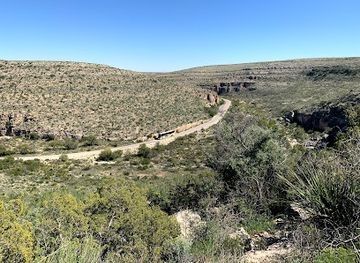
Carlsbad Caverns National Park
Discover the stunning beauty of Carlsbad Caverns National Park, a natural treasure in New Mexico with extraordinary limestone caves and rich biodiversity.
-
Tourist attraction
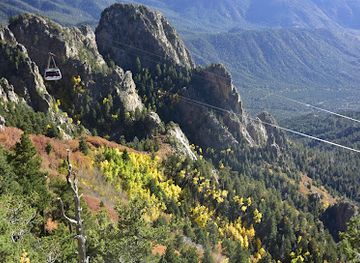
Sandia Peak Tramway
Experience breathtaking views and thrilling adventures at Sandia Peak Tramway in Albuquerque, New Mexico, an essential stop for every traveler.
-
Tourist attraction
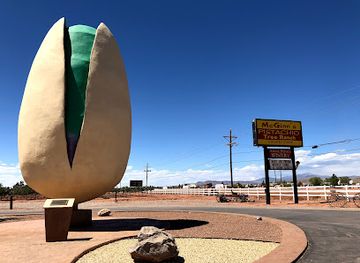
McGinn's PistachioLand Home of the World's Largest Pistachio
Discover the fun and flavor of McGinn's PistachioLand, where the world's largest pistachio awaits in Alamogordo, New Mexico.
-
National reserve
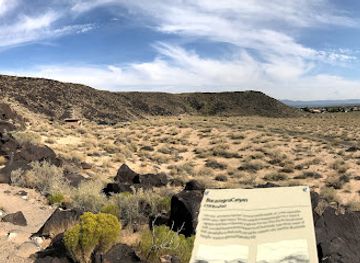
Petroglyph National Monument
Discover the ancient rock art and stunning landscapes of Petroglyph National Monument in Albuquerque, a must-visit for history and nature enthusiasts.
Best landmarks in High Plains
The most distinctive landmarks of High Plains New Mexico are often geological, archaeological or linked to transport. The mesa-and-highway setting of Tucumcari, including surviving Route 66 commercial architecture and roadside signs, symbolises the era when automobile travel made the eastern plains a national corridor. Blackwater Draw near Portales is an important archaeological landscape whose excavated deposits connect the region with the Clovis tradition and the Ice Age. Clayton Lake State Park preserves dinosaur-track evidence in a setting of open grassland and water, while the volcanic formations and prairie around northeastern New Mexico provide a visual contrast to the level southern Llano Estacado. The courthouses, commercial blocks and railway-era buildings of towns such as Clayton, Clovis, Portales and Tucumcari also serve as civic landmarks, recording the settlement patterns created by railways, agriculture and cattle. Together these places express deep time, Indigenous history, transport and the practical architecture of small-town New Mexico.
-
Tourist attraction
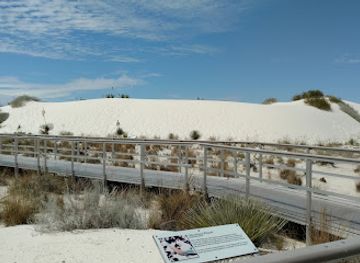
White Sands National Park
Discover the surreal beauty of White Sands National Park, a national treasure in New Mexico known for its stunning white gypsum dunes and diverse outdoor activities.
-
Historical landmark
Santa Fe Plaza
Experience the vibrant culture and rich history of Santa Fe Plaza, the heart of Santa Fe, New Mexico, where art, food, and tradition come together.
-
National reserve
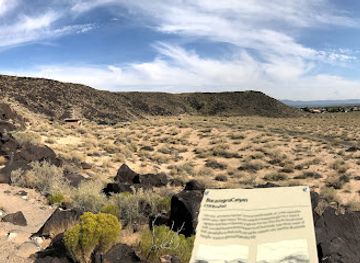
Petroglyph National Monument
Discover the ancient petroglyphs and stunning landscapes at Petroglyph National Monument, a captivating national reserve in Albuquerque, New Mexico.
-
National reserve
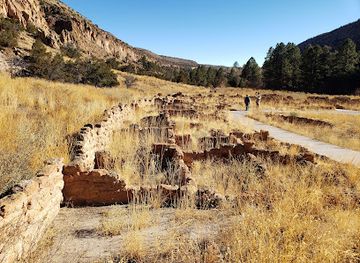
Bandelier National Monument
Discover the rich cultural heritage and stunning landscapes of Bandelier National Monument, a must-visit destination for nature and history enthusiasts.
Explore High Plains on the map
Plan your trip on one map. See where the top cities, national parks and sights are, and book hotels and experiences in a few clicks.
Best hotels in High Plains
Best restaurants in High Plains
Dining across High Plains New Mexico reflects small-town life, ranching, agriculture and the state’s broader Southwestern food culture. Cafés, diners and family restaurants in Tucumcari, Clayton, Clovis and Portales commonly provide practical meals for road travellers, while local menus may include New Mexican-style chile dishes alongside burgers, steaks, Mexican-American cooking and regional comfort food. Red or green chile is a defining New Mexican ingredient, though recipes and levels of heat vary between establishments. Portales and the surrounding agricultural area are associated with peanuts and dairy production, and farm products appear through local shops and seasonal markets rather than a single formal cuisine. Roadside stops, bakeries and independent cafés are useful for breakfast and provisions, while ranch-oriented restaurants and steakhouses reflect the importance of cattle. Check market days and seasonal availability locally, as smaller communities may have limited dining choices outside conventional meal hours.
-
Hamburger
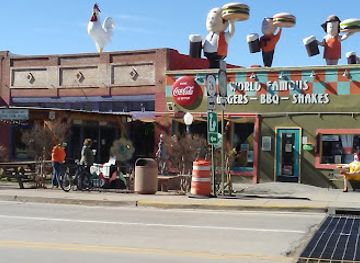
Sparkys
Discover Sparkys in Hatch, NM - where juicy burgers meet delicious barbecue in a vibrant setting.
-
American
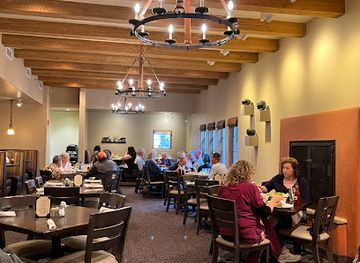
The Ranch House
Discover authentic American flavors at The Ranch House in Santa Fe - where local ingredients meet culinary excellence.
-
Mexican
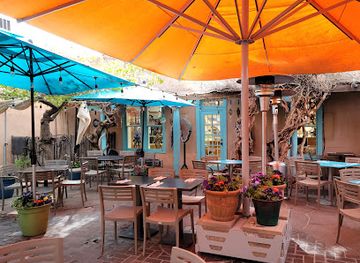
The Shed
Discover authentic Mexican flavors at The Shed in Santa Fe - a must-visit restaurant for every food lover exploring New Mexico.
-
Southwestern American
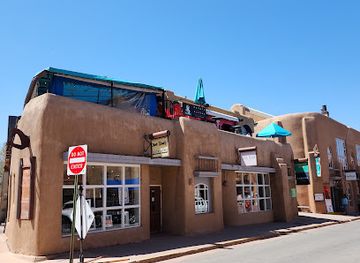
Coyote Cafe & Rooftop Cantina
Discover Coyote Cafe & Rooftop Cantina in Santa Fe: A vibrant dining experience showcasing Southwestern cuisine with stunning rooftop views.
Best bars in High Plains
Evening life in the High Plains is centred on traditional bars, restaurants, hotel lounges and community venues rather than a large nightclub circuit. Tucumcari has the region’s most recognisable Route 66-oriented evening atmosphere, with historic roadside settings and places where travellers can eat or have a drink after a day on the highway. Clayton, Clovis and Portales provide additional restaurants, bars, live music and local social venues, while smaller towns tend to close earlier and offer a quieter pub or café culture. Seasonal fairs, rodeo-related gatherings and town events can bring temporary energy, but dates and programmes vary. Craft beer and cocktails are available in some larger communities, although the region is not primarily a brewery or nightlife destination. Designated drivers are important because distances are long, taxis and ride-hailing coverage can be limited, and rural roads are poorly suited to late-night improvisation.
-
Irish pub
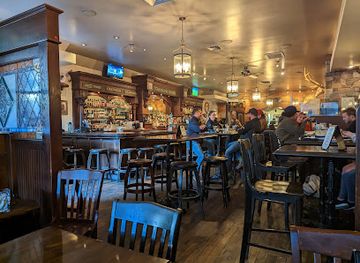
Two Fools Tavern
Discover the vibrant spirit of Ireland at Two Fools Tavern - a beloved Irish pub in Albuquerque's Nob Hill, serving authentic cuisine and lively entertainment.
-
Grill
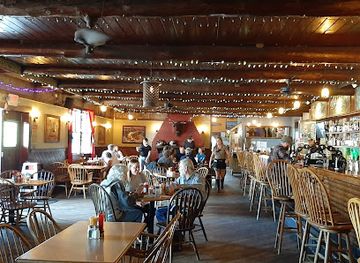
The Mine Shaft Tavern & Cantina
Discover The Mine Shaft Tavern & Cantina in Madrid, NM, where local art meets delicious cuisine in a lively atmosphere.
-
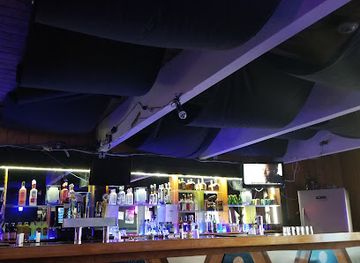
Cocktail bar
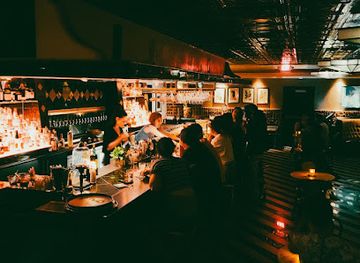
The Copper Lounge
Discover Albuquerque's vibrant nightlife at The Copper Lounge, where expertly crafted cocktails and a lively atmosphere await.
-
Brewery
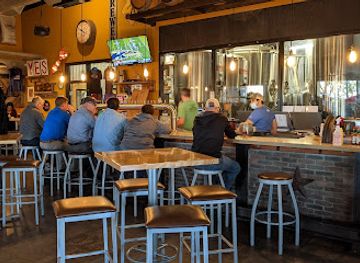
Canteen Brewhouse
Experience the best of craft beer and live music at Canteen Brewhouse, Albuquerque's premier brewpub for tourists and locals alike.
Best nightclubs in High Plains
Evening life in the High Plains is centred on traditional bars, restaurants, hotel lounges and community venues rather than a large nightclub circuit. Tucumcari has the region’s most recognisable Route 66-oriented evening atmosphere, with historic roadside settings and places where travellers can eat or have a drink after a day on the highway. Clayton, Clovis and Portales provide additional restaurants, bars, live music and local social venues, while smaller towns tend to close earlier and offer a quieter pub or café culture. Seasonal fairs, rodeo-related gatherings and town events can bring temporary energy, but dates and programmes vary. Craft beer and cocktails are available in some larger communities, although the region is not primarily a brewery or nightlife destination. Designated drivers are important because distances are long, taxis and ride-hailing coverage can be limited, and rural roads are poorly suited to late-night improvisation.
-
Bar
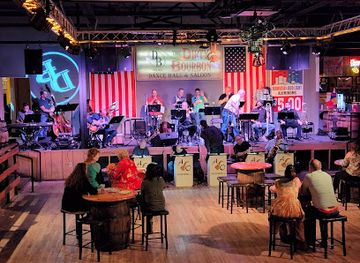
The Dirty Bourbon
Experience the vibrant nightlife at The Dirty Bourbon, Albuquerque's premier bar and dance hall, where great music and fun await.
-
Night club
Leo's
Dive into the vibrant nightlife at Leo's, Albuquerque's top night club and bar, known for live music, karaoke, and an electrifying atmosphere.
-
Night club
Latin Groove
Latin Groove in El Paso, TX, offers an unforgettable nightlife experience with lively Latin music, vibrant dancing, and a welcoming atmosphere.
-
Night club
Win Place & Show Bar & Package Liquor Store
Experience the vibrant nightlife of Ruidoso at Win Place & Show Bar, where craft cocktails and live entertainment create unforgettable memories.


Best shops in High Plains
Shopping in High Plains New Mexico is concentrated in the principal towns and is generally practical, independent and connected to regional life. Tucumcari’s historic Route 66 area offers opportunities to look for road memorabilia, vintage signs, books and locally themed gifts, although individual businesses and stock change over time. Clayton, Clovis and Portales provide everyday high-street shops, Western clothing, saddlery-related goods, antiques, artworks and locally produced food. Farmers’ markets and seasonal sales may feature peanuts, dairy products, baked goods, chile products and other items from the surrounding agricultural economy; availability depends on harvests and community calendars. Museums often have the most useful selection of regional books, archaeological interpretation and locally made souvenirs. Travellers should distinguish genuine local products from generic Southwestern merchandise, and should never buy fossils or archaeological objects whose legal origin and collecting permissions are unclear.
-
Shopping mall
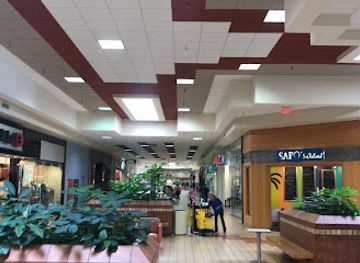
North Plains Mall
Experience the best of shopping and dining at North Plains Mall in Clovis, New Mexico—a hub of local culture and retail excitement.
-
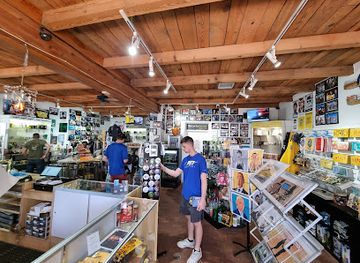
Gift shop
The Breaking Bad Store ABQ
Dive into the world of Breaking Bad at The Breaking Bad Store ABQ, where iconic memorabilia and unique gifts await every fan.
-
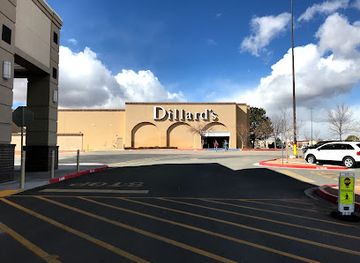
Department store
Dillard's
Explore the elegance of Dillard's in Santa Fe, where quality fashion meets exceptional home goods in a premier shopping experience.
-
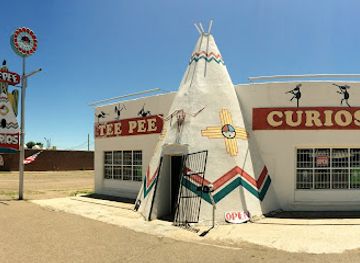
Gift shop
TeePee Curios
Explore TeePee Curios in Tucumcari, NM for unique souvenirs, local art, and handcrafted treasures that embody the spirit of Route 66.
Get your free copy of our complete guide to High Plains, delivered straight to you.
Everything on this page, from attractions and restaurants to essentials and local phrases, in one PDF you can read offline, print or share.
Already have an account? Sign in
Your High Plains guide is ready.
We'll send it to · Not you? Sign out

Getting your guide ready…
We are putting together a fresh copy of the High Plains guide. This can take up to a minute.
This can take a few moments. If your browser asks, choose Allow so the download can start. You'll find the guide in your Downloads folder.
Nothing happened? Download it again
Sorry, the guide is taking longer than usual. Please try again in a minute, or get it by email instead.
High Plains essentials
Currency and Payment
Safety
Emergency Situations
Do's and Don'ts
Local Tips
From Eve
Local phrases worth knowing
You don't need to get them perfect. A few words go a long way, and locals appreciate the effort.
Basics
| English | Local | Say it |
|---|---|---|
| Hello | Hola | [OH-lah] |
| Goodbye | Adiós | [ah-DYOHs] |
| Yes | Sí | [SEE] |
| No | No | [NO] |
| Please/You're welcome | Por favor | [por fah-VOR] |
| Thank you | Gracias | [GRAH-syahs] |
| Excuse me/Sorry | Perdón | [per-DON] |
| How are you? | ¿Cómo estás? | [KOH-moh es-TAS] |
| Fine. And you? | Bien. ¿Y tú? | [byEN. ee TOO?] |
| Do you speak English? | ¿Hablas inglés? | [AH-blas een-GLES?] |
| I don't understand | No entiendo | [no en-TYEN-do] |
Eating & Drinking
| English | Local | Say it |
|---|---|---|
| I'd like to see the menu, please | Me gustaría ver el menú, por favor | [me goo-stah-REE-ah BEHR el meh-NOO, por fah-VOR] |
| I don't eat meat | No como carne | [no KOH-mo KAR-neh] |
| Cheers! | ¡Salud! | [sah-LOOD] |
| I would like to pay, please | Quisiera pagar, por favor | [kee-SYEH-rah pah-GAR, por fah-VOR] |
Emergencies
| English | Local | Say it |
|---|---|---|
| Help! | ¡Ayuda! | [ah-YOO-dah] |
| Go away! | ¡Vete! | [VEH-teh] |
| Call the Police! | ¡Llame a la policía! | [YAH-meh ah lah poh-lee-SEE-ah] |
| Call a doctor! | ¡Llame a un doctor! | [YAH-meh ah oon dok-TOR] |
| I'm lost | Estoy perdido | [es-TOY per-DI-do] |
| I'm ill | Estoy enfermo | [es-TOY en-FER-mo] |
Shopping
| English | Local | Say it |
|---|---|---|
| I'd like to buy... | Quisiera comprar... | [kee-SYEH-rah kom-PRAR...] |
| I'm just looking | Solo estoy mirando | [SOH-lo es-TOY mee-RAN-do] |
| How much is it? | ¿Cuánto cuesta? | [KWAN-to KWES-ta?] |
| That's too expensive | Eso es muy caro | [EH-so es mwee KAH-ro] |
| Can you lower the price? | ¿Puedes bajar el precio? | [PWEH-des ba-HAR el PREH-syo?] |
Time & Numbers
| English | Local | Say it |
|---|---|---|
| What time is it? | ¿Qué hora es? | [KEH OH-rah es?] |
| It's one o'clock | Es la una | [es lah OO-nah] |
| Half past (10) | Y diez y media | [ee DYEZ ee MEH-dyah] |
| Morning | Mañana | [ma-NYAH-nah] |
| Afternoon | Tarde | [TAR-deh] |
| Evening | Noche | [NOH-cheh] |
| Yesterday | Ayer | [ah-YER] |
| Today | Hoy | [OY] |
| Tomorrow | Mañana | [ma-NYAH-nah] |
| 1 | Uno | [OO-no] |
| 2 | Dos | [DOS] |
| 3 | Tres | [TRES] |
| 4 | Cuatro | [KWAT-ro] |
| 5 | Cinco | [SEEN-ko] |
| 6 | Seis | [SAYZ] |
| 7 | Siete | [SYEH-teh] |
| 8 | Ocho | [OH-cho] |
| 9 | Nueve | [NWEH-beh] |
| 10 | Diez | [DYEZ] |
Transport & Directions
| English | Local | Say it |
|---|---|---|
| Where's a/the...? | ¿Dónde está un/la...? | [DON-deh es-TAH oon/lah...?] |
| What's the address? | ¿Cuál es la dirección? | [KWAL es lah dee-rek-SYON?] |
| Can you show me (on the map)? | ¿Puedes mostrarme (en el mapa)? | [PWEH-des mos-TRAR-meh (en el MAH-pah)?] |
| When's the next (bus)? | ¿Cuándo es el próximo (autobús)? | [KWAN-doh es el PROK-see-mo (ow-toh-BOOS)?] |
| A ticket (to ....) | Un boleto (a ....) | [oon bo-LEH-to (ah ....)] |
History of High Plains
Paleoindian Life on the High Plains
Eastern New Mexico contains some of North America’s most important evidence for early human settlement. Blackwater Draw, near Portales, preserves archaeological deposits associated with the Clovis tradition, including stone tools and the remains of extinct Ice Age animals. The site is significant because it helped establish the antiquity and sophistication of human activity in the Americas, although archaeological interpretations have continued to develop. Near Folsom in the northeastern plains, discoveries of distinctive projectile points with extinct bison remains gave the Folsom culture its name. Together, these sites place the modern High Plains within a much older landscape of grassland, water and seasonal hunting.
Indigenous Peoples and the Plains Frontier
Long before ranches, railways and highways, the eastern New Mexico plains were used by Indigenous communities whose territories, movements and relationships changed over time. Apache and Comanche peoples were especially important in the region’s later pre-colonial and early colonial history, while other Indigenous nations also travelled through or maintained connections with the plains and river corridors. Spanish and later Mexican authorities claimed the wider area, but control was uneven and often contested. Understanding this history requires recognising the plains as an inhabited cultural landscape rather than an empty frontier, with Indigenous displacement and resistance forming a central part of the region’s past.
Trails, Trading Posts and the Santa Fe Trade
From the early nineteenth century, eastern New Mexico became a corridor for trade and military movement between the Missouri country and Santa Fe. The Cimarron Cutoff of the Santa Fe Trail crossed the northeastern plains, offering a shorter but more hazardous route across water-poor country. Traders, soldiers and emigrants relied on landmarks, springs and trading stations while negotiating Indigenous territories and the risks of drought, attack and difficult ground. Although much of the trail has disappeared beneath modern roads and private land, the region’s museums, historic sites and road alignments preserve the memory of this commercial and political connection between the Great Plains and New Mexico.
Railways, Towns and Cattle Ranching
Railway construction transformed the High Plains during the late nineteenth century, creating or expanding towns such as Tucumcari, Clayton, Clovis and other service centres. Rail access enabled livestock, agricultural products and commercial goods to move over much greater distances, while depots and water facilities encouraged permanent settlement. Ranching remained fundamental, particularly where native grasslands supported cattle operations, and town economies developed around feed, equipment, banking and transport. The resulting landscape combined large ranches with compact railway communities, many of which still reveal their origins through grid plans, historic commercial buildings, depots and courthouse architecture.
Agriculture, Irrigation and the Llano Estacado
The southern High Plains were reshaped in the twentieth century by mechanised farming and groundwater irrigation. Around Clovis and Portales, the relatively level Llano Estacado supported large-scale production as wells, pumps and improved machinery made cultivation possible in an arid climate. Peanuts, dairy farming, cattle and other agricultural activities became important to the regional economy, although water availability and soil conservation have remained pressing concerns. Irrigation also helped create the modern character of communities that had once depended more directly on railways and open-range ranching, linking rural production with processing, transport and research.
Route 66 and Roadside New Mexico
The development of US Route 66 gave Tucumcari and other eastern New Mexico communities a new role as places of accommodation, fuel and roadside commerce. Motels, cafés, service stations and neon signs catered to motorists travelling between Chicago and Los Angeles. Interstate highways later diverted much through traffic, leaving surviving fragments and adapted businesses as reminders of the earlier road economy. In the High Plains, Route 66 is especially meaningful because it connects the region’s small-town commercial history with a national story of automobile travel, migration and changing patterns of tourism.
Modern Archaeology, Paleontology and Conservation
During the later twentieth and early twenty-first centuries, the High Plains became increasingly important for public interpretation of archaeology, paleontology and grassland ecology. Museums in Tucumcari, Clayton, Clovis and Portales explain discoveries from fossil-bearing strata, ancient mammals and early human sites, while state parks and grassland areas protect parts of the region’s geological and ecological setting. Contemporary challenges include groundwater pressure, drought, wildfire, erosion and the economic difficulties faced by small rural communities. Tourism in the region therefore often combines heritage interpretation with an awareness of how farming, ranching and conservation must coexist on an arid plain.
High Plains in Photos
Browse through our photo collection highlighting the charm and character of the destination.
Neighbouring regions of High Plains
The closest regions to High Plains, if you have time for more than one.
-
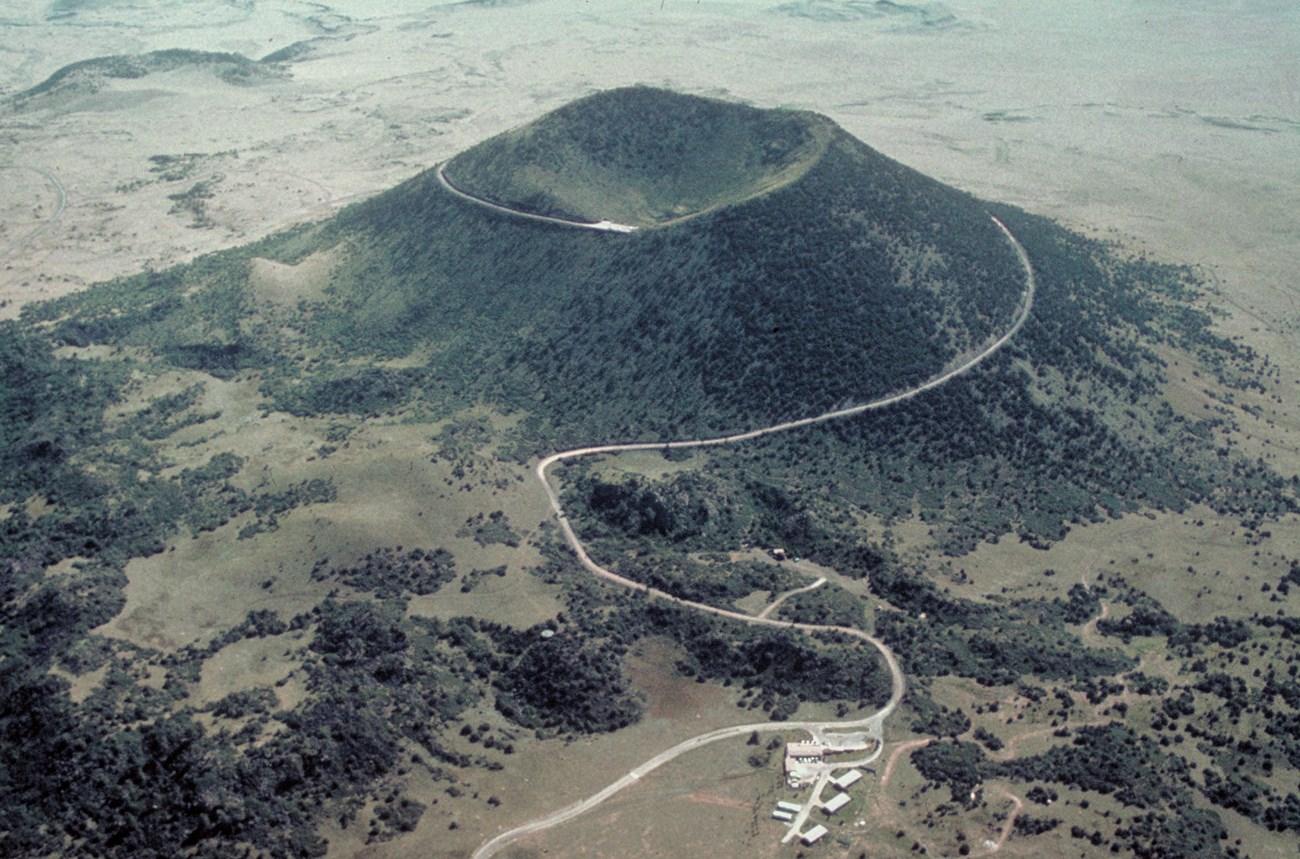 Northeast New Mexico
Explore Northeast New Mexico for Santa Fe Trail history, historic Las Vegas, mountain recreation, ranch country and wide-open high-plains landscapes.
Northeast New Mexico
Explore Northeast New Mexico for Santa Fe Trail history, historic Las Vegas, mountain recreation, ranch country and wide-open high-plains landscapes.
-

-

-

-


Swipe for more regions
Explore more

Explore more of New Mexico
Discover the enchanting blend of rich history, diverse cultures, and stunning landscapes in New Mexico, the Land of Enchantment, where adventure and relaxation await.
Explore New Mexico