

Two Chimneys Travel Guide - Free Web & App
Your ultimate guide to Two Chimneys. Discover top landmarks, proposed trips, and local tips. Free on the web or via the Evendo companion app.


Two Chimneys, Norfolk Island, offers quiet rural landscapes, historic chimney ruins, island walks, convict heritage, with Kingston and national park trails nearby.
A Small Rural Landmark
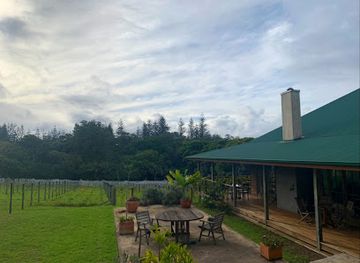
Two Chimneys is a quiet inland locality on Norfolk Island, recognised chiefly for the chimney remnants that give the area its name and for its rural island setting. It is not a separate town or resort, but a modest destination reached through Norfolk Island’s network of narrow roads, open pasture and subtropical vegetation. The atmosphere is peaceful and lightly settled, with the landscape shaped by volcanic soils, historic land use and the island’s distinctive Norfolk Island pine trees.Read more about Two Chimneys
History in the Landscape
Exploring from Two Chimneys
When is the best time to visit Two Chimneys?
Best: February–April · 23–25°C| Month | High (°C) | Rainfall (mm) |
|---|---|---|
| January | 24 | 100 |
| February (best) | 24 | 91 |
| March (best) | 25 | 81 |
| April (best) | 23 | 71 |
| May | 21 | 61 |
| June | 19 | 53 |
| July | 18 | 50 |
| August | 19 | 53 |
| September | 20 | 60 |
| October | 21 | 69 |
| November | 23 | 80 |
| December | 24 | 91 |
Getting to and around Two Chimneys
How to get there
Transportation
Best landmarks in Two Chimneys
The defining landmark of Two Chimneys is the surviving pair of masonry chimneys from which the locality takes its name. Their significance lies in their connection with Norfolk Island’s historic domestic and rural settlement, where chimneys and other remnants can preserve evidence of buildings that have otherwise disappeared. The surrounding agricultural landscape is also meaningful: open fields, island roads and Norfolk Island pines show how the territory’s inhabited interior developed beyond its principal penal-colony precinct. The major architectural landmarks associated with Norfolk Island, including the convict buildings of Kingston and Arthur’s Vale, are elsewhere, while the island’s most prominent natural landmarks include Mount Pitt, coastal cliffs and national-park forests. Two Chimneys therefore has a modest, local character, with its historic masonry functioning as a landscape marker rather than a large formal monument.
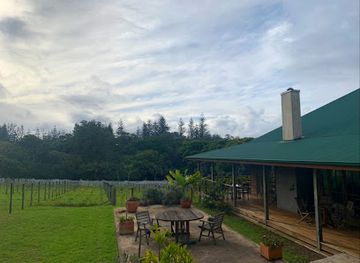
Explore Two Chimneys on the map
Plan your trip on one map. See where the top attractions, landmarks, restaurants and hotels are, and book hotels and experiences in a few clicks.
Best hotels in Two Chimneys
Best restaurants in Two Chimneys
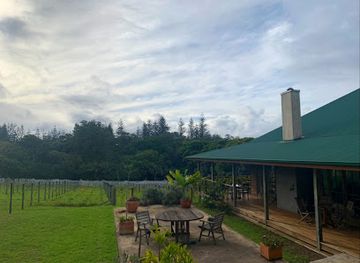
Two Chimneys has no recognised restaurant district or substantial dining infrastructure of its own. Visitors normally eat in Burnt Pine or other settled parts of Norfolk Island, where cafés, restaurants, hotel dining rooms, takeaway options and food suppliers serve residents and travellers. Local menus often draw on island-grown produce, beef, pork, fruit and seafood, with Norfolk Island’s farming history influencing the way meals are sourced and presented. Visitors staying in self-catering accommodation can buy provisions for picnics or simple meals, although the range and opening arrangements of smaller businesses can vary. Kingston and the rural districts may have hospitality venues associated with accommodation or heritage visits, but these should not be assumed to operate as walk-in options at all times. Carrying water and a snack is sensible when spending time around Two Chimneys and other lightly serviced rural areas.
Best bars in Two Chimneys
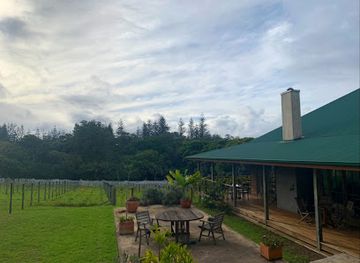
Two Chimneys has no established nightlife scene, bars or nightclubs. Evenings are generally quiet and centred on accommodation, home cooking, small hospitality venues and the island’s subdued rural atmosphere. Visitors seeking a drink or a social meal should look towards Burnt Pine and established accommodation businesses elsewhere on Norfolk Island, where licensed venues may offer a more practical evening setting than the countryside. Entertainment can also include cultural presentations or community events, but these are periodic rather than guaranteed nightly attractions. Rural roads should be approached carefully after dark, particularly where lighting is limited and livestock or bends may affect visibility. The locality is better suited to a peaceful evening base than to late-night entertainment.
Best nightclubs in Two Chimneys
Two Chimneys has no established nightlife scene, bars or nightclubs. Evenings are generally quiet and centred on accommodation, home cooking, small hospitality venues and the island’s subdued rural atmosphere. Visitors seeking a drink or a social meal should look towards Burnt Pine and established accommodation businesses elsewhere on Norfolk Island, where licensed venues may offer a more practical evening setting than the countryside. Entertainment can also include cultural presentations or community events, but these are periodic rather than guaranteed nightly attractions. Rural roads should be approached carefully after dark, particularly where lighting is limited and livestock or bends may affect visibility. The locality is better suited to a peaceful evening base than to late-night entertainment.
Best shops in Two Chimneys
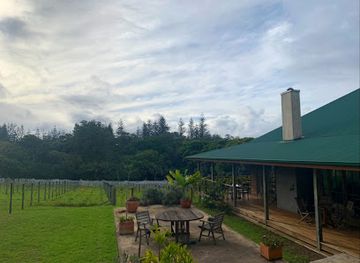
There is no substantial shopping provision at Two Chimneys itself. Visitors should shop in Burnt Pine, Norfolk Island’s principal commercial centre, or arrange supplies before setting out on rural roads. Retail opportunities across the island typically focus on groceries, practical travel needs, locally made crafts, artwork, souvenirs and products connected with island agriculture and food production. Small businesses and individual producers may have different opening arrangements, so visitors should not assume that every rural stop operates as a permanent shop. Norfolk Island’s crafts and local products reflect its layered identity, including Pitcairn Islander heritage, convict history and an active farming community. Those looking for gifts or provisions will find a much broader choice in settled areas than around the quiet locality of Two Chimneys.
Get your free copy of our complete guide to Two Chimneys, delivered straight to you.
Everything on this page, from attractions and restaurants to essentials and local phrases, in one PDF you can read offline, print or share.
Already have an account? Sign in
Your Two Chimneys guide is ready.
We'll send it to · Not you? Sign out

Getting your guide ready…
We are putting together a fresh copy of the Two Chimneys guide. This can take up to a minute.
This can take a few moments. If your browser asks, choose Allow so the download can start. You'll find the guide in your Downloads folder.
Nothing happened? Download it again
Sorry, the guide is taking longer than usual. Please try again in a minute, or get it by email instead.
Two Chimneys essentials
Currency and Payment
Safety
Emergency Situations
Do's and Don'ts
Local Tips
From Eve
Local phrases worth knowing
You don't need to get them perfect. A few words go a long way, and locals appreciate the effort.
Basics
| English | Local | Say it |
|---|---|---|
| Hello | G'day | [g'day] |
| Goodbye | See ya | [see ya] |
| Yes | Aye | [aye] |
| No | Nah | [nah] |
| Please/You're welcome | Please/No worries | [please/no worries] |
| Thank you | Cheers | [cheers] |
| Excuse me/Sorry | Sorry | [sorry] |
| How are you? | Howzit goin'? | [howzit goin'] |
| Fine. And you? | All good. You? | [all good. you?] |
| Do you speak English? | Ya speak English? | [ya speak English?] |
| I don't understand | No idea mate | [no idea mate] |
Eating & Drinking
| English | Local | Say it |
|---|---|---|
| I'd like to see the menu, please | Can I check the menu? | [can I check the menu?] |
| I don't eat meat | I'm veggo | [I'm veggo] |
| Cheers! | Cheers! | [cheers] |
| I would like to pay, please | I'll pay now, thanks | [I'll pay now, thanks] |
Emergencies
| English | Local | Say it |
|---|---|---|
| Help! | Help! | [help!] |
| Go away! | Bugger off! | [bugger off!] |
| Call the Police! | Ring the coppers! | [ring the coppers!] |
| Call a doctor! | Get a doc! | [get a doc!] |
| I'm lost | I'm lost | [I'm lost] |
| I'm ill | I'm crook | [I'm crook] |
Shopping
| English | Local | Say it |
|---|---|---|
| I'd like to buy... | I'm keen to buy... | [I'm keen to buy...] |
| I'm just looking | Just browsing | [just browsing] |
| How much is it? | How much for this? | [how much for this?] |
| That's too expensive | Bit exxy that | [bit exxy that] |
| Can you lower the price? | Any chance of a discount? | [any chance of a discount?] |
Time & Numbers
| English | Local | Say it |
|---|---|---|
| What time is it? | What's the time? | [what's the time?] |
| It's one o'clock | It's one | [it's one] |
| Half past (10) | Half past ten | [half past ten] |
| Morning | Mornin' | [mornin'] |
| Afternoon | Arvo | [arvo] |
| Evening | Evenin' | [evenin'] |
| Yesterday | Yesty | [yesty] |
| Today | Today | [today] |
| Tomorrow | Tomorra | [tomorra] |
| 1 | One | [one] |
| 2 | Two | [two] |
| 3 | Three | [three] |
| 4 | Four | [four] |
| 5 | Five | [five] |
| 6 | Six | [six] |
| 7 | Seven | [seven] |
| 8 | Eight | [eight] |
| 9 | Nine | [nine] |
| 10 | Ten | [ten] |
Transport & Directions
| English | Local | Say it |
|---|---|---|
| Where's a/the...? | Where's the...? | [where's the...?] |
| What's the address? | What's the addy? | [what's the addy?] |
| Can you show me (on the map)? | Can you point it out? | [can you point it out?] |
| When's the next (bus)? | When's the next (bus)? | [when's the next (bus)?] |
| A ticket (to ....) | A ticket to... | [a ticket to...] |
History of Two Chimneys
A Volcanic Island Foundation
Norfolk Island is the exposed summit of a large volcanic seamount in the southwest Pacific. Its basaltic geology created fertile soils, rolling uplands, wooded valleys and steep coastal margins, while later weathering and human cultivation produced the mixed rural landscape seen around Two Chimneys. The island’s natural setting has always influenced settlement: freshwater, arable ground, sheltered valleys and access to the coast determined where people could live and work.
Polynesian Settlement
Before European arrival, Norfolk Island was occupied by Polynesian voyagers, probably from eastern Polynesia, who established a settlement and cultivated food plants. Archaeological evidence records their presence, although the community had disappeared before the island was permanently colonised by Britain. This earlier phase forms an important part of Norfolk Island’s history and distinguishes its heritage from the later penal-colony narrative more commonly associated with Kingston.
The First Penal Settlement
Britain established a penal settlement on Norfolk Island in 1788, soon after the founding of New South Wales. The first settlement was abandoned in 1814, but its existence began the island’s long association with convict administration, farming and the movement of food and materials across the Pacific. Rural areas such as the land around present-day Two Chimneys were connected to the practical demands of supplying a settlement in an isolated environment.
The Second Penal Era
Norfolk Island was recolonised as a penal settlement in 1825, and the second period continued until 1855. Convict labour was used in agriculture, road building, construction and other works, leaving an enduring imprint on the island’s landscape and historic places. The chimney remnants associated with Two Chimneys are part of the type of domestic and rural evidence that survives beyond the more formal buildings of Kingston and Arthur’s Vale.
The Pitcairn Island Resettlement
In 1856, the population of Pitcairn Island was transferred to Norfolk Island, bringing the descendants of the Bounty mutineers and their Polynesian companions. Their communities, language, religious traditions and family histories became central to Norfolk Island’s modern identity. The resettlement also renewed agricultural use across the island, linking places such as Two Chimneys to a continuing rural way of life rather than leaving them solely as relics of the convict period.
Heritage Protection and Modern Norfolk Island
Norfolk Island later passed through New Zealand administration before becoming an Australian external territory. Historic Kingston and Arthur’s Vale were inscribed on the UNESCO World Heritage List in 2010 as part of the Australian Convict Sites serial listing. Modern Norfolk Island combines protected heritage, farming, tourism and conservation, with the national park safeguarding important forest and coastal environments. Two Chimneys remains a small landscape feature within this wider pattern of historic preservation and everyday island life.
Two Chimneys in Photos
Browse through our photo collection highlighting the charm and character of the destination.
Neighbouring destination travel guides
The closest destinations to Two Chimneys, if you have time for more than one.
-

-

-

-

-


Swipe for more destinations
Explore more

Explore more of Mount Pitt
Discover the breathtaking views and natural wonders of Mount Pitt on Norfolk Island, a paradise for nature lovers and adventure seekers alike.
Explore Mount Pitt
Explore more of Norfolk Island
Discover Norfolk Island, a serene and historic gem in the South Pacific, known for its stunning landscapes, rich cultural heritage, and abundant natural beauty.
Explore Norfolk Island