

Free Greensboro Travel Guide & Mobile App
Plan your Greensboro trip with Evendo. Get free guides to top attractions, restaurants, hotels, and bars. Web access or download the mobile app.


Greensboro, North Carolina blends civil-rights history, historic museums, gardens, live culture and easy access to Piedmont landscapes and local food.
A Piedmont City with a Defining Past
Greensboro lies in North Carolina's central Piedmont, where gently rolling countryside, historic rail lines and a long tradition of education and industry have shaped the city's character. Founded in 1808 and named for Revolutionary War general Nathanael Greene, it developed from a county-seat community into an important trading and transportation centre. Its past is especially visible in the story of the civil-rights movement: on 1 February 1960, four students from North Carolina Agricultural and Technical State University began a sit-in at the segregated Woolworth lunch counter, an action that helped inspire demonstrations across the American South. The former store is now home to the International Civil Rights Center & Museum.Read more about Greensboro
Museums, Gardens and Neighbourhood Life
When is the best time to visit Greensboro?
Best: April–May, October · 22–27°C| Month | High (°C) | Rainfall (mm) |
|---|---|---|
| January | 9 | 93 |
| February | 12 | 89 |
| March | 18 | 102 |
| April (best) | 22 | 93 |
| May (best) | 27 | 99 |
| June | 31 | 101 |
| July | 33 | 122 |
| August | 32 | 114 |
| September | 28 | 101 |
| October (best) | 23 | 81 |
| November | 16 | 85 |
| December | 11 | 81 |
Getting to and around Greensboro
How to get there
Transportation
Best attractions in Greensboro
Greensboro's attractions combine civil-rights history, science, art and landscaped outdoor spaces. The International Civil Rights Center & Museum occupies the former Woolworth building and interprets the 1960 sit-in at the preserved lunch counter. At the Greensboro History Museum, regional stories range from Indigenous heritage and early settlement to industry and modern civic life. Families and science enthusiasts can explore the Greensboro Science Center, which brings together museum exhibits, an aquarium and a zoo in a single campus. The Weatherspoon Art Museum presents modern and contemporary works in a university setting, while the Greensboro Cultural Center hosts changing arts and community programmes. For time outdoors, Tanger Family Bicentennial Garden, the Greensboro Arboretum and nearby greenways provide contrasting settings for walking, planting displays and quiet observation. Historic Downtown Greensboro and College Hill add cafés, galleries, civic buildings and nineteenth-century streets to the sightseeing landscape.
-
Tourist attraction
Breakout Games - Greensboro
Experience the ultimate thrill at Breakout Games - Greensboro, an escape room center where adventure meets teamwork and excitement.
25 min drive · 8.2 km from city centre
-
Tourist attraction
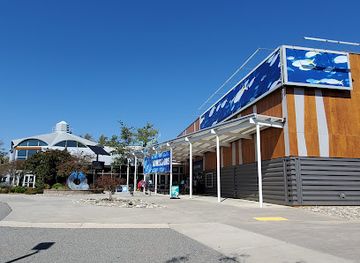
Greensboro Science Center
Discover the fusion of aquarium, zoo, and science museum at Greensboro Science Center - a captivating experience for all ages.
22 min drive · 7.4 km from city centre
-
Tourist attraction
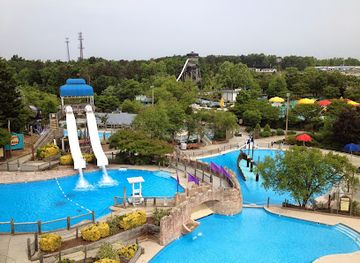
Wet 'n Wild Emerald Pointe Water Park
Experience the ultimate summer fun at Wet 'n Wild Emerald Pointe Water Park, where thrilling slides and family-friendly attractions await in Greensboro, NC.
25 min drive · 8.4 km from city centre
-
Tourist attraction
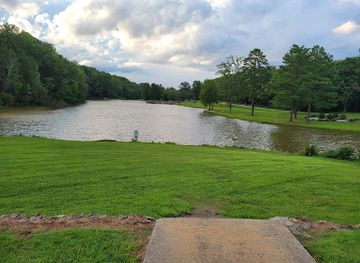
City of Greensboro - Country Park
Discover the natural beauty and recreational charm of Greensboro's Country Park, a perfect destination for families and nature enthusiasts alike.
20 min drive · 6.7 km from city centre

Best landmarks in Greensboro
Greensboro's most significant landmarks embody its political history, educational influence and civil-rights legacy. The former Woolworth building, now the International Civil Rights Center & Museum, preserves the lunch counter associated with the 1960 sit-in and gives national history a precisely local setting. The Guilford County Courthouse anchors the civic centre of the city founded in 1808, while the Greensboro History Museum occupies the former First Presbyterian Church and connects its architecture with the region's past. Nearby College Hill contains one of the city's oldest residential areas, with nineteenth-century houses reflecting Greensboro's growth before and after the railway era. North Carolina Agricultural and Technical State University is an important institutional landmark whose campus represents the central role of Black higher education in the city's history. UNCG's campus and the Weatherspoon Art Museum add a different architectural and cultural presence to the urban landscape.
-
Science museum
Greensboro Science Center
Explore the interactive world of science, nature, and wildlife at Greensboro Science Center – a must-visit for families and curious minds alike!
22 min drive · 7.4 km from city centre
-
Park
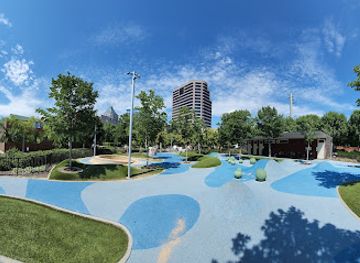
LeBauer Park @ Greensboro Downtown Parks, Inc.
Discover the beauty and tranquility of LeBauer Park, a lush green retreat in downtown Greensboro, perfect for leisure, recreation, and community events.
5 min walk · 0.4 km from city centre
-
Botanical garden
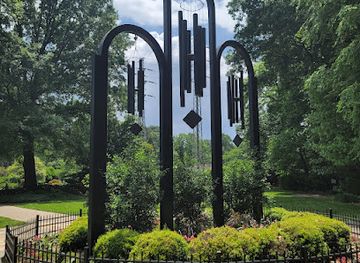
Greensboro Arboretum
Explore the lush landscapes and vibrant flora at Greensboro Arboretum, a serene botanical garden in the heart of North Carolina.
12 min drive · 4.1 km from city centre
-
Visitor center
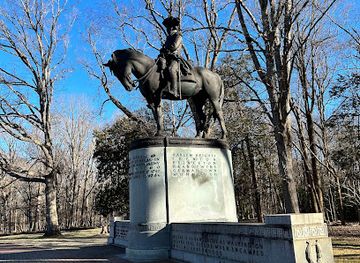
Guilford Courthouse National Military Park
Explore modern-day Greensboro's rich Revolutionary War history at Guilford Courthouse National Military Park, featuring trails, exhibits, and reenactments.
24 min drive · 8.1 km from city centre
Explore Greensboro on the map
Plan your Greensboro trip on one map. See where the top attractions, landmarks, restaurants, bars and hotels are, find what's near where you're staying, and book hotels and experiences in a few clicks.
Neighbourhoods in Greensboro
-

-

-


Swipe for more neighbourhoods
Best hotels in Greensboro
Best restaurants in Greensboro
Greensboro's food culture is rooted in the Piedmont and in the culinary traditions of the American South. North Carolina barbecue, generally pork cooked slowly over wood and served with a sharp vinegar-based sauce in the eastern tradition or a sweeter Piedmont-style sauce, is a natural local speciality, while biscuits, fried chicken, collard greens, hush puppies and seasonal produce appear across informal and refined menus. The city's African American culinary heritage is reflected in soul-food traditions and community restaurants, while its university population and international residents have broadened the choice of Asian, Latin American and other cuisines. Downtown, College Hill, Spring Garden Street and the areas around the universities offer cafés, bakeries, breweries and independent restaurants. Farmers' markets and local-produce programmes connect dining with the surrounding Piedmont's farms, rather than treating regional food as a purely nostalgic tradition.
-
Hamburger
Hops Burger Bar
Experience gourmet burgers like never before at Hops Burger Bar in Greensboro—where flavor meets fun in every bite!
12 min drive · 3.9 km from city centre
-
American
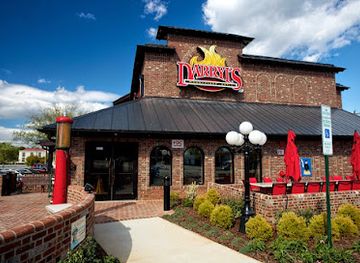
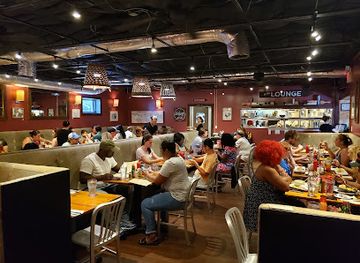
Darryl's Wood Fired Grill
Discover the exquisite flavors of wood-fired cuisine at Darryl's Wood Fired Grill in Greensboro - where great food meets a vibrant atmosphere.
18 min drive · 5.9 km from city centre
-
Breakfast
Scrambled Southern Diner
Experience the heartwarming flavors of the South at Scrambled Southern Diner in Greensboro – where every meal feels like home.
12 min drive · 3.8 km from city centre
-
Southern
Stephanie's Restaurant II
Discover authentic Southern cuisine at Stephanie's Restaurant II in Greensboro - where every meal feels like home.
14 min drive · 4.7 km from city centre
Best bars in Greensboro
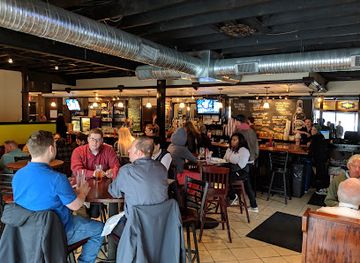
Greensboro's evening life is concentrated around downtown, College Hill, Elm Street and nearby university districts, with a mixture of relaxed bars, breweries, cocktail-led venues, live music and cultural programming. The city's large student population supports a youthful scene, but the atmosphere is not limited to nightclubs: theatres, galleries, concert halls and campus events provide alternatives to drinking. Downtown venues range from informal places for local beer and conversation to spaces hosting touring bands, while restaurants often contribute to the evening rhythm without defining it. Live performances and arts events can be found through institutions such as the Greensboro Cultural Center and university venues, alongside independently organised music. Opening patterns and event schedules vary, so nightlife is best approached through current listings rather than assumed late-night availability.
-
Grill
Hops Burger Bar
Savor unforgettable burgers and craft beers at Hops Burger Bar, Greensboro's top grill destination for casual dining.
10 min drive · 3.3 km from city centre
-
Bar
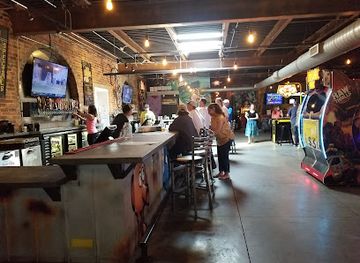
Boxcar Bar + Arcade
Discover the ultimate entertainment hub in Greensboro, NC, at Boxcar Bar + Arcade, where delicious pizza meets classic arcade games and vibrant nightlife.
9 min walk · 0.7 km from city centre
-
Pub
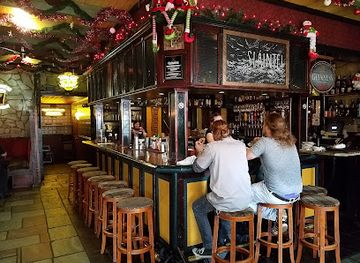
M'Coul's Public House
Discover the delightful flavors of M'Coul's Public House, a cozy gastropub in Greensboro offering American and European cuisine.
6 min walk · 0.4 km from city centre
-
Gastropub
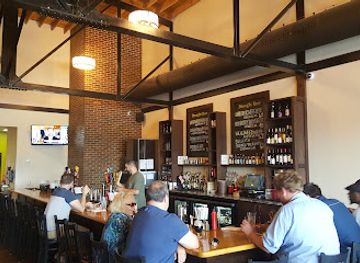
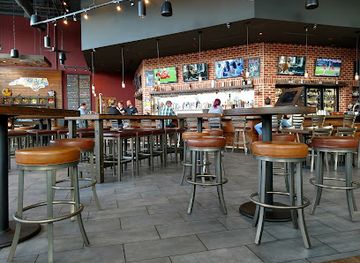
World of Beer
Discover a lively gastropub experience at World of Beer in Greensboro, where delicious food meets an extensive beer selection and vibrant live music.
8 min drive · 2.8 km from city centre
Best nightclubs in Greensboro
Greensboro's evening life is concentrated around downtown, College Hill, Elm Street and nearby university districts, with a mixture of relaxed bars, breweries, cocktail-led venues, live music and cultural programming. The city's large student population supports a youthful scene, but the atmosphere is not limited to nightclubs: theatres, galleries, concert halls and campus events provide alternatives to drinking. Downtown venues range from informal places for local beer and conversation to spaces hosting touring bands, while restaurants often contribute to the evening rhythm without defining it. Live performances and arts events can be found through institutions such as the Greensboro Cultural Center and university venues, alongside independently organised music. Opening patterns and event schedules vary, so nightlife is best approached through current listings rather than assumed late-night availability.
-
Night club
Boston's
Discover the energetic nightlife at Boston's, Greensboro's premier night club, featuring vibrant music, delicious drinks, and an unforgettable atmosphere.
8 min drive · 2.6 km from city centre
-
Lounge
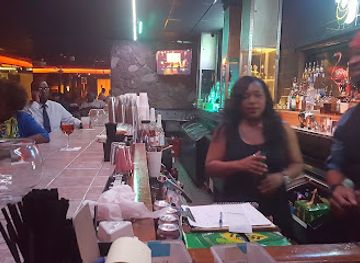
Chopper Bar N Lounge
Experience the vibrant nightlife at Chopper Bar N Lounge, Greensboro's top destination for cocktails, dancing, and live music.
17 min drive · 5.8 km from city centre
-
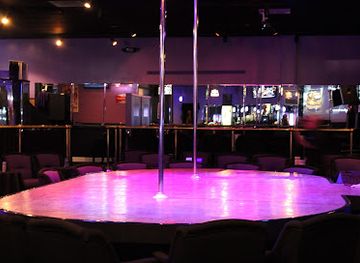
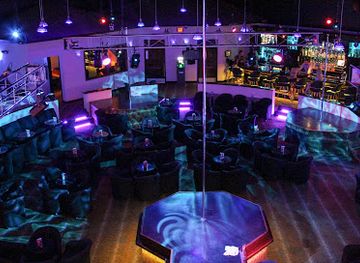
Adult entertainment club
The Treasure Club Greensboro, NC
Discover the vibrant nightlife at The Treasure Club in Greensboro, NC, offering exhilarating performances and a lively atmosphere for unforgettable nights out.
35 min drive · 15 km from city centre
-
Night club
Mirage Exotic Nightlife
Discover the electrifying nightlife at Mirage Exotic Nightlife, where music, dance, and delectable cuisine collide for an unforgettable experience in Greensboro.
34 min drive · 14 km from city centre

Best shops in Greensboro
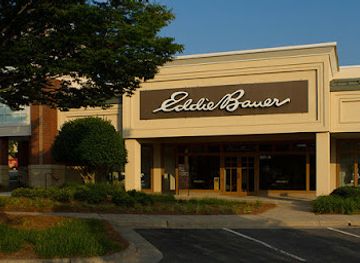
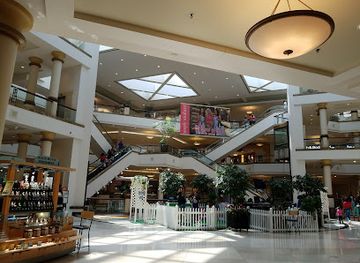
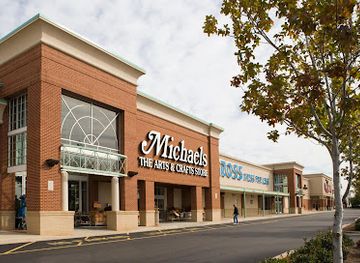
Shopping in Greensboro ranges from central independent businesses to established suburban retail areas and markets selling regional produce. Downtown and nearby College Hill offer boutiques, galleries, bookshops and locally owned businesses within districts where shopping can be combined with historic streets and cafés. Friendly Center is a major open-air retail complex with a broad mixture of national and independent outlets, while Four Seasons Town Centre provides an enclosed shopping environment south of the centre. The Greensboro Farmers Curb Market connects visitors with North Carolina growers, bakers and food producers, although the exact range of stalls changes with the season. Local purchases may include North Carolina foods, craft beverages, handmade objects, art and small-batch gifts rather than a single city-specific souvenir tradition. Antique and design-oriented shopping also appears in repurposed industrial and older commercial spaces around the city.
-
Shopping mall
Friendly Center
Explore a shopper's paradise at Friendly Center, Greensboro's premier shopping mall with diverse retail and dining options in a vibrant atmosphere.
13 min drive · 4.2 km from city centre
-
Shopping mall
Four Seasons Town Centre
Explore a shopper's paradise at Four Seasons Town Centre, Greensboro's premier shopping mall with diverse stores and dining options.
17 min drive · 5.5 km from city centre
-
Shopping mall
Wendover Place
Explore the vibrant shopping and dining scene at Wendover Place, Greensboro's ultimate retail destination for tourists and locals alike.
30 min drive · 10 km from city centre
-
Shopping mall
Wendover Village LLC
Explore Wendover Village in Greensboro, NC - a vibrant shopping mall with a diverse range of stores and dining options for every visitor.
26 min drive · 8.7 km from city centre

Get your free copy of our complete guide to Greensboro, delivered straight to you.
Everything on this page, from attractions and restaurants to essentials and local phrases, in one PDF you can read offline, print or share.
Already have an account? Sign in
Your Greensboro guide is ready.
We'll send it to · Not you? Sign out

Getting your guide ready…
We are putting together a fresh copy of the Greensboro guide. This can take up to a minute.
This can take a few moments. If your browser asks, choose Allow so the download can start. You'll find the guide in your Downloads folder.
Nothing happened? Download it again
Sorry, the guide is taking longer than usual. Please try again in a minute, or get it by email instead.
Greensboro essentials
Currency and Payment
Safety
Emergency Situations
Do's and Don'ts
Local Tips
From Eve
Local phrases worth knowing
You don't need to get them perfect. A few words go a long way, and locals appreciate the effort.
Basics
| English | Local | Say it |
|---|---|---|
| Hello | Hey y'all | [hey y'all] |
| Goodbye | See ya later | [see ya later] |
| Yes | Yessir/Yessum | [yes-sir/yes-ma'am] |
| No | Nah | [nah] |
| Please/You're welcome | Please/You're welcome | [please/you're welcome] |
| Thank you | Thank ya | [thank ya] |
| Excuse me/Sorry | Scuse me/Sorry | [sk-yoos me/sorry] |
| How are you? | How y'all doin'? | [how y'all doin'] |
| Fine. And you? | I'm doin' alright. How 'bout you? | [I'm doin' alright. how 'bout you] |
| Do you speak English? | Ya speak English? | [ya speak English] |
| I don't understand | I ain't gettin' it | [I ain't gettin' it] |
Eating & Drinking
| English | Local | Say it |
|---|---|---|
| I'd like to see the menu, please | Can I see the menu, please | [can I see the menu please] |
| I don't eat meat | I don't eat meat | [I don't eat meat] |
| Cheers! | Cheers! | [cheers] |
| I would like to pay, please | I need to pay, please | [I need to pay please] |
Emergencies
| English | Local | Say it |
|---|---|---|
| Help! | Help! | [help] |
| Go away! | Git outta here! | [git outta here] |
| Call the Police! | Call the cops! | [call the cops] |
| Call a doctor! | Get a doc! | [get a doc] |
| I'm lost | I'm lost | [I'm lost] |
| I'm ill | I ain't feelin' well | [I ain't feelin' well] |
Shopping
| English | Local | Say it |
|---|---|---|
| I'd like to buy... | I wanna buy... | [I wanna buy] |
| I'm just looking | I'm just lookin' | [I'm just lookin'] |
| How much is it? | How much does it cost? | [how much does it cost] |
| That's too expensive | That's too pricey | [that's too pricey] |
| Can you lower the price? | Can you bring the price down? | [can you bring the price down] |
Time & Numbers
| English | Local | Say it |
|---|---|---|
| What time is it? | What time is it? | [what time is it] |
| It's one o'clock | It's one o'clock | [it's one o'clock] |
| Half past (10) | Half past ten | [half past ten] |
| Morning | Mornin' | [mornin'] |
| Afternoon | Afternoon | [afternoon] |
| Evening | Evenin' | [evenin'] |
| Yesterday | Yest'day | [yest'day] |
| Today | Today | [today] |
| Tomorrow | Tomorrer | [tomorrer] |
| 1 | One | [one] |
| 2 | Two | [two] |
| 3 | Three | [three] |
| 4 | Four | [four] |
| 5 | Five | [five] |
| 6 | Six | [six] |
| 7 | Seven | [seven] |
| 8 | Eight | [eight] |
| 9 | Nine | [nine] |
| 10 | Ten | [ten] |
Transport & Directions
| English | Local | Say it |
|---|---|---|
| Where's a/the...? | Where's the...? | [where's the] |
| What's the address? | What's the address? | [what's the address] |
| Can you show me (on the map)? | Can you show me (on the map)? | [can you show me on the map] |
| When's the next (bus)? | When's the next (bus)? | [when's the next bus] |
| A ticket (to ....) | A ticket (to ....) | [a ticket to] |
History of Greensboro
Indigenous Piedmont Landscapes
Long before the establishment of Greensboro, the central North Carolina Piedmont was inhabited and travelled by Indigenous peoples, including communities associated with the Saura and other Siouan-speaking groups. The area's wooded ridges, creeks and fertile clearings supported hunting, cultivation and trade, while networks of paths connected settlements across the region. European colonisation brought profound disruption through disease, land seizure and changing political relationships. By the eighteenth century, German, Scots-Irish, English and other settlers were establishing farms and small communities in the wider Guilford County area. Greensboro's later development therefore took place within a much older cultural landscape, although much of the visible built environment reflects colonial and modern settlement rather than Indigenous architecture.
Founding Guilford County's Seat
Greensboro was established in 1808 as the county seat of Guilford County and named after Nathanael Greene, the Continental Army general whose southern campaign was fought nearby during the American Revolution. The new settlement replaced Guilford Court House as the county's administrative centre, and its central courthouse square helped organise the early town. Roads linking farms and market communities encouraged gradual growth, while the surrounding Piedmont economy relied heavily on agriculture, including grain, livestock and later tobacco. The courthouse and associated civic functions gave Greensboro a durable political role even before railways and large-scale industry transformed its fortunes.
Railways and Industrial Expansion
The arrival of rail connections in the mid-nineteenth century changed Greensboro from a county seat into a major regional junction. Rail travel improved access to markets and encouraged commerce, manufacturing and population growth. The American Civil War disrupted the town, and the nearby Battle of Guilford Court House, fought in 1781, belonged to the Revolutionary War rather than the later conflict; Greensboro itself became associated with the final days of the Confederacy when Confederate president Jefferson Davis and his cabinet passed through the city in 1865. After the war, textile production, tobacco processing, furniture-making and related trades expanded. Rail infrastructure and industrial employment continued to shape the city's neighbourhoods and social divisions well into the twentieth century.
Education, Industry and Urban Change
Greensboro's educational institutions became central to its civic identity. North Carolina Agricultural and Technical State University, founded in 1891, grew into one of the leading historically Black universities in the United States, while the University of North Carolina Greensboro developed from an institution established for women into a comprehensive university. Manufacturing and business growth brought new residents, but segregation restricted housing, education, employment and public facilities for African Americans. The city also became a significant centre for the textile and hosiery industries, whose factories and warehouses influenced its economy and architecture. These educational and industrial legacies remain visible in university campuses, former mill buildings and the city's cultural institutions.
The 1960 Woolworth Sit-In
On 1 February 1960, four students from North Carolina Agricultural and Technical State University—Ezell Blair Jr., David Richmond, Franklin McCain and Joseph McNeil—sat at the whites-only lunch counter in the Greensboro Woolworth store and asked to be served. Their protest continued through subsequent days and helped spark a wider sit-in movement against segregated facilities across the South. The action was part of a broader campaign led by Black communities, students and civil-rights organisations rather than an isolated event. The former Woolworth building now houses the International Civil Rights Center & Museum, preserving the lunch counter and interpreting the local protest within the national struggle for equal rights.
A Contemporary Cultural Centre
During the later twentieth century, Greensboro's economy and physical form changed as textile and tobacco industries contracted, manufacturing became more varied and educational, healthcare and service sectors gained importance. The city invested in downtown revitalisation, cultural venues, greenways and the preservation of historic districts, while former industrial sites found new uses. Its universities continue to attract students and research, and institutions such as the Greensboro History Museum, Weatherspoon Art Museum and Greensboro Science Center broaden the city's public life. Greensboro's contemporary identity is consequently shaped by both remembrance and reinvention: civil-rights history and industrial heritage coexist with arts programming, expanding neighbourhoods and renewed connections to the surrounding Piedmont.
Greensboro in Photos
Browse through our photo collection highlighting the charm and character of the destination.
Cities near Greensboro
The closest cities to Greensboro, if you have time for more than one stop.
-

-

-

-

-


Swipe for more cities
Explore more

Explore more of North Carolina
Discover North Carolina's blend of natural beauty, vibrant cities, and rich history. From the Outer Banks to the Blue Ridge Mountains, experience diverse landscapes and cultures.
Explore North Carolina