

Free Niš Travel Guide & Mobile App
Plan your Niš trip with Evendo. Get free guides to top attractions, restaurants, hotels, and bars. Web access or download the mobile app.


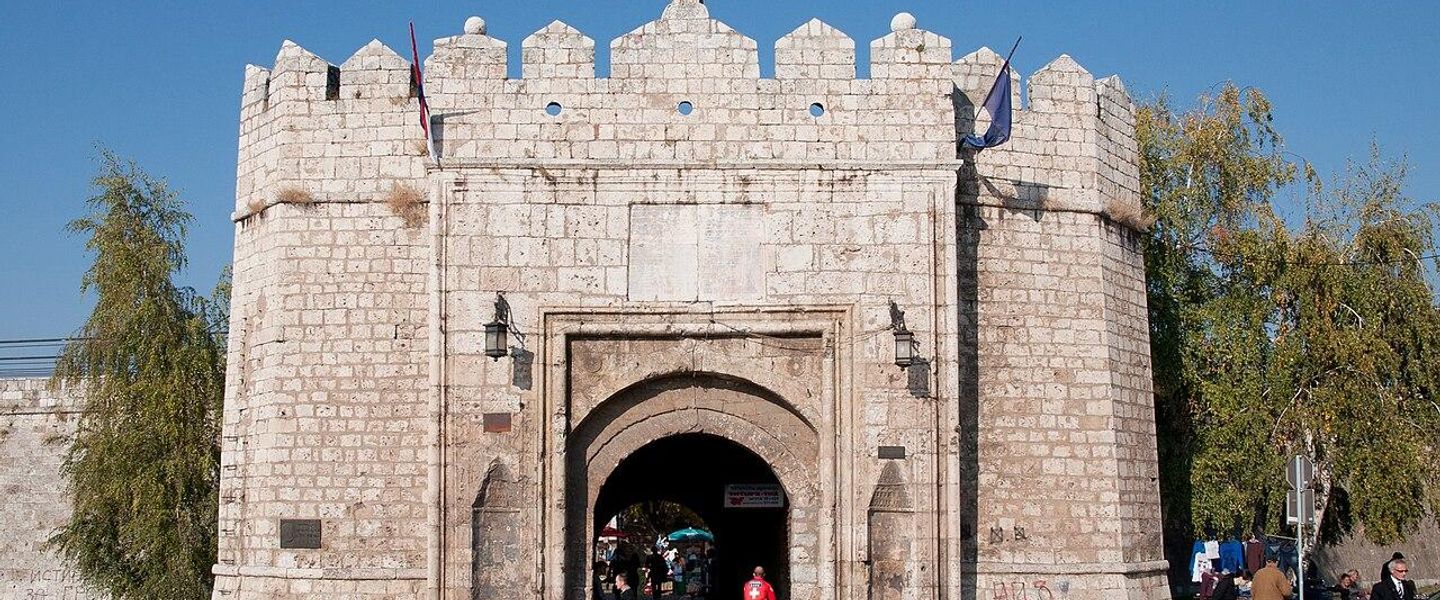


Niš, Serbia, blends Roman heritage, Ottoman streets, fortress walls and memorable cuisine with museums, markets and lively southern Serbian culture.
At the Crossroads of the Balkans
Niš stands in southern Serbia where historic routes between Central Europe, the Balkans and the Aegean have long converged. The Nišava River cuts through a city shaped by Roman, Byzantine, Ottoman and modern Serbian history, while the surrounding hills give the urban landscape a broad, open setting. Niš is Serbia’s third-largest city, but its central districts remain approachable on foot, with cafés, markets and historic sites gathered around the river and fortress.Read more about Niš
Layers of History
City Life and Local Flavours
When is the best time to visit Niš?
Best: June–August · 26–27°C| Month | High (°C) | Rainfall (mm) |
|---|---|---|
| January | 4 | 35 |
| February | 6 | 30 |
| March | 11 | 42 |
| April | 18 | 59 |
| May | 23 | 65 |
| June (best) | 26 | 50 |
| July (best) | 27 | 44 |
| August (best) | 27 | 38 |
| September | 24 | 65 |
| October | 17 | 66 |
| November | 10 | 61 |
| December | 4 | 53 |
Getting to and around Niš
How to get there
Transportation
Best attractions in Niš
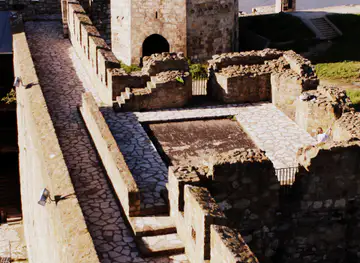
Niš Fortress is the city’s central sightseeing anchor, enclosing broad lawns, surviving gates, archaeological traces and cultural venues within its substantial walls. The nearby pedestrian centre leads towards the National Museum, whose collections help place Roman, Ottoman and modern Niš in context, while the Archaeological Hall presents some of the region’s ancient heritage. Mediana, the Roman imperial residence associated with Constantine the Great, offers a different experience through its mosaics and remains outside the compact centre. The Skull Tower provides a sobering encounter with the aftermath of the 1809 Battle of Čegar, and the Red Cross Concentration Camp preserves testimony to wartime persecution during the Second World War. For a lighter urban interlude, Kazandžijsko sokače retains the memory of the city’s craft traditions, while the Nišava riverfront and Čair Park reveal everyday local life beyond the principal monuments.
-
Fortress
Fortress of Niš
Discover the Fortress of Niš: A historical landmark that captures the essence of Serbia’s vibrant past amidst stunning architecture and scenic views.
7 min walk · 0.6 km from city centre
-
Tourist attraction
St. Sava Park
Explore the tranquility and beauty of St. Sava Park, a serene oasis in Niš, perfect for relaxation and outdoor activities.
6 min drive · 1.9 km from city centre
-
Historical landmark
King Milan Square
Discover the vibrant history and culture of Niš at King Milan Square, a historical landmark filled with charm and local flavor.
1 min walk · 0.1 km from city centre
-
Tourist attraction
Park Čair
Experience the tranquility of Park Čair in Niš, a lush urban park perfect for relaxation, family outings, and enjoying the local culture.
12 min walk · 1.0 km from city centre


Best landmarks in Niš
Niš Fortress is the city’s defining architectural monument, with Ottoman-era walls, gates and bastions occupying a site fortified since antiquity and reflecting Niš’s strategic importance. The Skull Tower, built from the remains of Serbian rebels after the Battle of Čegar in 1809, is a stark memorial to resistance and Ottoman repression. At Mediana, the surviving imperial villa and mosaic floors express the wealth and ceremonial life of late Roman Naissus, linking the city to Constantine the Great. The Red Cross Concentration Camp is a preserved wartime site whose barracks and memorial displays document Nazi occupation and persecution during the Second World War. The Cathedral Church of the Descent of the Holy Spirit and the city’s older Ottoman street fabric add further architectural layers, while the fortress mosque recalls the long Islamic heritage of Ottoman Niš.
-
Fortress
Fortress of Niš
Explore the Fortress of Niš, a historical landmark offering stunning views and a rich cultural experience in the heart of Serbia.
7 min walk · 0.6 km from city centre
-
Park
St. Sava Park
Experience the lush tranquility of St. Sava Park in Niš, a serene escape filled with greenery, cultural landmarks, and family-friendly spaces.
6 min drive · 1.9 km from city centre
-
Historical landmark
King Milan Square
Explore the historical significance and vibrant culture of King Milan Square in Niš, where history meets modern Serbian life.
1 min walk · 0.1 km from city centre
-
Local history museum
Skull Tower
Explore the haunting history of Skull Tower in Niš, a unique memorial to Serbian bravery and resilience, offering a deep dive into the past.
7 min drive · 2.5 km from city centre


Explore Niš on the map
Plan your Niš trip on one map. See where the top attractions, landmarks, restaurants, bars and hotels are, find what's near where you're staying, and book hotels and experiences in a few clicks.
Neighbourhoods in Niš
-

-


Swipe for more neighbourhoods
Best hotels in Niš
Best restaurants in Niš
Niš is closely associated with hearty southern Serbian cooking, with grilled meat, burek, beans, peppers and fresh salads forming the foundation of many traditional meals. Burek is particularly prominent in local food culture, whether filled with meat, cheese or other savoury ingredients, and is most often enjoyed from a bakery with yoghurt. Grill restaurants and kafane serve ćevapi, pljeskavica and other charcoal-cooked specialities, while regional influences appear in dishes such as tavče gravče, a baked bean preparation. The centre, Obrenovićeva Street and Kazandžijsko sokače contain restaurants and cafés ranging from informal grills to more contemporary kitchens. Market stalls and bakeries are useful for quick local tastes, and rakija, Serbian coffee and seasonal produce add further dimensions to the city’s sociable dining culture.
-
Serbian
Kod Rajka
Experience authentic Serbian cuisine at Kod Rajka in Niš - where tradition meets flavor in every dish.
4 min walk · 0.3 km from city centre
-
Irish pub
Irish Pub Crazy Horse
Discover authentic Irish flavors and vibrant culture at Irish Pub Crazy Horse in Niš—where every visit feels like home.
2 min walk · 0.2 km from city centre
-
Barbecue
Kafana Mrak
Experience authentic Serbian barbecue at Kafana Mrak in Niš – where flavor meets tradition in a welcoming atmosphere.
10 min drive · 3.2 km from city centre
-
Restaurant
Nišlijska Mehana
Discover the heart of Serbian flavors at Nišlijska Mehana - where tradition meets taste in every dish.
7 min walk · 0.5 km from city centre


Best bars in Niš
Niš has an approachable evening scene rather than the scale of a major European club capital. The pedestrian centre and Obrenovićeva Street fill with cafés and bars, while Kazandžijsko sokače offers a more traditional setting for drinks, conversation and live music. Kafane remain important to local nightlife, with some combining food, rakija and Serbian or Balkan music in a convivial atmosphere. Along the Nišava and in parts of the central entertainment area, younger venues may offer DJ sets, live bands and later evenings, although the scene changes with the season and university calendar. Cultural programming at theatres and concert venues provides an alternative to bar-hopping, and visitors should expect evening activity to begin relatively late, particularly at music-oriented venues.
-
Irish pub
Irish Pub Crazy Horse
Discover the heart of Irish culture in Niš at Irish Pub Crazy Horse, where authentic cuisine meets vibrant entertainment.
2 min walk · 0.2 km from city centre
-
Restaurant
Pleasure Čair
Experience the authentic flavors of Serbia at Pleasure Čair, a culinary gem in Niš offering a warm atmosphere and exquisite local dishes.
12 min walk · 1.0 km from city centre
-
Restaurant
Pleasure
Experience the vibrant flavors of Niš at Pleasure, a charming restaurant offering a delightful mix of traditional and international cuisine.
4 min walk · 0.3 km from city centre
-
Bar
MINISTARSTVO Beer Bar
Experience the vibrant atmosphere of MINISTARSTVO Beer Bar in Niš, Serbia, known for its unique brews and delicious food in a lively setting.
6 min walk · 0.5 km from city centre


Best nightclubs in Niš
Niš has an approachable evening scene rather than the scale of a major European club capital. The pedestrian centre and Obrenovićeva Street fill with cafés and bars, while Kazandžijsko sokače offers a more traditional setting for drinks, conversation and live music. Kafane remain important to local nightlife, with some combining food, rakija and Serbian or Balkan music in a convivial atmosphere. Along the Nišava and in parts of the central entertainment area, younger venues may offer DJ sets, live bands and later evenings, although the scene changes with the season and university calendar. Cultural programming at theatres and concert venues provides an alternative to bar-hopping, and visitors should expect evening activity to begin relatively late, particularly at music-oriented venues.
-
Disco club
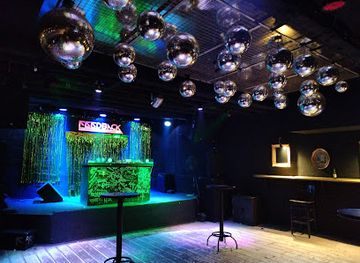
Carpe Diem
Discover the vibrant nightlife of Niš at Carpe Diem, a premier disco club filled with energy, music, and unforgettable experiences.
2 min walk · 0.2 km from city centre
-
Night club
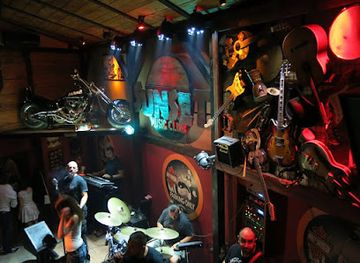
Sunset Club Niš
Dive into the electrifying nightlife of Niš at Sunset Club, where music and dance create unforgettable experiences.
6 min walk · 0.5 km from city centre
-
Night club
Feedback
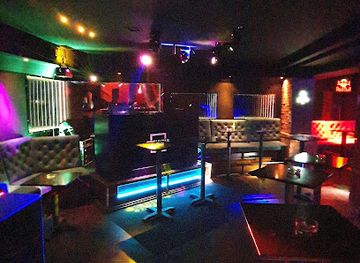
Experience the vibrant nightlife of Niš at Feedback, a premier night club and live music venue where the beats come alive!
1 min walk · 0.1 km from city centre
-
Night club
Stanica Pub Club
Discover the electrifying nightlife of Niš at Stanica Pub Club, where great music and lively crowds promise an unforgettable experience.
6 min walk · 0.5 km from city centre

Best shops in Niš
Shopping in Niš centres on the pedestrian streets and central commercial area, where Serbian fashion chains, independent shops, cafés and everyday retailers occupy the modern city fabric. Local markets provide a more traditional experience, with seasonal fruit and vegetables, dairy products, preserves and household goods reflecting the agricultural hinterland of southern Serbia. Around Kazandžijsko sokače, the memory of coppersmiths and other artisans remains part of the district’s identity, although contemporary retail has joined the historic craft atmosphere. Bakeries are useful places to buy burek and other regional snacks, while specialist food shops may offer honey, ajvar, Serbian sweets and bottles of rakija. Visitors seeking souvenirs should look for locally made food products, ceramics, textiles and small craft objects rather than assuming every item sold in the centre is produced in Niš.
-
Shopping mall
Delta Planet (Niš)
Discover Niš's exciting shopping scene at Delta Planet, featuring diverse stores, delightful dining, and entertainment for all ages in a modern setting.
16 min walk · 1.3 km from city centre
-
Store
Forum
Discover shopping, dining, and entertainment at the vibrant Forum Shopping Center in Niš, a must-visit destination for every traveler.
3 min walk · 0.2 km from city centre
-
Underwear store
Extreme Intimo Stop Shop Niš
Explore Extreme Intimo Stop Shop Niš for stylish and comfortable underwear in a vibrant shopping environment, perfect for tourists and locals alike.
11 min drive · 3.5 km from city centre
-
Shopping mall
Kalča
Explore Kalča, the ultimate shopping destination in Niš, Serbia, where modern retail meets local culture and vibrant dining options.
5 min walk · 0.4 km from city centre


Get your free copy of our complete guide to Niš, delivered straight to you.
Everything on this page, from attractions and restaurants to essentials and local phrases, in one PDF you can read offline, print or share.
Already have an account? Sign in
Your Niš guide is ready.
We'll send it to · Not you? Sign out

Getting your guide ready…
We are putting together a fresh copy of the Niš guide. This can take up to a minute.
This can take a few moments. If your browser asks, choose Allow so the download can start. You'll find the guide in your Downloads folder.
Nothing happened? Download it again
Sorry, the guide is taking longer than usual. Please try again in a minute, or get it by email instead.
Niš essentials
Currency and Payment
Safety
Emergency Situations
Do's and Don'ts
Local Tips
From Eve
Local phrases worth knowing
You don't need to get them perfect. A few words go a long way, and locals appreciate the effort.
Basics
| English | Local | Say it |
|---|---|---|
| Hello | Здраво | [Zdravo] |
| Goodbye | Довиђења | [Doviđenja] |
| Yes | Да | [Da] |
| No | Не | [Ne] |
| Please/You're welcome | Молим/Нема на чему | [Molim/Nema na čemu] |
| Thank you | Хвала | [Hvala] |
| Excuse me/Sorry | Извините | [Izvinite] |
| How are you? | Како си? | [Kako si?] |
| Fine. And you? | Добро. А ти? | [Dobro. A ti?] |
| Do you speak English? | Да ли говорите енглески? | [Da li govorite engleski?] |
| I don't understand | Не разумем | [Ne razumem] |
Eating & Drinking
| English | Local | Say it |
|---|---|---|
| I'd like to see the menu, please | Желео/ла бих да видим мени, молим | [Želeo/la bih da vidim meni, molim] |
| I don't eat meat | Не једем месо | [Ne jedem meso] |
| Cheers! | Живели! | [Živeli!] |
| I would like to pay, please | Желео/ла бих да платим, молим | [Želeo/la bih da platim, molim] |
Emergencies
| English | Local | Say it |
|---|---|---|
| Help! | Упомоћ! | [Upomoć!] |
| Go away! | Иди одавде! | [Idi odavde!] |
| Call the Police! | Позвате полицију! | [Pozvate policiju!] |
| Call a doctor! | Позвате доктора! | [Pozvate doktora!] |
| I'm lost | Изгубио/ла сам се | [Izgubio/la sam se] |
| I'm ill | Боли ме | [Boli me] |
Shopping
| English | Local | Say it |
|---|---|---|
| I'd like to buy... | Желео/ла бих да купим... | [Želeo/la bih da kupim...] |
| I'm just looking | Само гледам | [Samo gledam] |
| How much is it? | Колико кошта? | [Koliko košta?] |
| That's too expensive | Превише је скупо | [Prevše je skupo] |
| Can you lower the price? | Можете ли снизити цену? | [Možete li sniziti cenu?] |
Time & Numbers
| English | Local | Say it |
|---|---|---|
| What time is it? | Колико је сати? | [Koliko je sati?] |
| It's one o'clock | Један сат | [Jedan sat] |
| Half past (10) | Пола (10) | [Pola (10)] |
| Morning | Јутро | [Jutro] |
| Afternoon | Поподне | [Popodne] |
| Evening | Вече | [Veče] |
| Yesterday | Јуче | [Juče] |
| Today | Данас | [Danas] |
| Tomorrow | Сутра | [Sutra] |
| 1 | Један | [Jedan] |
| 2 | Два | [Dva] |
| 3 | Три | [Tri] |
| 4 | Четири | [Četiri] |
| 5 | Пет | [Pet] |
| 6 | Шест | [Šest] |
| 7 | Седам | [Sedam] |
| 8 | Осам | [Osam] |
| 9 | Девет | [Devet] |
| 10 | Десет | [Deset] |
Transport & Directions
| English | Local | Say it |
|---|---|---|
| Where's a/the...? | Где је...? | [Gde je...?] |
| What's the address? | Која је адреса? | [Koja je adresa?] |
| Can you show me (on the map)? | Можете ли ми показати (на мапи)? | [Možete li mi pokazati (na mapi)?] |
| When's the next (bus)? | Кад је следећи (аутобус)? | [Kad je sledeći (autobus)?] |
| A ticket (to ....) | Једну карту (за ....) | [Jednu kartu (za ....)] |
History of Niš
Naissus and the Roman World
Niš developed around the ancient settlement of Naissus, an important city in the Roman province of Moesia Superior and a strategic point on routes linking the Danube with the central Balkans. Its position supported trade, administration and military movement. The city’s most famous Roman association is Constantine the Great, who was born at Naissus around AD 272 and later became emperor. Archaeological remains at Mediana, an imperial residence outside the ancient centre, reveal a substantial complex of reception halls, service buildings and mosaic floors. These remains show that Naissus was more than a provincial way station: it was connected to the imperial court and the political currents of the late Roman Empire.
Late Antiquity and Imperial Change
During late antiquity, Naissus remained an urban and military centre in a period marked by political upheaval and movement across the Balkans. Fortifications, public buildings and imperial connections reflected the city’s strategic value, while Christianity became increasingly important within the Roman world. The fourth century brought the long reign and religious policies of Constantine the Great, whose career linked his birthplace to the transformation of the empire. Later incursions and conflicts damaged the settlement, and the ancient city gradually lost its earlier prominence. The archaeological record at Mediana and other sites around Niš preserves evidence of wealth, craftsmanship and changing religious and political life before the medieval period.
Medieval Rule and Regional Rivalries
After the fragmentation of Roman power, Niš passed through the influence of Byzantine rulers and competing Balkan states. Its location made it a strategic prize, and control shifted during the struggles involving Byzantium, Bulgaria and medieval Serbian rulers. The city’s Christian traditions and position on important routes endured despite repeated warfare and political change. Medieval Niš was associated with the wider development of Serbian statehood and ecclesiastical life, although much of the visible urban fabric seen today belongs to later centuries. Its strategic geography continued to determine its fate: whoever controlled the valley could influence movement between the interior Balkans and the routes leading north towards the Danube.
Ottoman Niš and the Fortress
The Ottoman Empire incorporated Niš in the fifteenth century, beginning a long period in which the city became an important administrative, commercial and military centre. The present Niš Fortress largely reflects Ottoman rebuilding and expansion, although it occupies a site with earlier defensive layers. Within and around the fortified enclosure, roads, markets, religious buildings and craft workshops connected Niš to Ottoman networks across the Balkans. The city’s urban culture became more diverse, with Muslim, Orthodox, Jewish and other communities contributing to commerce and daily life. Streets associated with metalworking and trade, including the area now known as Kazandžijsko sokače, recall this period of craft production and urban exchange.
Liberation and the Serbian State
Serbia captured Niš from the Ottoman Empire in 1878 during the Serbian–Ottoman War, a turning point that brought the city into the modern Serbian state. The change altered administration, institutions and the direction of economic development, while Niš became an increasingly important centre in southern Serbia. The Skull Tower, built by Ottoman authorities after the Battle of Čegar in 1809, remains a powerful reminder of the earlier struggle and its human cost. In the decades after liberation, rail connections and modern civic institutions strengthened Niš’s role as a regional centre. New urban buildings and public spaces appeared alongside older Ottoman structures and surviving defensive walls.
War, Occupation and Modern Memory
Niš experienced upheaval during the Balkan Wars and the First World War, when its strategic position again made it significant to military and political events. During the Second World War, German occupation authorities established the Red Cross Concentration Camp in the city; the preserved site documents imprisonment, deportation and resistance, and is one of Niš’s most important memorial institutions. After 1945, Niš expanded as an industrial, educational and administrative centre within socialist Yugoslavia. The city suffered damage during the NATO bombing campaign in 1999, but continued to develop as a major southern Serbian hub. Today, Roman ruins, Ottoman fortifications, wartime memorials and modern neighbourhoods coexist within its historical landscape.
Niš in Photos
Browse through our photo collection highlighting the charm and character of the destination.
Cities near Niš
The closest cities to Niš, if you have time for more than one stop.
-

-

-
-
-


Swipe for more cities
Explore more

Explore more of Serbia
Discover Serbia: A Balkan treasure with rich history, stunning natural landscapes, and vibrant cities waiting to be explored.
Explore Serbia