
Île aux Récifs, Seychelles Travel Guide
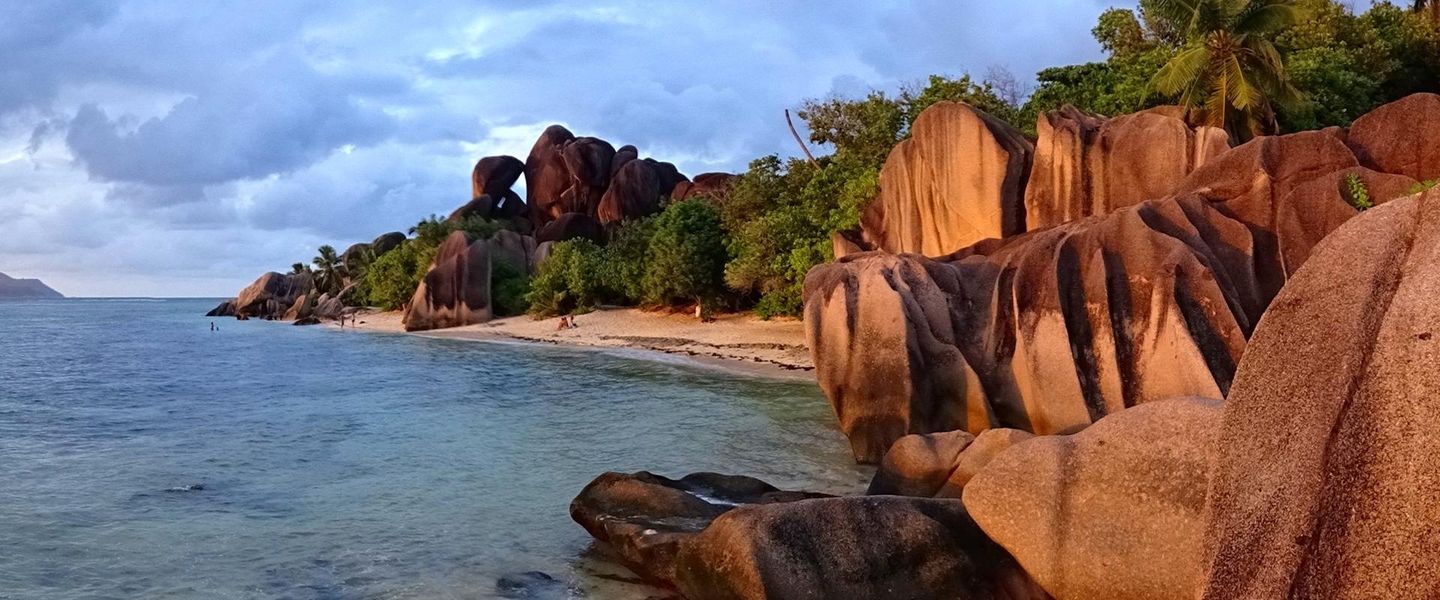
Discover Île aux Récifs in Seychelles – a serene island paradise with vibrant coral reefs, crystal-clear waters, and unspoiled natural beauty.
Île aux Récifs, located in the idyllic Seychelles archipelago, is a true gem of natural beauty. This small island is renowned for its stunning coral reefs that teem with marine life. Whether you're an avid diver or a casual snorkeler, the underwater world around Île aux Récifs will leave you mesmerized by its colorful coral gardens and diverse species of fish. Aside from its underwater wonders, Île aux Récifs offers breathtaking scenery above sea level. The island is surrounded by crystal-clear turquoise waters and pristine white sandy beaches. Visitors can enjoy a relaxing day on the beach, basking in the sun or taking a leisurely swim in the warm Indian Ocean. One of the highlights of Île aux Récifs is its secluded and peaceful atmosphere. Unlike some of the more popular islands in Seychelles, Île aux Récifs remains relatively untouched and less crowded. This makes it a perfect destination for those seeking tranquility and a closer connection with nature.

Know before you go
Hi, I'm Eve. Here are a few practical things to know before exploring Île aux Récifs.
- Bring your own snorkeling or diving gear as rental options might be limited on the island.
- Pack plenty of sunscreen and insect repellent to stay comfortable during your visit.
- Plan your visit during the dry season (April to October) for the best weather and sea conditions.
- Consider hiring a local guide to enhance your experience and learn more about the island's marine life.
- Carry a reusable water bottle to stay hydrated and help protect the environment.
Explore Île aux Récifs: Things to Do, Places to Eat, Hotels & More
Handpicked recommendations for top attractions, local dining, accommodations, and more

Top Attractions & Sightseeing in Île aux Récifs


Best landmarks in Île aux Récifs
Top-rated picks
Best Landmarks

Takamaka Rum Distillery
Explore the flavors and craftsmanship of Seychelles at Takamaka Rum Distillery, a must-visit for rum enthusiasts and curious travelers alike.

Jardin du Roi Spice Garden
Explore the exotic flora and savor the local flavors at Jardin du Roi Spice Garden, a tranquil oasis in Anse Royale, Seychelles.

Saint-Anne Marine National Park
Discover the stunning marine life and breathtaking landscapes of Saint-Anne Marine National Park in Seychelles, a paradise for nature lovers and adventure seekers.

Copolia Trail
Discover the breathtaking beauty of Seychelles on the Copolia Trail, a premier hiking destination that brings nature and adventure together.

Best restaurants in Île aux Récifs
Top-rated picks
Best Restaurants

Del Place Restaurant
Experience exquisite Seychellois cuisine at Del Place Restaurant amidst breathtaking views and exceptional service.

Kafe Kreol Cafe & Restaurant
Experience authentic Creole flavors at Kafe Kreol Cafe & Restaurant in Anse Royale – a culinary journey through Seychelles' vibrant cuisine.

Jardin du Roi Spice Garden
Experience culinary delights amidst lush botanicals at Jardin du Roi Spice Garden in Anse Royale - a perfect blend of flavor and nature.

Surfers Beach Restaurant
Experience exquisite dining with breathtaking ocean views at Surfers Beach Restaurant in Takamaka.

Best bars in Île aux Récifs
Top-rated picks
Best Bars

Kafe Kreol Cafe & Restaurant
Experience the vibrant flavors of the Seychelles at Kafe Kreol Cafe & Restaurant, a must-visit for authentic Creole cuisine.

Fisherman's Cove Resort
Experience luxury and tranquility at Fisherman's Cove Resort in Bel Ombre, Seychelles - your perfect getaway to paradise.

Surfers Beach Restaurant
Experience the flavors of the Seychelles at Surfers Beach Restaurant, a coastal dining haven offering local seafood and stunning ocean views.

Beach Shak Seychelles
Experience the vibrant flavors of the Seychelles at Beach Shak, where mouthwatering grills meet refreshing cocktails in a stunning beachside setting.

Best nightclubs in Île aux Récifs
Top-rated picks
Best Nightclubs

Beach Shak Seychelles
Experience the vibrant flavors of Seychelles at Beach Shak, where delicious grilled dishes meet refreshing cocktails in a stunning beachside setting.

Gecko Bar
Experience the vibrant charm of Gecko Bar in Beau Vallon, where delicious food and refreshing drinks meet stunning coastal views.

The Boardwalk Bar & Grill
Experience the vibrant nightlife and delicious cuisine at The Boardwalk Bar & Grill on Eden Island, a top destination for tourists seeking fun and flavor.

Trader Vic's Seychelles
Experience the vibrant culinary scene at Trader Vic's Seychelles, where tropical ambiance meets exquisite dining in the heart of Beau Vallon.

Best shops in Île aux Récifs
Top-rated picks
Best Shops

Sir Selwyn Selwyn-Clarke Market
Discover the heart of Seychelles at Sir Selwyn Selwyn-Clarke Market, a vibrant hub of local culture, fresh produce, and unique handicrafts.

STORY Seychelles
Discover the luxury and tranquility of STORY Seychelles, a stunning resort hotel on Beau Vallon offering unforgettable experiences in paradise.

Eden Plaza
Discover the vibrant shopping experience at Eden Plaza in Providence, where local culture meets international brands and delicious dining.

Anse Takamaka Beach
Discover the pristine beauty of Anse Takamaka Beach, a serene paradise in Seychelles ideal for relaxation, swimming, and unforgettable memories.

Explore Île aux Récifs on the Map
A handpicked selection of must-see spots in Île aux Récifs, mapped for you.
Île aux Récifs Essentials
-
Île aux Récifs is a small island located in the Seychelles archipelago. The nearest major airport is Seychelles International Airport (SEZ) on Mahé Island. From Mahé, you can reach Île aux Récifs by taking a domestic flight to Praslin Island, followed by a boat or helicopter transfer. Alternatively, private boat charters are available directly from Mahé to Île aux Récifs, offering a scenic journey through the crystal-clear waters.
-
Transportation options on Île aux Récifs are limited due to its small size. Most areas are accessible by foot or bicycle. For longer distances, electric carts are available for hire. Boat tours and water taxis are also popular for exploring nearby islands and marine reserves. Since there are no public buses or extensive road networks, planning your transportation in advance is advisable.
-
The official currency in the Seychelles is the Seychellois Rupee (SCR). Credit cards are widely accepted in hotels, restaurants, and larger shops on Île aux Récifs. However, it's a good idea to carry some cash for smaller establishments and local markets. ATMs are available on the island, but it's recommended to withdraw sufficient funds before arrival, as ATM services can sometimes be unreliable.
-
Île aux Récifs is generally a safe destination with low crime rates. Nonetheless, standard safety precautions are advised. Keep your valuables secure and avoid leaving belongings unattended on the beach. While there are no specific high-crime areas targeting tourists, be cautious when exploring isolated areas, especially at night.
-
In case of emergency, dial 999 for immediate assistance. The island has a small medical facility for minor health issues. For more serious medical emergencies, patients may need to be transferred to Mahé Island. It is highly recommended to have comprehensive travel insurance that covers medical emergencies and evacuation. Pharmacies are available for over-the-counter medications.
-
Fashion: Do dress in light, breathable clothing due to the tropical climate. Avoid overly revealing attire, especially in public areas. Religion: Do respect local customs and religious practices. When visiting religious sites, dress modestly and remove your shoes. Public Transport: Since there is no public transport, rely on walking, cycling, or electric carts. Don't expect extensive public transit options. Greetings: Do greet locals with a friendly 'hello' or 'bonzour' (good morning in Creole). A handshake is also appropriate. Eating & Drinking: Do try local cuisine and fresh seafood. Don't waste food, as it is considered disrespectful. Always use your right hand when eating or offering something to someone.
-
To experience Île aux Récifs like a local, visit the island's markets where you can purchase fresh produce and handmade crafts. Engage with locals; they are often eager to share stories and insider tips. Don't miss the opportunity to snorkel or dive in the vibrant coral reefs surrounding the island. For a unique experience, join a guided nature walk to learn about the island's flora and fauna from a local perspective.
When is the best time to visit Île aux Récifs?
Useful Local Phrases for Île aux Récifs
You don't need to speak the language perfectly. Even learning a few simple words can make conversations warmer—and locals usually appreciate the effort.
— Eve

Here are the phrases I use most often in Île aux Récifs. Try a few—you'll be surprised how far they go! 😊
❤️
-
- HelloBonzour
[Bohn-zhoor] - GoodbyeOrevwar
[Oh-reh-vwahr] - YesWi
[Wee] - NoNon
[Nohn] - Please/You're welcomeSilvousplé
[Seel-voo-spleh] - Thank youMersi
[Mehr-see] - Excuse me/SorryEskize mwen
[Es-kee-zeh mwen] - How are you?Koman ou ete?
[Koh-mahn oo eh-teh] - Fine. And you?Byen. E ou?
[Byen. Eh oo?] - Do you speak English?Ou koz Anglè?
[Oo kohz Ahn-glay] - I don't understandMwen pa konpran
[Mwen pah kohn-prahn]
- HelloBonzour
-
- I'd like to see the menu, pleaseMwen kontan vwar meni, silvousplé
[Mwen kohn-tahn vwar meh-nee, seel-voo-spleh] - I don't eat meatMwen pa manze vyann
[Mwen pah mahn-zay vyahn] - Cheers!Santé!
[Sahn-tay] - I would like to pay, pleaseMwen ti a kontan peye, silvousplé
[Mwen tee ah kohn-tahn pay-ay, seel-voo-spleh]
- I'd like to see the menu, pleaseMwen kontan vwar meni, silvousplé
-
- Help!Sos!
[Sohs] - Go away!Ale! Aret!
[Ah-lay! Ah-reh!] - Call the Police!Apel polis!
[Ah-pehl poh-lees!] - Call a doctor!Apel en dokte!
[Ah-pehl ahn dohktay!] - I'm lostMwen perdi
[Mwen pehr-dee] - I'm illMwen malad
[Mwen mah-lahd]
- Help!Sos!
-
- I'd like to buy...Mwen ti a kontan achte...
[Mwen tee ah kohn-tahn ahsh-tay...] - I'm just lookingMwen zis pe vwar
[Mwen zees pay vwar] - How much is it?Ki kantite li koute?
[Kee kohn-dee-tay lee koo-tay] - That's too expensiveSa tro cher
[Sah tro shair] - Can you lower the price?Eski ou kapav redwir pri a?
[Es-kee oo kah-pahv red-weir pree ah?]
- I'd like to buy...Mwen ti a kontan achte...
-
- What time is it?Ki ler li?
[Kee lehr lee?] - It's one o'clockLi enn ler
[Lee enn lehr] - Half past (10)Demi apré (10)
[Duh-mee ah-pray (10)] - MorningMaten
[Mah-ten] - AfternoonApremidi
[Ah-preh-mee-dee] - EveningSwar
[Swar] - YesterdayYer
[Yair] - TodayZordi
[Zor-dee] - TomorrowDemain
[Duh-meh] - 1En
[En] - 2De
[Deh] - 3Trwa
[Trwah] - 4Kat
[Kat] - 5Senk
[Sank] - 6Siz
[Seez] - 7Set
[Set] - 8Huit
[Wheet] - 9Nef
[Nehf] - 10Dis
[Dees]
- What time is it?Ki ler li?
-
- Where's a/the...?Kot i annan a...?
[Kot ee ahn-nahn ah...?] - What's the address?Ki ladres?
[Kee lah-dres?] - Can you show me (on the map)?Eski ou kapav montre mwen (lo kat)?
[Es-kee oo kah-pahv mohn-tray mwan (loh kaht)?] - When's the next (bus)?Kan prochen (buss)?
[Kahn proh-shen (buss)?] - A ticket (to ....)En tikè (pou ....)
[En tee-kay (poo ....)]
- Where's a/the...?Kot i annan a...?
History of Île aux Récifs
-
Île aux Récifs, like many islands in the Seychelles archipelago, was uninhabited until the Age of Exploration. The island was first documented by European explorers in the 16th century. Portuguese and later French navigators noted its presence while mapping the Indian Ocean. The island remained largely untouched due to its remote location and challenging coral reefs.
-
During the 18th century, the Seychelles islands, including Île aux Récifs, came under French control. The island's strategic position was recognized, but it saw little development compared to larger islands like Mahé and Praslin. The French influence is still evident in the place names and some of the cultural practices observed in the region.
-
In 1814, following the defeat of Napoleon, the Seychelles were ceded to the British under the Treaty of Paris. Île aux Récifs, along with other islands, became part of the British Empire. The British administration focused on agricultural development, but Île aux Récifs remained largely a natural haven due to its challenging terrain and the surrounding coral reefs.
-
During World War II, the strategic importance of the Seychelles increased. Île aux Récifs, with its secluded location, was occasionally used as a lookout point and a place for naval maneuvers by Allied forces. The island's isolation made it an ideal spot for these activities, away from the main areas of conflict.
-
Seychelles gained independence from Britain in 1976. Île aux Récifs, like the rest of the islands, began to chart its own course. The island saw efforts to preserve its natural environment and promote eco-tourism. The government recognized the importance of maintaining the island's pristine condition while allowing for controlled tourism.
-
The cultural heritage of Île aux Récifs is a blend of African, European, and Asian influences, reflecting the diverse history of Seychelles. Traditional Seychellois Creole culture is evident in the music, dance, and cuisine. The island's festivals and local customs are celebrated with a mix of traditional and modern practices, highlighting the rich cultural tapestry of the region.
-
In recent years, Île aux Récifs has become a focal point for environmental conservation efforts. The island's unique biodiversity, including its coral reefs and endemic species, is protected through various initiatives. Conservation programs aim to balance human activity with the preservation of the island's natural beauty, ensuring that Île aux Récifs remains a pristine sanctuary for future generations.
Neighbouring Regions of Île aux Récifs
The closest regions to Île aux Récifs, if you have time for more than one.




Your all‑in‑one travel companion app
Explore expert travel guides, compare and book tours, experiences, hotels, and more—all from the palm of your hand. Download now for seamless trip planning wherever your wanderlust takes you.


Explore More of Seychelles
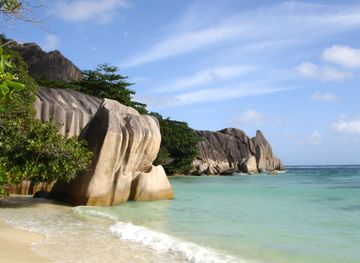
Looking beyond Île aux Récifs? Discover Seychelles for broader travel guides, local hot-spots, and regional highlights.
Explore SeychellesÎle aux Récifs in Photos
Browse through our photo collection highlighting the charm and character of the destination.
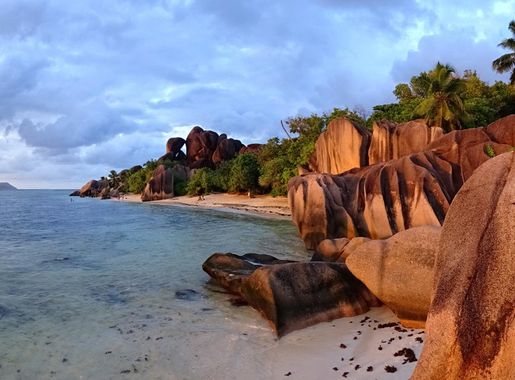


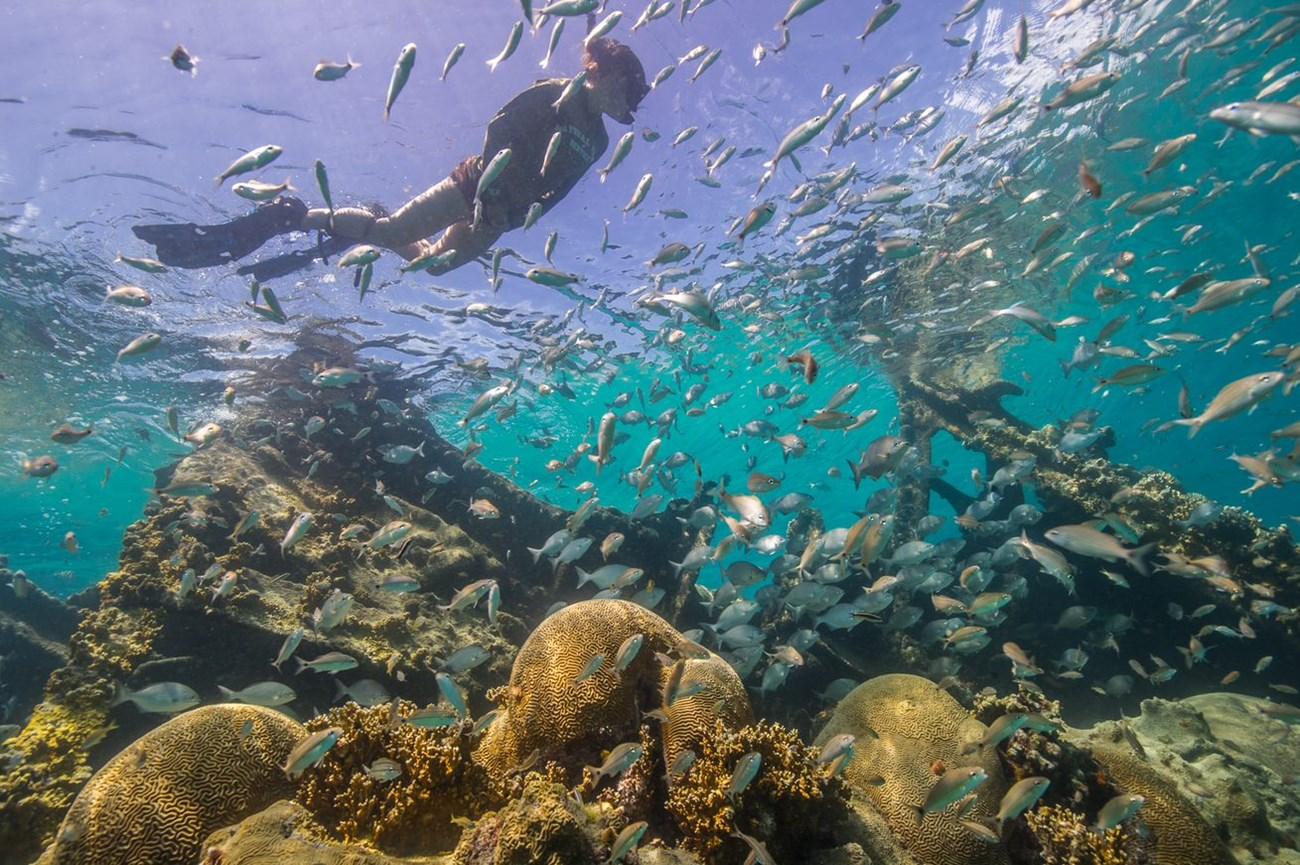


Île aux Récifs: A Pristine Coral Haven in Seychelles
Île aux Récifs, located in the idyllic Seychelles archipelago, is a true gem of natural beauty. This small island is renowned for its stunning coral reefs that teem with marine life. Whether you're an avid diver or a casual snorkeler, the underwater world around Île aux Récifs will leave you mesmerized by its colorful coral gardens and diverse species of fish. Aside from its underwater wonders, Île aux Récifs offers breathtaking scenery above sea level. The island is surrounded by crystal-clear turquoise waters and pristine white sandy beaches. Visitors can enjoy a relaxing day on the beach, basking in the sun or taking a leisurely swim in the warm Indian Ocean. One of the highlights of Île aux Récifs is its secluded and peaceful atmosphere. Unlike some of the more popular islands in Seychelles, Île aux Récifs remains relatively untouched and less crowded. This makes it a perfect destination for those seeking tranquility and a closer connection with nature.