

Aquacity Poprad Travel Guide - Free Web & App
Your ultimate guide to Aquacity Poprad. Discover top landmarks, proposed trips, and local tips. Free on the web or via the Evendo companion app.


AquaCity Poprad in Slovakia combines geothermal pools, wellness, family water attractions and convenient access to Poprad and High Tatras mountain adventures.
Water, Wellness and Mountain Setting
AquaCity Poprad is a modern water-and-wellness resort on the eastern side of Poprad, in northern Slovakia, where geothermal water, family recreation and mountain tourism meet. The complex lies below the High Tatras, whose peaks form the dramatic skyline to the north, while the historic Spiš region extends around the town. AquaCity itself is a compact, purpose-built destination rather than a village or separate natural area, with indoor and outdoor pools, slides, children’s facilities, wellness areas, fitness provision, accommodation and dining on one site.Read more about Aquacity Poprad
More Than a Water Park
Poprad and the Wider Region
When is the best time to visit Aquacity Poprad?
Best: June–August · 22–24°C| Month | High (°C) | Rainfall (mm) |
|---|---|---|
| January | 1 | 23 |
| February | 1 | 20 |
| March | 7 | 26 |
| April | 12 | 35 |
| May | 17 | 50 |
| June (best) | 22 | 54 |
| July (best) | 24 | 51 |
| August (best) | 23 | 47 |
| September | 19 | 40 |
| October | 13 | 33 |
| November | 6 | 28 |
| December | 2 | 24 |
Getting to and around Aquacity Poprad
How to get there
Transportation
Best attractions in Aquacity Poprad
-
Park
Park pri železničnej stanici
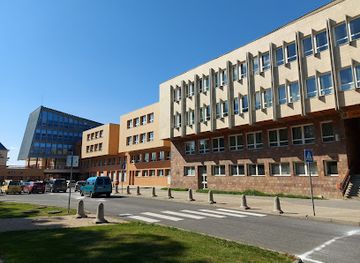
Explore the serene beauty of Park pri Železnične stanici in Poprad – a perfect retreat for nature lovers and families alike.
Best landmarks in Aquacity Poprad
The defining landmark of AquaCity Poprad is its geothermal water complex, a distinctly modern feature set against the mountain skyline of the High Tatras. Within Poprad, Spišská Sobota’s central square and the Church of Saint George are the most important historical markers, preserving the character of a former market and craft settlement. The High Tatras form the region’s dominant natural landmark, although their principal peaks and mountain resorts lie outside the resort’s immediate urban setting. In the wider Spiš landscape, the medieval towns of Levoča and Kežmarok, together with Spiš Castle, provide major heritage points reached by excursion rather than by a short walk from AquaCity. The contrast between geothermal leisure, historic Spiš architecture and high mountain terrain explains Poprad’s importance as a regional base.
-
Water park
AquaCity Poprad
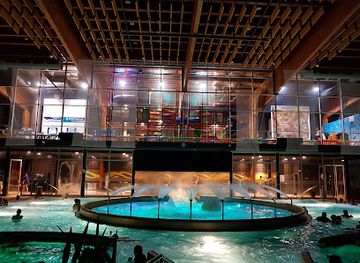
Discover the ultimate water adventure at AquaCity Poprad, where fun meets relaxation in Slovakia's picturesque mountains.
Explore Aquacity Poprad on the map
Plan your trip on one map. See where the top attractions, landmarks, restaurants and hotels are, and book hotels and experiences in a few clicks.
Best hotels in Aquacity Poprad
Best restaurants in Aquacity Poprad
Dining at AquaCity is concentrated in the resort’s hotel and leisure facilities, making it possible to eat without leaving the complex, although the choice and operating arrangements should be checked before arrival. Poprad provides a broader range of restaurants, cafés and everyday food shops, while the historic district of Spišská Sobota offers a more traditional setting for meals and refreshments. Regional cooking in northern Slovakia commonly draws on potatoes, cabbage, soups, dumplings, pork, dairy products and seasonal produce, with Slovak specialities appearing alongside Central European and international menus. Mountain gateways around the High Tatras add chalet-style dining and après-hike options, but these are outside AquaCity itself. Visitors exploring the wider Spiš area can look for local bakeries, village restaurants and farm-linked products rather than expecting extensive dining at rural attractions.
-
 Hotel
HotelHotel Riverside AquaCity Poprad
Discover tranquility and adventure at Hotel Riverside AquaCity Poprad - your perfect getaway in the heart of nature.
-
Restaurant
Pension & Restaurant Sabato
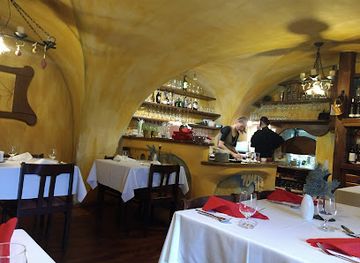
Experience authentic Slovak hospitality at Pension & Restaurant Sabato in scenic Poprad-Spišská Sobota, offering delicious meals and cozy accommodations.
-
Restaurant
restaurant 63
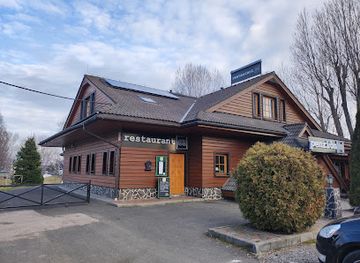
Experience authentic Slovak cuisine at Restaurant 63 in Poprad-Spišská Sobota, where tradition meets flavor in a cozy atmosphere.
-
Fast Food
Grill bar
Discover the best local fast food at Grill Bar in Poprad-Spišská Sobota – where delicious meets convenience!

Best bars in Aquacity Poprad
AquaCity’s evening atmosphere is centred on hotel hospitality, wellness and leisure rather than a dedicated nightclub scene. Guests may find a bar or evening refreshments within the resort, while Poprad offers the wider choice of pubs, cafés and casual venues. The historic streets of Spišská Sobota are quieter and better suited to an early evening meal or drink than late-night entertainment. Nightlife in the town is modest compared with a major Slovak city, and many visitors use Poprad as a base for an early start in the High Tatras. Seasonal cultural programmes, local events and hotel entertainment may add variety, but availability changes, so current information should be checked rather than assumed.
-
Bar
LOBBY BAR
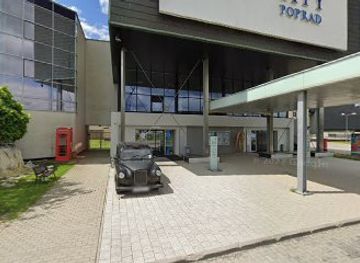
Discover the lively ambiance of Lobby Bar in Poprad-Spišská Sobota, where relaxation meets local culture in a vibrant setting.
Best nightclubs in Aquacity Poprad
AquaCity’s evening atmosphere is centred on hotel hospitality, wellness and leisure rather than a dedicated nightclub scene. Guests may find a bar or evening refreshments within the resort, while Poprad offers the wider choice of pubs, cafés and casual venues. The historic streets of Spišská Sobota are quieter and better suited to an early evening meal or drink than late-night entertainment. Nightlife in the town is modest compared with a major Slovak city, and many visitors use Poprad as a base for an early start in the High Tatras. Seasonal cultural programmes, local events and hotel entertainment may add variety, but availability changes, so current information should be checked rather than assumed.
-
Water park
AquaCity Poprad
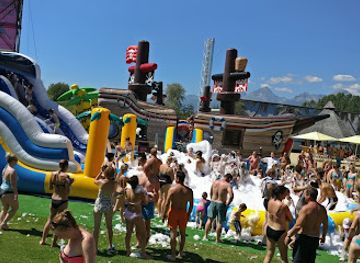
Experience the perfect blend of adventure and relaxation at AquaCity Poprad, Slovakia's premier water park and wellness center.
-
Bar
LOBBY BAR
Experience the vibrant nightlife at Lobby Bar in Poprad-Spišská Sobota, where locals and travelers unite over drinks and good times.

Best shops in Aquacity Poprad
Shopping at AquaCity is primarily functional and connected with resort needs rather than an extensive retail experience. Poprad supplies supermarkets, pharmacies, sports and outdoor equipment shops, local services and larger commercial outlets, with the town centre and shopping centres offering the broadest choice. Spišská Sobota is more atmospheric but has fewer retail facilities, while villages and mountain resorts tend to concentrate on everyday provisions, souvenirs and outdoor goods. Visitors seeking regional products can look for Slovak food specialities, honey, preserves, woven textiles, woodwork, ceramics and locally made gifts in reputable independent shops or markets, though stock varies. For serious outdoor equipment, Poprad and the established High Tatras resorts are more practical than the water park itself.
-
Water park
AquaCity Poprad
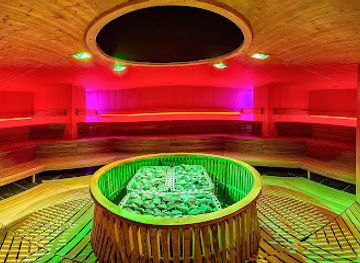
Experience the ultimate fusion of thrill and relaxation at AquaCity Poprad, Slovakia's premier water park and wellness retreat.
-
Hockey supply store
BAUER HOCKEY SHOP - POPRAD
Explore the Bauer Hockey Shop in Poprad for top-quality hockey equipment and expert advice, all in a welcoming atmosphere dedicated to the love of the game.
-
Gift shop
Nostalgiashop.sk bytové doplnky a dekorácie
Explore Nostalgiashop.sk for unique home decor and memorable souvenirs in the heart of Poprad, Slovakia.


Get your free copy of our complete guide to Aquacity Poprad, delivered straight to you.
Everything on this page, from attractions and restaurants to essentials and local phrases, in one PDF you can read offline, print or share.
Already have an account? Sign in
Your Aquacity Poprad guide is ready.
We'll send it to · Not you? Sign out

Getting your guide ready…
We are putting together a fresh copy of the Aquacity Poprad guide. This can take up to a minute.
This can take a few moments. If your browser asks, choose Allow so the download can start. You'll find the guide in your Downloads folder.
Nothing happened? Download it again
Sorry, the guide is taking longer than usual. Please try again in a minute, or get it by email instead.
Aquacity Poprad essentials
Currency and Payment
Safety
Emergency Situations
Do's and Don'ts
Local Tips
From Eve
Local phrases worth knowing
You don't need to get them perfect. A few words go a long way, and locals appreciate the effort.
Basics
| English | Local | Say it |
|---|---|---|
| Hello | Ahoj | [ahoy] |
| Goodbye | Dovidenia | [doh-vee-de-nyah] |
| Yes | Áno | [ah-no] |
| No | Nie | [nye] |
| Please/You're welcome | Prosím | [pro-seem] |
| Thank you | Ďakujem | [dyah-koo-yem] |
| Excuse me/Sorry | Prepáčte | [preh-pahch-teh] |
| How are you? | Ako sa máš? | [ah-koh sah mahsh] |
| Fine. And you? | Dobre. A ty? | [doh-breh. ah tee] |
| Do you speak English? | Hovoríte po anglicky? | [hoh-voh-ree-teh poh ahn-gleet-skee] |
| I don't understand | Nerozumiem | [neh-roh-zoo-myem] |
Eating & Drinking
| English | Local | Say it |
|---|---|---|
| I'd like to see the menu, please | Chcel by som vidieť menu, prosím | [kh-tyel bih sohm vee-dee-tyeh menuh, pro-seem] |
| I don't eat meat | Nemám rád mäso | [neh-mahm raad mah-so] |
| Cheers! | Na zdravie! | [nah zdrah-vee-eh] |
| I would like to pay, please | Chcel by som zaplatiť, prosím | [kh-tyel bih sohm zah-pla-teet, pro-seem] |
Emergencies
| English | Local | Say it |
|---|---|---|
| Help! | Pomoc! | [poh-mohts] |
| Go away! | Choď preč! | [khoj prech] |
| Call the Police! | Volajte políciu! | [voh-lah-yteh poh-lee-choo] |
| Call a doctor! | Volajte lekára! | [voh-lah-yteh leh-kah-rah] |
| I'm lost | Stratil som sa | [strah-teel sohm sah] |
| I'm ill | Som chorý | [sohm khor-ee] |
Shopping
| English | Local | Say it |
|---|---|---|
| I'd like to buy... | Chcel by som kúpiť... | [kh-tyel bih sohm koo-pee-tyh] |
| I'm just looking | Len sa pozerám | [len sah poh-zeh-rahm] |
| How much is it? | Koľko to stojí? | [ko-uhl-koh toh stoh-yee] |
| That's too expensive | To je príliš drahé | [toh yeh pree-leesh draa-heh] |
| Can you lower the price? | Môžete znížiť cenu? | [moh-zheh-teh znee-zheet tseh-noo] |
Time & Numbers
| English | Local | Say it |
|---|---|---|
| What time is it? | Koľko je hodín? | [ko-uhl-koh yeh hoh-deen] |
| It's one o'clock | Je jedna hodina | [yeh yehd-nah hoh-dee-nah] |
| Half past (10) | Polovica desiatej | [poh-loh-vee-tsa deh-shya-tyeh] |
| Morning | Ráno | [rah-noh] |
| Afternoon | Popoludní | [poh-poh-loo-dnee] |
| Evening | Večer | [veh-chehr] |
| Yesterday | Včera | [v-cheh-rah] |
| Today | Dnes | [dnes] |
| Tomorrow | Zajtra | [zai-trah] |
| 1 | Jeden | [yeh-dehn] |
| 2 | Dva | [dvah] |
| 3 | Tri | [tree] |
| 4 | Štyri | [shteer-ee] |
| 5 | Päť | [pyat] |
| 6 | Šesť | [shest] |
| 7 | Sedem | [seh-dem] |
| 8 | Osem | [oh-sehm] |
| 9 | Deviat | [deh-vee-aht] |
| 10 | Desať | [deh-saht] |
Transport & Directions
| English | Local | Say it |
|---|---|---|
| Where's a/the...? | Kde je...? | [kdeh yeh] |
| What's the address? | Aká je adresa? | [ah-kah yeh ah-dreh-sah] |
| Can you show me (on the map)? | Môžete mi ukázať (na mape)? | [moh-zheh-teh mee ooh-kah-zaht (nah mah-peh)] |
| When's the next (bus)? | Kedy je ďalší (autobus)? | [keh-dee yeh dyahl-shee (ow-toh-boos)] |
| A ticket (to ....) | Lístok (do ....) | [lees-tohk (doh)] |
History of Aquacity Poprad
The Poprad Basin and Geothermal Water
AquaCity’s setting belongs to the Poprad Basin, a broad highland basin shaped by geological processes and framed by the High Tatras to the north. The resort is associated with geothermal water drawn from underground rather than with a naturally occurring open-air thermal spring. This resource underpins the complex’s pools and wellness identity, connecting a modern leisure development with the region’s geological conditions. The surrounding landscape has long been defined by the contrast between the elevated mountain rim, the basin floor and the settlements of Spiš.
Medieval Settlements of Spiš
Poprad and the settlements that now form part of the town developed within the historical region of Spiš, an area shaped by medieval colonisation, trade and craft production. Spišská Sobota, now a historic district of Poprad, was documented in the thirteenth century and became an important market and craft centre. Its surviving square and church preserve the character of a former regional settlement, while nearby communities including Veľká, Matejovce and Stráže followed their own historical paths before later becoming part of the modern town.
The Growth of Modern Poprad
Poprad’s modern importance grew through transport, manufacturing and its position between the High Tatras and the wider Spiš region. Railway development in the nineteenth century strengthened connections with other parts of what is now Slovakia and helped tourism reach the mountain resorts more easily. Industrial growth and the expansion of the separate surrounding settlements gradually produced the urban Poprad of today. In 1946, Poprad, Spišská Sobota, Veľká, Stráže and Matejovce were administratively united, creating the broader city in which AquaCity is located.
AquaCity and Contemporary Leisure
AquaCity emerged in the early twenty-first century as a geothermal water park, wellness and accommodation project serving both local residents and visitors to the High Tatras. Its development reflects a wider shift in the region’s tourism economy, in which bathing, spa leisure and family recreation complement hiking and winter sports. The resort does not replace Poprad’s historic districts or the protected mountain landscapes nearby; instead, it forms part of the town’s modern visitor infrastructure, providing an urban leisure hub between the railway station, the historic Spiš settlements and the mountain gateways.
Aquacity Poprad in Photos
Browse through our photo collection highlighting the charm and character of the destination.
Neighbouring destination travel guides
The closest destinations to Aquacity Poprad, if you have time for more than one.
-

-

-

-

-


Swipe for more destinations
Explore more

Explore more of Spiš
Discover Spiš: A captivating region in Slovakia known for its medieval castles, UNESCO World Heritage Sites, and breathtaking natural beauty.
Explore Spiš
Explore more of Slovakia
Discover Slovakia: A land of majestic mountains, charming castles, and vibrant culture in the heart of Europe.
Explore Slovakia