

Free Postojna Travel Guide & Mobile App
Plan your Postojna trip with Evendo. Get free guides to top attractions, restaurants, hotels, and bars. Web access or download the mobile app.


Postojna, Slovenia, pairs the vast Postojna Cave with karst landscapes, Predjama Castle, local history and easy access to the Julian-Carniolan region.
Life Above the Karst
Postojna lies in southwestern Slovenia, on the high karst plateau between Ljubljana and the Adriatic coast. The town is best known as the gateway to Postojna Cave, one of Europe’s most celebrated subterranean landscapes, yet its character extends beyond the celebrated cave railway and illuminated chambers. Forested hills, sinkholes, limestone ridges and disappearing rivers shape the wider landscape, giving the area a distinctive relationship with water and rock.Read more about Postojna
Caves, Castles and Living Heritage
A Base for the Inner Karst
When is the best time to visit Postojna?
Best: June, August–September · 23–27°C| Month | High (°C) | Rainfall (mm) |
|---|---|---|
| January | 4 | 49 |
| February | 6 | 45 |
| March | 10 | 57 |
| April | 15 | 93 |
| May | 20 | 117 |
| June (best) | 26 | 138 |
| July | 28 | 132 |
| August (best) | 27 | 117 |
| September (best) | 23 | 109 |
| October | 17 | 101 |
| November | 10 | 82 |
| December | 6 | 60 |
Getting to and around Postojna
How to get there
Transportation
Best attractions in Postojna
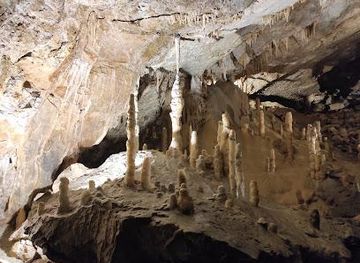
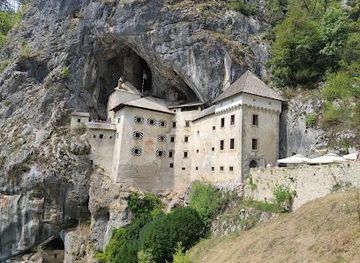
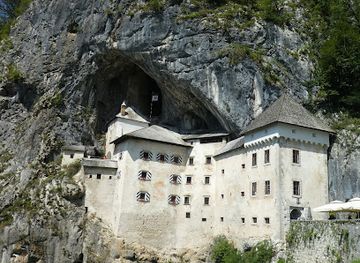
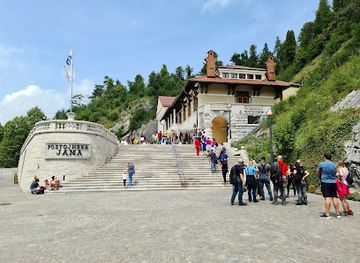
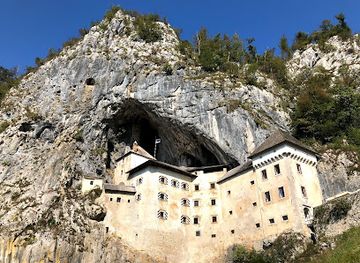
Postojna Cave is the town’s defining attraction, with guided routes through enormous chambers, flowstone formations and passages shaped by the Pivka River; the cave railway forms part of the established visitor experience. The surrounding Postojna Cave Park includes exhibition and interpretation facilities that explain the geology and biology of the karst, including the olm. Predjama Castle, set in a cave mouth in the nearby village of Predjama, adds a compelling journey into medieval history and cliffside architecture. For a more natural excursion, Planina Cave combines underground passages with the meeting of the Pivka and Rak rivers, while Rakov Škocjan presents a wooded karst valley marked by collapsed limestone arches. Within the town, museums and smaller cultural sites provide context for local history, tourism and the region’s long relationship with subterranean landscapes.
-
Tourist attraction
Postojna Cave
Explore the magical underground world of Postojna Cave, Slovenia's spectacular natural wonder with stunning formations and rich history.
16 min walk · 1.3 km from city centre
-
Castle
Predjama Castle
Experience the enchanting Predjama Castle, a stunning medieval fortress nestled in a cliff, blending history with breathtaking views in Slovenia.
25 min drive · 8.3 km from city centre
-
Tourist attraction
Mestni Park
Explore the serene landscapes of Mestni Park, a tranquil getaway in Postojna, Slovenia, perfect for relaxation and leisure activities.
2 min walk · 0.2 km from city centre
-
Tourist attraction
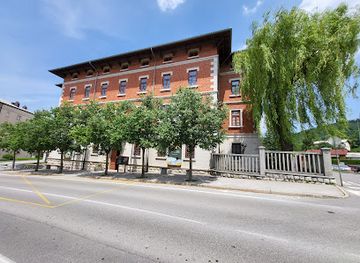
Notranjski muzej Postojna
Explore the captivating heritage of Slovenia at Notranjski muzej Postojna, a museum that brings history to life through engaging exhibits and rich cultural insights.
5 min walk · 0.4 km from city centre
Best landmarks in Postojna
Postojna Cave is both a natural landmark and the symbol of the town, its immense limestone galleries representing the geological processes that define the Inner Carniola karst. Predjama Castle, built dramatically into a high rock face and cave entrance near Predjama, is the area’s most distinctive historic structure; its defensive position and unusual relationship with the cliff are central to its architectural identity. In Postojna itself, St Stephen’s Church provides a visible reference point in the town’s built landscape, while the railway station recalls the nineteenth-century transformation that connected the karst with Vienna and Trieste. The network of cave entrances, sinkholes and disappearing rivers around the town is also significant, because the landscape itself explains Postojna’s development as a centre of scientific exploration and tourism.
-
Nature preserve
Postojna Cave
Discover the breathtaking beauty of Postojna Cave, a natural marvel in Slovenia filled with stunning formations and rich biodiversity.
16 min walk · 1.3 km from city centre
-
Castle
Predjama Castle
Explore the enchanting Predjama Castle, a medieval fortress nestled in a cliff, showcasing Slovenia's rich history and stunning landscapes.
25 min drive · 8.3 km from city centre
-
Hotel
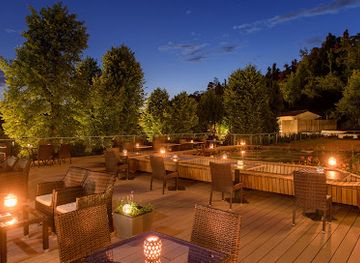
Hotel Jama
Experience the unique blend of comfort and adventure at Hotel Jama, your gateway to Slovenia's stunning natural wonders and cultural heritage.
13 min walk · 1.1 km from city centre
-
RV park
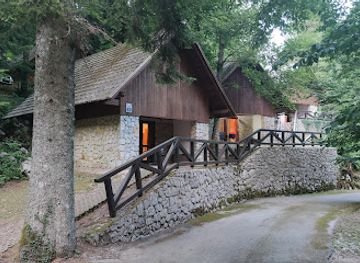
Pivka Jama
Discover the beauty of Slovenia at Pivka Jama RV Park, your gateway to nature and adventure near iconic attractions like Postojna Cave.
11 min drive · 3.5 km from city centre
Explore Postojna on the map
Plan your Postojna trip on one map. See where the top attractions, landmarks, restaurants, bars and hotels are, find what's near where you're staying, and book hotels and experiences in a few clicks.
Best hotels in Postojna
Best restaurants in Postojna
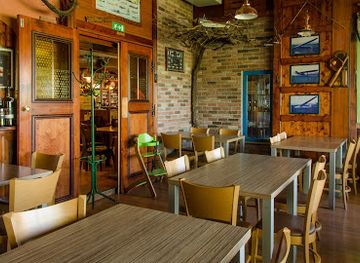
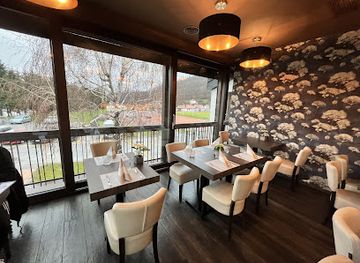
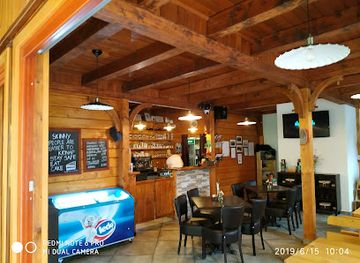
Postojna’s food scene reflects the meeting of Slovenian, Inner Carniolan and wider Central European traditions. Menus commonly draw on seasonal vegetables, mushrooms, potatoes, freshwater fish, pork and game from the surrounding wooded plateau, while regional staples such as jota, a hearty bean, sauerkraut and potato soup, belong to the broader cuisine of western Slovenia. Restaurants and gostilnas, traditional Slovenian inns, provide the most direct introduction to local cooking, while cafés and bakeries serve pastries, coffee and simple daytime fare around the town centre and visitor areas. The karst region is also associated with distinctive cured-meat and wine traditions, although the best-known vineyards lie farther towards the coast and Vipava Valley. Dining is generally more concentrated around the cave, centre and main transport routes than spread across a large urban neighbourhood scene.
-
Restaurant
AVIO PUB
Discover authentic Slovenian cuisine at AVIO PUB in Prestranek – where every meal tells a story.
10 min drive · 3.2 km from city centre
-
Restaurant
Restaurant and Pizzeria ČUK
Experience the best of Slovenian cuisine and pizza at Restaurant and Pizzeria ČUK in Postojna - where every meal is a celebration of flavor.
6 min walk · 0.5 km from city centre
-
Restaurant
Okrepčevalnica Prepih
Discover delightful dining at Okrepčevalnica Prepih - where affordable prices meet delicious flavors in Postojna.
18 min drive · 5.8 km from city centre
-
Pizza
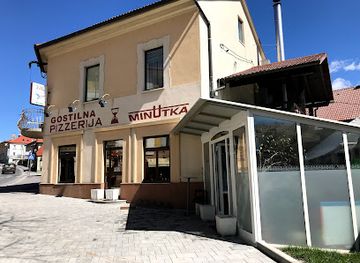
Pizzerija minutka Hamza Kukavica s.p.
Discover authentic Italian flavors at Pizzerija Minutka in Postojna – where every pizza tells a story.
3 min walk · 0.2 km from city centre
Best bars in Postojna
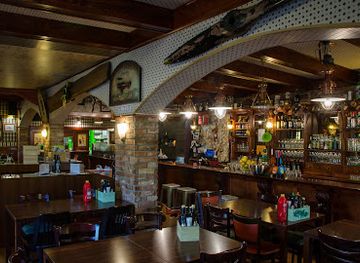
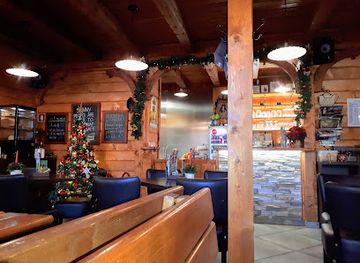
Postojna has a modest evening scene rather than a large club culture. After sightseeing, visitors generally find cafés, hotel bars and local pubs around the town centre, where evenings are suited to conversation, coffee, Slovenian wine or a relaxed drink rather than late-night crowds. Some restaurants remain useful for evening meals, while cultural programming and seasonal events can add music or performances at selected venues. The cave park itself is primarily a daytime attraction, and nightlife becomes quieter outside the main visitor periods. Those seeking extensive clubs, concert listings or a broad choice of late venues usually travel to Ljubljana or the coastal cities, whereas Postojna’s evening character is shaped by its small-town scale and its role as a base for exploring the karst.
-
Restaurant
AVIO PUB
Experience authentic Slovenian cuisine at AVIO PUB in Prestranek, where local flavors and a cozy atmosphere await every traveler.
10 min drive · 3.2 km from city centre
-
Bar
Okrepčevalnica Prepih
Discover the flavors of Slovenia at Okrepčevalnica Prepih, a delightful bar and restaurant in Postojna offering delicious burgers and local cuisine.
18 min drive · 5.8 km from city centre
-
Restaurant
Ob kaminu
Experience authentic Slovenian cuisine at Ob Kaminu in Postojna, where local flavors meet a cozy ambiance for an unforgettable dining experience.
6 min drive · 2.0 km from city centre
-
Bistro
Bistro Štorja
Experience the essence of Slovenian cuisine at Bistro Štorja in Postojna, where local flavors meet a cozy atmosphere.
1 min walk · 0.1 km from city centre


Best nightclubs in Postojna
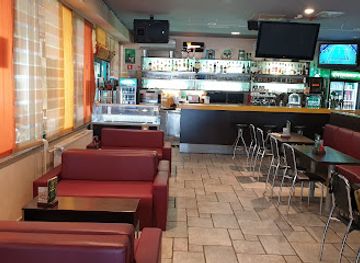
Postojna has a modest evening scene rather than a large club culture. After sightseeing, visitors generally find cafés, hotel bars and local pubs around the town centre, where evenings are suited to conversation, coffee, Slovenian wine or a relaxed drink rather than late-night crowds. Some restaurants remain useful for evening meals, while cultural programming and seasonal events can add music or performances at selected venues. The cave park itself is primarily a daytime attraction, and nightlife becomes quieter outside the main visitor periods. Those seeking extensive clubs, concert listings or a broad choice of late venues usually travel to Ljubljana or the coastal cities, whereas Postojna’s evening character is shaped by its small-town scale and its role as a base for exploring the karst.
-
Bar
Bale Bar
Discover the vibrant nightlife at Bale Bar in Postojna, Slovenia, where great drinks and a friendly atmosphere await.
13 min walk · 1.1 km from city centre
-
Bar
Tandem bar
Discover the lively atmosphere of Tandem Bar in Postojna, where great drinks and unforgettable nights await you.
9 min walk · 0.7 km from city centre
-
Bar
Aleja Caffe
Discover the charm of Aleja Caffe, a cozy bar in Postojna offering a delightful selection of drinks and a welcoming atmosphere for tourists.
2 min walk · 0.2 km from city centre
-
Ice skating club
drsališče v Postojni
Drsališče v Postojni: A premier ice skating destination in Slovenia, perfect for family fun and unforgettable winter memories.
9 min drive · 2.9 km from city centre


Best shops in Postojna
Shopping in Postojna is compact and practical, with everyday shops, cafés, small retailers and visitor outlets concentrated around the town centre and the Postojna Cave area. Souvenirs tend to reflect the karst: geological specimens, cave-themed objects, illustrated books and locally produced foods are more characteristic than large-scale luxury retail. Slovenian honey, herbal products, preserves, spirits and regional wines can make useful edible purchases, while craft items may be found through local cultural or tourist outlets rather than a single traditional bazaar. The town is not a major fashion-shopping destination, and visitors looking for extensive department stores or designer districts will find a broader selection in Ljubljana. Markets and specialist retail activity can vary by season, so the most local purchases often come from small producers and regional food shops.
-
Store
Maaarket
Explore authentic Slovene crafts, delicacies, and more at Maaarket, the perfect shopping destination in Postojna for unique souvenirs.
5 min drive · 1.7 km from city centre
-
Shopping mall
Supernova Mercator Center
Explore the Supernova Mercator Center: A shopping haven in Postojna with diverse stores, delightful dining, and vibrant local culture.
12 min walk · 1.0 km from city centre
-
Grocery store
Poslovni sistem Mercator d.d.
Discover the lively Supernova Mercator in Postojna, Slovenia – a shopping and dining haven showcasing local charm and international flair.
4 min walk · 0.3 km from city centre
-
Hunting and fishing store
Trgovina AVANTURA - Avantura Trade d.o.o. Postojna
Explore Slovenia's wilderness with quality gear from Trgovina AVANTURA, your go-to hunting, fishing, and outdoor equipment store in Postojna.
7 min walk · 0.6 km from city centre
Get your free copy of our complete guide to Postojna, delivered straight to you.
Everything on this page, from attractions and restaurants to essentials and local phrases, in one PDF you can read offline, print or share.
Already have an account? Sign in
Your Postojna guide is ready.
We'll send it to · Not you? Sign out

Getting your guide ready…
We are putting together a fresh copy of the Postojna guide. This can take up to a minute.
This can take a few moments. If your browser asks, choose Allow so the download can start. You'll find the guide in your Downloads folder.
Nothing happened? Download it again
Sorry, the guide is taking longer than usual. Please try again in a minute, or get it by email instead.
Postojna essentials
Currency and Payment
Safety
Emergency Situations
Do's and Don'ts
Local Tips
From Eve
Local phrases worth knowing
You don't need to get them perfect. A few words go a long way, and locals appreciate the effort.
Basics
| English | Local | Say it |
|---|---|---|
| Hello | Zdravo | [Zdrah-voh] |
| Goodbye | Nasvidenje | [Nah-svee-dehn-yeh] |
| Yes | Ja | [Yah] |
| No | Ne | [Neh] |
| Please/You're welcome | Prosim | [Proh-seem] |
| Thank you | Hvala | [Hvah-lah] |
| Excuse me/Sorry | Oprostite | [Oh-proh-stee-teh] |
| How are you? | Kako ste? | [Kah-koh steh?] |
| Fine. And you? | Dobro. Vi? | [Doh-broh. Vee?] |
| Do you speak English? | Govorite angleško? | [Goh-voh-ree-teh ahn-gleh-shkoh?] |
| I don't understand | Ne razumem | [Neh rah-zoo-mehm] |
Eating & Drinking
| English | Local | Say it |
|---|---|---|
| I'd like to see the menu, please | Rad bi videl jedilnik, prosim | [Raad bee vee-dehl yeh-deel-neek, proh-seem] |
| I don't eat meat | Ne jem mesa | [Neh yehm meh-sah] |
| Cheers! | Na zdravje! | [Nah zdrahv-yeh!] |
| I would like to pay, please | Rad bi plačal, prosim | [Raad bee plah-chahl, proh-seem] |
Emergencies
| English | Local | Say it |
|---|---|---|
| Help! | Pomoč! | [Poh-moh-ch!] |
| Go away! | Pojdi stran! | [Poy-dee strahn!] |
| Call the Police! | Pokličite policijo! | [Poh-klee-chee-teh poh-lee-tsee-yoh!] |
| Call a doctor! | Pokličite zdravnika! | [Poh-klee-chee-teh zdrahv-nee-kah!] |
| I'm lost | Izgubil sem se | [Eez-goo-beel sehm seh] |
| I'm ill | Bolna sem | [Bohl-nah sehm] |
Shopping
| English | Local | Say it |
|---|---|---|
| I'd like to buy... | Rad bi kupil... | [Raad bee koo-peel] |
| I'm just looking | Samo gledam | [Sah-moh gleh-dahm] |
| How much is it? | Koliko stane? | [Koh-lee-koh stah-neh?] |
| That's too expensive | To je predrago | [Toh yeh preh-drah-goh] |
| Can you lower the price? | Lahko znižate ceno? | [Lah-koh znee-zah-teh cheh-noh?] |
Time & Numbers
| English | Local | Say it |
|---|---|---|
| What time is it? | Koliko je ura? | [Koh-lee-koh yeh oo-rah?] |
| It's one o'clock | Je ena ura | [Yeh eh-nah oo-rah] |
| Half past (10) | Pol desetih | [Pohl deh-seh-teeh] |
| Morning | Jutro | [Yoo-troh] |
| Afternoon | Popoldne | [Poh-pohl-deh-neh] |
| Evening | Večer | [Veh-chehr] |
| Yesterday | Včeraj | [Veh-cheh-rah-ee] |
| Today | Danes | [Dah-nehs] |
| Tomorrow | Jutri | [Yoo-tree] |
| 1 | Ena | [Eh-nah] |
| 2 | Dva | [Dvah] |
| 3 | Tri | [Tree] |
| 4 | Štiri | [Shtee-ree] |
| 5 | Pet | [Peh-t] |
| 6 | Šest | [Shehst] |
| 7 | Sedem | [Seh-dehm] |
| 8 | Osem | [Oh-sehm] |
| 9 | Devet | [Deh-veht] |
| 10 | Deset | [Deh-seht] |
Transport & Directions
| English | Local | Say it |
|---|---|---|
| Where's a/the...? | Kje je... | [Kyeh yeh...] |
| What's the address? | Kakšen je naslov? | [Kahk-shen yeh nahs-lohv?] |
| Can you show me (on the map)? | Mi lahko pokažete (na zemljevidu)? | [Mee lah-koh poh-kah-zheh-teh (nah zehm-lyeh-vee-doo)?] |
| When's the next (bus)? | Kdaj je naslednji (avtobus)? | [Kdyay yeh nah-slehd-nyee (ow-toh-boos)?] |
| A ticket (to ....) | Ena vozovnica (do ....) | [Eh-nah voh-zohv-nee-tsah (doh ....)] |
History of Postojna
Prehistoric Karst Occupation
The limestone caves and sheltered valleys around Postojna have attracted human activity since prehistoric times. Cave sites in the wider karst region preserve evidence of early occupation, while the landscape’s springs, forests and natural shelters helped shape settlement long before the modern town emerged. The most famous underground discoveries are geological as well as archaeological: the caves record the long action of water dissolving limestone, creating passages that later became routes for exploration and scientific study. This combination of human use and unusual geology established the local identity that still distinguishes Postojna from ordinary lowland settlements.
Roman Roads and Medieval Settlement
The area occupied an important position between the interior of the Roman world and the northern Adriatic, with routes crossing the karst towards Tergeste, modern Trieste. After the Roman period, political authority in the region changed repeatedly, but the transport value of the plateau endured. A medieval settlement developed around the local road network and agricultural hinterland, while nearby castles and ecclesiastical estates reflected the feudal organisation of Inner Carniola. Predjama Castle, built into a dramatic cave mouth several kilometres from Postojna, remains the most conspicuous medieval monument associated with the town’s surroundings.
The Habsburg Era and Cave Tourism
Postojna became part of the Habsburg lands and later the Austrian Empire, conditions that connected it more closely with administrative and cultural centres north of the Adriatic. Interest in the cave grew during the early modern period, and organised exploration gradually transformed it from a local curiosity into a regional attraction. The arrival of the railway from Vienna to Trieste in 1857 was decisive: visitors could reach the karst more easily, and Postojna became established on the itinerary of travellers interested in natural wonders. Tourism, interpretation and scientific investigation developed together around the cave.
War, Occupation and Borderland Change
The twentieth century brought major political changes to Postojna. After the First World War, the town became part of the Kingdom of Italy, and during the Second World War it experienced Italian occupation followed by German control. The surrounding forests and karst provided difficult terrain for wartime movement and resistance activity. After 1945, Postojna became part of socialist Yugoslavia and continued to develop its cave facilities and visitor infrastructure. These changing borders are characteristic of the wider former Austrian Littoral and Inner Carniola, where language, administration and political allegiance shifted repeatedly during the century.
Postojna in Independent Slovenia
Slovenia declared independence in 1991, and Postojna became part of the new republic’s growing international tourism network. The cave remained the town’s central economic and cultural asset, but modern interpretation increasingly presents it within the broader karst system rather than as an isolated spectacle. Scientific research, environmental protection and tourism now meet in the management of the cave and its fauna, including the olm. Postojna’s contemporary identity therefore rests on several layers: a historic route through Inner Carniola, a town shaped by twentieth-century borderland history and a major gateway to the underground landscapes of Slovenia.
Travel experiences inspired by this city
-
 8 Day Trip
Friends, Karst, and Canyons: 8 Days at Slovenia’s Škocjan Caves
Eco-minded 8-day friends’ adventure to Slovenia’s UNESCO-listed Škocjan Caves, with karst hikes, river canyons, local cuisine, and a comfy base in Divača.
8 Day Trip
Friends, Karst, and Canyons: 8 Days at Slovenia’s Škocjan Caves
Eco-minded 8-day friends’ adventure to Slovenia’s UNESCO-listed Škocjan Caves, with karst hikes, river canyons, local cuisine, and a comfy base in Divača.
 20 Jul 2026
By Esther Mwangi -
 11 Day Trip
Sežana with Family: 11 Days between the Karst and the Coast
Family-friendly Sežana, Slovenia: discover the Karst, Škocjan Caves, Lipica horses, and easy Trieste day trips by train for a sustainable summer escape.
11 Day Trip
Sežana with Family: 11 Days between the Karst and the Coast
Family-friendly Sežana, Slovenia: discover the Karst, Škocjan Caves, Lipica horses, and easy Trieste day trips by train for a sustainable summer escape.
 15 Jul 2026
By Abena Mensah -
 9 Day Trip
Family Summer Escape to Škofja Loka, Slovenia
A family-friendly journey to medieval Škofja Loka with hikes, castle views, river picnics, and day trips to Ljubljana and Bled from a cozy B&B.
9 Day Trip
Family Summer Escape to Škofja Loka, Slovenia
A family-friendly journey to medieval Škofja Loka with hikes, castle views, river picnics, and day trips to Ljubljana and Bled from a cozy B&B.
 15 Jul 2026
By Juan Diaz -
 11 Day Trip
Exploring the Majestic Škocjan Caves with Friends
Discover the awe-inspiring Škocjan Caves in Slovenia with friends, exploring breathtaking karst formations and the rich local culture.
11 Day Trip
Exploring the Majestic Škocjan Caves with Friends
Discover the awe-inspiring Škocjan Caves in Slovenia with friends, exploring breathtaking karst formations and the rich local culture.
 5 May 2026
By Jelena Popović -
 6 Day Trip
Solo Adventure to the Majestic Škocjan Caves
Discover the awe-inspiring Škocjan Caves on a solo journey, exploring Slovenia's natural wonders and capturing breathtaking memories.
6 Day Trip
Solo Adventure to the Majestic Škocjan Caves
Discover the awe-inspiring Škocjan Caves on a solo journey, exploring Slovenia's natural wonders and capturing breathtaking memories.
 15 Nov 2025
By Marko Novak -
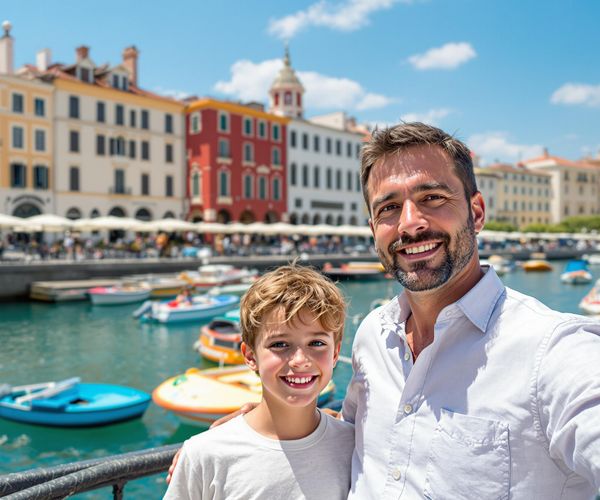 8 Day Trip
Family Adventure in Trieste: Exploring History and Culture
Discover Trieste's rich history and culture with your family, from scenic train rides to exploring architectural marvels and savoring local cuisine.
8 Day Trip
Family Adventure in Trieste: Exploring History and Culture
Discover Trieste's rich history and culture with your family, from scenic train rides to exploring architectural marvels and savoring local cuisine.
 5 Jun 2025
By Michael Garcia
Swipe for more travel diaries
Postojna in Photos
Browse through our photo collection highlighting the charm and character of the destination.
Cities near Postojna
The closest cities to Postojna, if you have time for more than one stop.
-

-

-

-
-


Swipe for more cities
Explore more

Explore more of Slovenia
Discover Slovenia's stunning landscapes, rich cultural heritage, and delightful cuisine. A hidden gem in Europe, perfect for outdoor adventures, history, and culinary exploration.
Explore Slovenia