Arab Walls, Madrid Travel Guide
9th-century Moorish ramparts in Madrid's core expose the Islamic fortress that birthed a European capital, blending ancient stone defenses with the pulse of modern Centro life.
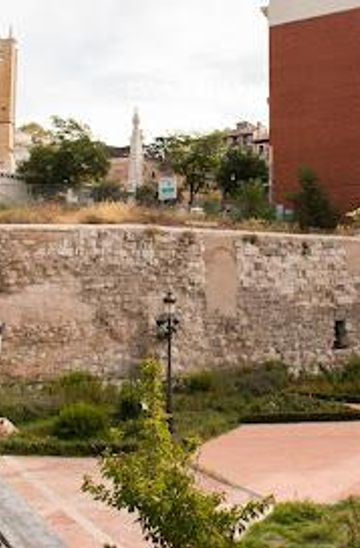
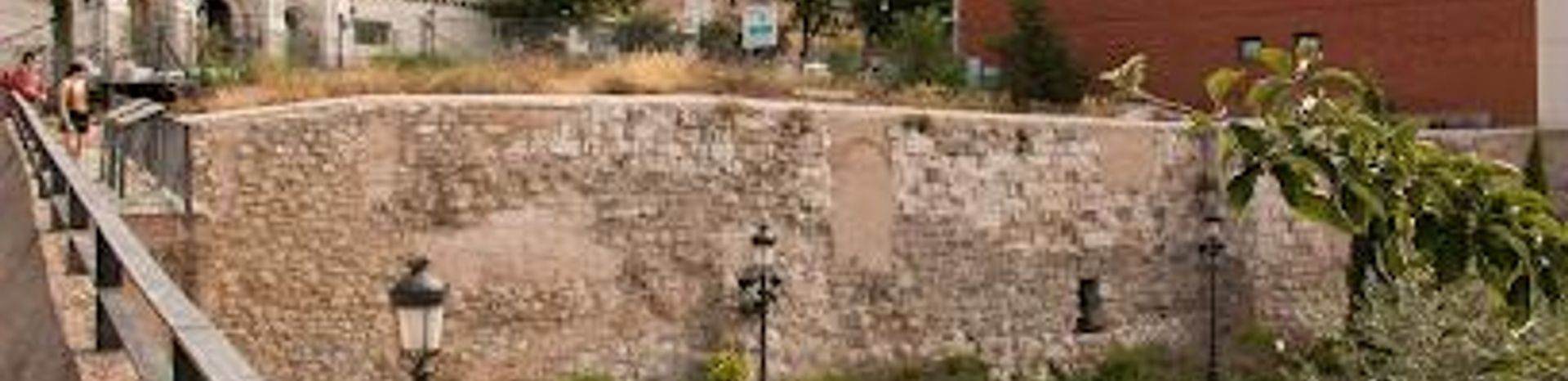
Amid Madrid's bustling Centro district, the Arab Walls stand as silent sentinels of the city's Islamic past. These 9th-century fortifications, remnants of the Moorish era, reveal layers of history through well-preserved stonework and towers. Nestled near vibrant streets, they offer a serene contrast to urban energy, inviting reflection on Madrid's multicultural roots. Explore the excavated sections and imagine the caliphs who once ruled here. A compact site perfect for history enthusiasts seeking authentic glimpses of medieval Spain without the crowds of grander landmarks.
A brief summary to Arab Walls
- Madrid, Centro, Madrid, 28005, ES
- Click to display
- Free
-
 Outdoor
- Mobile reception: 5 out of 5
- Friday 10 am-9 pm
- Saturday 10 am-9 pm
- Sunday 10 am-9 pm

Know before you go
Hi, I'm Eve. Here are a few practical things to know before exploring Arab Walls.
- Combine your visit with nearby San Pedro Church for a fuller picture of medieval layering, as the walls integrate directly into its base.
- Visit early morning or late afternoon to avoid peak heat and enjoy softer light that accentuates the stone textures.
- Look for subtle Arabic masons' marks on blocks, remnants of the original builders from Córdoba's emirate.
- Approach from Cuesta de la Vega for the most dramatic reveal of the walls emerging from the hillside.
- Wear sturdy shoes; the uneven terrain around excavations requires careful footing on gravel paths.
Do you manage this location?
Take control to get all the benefits, like improved information, better appearance, and stronger visibility across AI-powered discovery. Learn more
Activate your presenceOther nearby places you may find interesting
The closest places of the same kind, if this one is not quite what you had in mind.
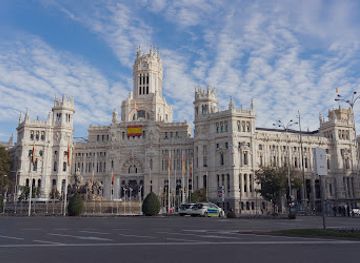
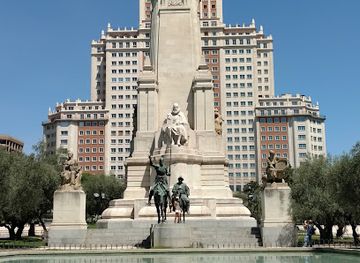
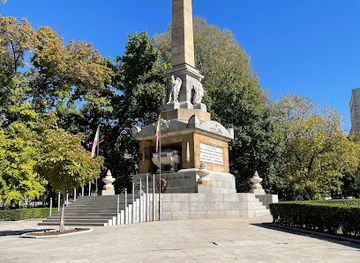
Explore Arab Walls on the Map
A handpicked selection of must-see spots near Arab Walls, mapped for you.
Getting There
-
Metro
Take Metro Line 5 to Ópera station (10-15 min from Sol), then 5-min walk; €1.50-2 single ticket.
-
Walking
From Puerta del Sol, 20-min downhill walk via Calle Bailén; free, scenic through historic Centro.
-
Bus
Bus 25 or 39 from Plaza Mayor (5-10 min), €1.50; frequent service, stops near Cuesta de la Vega.
-
Taxi
10-min ride from Gran Vía; €6-8, convenient for groups or with luggage.
For the on-the-go comforts that matter to you
-
 Restrooms
-
 Seating Areas
-
 Information Boards
-
 Trash Bins
Discover more about Arab Walls
Historical Foundations
The Arab Walls trace their origins to the 9th century, constructed during the period when Madrid was known as Mayrit under Muslim rule. Built as defensive fortifications around 860 AD by order of Emir Muhammad I of Córdoba, these walls enclosed a strategic alcázar on a hill overlooking the Manzanares River. The structure featured a double ring of ramparts, towers, and gates, protecting a burgeoning settlement that blended Berber, Arab, and local Visigothic influences. Excavations have uncovered original limestone and granite blocks, some bearing Arabic inscriptions, testifying to advanced engineering techniques like angled bastions for better defense.Architectural Legacy
What remains today are fragments of the original 2.5-kilometer perimeter, including key sections near Cuesta de la Vega and the Church of San Pedro. The walls employed a sophisticated construction method with a rubble core faced in ashlar masonry, topped by crenellated battlements. Towers like the Arco de la Mala de las Monjas provided vantage points for archers. Over centuries, parts were incorporated into later buildings, creating a palimpsest of architectural styles from Islamic to Christian eras. The site's layout reveals how Madrid evolved from a fortress town to a royal capital.Rediscovery and Preservation
Buried under medieval and Renaissance expansions, the walls were largely forgotten until archaeological digs in the 20th century, particularly after 1950s excavations by the Madrid City Council. Systematic restoration in the 1980s and ongoing conservation efforts have made portions publicly accessible, with interpretive panels explaining their significance. These efforts highlight the walls' role in Madrid's UNESCO-recognized cultural heritage, emphasizing sustainable preservation amid urban development. The site now serves as an open-air museum, blending archaeology with the living cityscape.Atmosphere and Visitor Experience
Visiting evokes a palpable sense of time travel. The quiet enclave, shaded by mature trees, contrasts sharply with the nearby thrum of Plaza Mayor and La Latina. Stone walls rise imposingly, their weathered surfaces etched by a millennium of weather and conflict. One can trace the original perimeter path, peering into excavated chambers that once housed guards. The air carries faint echoes of history—perhaps the call to prayer or clash of swords—while modern Madrid hums just beyond. It's an intimate encounter, rewarding those who linger to absorb the layered narratives.Cultural Significance
As one of Europe's best-preserved Islamic fortifications north of the Strait of Gibraltar, the Arab Walls underscore Madrid's position on the frontier of Al-Andalus. They symbolize the city's hybrid identity, where Muslim innovations in urban planning influenced subsequent Habsburg grandeur. Festivals and guided walks occasionally animate the site, connecting past to present. For travelers, it offers profound insight into Spain's Reconquista dynamics, where coexistence and conquest shaped the capital's soul.












Your all‑in‑one travel companion app
Explore expert travel guides, compare and book tours, experiences, hotels, and more—all from the palm of your hand. Download now for seamless trip planning wherever your wanderlust takes you.


Explore More of Madrid
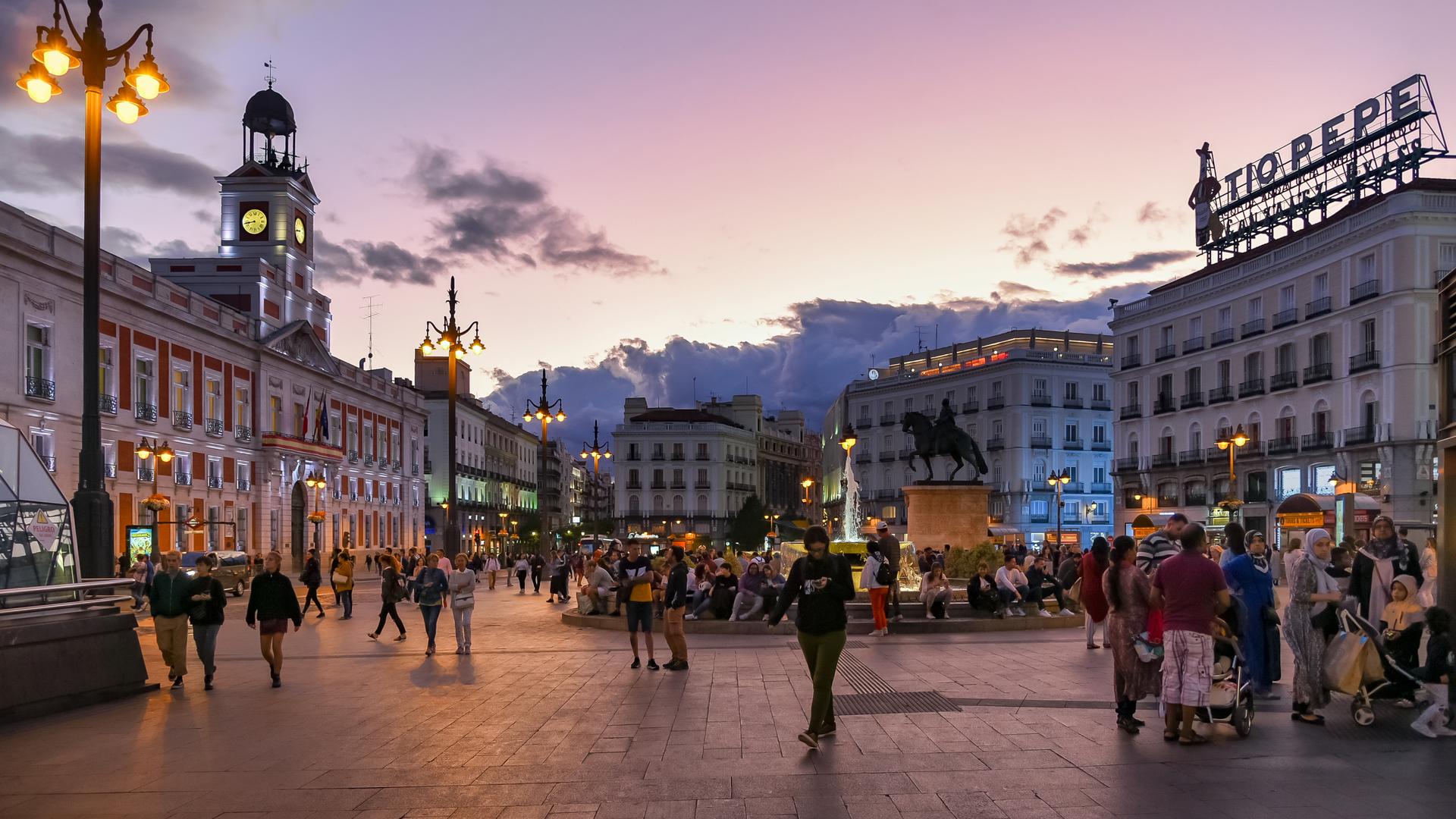
Looking beyond Arab Walls? Discover Madrid for broader travel guides, local hot-spots, and regional highlights.
Explore Madrid
Madrid's central historical junction at Calle de Madrid, where Centro's street history meets urban vitality in a compact landmark encounter.
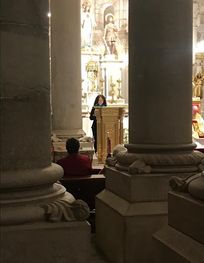
Over 400 pillars form a stone forest in Madrid's subterranean neo-Byzantine crypt, anchoring the Almudena Cathedral with vaulted grandeur and sacred history beneath the Royal Palace.