
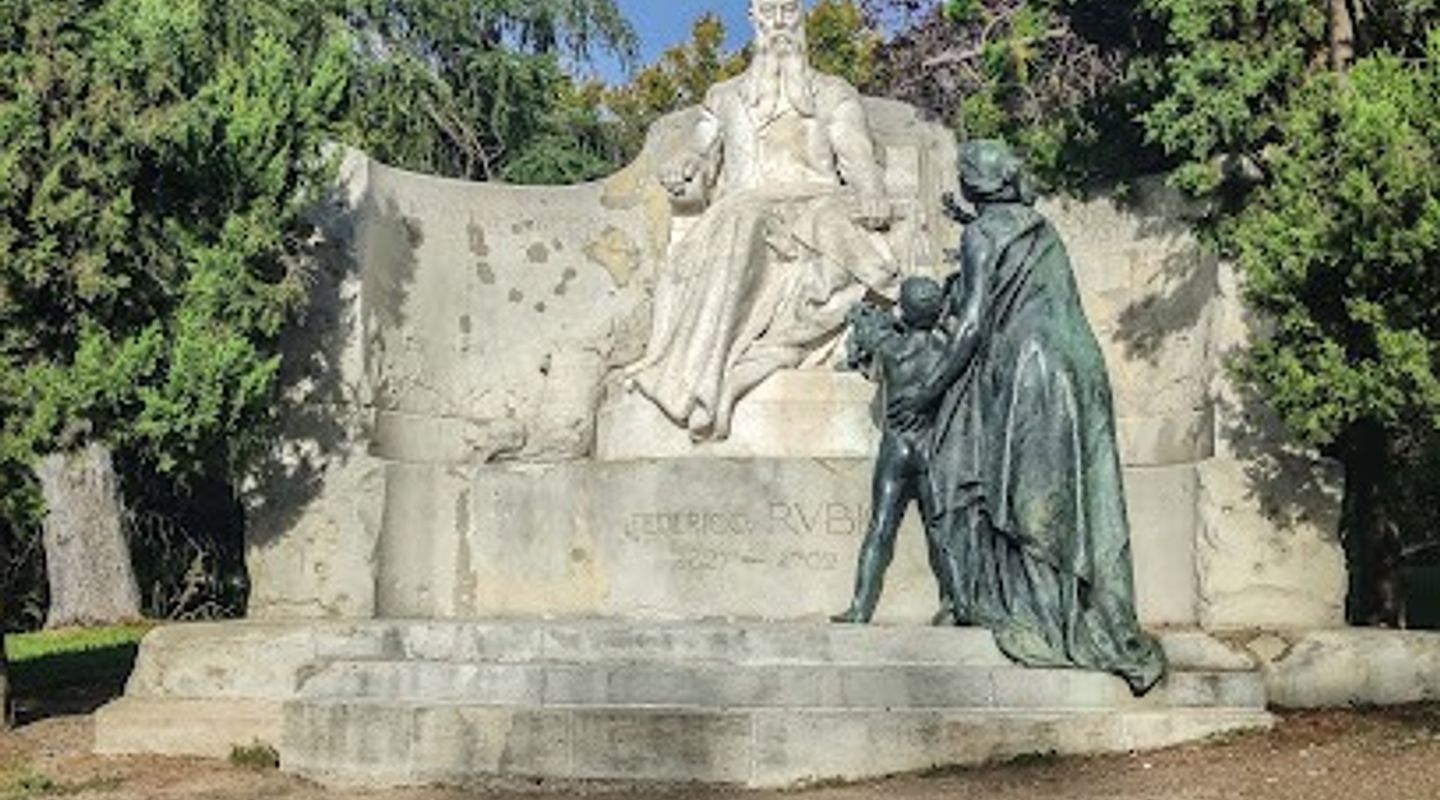
Monument to Federico Rubio, Madrid Travel Guide
Sculpted tribute to Madrid's gynecology pioneer Federico Rubio y Galí on Avenida de Séneca, blending medical history with Moncloa's green urban calm.
In Madrid's Moncloa-Aravaca district, this understated sculpture honors Federico Rubio y Galí, the pioneering surgeon whose innovations in gynecology transformed medical practice in Spain. A quiet tribute amid urban greenery, it invites reflection on medical history and human resilience.
A brief summary to Monument to Federico Rubio
- Av. de Séneca, 118, Madrid, Moncloa - Aravaca, Madrid, 28008, ES
- Click to display
- Free
-
 Outdoor
- Mobile reception: 5 out of 5
- Monday 12 am-12 pm
- Tuesday 12 am-12 pm
- Wednesday 12 am-12 pm
- Thursday 12 am-12 pm
- Friday 12 am-12 pm
- Saturday 12 am-12 pm
- Sunday 12 am-12 pm

Know before you go
Hi, I'm Eve. Here are a few practical things to know before exploring Monument to Federico Rubio.
- Pair your visit with a walk through nearby university grounds for context on Madrid's academic heritage tied to Rubio's career.
- Visit early morning or late afternoon to avoid peak commuter traffic and enjoy softer light for photos.
- Read up on Rubio's surgical innovations beforehand to fully grasp the monument's symbolic details.
Do you manage this location?
Take control to get all the benefits, like improved information, better appearance, and stronger visibility across AI-powered discovery. Learn more about listing your business on Evendo
Activate your presenceOther nearby places you may find interesting
The closest places of the same kind, if this one is not quite what you had in mind.
Explore Monument to Federico Rubio on the Map
A handpicked selection of must-see spots near Monument to Federico Rubio, mapped for you.
Getting There
-
Metro
Take Metro Line 3 or 6 to Moncloa station (15-20 min from Sol), then 10-min walk northwest; €1.50-2 fare.
-
Bus
EMT buses 46 or 65 from center to Moncloa area (20-30 min), short walk along avenue; €1.50 single ticket.
-
Walking
From Moncloa station or nearby university, 15-20 min stroll via green paths; free, pleasant in good weather.
-
Taxi
15-25 min ride from Puerta del Sol; €10-15 depending on traffic.
For the on-the-go comforts that matter to you
-
 Restrooms
-
 Seating Areas
-
 Trash Bins
Discover more about Monument to Federico Rubio
Historical Significance
The Monument to Federico Rubio y Galí stands as a dignified homage to one of Spain's most influential medical figures. Federico Rubio, born in 1827, rose from humble beginnings to become a cornerstone of modern gynecology. He founded Madrid's first chair of gynecology at the Universidad Central and established the Instituto Rubio, a pioneering clinic that advanced women's health care. The monument, erected in recognition of his lifelong dedication, captures the essence of 19th-century medical progress in a city that was rapidly modernizing.Sculptural Design and Setting
Crafted as a sculpture in a public space along Avenida de Séneca, the monument features a realistic portrayal of Rubio in contemplative pose, surrounded by symbolic elements evoking healing and science. Its placement in the leafy Moncloa-Aravaca neighborhood integrates it seamlessly into the urban landscape, where broad avenues meet green expanses. The work reflects the neoclassical influences prevalent in Madrid's public monuments, emphasizing restraint and reverence over grandeur.Medical Legacy
Rubio's contributions extended beyond surgery; he advocated for public health reforms, including better hospital infrastructure and education for midwives. His techniques in ovarian surgery and hysterectomy were groundbreaking, reducing mortality rates in an era when such procedures were highly risky. The monument serves as a physical reminder of how individual innovation propelled Spain's medical field forward, influencing generations of practitioners.Neighborhood Context
Located in Moncloa-Aravaca, a district known for its academic vibrancy near Complutense University, the site benefits from a blend of residential calm and intellectual energy. Visitors encounter the monument during strolls through areas dotted with educational institutions and parks, offering a serene pause amid daily life. Its accessibility enhances its role as an educational touchstone for those exploring Madrid's lesser-known historical markers.Cultural Resonance
Today, the monument prompts contemplation on the intersection of art, medicine, and public memory. It underscores Madrid's tradition of commemorating contributors to society through sculpture, joining a lineage of tributes that dot the city's boulevards. For travelers interested in untold stories, it reveals layers of history often overshadowed by grander icons, fostering a deeper appreciation for the human stories behind progress.Visitor Experience
Approaching the monument, one senses its understated power—a bridge between past achievements and present reflection. The surrounding environment, with its open vistas and pedestrian-friendly paths, encourages lingering, photography, and quiet admiration. It embodies Madrid's ability to weave personal legacies into the fabric of everyday urban life.More to explore near Monument to Federico Rubio













Your all‑in‑one travel companion app
Explore expert travel guides, compare and book tours, experiences, hotels, and more—all from the palm of your hand. Download now for seamless trip planning wherever your wanderlust takes you.


Explore More of Madrid
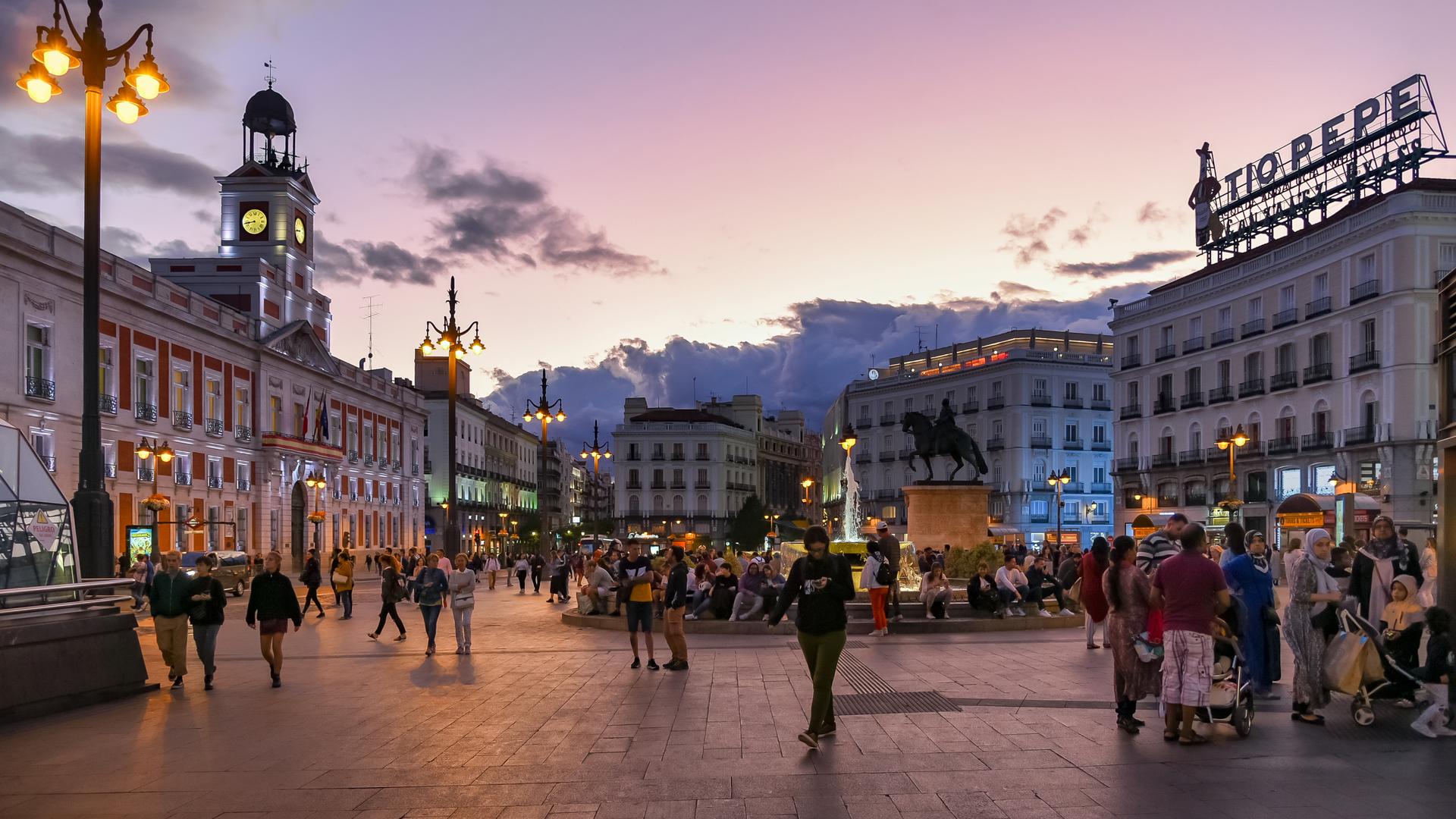
Looking beyond Monument to Federico Rubio? Discover Madrid for broader travel guides, local hot-spots, and regional highlights.
Explore Madrid
Discover the Monumento al Pueblo del Dos de Mayo de 1808, a powerful symbol of Spanish resilience and historical significance in the heart of Madrid.
Experience the breathtaking views of Madrid from Moncloa's Lighthouse, a must-see landmark that offers stunning panoramas of Spain’s vibrant capital.
