

National Historical Archive, Madrid Travel Guide
Free Guide: Where Spain's documentary legacy meets rigorous historical scholarship and preservation.


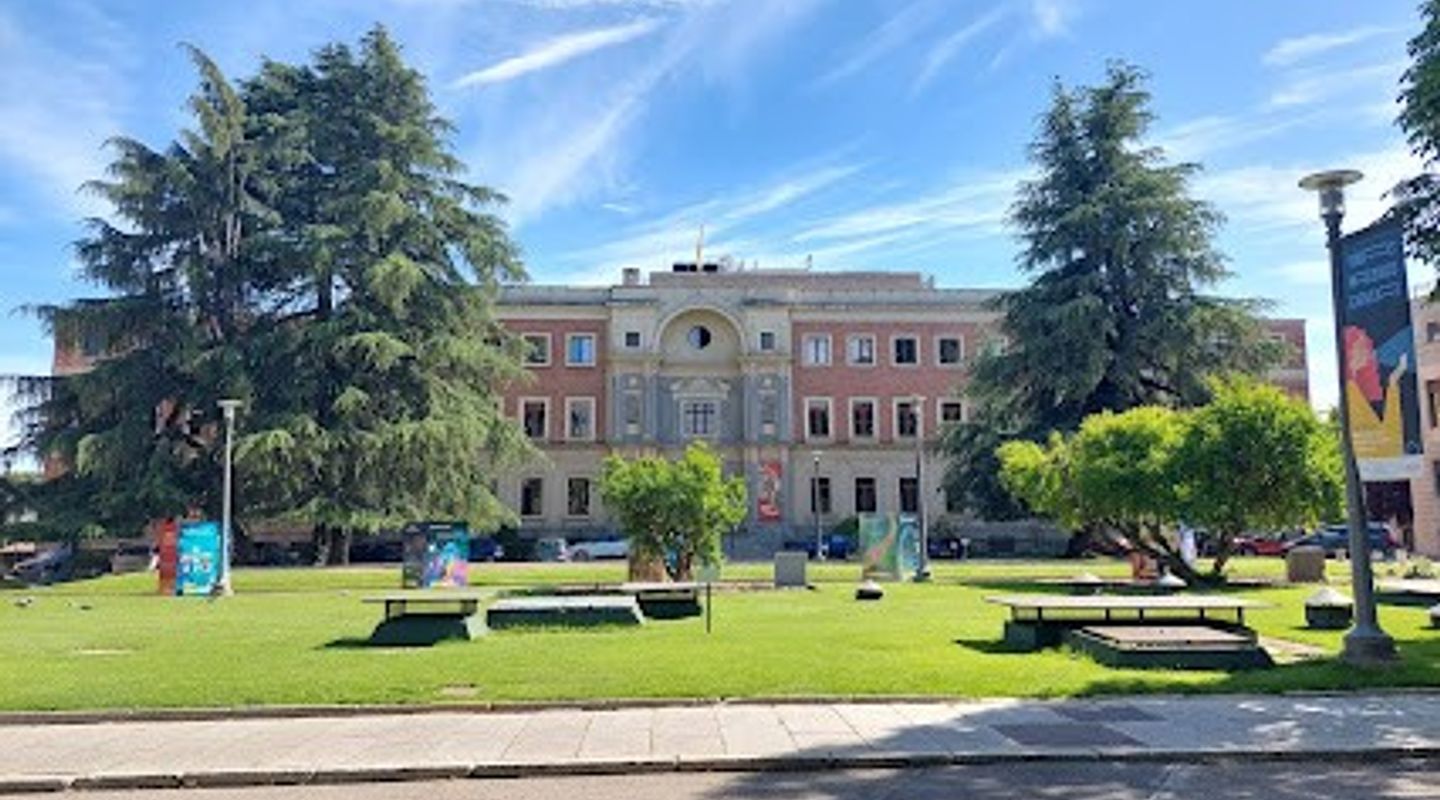
A brief summary of National Historical Archive
Where Spain's documentary legacy meets rigorous historical scholarship and preservation.
Step into Spain's most significant archive, where centuries of national history are meticulously preserved and catalogued. Located in Madrid's prestigious Chamartín district, the National Historical Archive houses millions of documents spanning from medieval times to the present, offering researchers and history enthusiasts unparalleled access to primary sources that shaped the nation's past.
On-site amenities
 Restrooms
 Drinking water
 Seating areas
 Information boards
 Visitor centre
Opening hours
- Mon9 am–7 pm
- Tue9 am–7 pm
- Wed9 am–7 pm
- Thu9 am–7 pm
- Fri9 am–3 pm
- SatClosed
- SunClosed
Opening hours as listed on the venue’s Google Business Profile. Hours can change for services and special events, so check with the venue before you go.
- Address
- C. de Serrano, 115, Chamartín, 28006 Madrid
- Phone
- Website
Getting there
Metro
Bus
Taxi or Ride-Share
Walking
Discover more about National Historical Archive
A Fortress of Spanish Heritage
The National Historical Archive (Archivo Histórico Nacional) stands as Spain's premier institution dedicated to preserving the nation's documentary heritage. Established to safeguard crucial historical records, this archive has evolved into an indispensable resource for understanding Spanish history, culture, and governance across multiple centuries. Located on Calle Serrano in Madrid's distinguished Chamartín neighbourhood, the archive occupies a position of institutional importance within Spain's cultural infrastructure.
Vast Collections and Research Resources
The archive's collections encompass millions of documents, manuscripts, and records spanning from the medieval period through contemporary times. These materials include royal decrees, administrative documents, legal records, personal correspondence, and official state papers that collectively chronicle Spain's political, social, and cultural evolution. The systematic organization and professional curation of these materials make the archive an essential destination for academic researchers, historians, genealogists, and anyone seeking to understand Spanish history through primary sources. The archive's commitment to preservation ensures that fragile and irreplaceable documents remain accessible to future generations.
Research and Access
The National Historical Archive operates as a working research institution, welcoming scholars and the general public to consult its holdings. The facility provides dedicated reading rooms equipped for serious research, with trained staff available to assist visitors in locating specific documents and navigating the extensive cataloguing systems. Whether conducting doctoral research, tracing family genealogy, or exploring specific historical periods, visitors benefit from professional guidance and access to one of Europe's most comprehensive historical collections. The archive's digital initiatives have also begun making selected materials available online, extending access beyond physical visits.
Institutional Significance
As part of Spain's Ministry of Culture and Sports, the National Historical Archive represents the nation's commitment to preserving and promoting historical knowledge. The institution plays a crucial role in Spanish academic life, supporting university research programs, doctoral studies, and scholarly publications. Beyond its research function, the archive serves as a guardian of national memory, maintaining documents that provide evidence of Spain's legal traditions, governmental structures, and historical events that continue to influence contemporary society.
The Madrid Experience
Visiting the archive offers more than documentary access; it provides insight into how historical institutions operate and how nations preserve their collective memory. The professional atmosphere and scholarly environment create an immersive experience for those interested in historical research methodology. The location within Madrid's cultural quarter places it within proximity to other significant institutions, allowing visitors to structure comprehensive cultural visits exploring Spain's intellectual heritage.
Evendo Review Centre
 Google
Guest reviews
Best time to go
Quietest: Jun, Jul & Aug · from 4pm
Busy times are Evendo estimates for a typical year, to help you plan. Actual crowds vary with events, school holidays and the weather.
Explore National Historical Archive on the map
A handpicked selection of must-see spots near National Historical Archive, mapped for you.
Get your free copy of our complete guide to National Historical Archive, delivered straight to you.
Everything on this page, from opening hours and how to get there to Eve’s tips and the best time to go, in one PDF you can read offline, print or share.
Already have an account? Sign in
Your National Historical Archive guide is ready.
We'll send it to · Not you? Sign out

Getting your guide ready…
We are putting together a fresh copy of the National Historical Archive guide. This can take up to a minute.
This can take a few moments. If your browser asks, choose Allow so the download can start. You'll find the guide in your Downloads folder.
Nothing happened? Download it again
Sorry, the guide is taking longer than usual. Please try again in a minute, or get it by email instead.
Other nearby places you may find interesting
The closest places of the same kind, if this one is not quite what you had in mind.
-
-
-
-
-


Swipe for more places
More to explore near National Historical Archive
-
 Best experiences near National Historical Archive
-
 Best hotels near National Historical Archive
-
 Best landmarks near National Historical Archive
-
 Best attractions near National Historical Archive
-
 Best shops near National Historical Archive
-
 Best restaurants near National Historical Archive
-
 Best bars near National Historical Archive


Do you manage this location?
Take control to get all the benefits, like improved information, better appearance, and stronger visibility across AI-powered discovery.
Explore more

Explore more of Madrid
Discover Madrid: A city of art, culture, and culinary delights, where history and modern vibrancy meet in the heart of Spain.
Explore Madrid
Explore more of Spain
Discover Spain: A vibrant tapestry of culture, history, and breathtaking landscapes, where every city offers a unique adventure and unforgettable experiences.
Explore Spain
