Tío Pepe, Madrid Travel Guide
Free Guide: Madrid's rooftop sherry bottle sign tilts eternally over Puerta del Sol, a neon Art Deco survivor blending sherry heritage with the plaza's nonstop human tide since 1935.


A brief summary of Tío Pepe
Madrid's rooftop sherry bottle sign tilts eternally over Puerta del Sol, a neon Art Deco survivor blending sherry heritage with the plaza's nonstop human tide since 1935.
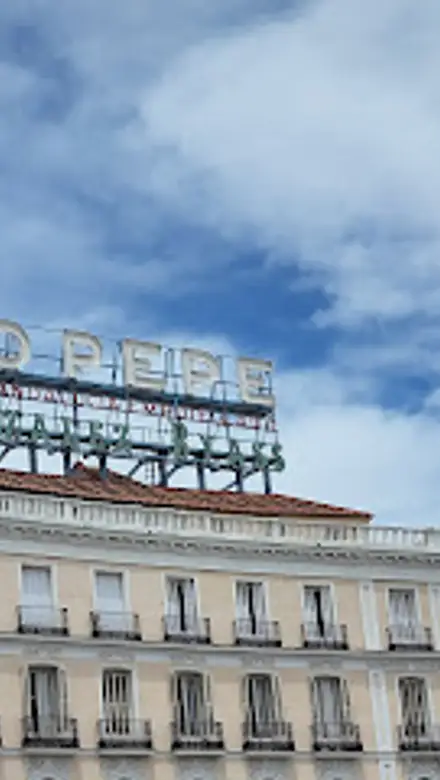
Perched high above Madrid's bustling Puerta del Sol, the Tío Pepe sign glows as a timeless emblem of Spanish sherry heritage. This neon-lit bottle, tilted jauntily with its white sombrero and guitar, has watched over the city's heart since 1935, blending Art Deco flair with commercial nostalgia in the midst of pedestrian frenzy and historic grandeur.
On-site amenities
 Restrooms
 Food options
 Drink options
 Seating areas
 Trash bins
 Information boards
Opening hours
- Every dayOpen 24 hours
Opening hours as listed on the venue’s Google Business Profile. Hours can change for services and special events, so check with the venue before you go.
- Address
- Prta del Sol, 11, Centro, 28013 Madrid
- Phone
- Website
Getting there
Walking
Metro
Bus
Discover more about Tío Pepe
Historical Origins and Enduring Presence
The Tío Pepe sign stands as a vivid marker of 20th-century Madrid, installed in 1935 by González Byass, the sherry producers who chose Puerta del Sol for its unmatched visibility. Originally an animated neon beacon, it flickered to life with the bottle pouring sherry endlessly, capturing the era's optimism before the Spanish Civil War dimmed its lights. Restored multiple times—most notably in 1986 with LED enhancements and again in 2011 after preservation battles—it returned triumphantly, its 5-meter height and 3-ton weight commanding the rooftop of the Edificio Madrid, directly facing the clock tower that chimes the New Year. This landmark embodies the fusion of commerce and culture, where a simple advertisement evolved into a protected cultural asset, shielded from modern urban redevelopment by heritage advocates who recognized its role in Madrid's collective memory.
Architectural and Visual Impact
Crafted in the Art Deco style, the sign's sleek bottle form, accented by gold lettering and the figure of Tío Pepe—a cheerful Andalusian man in traditional hat and cape—evokes mid-century advertising artistry. Its tilted pose suggests a casual toast to passersby, illuminated against the night sky with a warm glow that contrasts the cool stone facades of surrounding buildings. Positioned at the epicenter of Puerta del Sol, it frames views of the Bear and Strawberry Tree statue, the Kilometer Zero plaque, and the ceaseless flow of locals and tourists, turning an everyday plaza into a cinematic tableau. The sign's resilience through blackouts, renovations, and even a 2006 relocation threat underscores its status as more than signage—it's a sculptural sentinel defining Madrid's skyline silhouette.
Cultural Significance in Madrid's Pulse
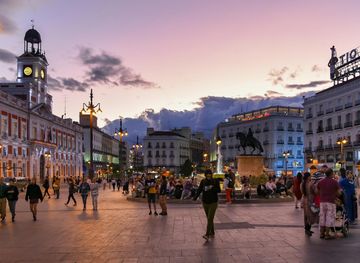
Puerta del Sol, Madrid's solar plexus, pulses with history from Roman origins to its role as the city's radial hub, and Tío Pepe amplifies this energy. It witnesses midnight grape-tossing on Nochevieja, political rallies, and daily commutes, its unchanging presence a counterpoint to the transient crowds. As a nod to Jerez de la Frontera's sherry tradition—where the brand's namesake character promotes fino and amontillado wines—the sign bridges Andalusian craftsmanship with Castilian vibrancy. Travelers encounter it amid street performers, churros vendors, and the buzz of Metro lines, making it a perfect vantage for absorbing Madrid's unfiltered rhythm, where commerce, tradition, and spectacle intertwine without pretense.
Atmosphere and Visitor Experience
Daylight reveals the sign's bold contours against blue skies, but dusk unleashes its magic as neon ignites, casting reflections on the plaza's granite. The vibe shifts from hurried daytime chaos—commuters dodging selfie sticks—to evening romance, with couples pausing beneath its gaze. Expect the sensory overload of honking taxis fading to pedestrian dominance, the scent of roasted chestnuts mingling with exhaust, and the constant murmur of multilingual chatter. It's not a site for quiet contemplation but for immersion in Madrid's extroverted soul, where the sign serves as a backdrop for photos, chance encounters, and the simple thrill of standing at Spain's geographic zero point.
Legacy and Modern Relevance
Today, Tío Pepe endures as a rare survivor of Madrid's neon golden age, its Grade II heritage listing ensuring future generations witness this blend of marketing genius and urban poetry. It prompts reflection on how everyday icons shape city identity, much like the Eiffel Tower's origins in a fair. Visitors leave with stories of its near-demise and revival, appreciating how it anchors Puerta del Sol's transformative energy—from Habsburg gatehouse to Republican rallying point to global tourist magnet—reminding all that Madrid's landmarks thrive on adaptation and communal affection.
Evendo Review Centre
 Google
Guest reviews
Best time to go
Quietest: Jan, Feb & Mar
Busy times are Evendo estimates for a typical year, to help you plan. Actual crowds vary with events, school holidays and the weather.
Explore Tío Pepe on the map
A handpicked selection of must-see spots near Tío Pepe, mapped for you.
Get your free copy of our complete guide to Tío Pepe, delivered straight to you.
Everything on this page, from opening hours and how to get there to Eve’s tips and the best time to go, in one PDF you can read offline, print or share.
Already have an account? Sign in
Your Tío Pepe guide is ready.
We'll send it to · Not you? Sign out

Getting your guide ready…
We are putting together a fresh copy of the Tío Pepe guide. This can take up to a minute.
This can take a few moments. If your browser asks, choose Allow so the download can start. You'll find the guide in your Downloads folder.
Nothing happened? Download it again
Sorry, the guide is taking longer than usual. Please try again in a minute, or get it by email instead.
Unlock the best of Tío Pepe
Skip-the-line tickets, guided tours with entry, and walking tours of the area, booked in a few clicks.

Other nearby places you may find interesting
The closest places of the same kind, if this one is not quite what you had in mind.
-
-
-
-
-


Swipe for more places
More to explore near Tío Pepe

 Best experiences near Tío Pepe
 Best hotels near Tío Pepe
 Best landmarks near Tío Pepe
 Best attractions near Tío Pepe
 Best shops near Tío Pepe
 Best restaurants near Tío Pepe
 Best bars near Tío Pepe
Do you manage this location?
Take control to get all the benefits, like improved information, better appearance, and stronger visibility across AI-powered discovery.
Explore more
Explore more of Sol
Experience the vibrant pulse of Madrid in Sol: where historic landmarks, shopping, and lively nightlife converge in the city's bustling heart.
Explore Sol
Explore more of Madrid
Discover Madrid: A city of art, culture, and culinary delights, where history and modern vibrancy meet in the heart of Spain.
Explore Madrid