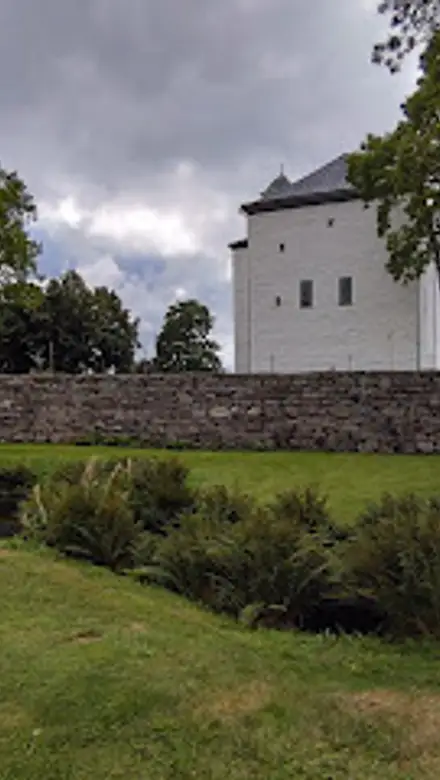
Torpa Stenhus Travel Guide
Free Guide: Sweden's only privately owned medieval castle, unbroken in family hands since 1470—fortress, royal romance hub, and home to ghostly legends amid serene lakeside grounds.


A brief summary of Torpa Stenhus
Sweden's only privately owned medieval castle, unbroken in family hands since 1470—fortress, royal romance hub, and home to ghostly legends amid serene lakeside grounds.
Torpa Stenhus stands as one of Sweden's best-preserved medieval stone castles, built around 1470 by Privy Councillor Arvid Knutsson as a fortress against Danish threats. Nestled near Lake Åsunden in Västergötland, this privately owned landmark boasts Renaissance interiors, a Baroque chapel, and centuries of noble history tied to the Stenbock family and King Gustav Vasa. Explore its thick stone walls, grisaille paintings, and haunting legends like the Gray Lady and the walled-up girl, all while wandering the serene rural grounds maintained by the descendant family.
On-site amenities
 Restrooms
 Drink options
 Food options
 Seating areas
 Information boards
- Address
- Torpa Gård, 514 52 Länghem
- Phone
- Website
Getting there
Car
Bus
Taxi
Bicycle
Discover more about Torpa Stenhus
Medieval Fortress Origins
Torpa Stenhus emerged in the late 1400s amid turbulent times of Danish incursions and local unrest. Privy Councillor Arvid Knutsson constructed the original stone house around 1470, leveraging the site's strategic position along trade routes through the Ätran and Viskan valleys for cattle and provisions. This simple yet formidable structure served dual purposes as both a defensive bastion and a prosperous manor, its thick walls designed to withstand sieges and safeguard the family's wealth.The castle's early architecture reflects the era's defensive priorities, with a compact layout that prioritized security over luxury. Historical records, including a 1513 parchment from Vadstena, affirm its existence as 'Stenhuset uppå Torpa gård,' marking it as one of Västergötland's oldest continuously inhabited estates.
Renaissance Transformations and Royal Connections
The 16th century brought expansion and elegance under the Stenbock family. Gustav Olofsson Stenbock, brother-in-law to King Gustav Vasa through his marriage to Brita Eriksdotter Leijonhufvud, oversaw major renovations around 1550. A grand staircase tower was added, roofs were elevated, and the fourth floor constructed, transforming the fortress into a Renaissance residence.Torpa's most famous moment arrived in 1552 when Gustav Vasa visited and became enamored with 16-year-old Katarina Stenbock, whom he wed as his third wife. The Knights' Hall gained exquisite grisaille wall paintings, blending illusory depth with historical motifs, while the interiors echoed the opulence of the Swedish Renaissance.
Baroque Flourish and Golden Age
The 17th century marked Torpa's zenith during Sweden's stormaktstid, or great power era. Gustav Otto Stenbock, general governor and later admiral, maintained the stone castle while building a separate timber manor for comfort. His wife, Christina Catharina, adorned the ground-floor chapel in lavish Baroque style around 1699, complete with ornate decorations that contrast the austere medieval core.This period infused the castle with elegance, as noble families hosted gatherings in halls alive with painted frescoes and period furnishings, embodying the shift from fortification to cultural centerpiece.
Enduring Legacy Through the Centuries
Torpa has never been sold, passing unbroken through inheritance since the 1400s—first via the Stenbocks, then Sjöblad, Sparre, and finally to the Zethelius family in 1927. Current owner Pehr Zethelius, a direct descendant of Arvid Knutsson, has devoted decades to meticulous restoration, reinstating original wooden walls stripped during 19th-century granary use.Today, the castle remains privately held, the sole such property in Sweden with continuous family ownership from its medieval founding, preserving its authenticity amid rural Västergötland landscapes.
Haunting Tales and Spectral Inhabitants
Legends envelop Torpa in mystery. The Gray Lady, daughter of a lord who executed her Danish lover, wanders as a protective spirit. Another tale recounts a girl walled alive by her father to quarantine plague from Denmark, her cries echoing eternally; workers who tried freeing her met grim fates.'Torpa's White Horses,' a spectral carriage drawn by four white steeds, appears only to the dying owner, adding layers of folklore to the stone walls where history and the supernatural intertwine.
Evendo Review Centre
 Google
Guest reviews
Best time to go
Quietest: Jan, Feb & Dec · before 8am or at 8pm
Busy times are Evendo estimates for a typical year, to help you plan. Actual crowds vary with events, school holidays and the weather.
Explore Torpa Stenhus on the map
A handpicked selection of must-see spots near Torpa Stenhus, mapped for you.
Get your free copy of our complete guide to Torpa Stenhus, delivered straight to you.
Everything on this page, from opening hours and how to get there to Eve’s tips and the best time to go, in one PDF you can read offline, print or share.
Already have an account? Sign in
Your Torpa Stenhus guide is ready.
We'll send it to · Not you? Sign out

Getting your guide ready…
We are putting together a fresh copy of the Torpa Stenhus guide. This can take up to a minute.
This can take a few moments. If your browser asks, choose Allow so the download can start. You'll find the guide in your Downloads folder.
Nothing happened? Download it again
Sorry, the guide is taking longer than usual. Please try again in a minute, or get it by email instead.
Other nearby places you may find interesting
The closest places of the same kind, if this one is not quite what you had in mind.
-
-
-
-
-


Swipe for more places
More to explore near Torpa Stenhus

 Best experiences near Torpa Stenhus
 Best hotels near Torpa Stenhus
 Best landmarks near Torpa Stenhus
 Best attractions near Torpa Stenhus
 Best shops near Torpa Stenhus
 Best restaurants near Torpa Stenhus
 Best bars near Torpa Stenhus
Do you manage this location?
Take control to get all the benefits, like improved information, better appearance, and stronger visibility across AI-powered discovery.
Explore more
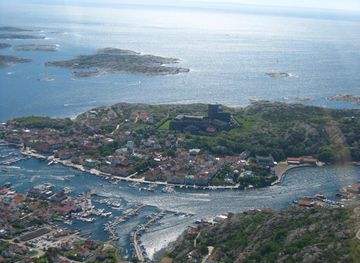
Explore more of Bohuslän
Explore Bohuslän, Sweden's stunning coastal region known for its picturesque islands, rich history, and delectable seafood. A paradise for nature lovers and history enthusiasts.
Explore Bohuslän
Explore more of Sweden
Discover Sweden's breathtaking landscapes, vibrant cities, and rich cultural heritage. From the Northern Lights to historic castles, experience the essence of Scandinavia.
Explore Sweden