

St. Nicolai Ruin Travel Guide
Free Guide: Echoes of sailors' devotion and Dominican resilience linger in Visby's ivy-embraced 13th-century church ruin, a stage for summer symphonies amid Gothic whispers.


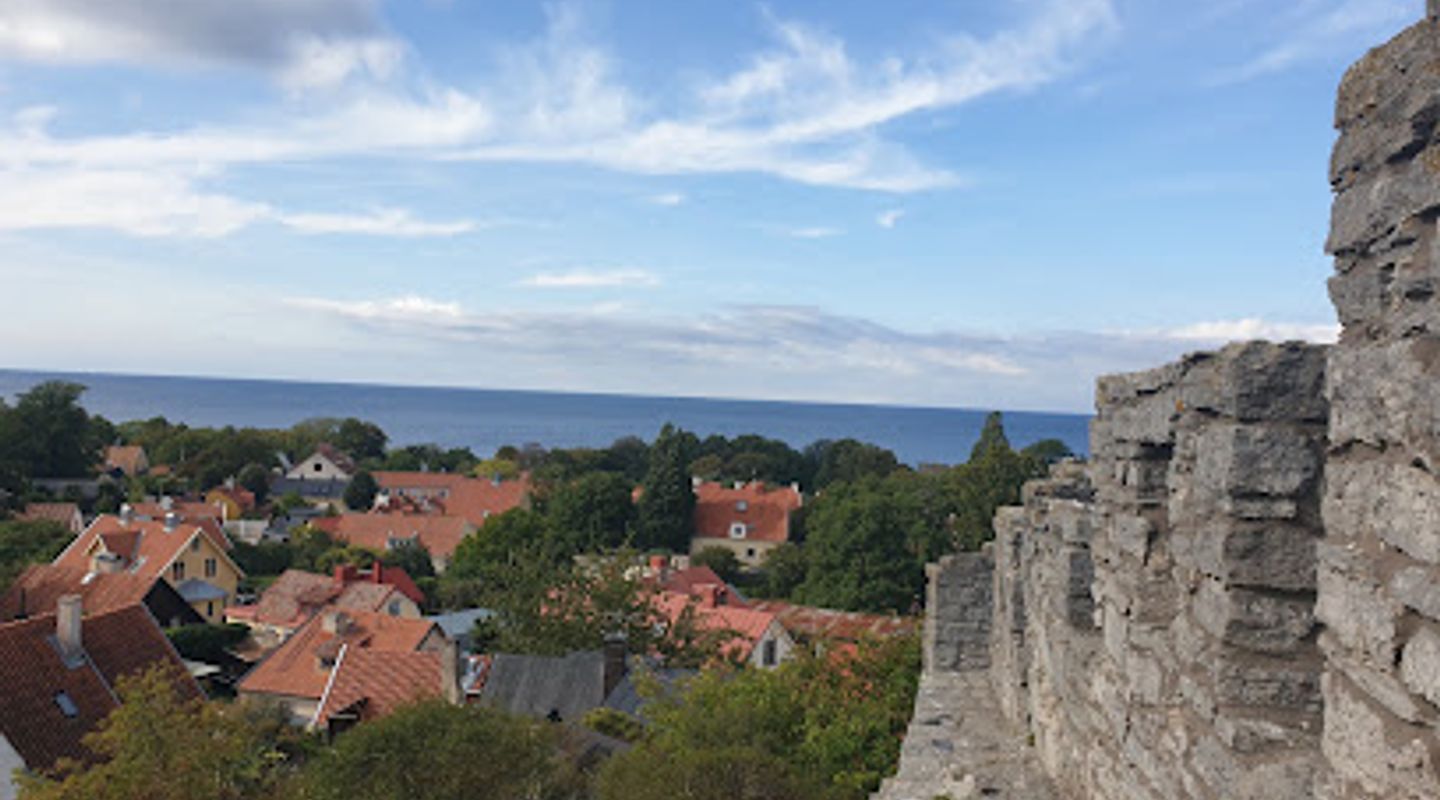
A brief summary of St. Nicolai Ruin
Echoes of sailors' devotion and Dominican resilience linger in Visby's ivy-embraced 13th-century church ruin, a stage for summer symphonies amid Gothic whispers.
St. Nicolai Ruin stands as a poignant medieval remnant in Visby's northern district, originally built around 1215-1220 as a parish church for German traders and sailors dedicated to Saint Nicholas, their patron. A devastating fire interrupted construction, leading Dominican friars to rebuild it mid-13th century into a convent church, marked by its striking west gable from 1251. Famous prior Petrus de Dacia left a legacy commemorated by a north-side plaque. Burned during the 1525 Lübeck attack, it fell into ruin post-Reformation, with materials quarried in 1795, yet 19th-century excavations preserved its Gothic arches and atmospheric stonework. Today, this free-access site hosts summer chamber music festivals amid ivy-clad walls, evoking Visby's Hanseatic past in a serene urban garden setting.
On-site amenities
 Restrooms
 Seating areas
 Trash bins
 Information boards
- Address
- Smedjegatan 19, 621 55 Visby
- Phone
- Website
Getting there
Walking
Bus
Bicycle
Taxi
Discover more about St. Nicolai Ruin
Origins Amid Medieval Trade Winds
Nestled in Visby's northern parish along Smedjegatan, St. Nicolai Ruin emerged around 1215-1220 as a vital parish church for the German merchant community. Dedicated to Saint Nicholas, protector of sailors and traders, it symbolized the bustling Hanseatic commerce that defined Visby as a Baltic powerhouse. Construction halted abruptly when fire ravaged the incomplete structure, shifting its role from parish hub to a site of resilient rebirth.
Dominican Renewal and Petrus de Dacia's Era
Resourceful Dominican friars seized the damaged shell in the mid-13th century, transforming it into a convent church. They erected the enduring west gable in 1251, its robust lines still piercing the skyline. A plaque on the north facade honors Petrus de Dacia, prior in the late 1200s, a Gotland-born scholar whose theological journeys to Paris and Cologne intertwined with mystic visions of nun Christina of Stommeln, yielding Sweden's earliest personal letters.
Flames of Conflict and Reformation Shadows
Tragedy struck in 1525 during the brutal Lübeck assault on Visby, when defenders torched the convent and church to thwart invaders. Post-Reformation, neglect set in; no rebuilding occurred, and by 1795, mayor Peter Herman Grevesmühl permitted quarrying of stones and sculptures for civic use, eroding much ornamentation. The ruins lingered as quiet relics of faded monastic life amid Gotland's medieval tapestry.
Archaeological Awakening and Modern Resonance
From the late 19th century, dedicated excavations unearthed buried features, stabilizing the Gothic arches, nave remnants, and choir for posterity. Today, the ruin's grassy enclosure invites contemplation of layered history, where weathered limestone whispers tales of devotion, destruction, and endurance. Sunlight filters through jagged openings, casting ethereal patterns on mossy floors.
Summer Echoes in Stone Sanctuaries
Reimagined as a natural concert venue since 1986, St. Nicolai hosts the Gotland Chamber Music Festival, with pianist Staffan Scheja and others filling the air with melodies under open skies. Lucia celebrations and choral events amplify its acoustic allure, blending sacred past with contemporary harmony. Ivy frames the scene, enhancing the intimate, al fresco ambiance.
Atmospheric Layers of Time
Wander the ruin's perimeter to trace Dominican expansions, fire-scarred walls, and subtle engravings. The site's compact scale belies its narrative depth, offering a microcosm of Visby's 12 church ruins—testaments to prosperity's ebb. In quiet moments, the rustle of leaves and distant gulls evoke sailors' gratitude to their saint.
Evendo Review Centre
 Google
Guest reviews
Best time to go
Quietest: Jan, Feb & Dec · before 8am or from 10pm
Busy times are Evendo estimates for a typical year, to help you plan. Actual crowds vary with events, school holidays and the weather.
Explore St. Nicolai Ruin on the map
A handpicked selection of must-see spots near St. Nicolai Ruin, mapped for you.
Get your free copy of our complete guide to St. Nicolai Ruin, delivered straight to you.
Everything on this page, from opening hours and how to get there to Eve’s tips and the best time to go, in one PDF you can read offline, print or share.
Already have an account? Sign in
Your St. Nicolai Ruin guide is ready.
We'll send it to · Not you? Sign out

Getting your guide ready…
We are putting together a fresh copy of the St. Nicolai Ruin guide. This can take up to a minute.
This can take a few moments. If your browser asks, choose Allow so the download can start. You'll find the guide in your Downloads folder.
Nothing happened? Download it again
Sorry, the guide is taking longer than usual. Please try again in a minute, or get it by email instead.
Unlock the best of St. Nicolai Ruin
Skip-the-line tickets, guided tours with entry, and walking tours of the area, booked in a few clicks.


Other nearby places you may find interesting
The closest places of the same kind, if this one is not quite what you had in mind.
-
-
-
-
-


Swipe for more places
More to explore near St. Nicolai Ruin

 Best experiences near St. Nicolai Ruin
 Best hotels near St. Nicolai Ruin
 Best landmarks near St. Nicolai Ruin
 Best attractions near St. Nicolai Ruin
 Best shops near St. Nicolai Ruin
 Best restaurants near St. Nicolai Ruin
 Best bars near St. Nicolai Ruin
Do you manage this location?
Take control to get all the benefits, like improved information, better appearance, and stronger visibility across AI-powered discovery.
Explore more

Explore more of Gotland
Explore Gotland, Sweden's largest island, known for its medieval charm, stunning natural landscapes, and vibrant cultural scene in the heart of the Baltic Sea.
Explore Gotland
Explore more of Sweden
Discover Sweden's breathtaking landscapes, vibrant cities, and rich cultural heritage. From the Northern Lights to historic castles, experience the essence of Scandinavia.
Explore Sweden
