

Lynga Sanddyn Travel Guide
Free Guide: A dramatic 36 m coastal dune with stair-climb summit views across pine-heath, beach and the Kattegat — where sand, wind and forest meet.


A brief summary of Lynga Sanddyn
A dramatic 36 m coastal dune with stair-climb summit views across pine-heath, beach and the Kattegat — where sand, wind and forest meet.
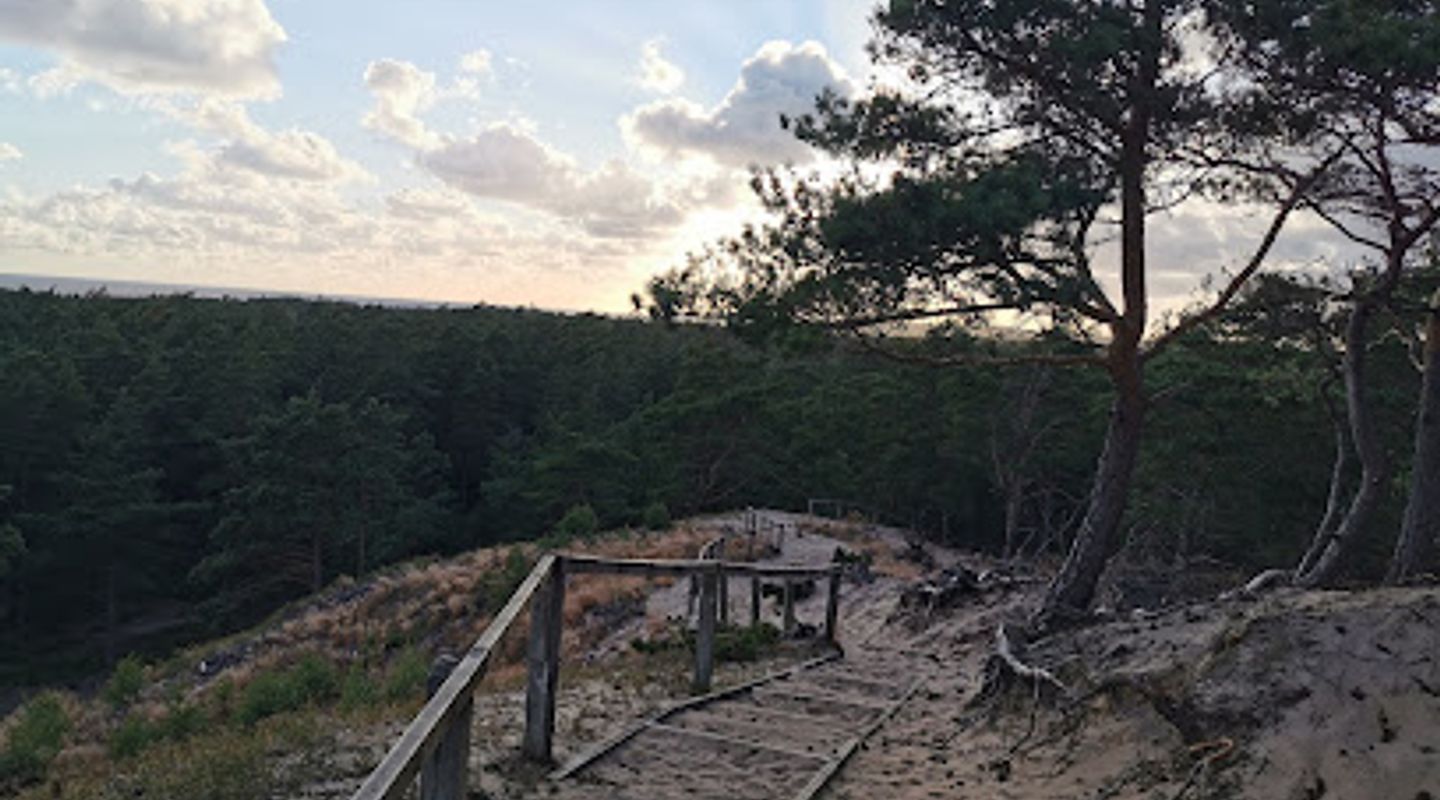
Lynga Sanddyn, locally known as Stora Sandkullen, is a dramatic coastal sand dune rising about 36 metres above sea level within Haverdal Nature Reserve near Villshärad, Sweden. A narrow stairway climbs to the summit, offering sweeping views over the pine-studded dune landscape, the long sandy beach and the Kattegat. The site is part of an area of fossil dunes, enchanted pine groves and diverse birdlife, ideal for short walks, photography and quiet picnics.
On-site amenities
 Seating areas
 Picnic areas
 Information boards
- Address
- Halmstad V
- Website
Getting there
By car
Local bus + walk
Cycling
Discover more about Lynga Sanddyn
A towering dune with coastal panorama
Lynga Sanddyn, often called Stora Sandkullen, stands out as a bold, sculpted shape against the coastal horizon: a sand mound that reaches roughly 36 metres above sea level and presents one of the highest dune viewpoints in the region. From the summit the terrain falls away into a mosaic of beach, shallow coastal waters and open pine-heath; on a clear day the view reads as layered textures of sand, treeline and sea that stretch toward the Kattegat. A narrow, steep timber staircase has been placed to ease ascent, and a lone picnic table at the top encourages lingering and watching light change across the reserve.
Geology, ecology and the story of the dunes
Lynga’s dunes are part of an old flygsand (windblown sand) system that formed as forests were cleared centuries ago and wind sculpted the coastline; fossil dunes remain tucked into the pine forest near the Lynga car park. Over the last centuries management and natural succession have altered the dune dynamics: where drifting sand was once a problem, vegetation — marram grass, shrubs and eventually pines — has stabilised ridges and the landscape is slowly returning to a denser forested state. This changing balance creates a patchwork of habitats, from open sand and dune grass to lichen-rich pine heath, each hosting characteristic plants and invertebrates.
Character of the forest and wildlife notes
The pine woodlands around the dune are notable for their gnarled, wind-carved trunks and low, open canopy; walkers often notice twisted shapes and mossy carpets beneath. A small stream, Skintan, threads nearby forest and scrub, supporting a richer deciduous fringe and attracting a diverse bird community. Spring and early summer bring lively song across the reserve; migrant and coastal species use the varied shoreline and wetlands. The mixture of exposed dune, scrub and forest edges makes the area particularly interesting for anyone observing plant succession and coastal bird behaviour.
Visitor experience and sensory detail
Approaching the dune you feel the breeze sharpen and the scent shift from resinous pine to salt and warm sand. The stair ascent is brief but steep; on reaching the top you get a sense of airy exposure as sea light and wind meet under open sky. At ground level, the forest is quieter and smells of needles and lichen; trunks twist into unusual silhouettes and sunlight filters in green-gold patterns. The slope down to the beach offers textured contrasts — coarse dune grass, compact sand, then the soft sweep of the shoreline.
Human history and conservation efforts
Historical records show that the dunes and surrounding lands were influenced by coastal agriculture and tree-felling several hundred years ago, practices which helped set the dune system in motion. More recently conservation measures aim to re-create and protect open dune habitats lost to natural reforestation; active management and information trails around Lynga explain these processes and the reasons some species have become locally scarce. The reserve’s protected status reflects both its ecological value and its role as a living example of coastal landscape evolution.
Practical rhythms and best moments to visit
Lynga Sanddyn functions as a compact but varied natural attraction: it suits short circular walks that combine forest, dune and beach, and it rewards early-morning or late-afternoon light for photography. Wind-washed, the summit is an excellent place to feel the scale of the coastline and to listen for sea noises and bird song. Seasonal shifts are pronounced — bright, lichen-studded greens of summer move to crisp, silvery tones in winter — so each visit delivers a subtly different feel.
Evendo Review Centre
 Google
Guest reviews
Best time to go
Quietest: Jan, Feb & Dec · before 6am or at 9pm
Busy times are Evendo estimates for a typical year, to help you plan. Actual crowds vary with events, school holidays and the weather.
Explore Lynga Sanddyn on the map
A handpicked selection of must-see spots near Lynga Sanddyn, mapped for you.
Get your free copy of our complete guide to Lynga Sanddyn, delivered straight to you.
Everything on this page, from opening hours and how to get there to Eve’s tips and the best time to go, in one PDF you can read offline, print or share.
Already have an account? Sign in
Your Lynga Sanddyn guide is ready.
We'll send it to · Not you? Sign out

Getting your guide ready…
We are putting together a fresh copy of the Lynga Sanddyn guide. This can take up to a minute.
This can take a few moments. If your browser asks, choose Allow so the download can start. You'll find the guide in your Downloads folder.
Nothing happened? Download it again
Sorry, the guide is taking longer than usual. Please try again in a minute, or get it by email instead.
Other nearby places you may find interesting
The closest places of the same kind, if this one is not quite what you had in mind.
-
-
-
-
-


Swipe for more places
More to explore near Lynga Sanddyn

 Best experiences near Lynga Sanddyn
 Best hotels near Lynga Sanddyn
 Best landmarks near Lynga Sanddyn
 Best attractions near Lynga Sanddyn
 Best shops near Lynga Sanddyn
 Best restaurants near Lynga Sanddyn
 Best bars near Lynga Sanddyn
Do you manage this location?
Take control to get all the benefits, like improved information, better appearance, and stronger visibility across AI-powered discovery.
Explore more

Explore more of Halland
Discover Halland, Sweden's coastal paradise with sandy beaches, historic towns, and lush nature reserves. Perfect for outdoor adventures, cultural experiences, and relaxation.
Explore Halland
Explore more of Sweden
Discover Sweden's breathtaking landscapes, vibrant cities, and rich cultural heritage. From the Northern Lights to historic castles, experience the essence of Scandinavia.
Explore Sweden
