

Gravfält/Bottenbäcken Travel Guide
Free Guide: Echoes of Iron Age pyres amid Härjedalen's wild forests, where ancient hunters' graves whisper of Viking-era rituals in serene isolation.


A brief summary of Gravfält/Bottenbäcken
Echoes of Iron Age pyres amid Härjedalen's wild forests, where ancient hunters' graves whisper of Viking-era rituals in serene isolation.
Gravfält/Bottenbäcken is an ancient burial ground in rural Storsjö Kapell, Härjedalen, featuring Iron Age and Viking-era graves amid forested landscapes. This understated site reveals glimpses of prehistoric hunter-gatherer societies through stone settings and cremation remains, offering a serene connection to Sweden's remote past near Lake Storsjön.
On-site amenities
 Trash bins
 Information boards
- Address
- 840 34 Storsjö Kapell
- Website
Getting there
Driving
Bus
Hiking
Discover more about Gravfält/Bottenbäcken
Whispers of Ancient Hunters
Nestled in the quiet expanse of Storsjö Kapell, Gravfält/Bottenbäcken emerges as a poignant relic of Iron Age life in Härjedalen. This burial field, marked by subtle stone settings and scattered cremation layers, speaks to communities who roamed these northern woods millennia ago. Flat mounds and burn layers, devoid of grand monuments, hint at rituals performed in harmony with the surrounding wilderness, where hunting and seasonal migrations shaped daily existence.The site's understated presence contrasts with more ostentatious Viking graves elsewhere, emphasizing a continuity of tradition in this peripheral region. Artifacts like iron pins and brooches, occasionally unearthed, suggest personal adornments carried through life and beyond, buried in fires that echo ancient pyres under open skies.
Burial Rites in the Wilderness
Cremation dominated here, with oval burn layers spanning roughly 0.9 by 0.6 meters, containing charred bones and grave goods. These practices align with those at nearby Krankmårtenhögen, another enigmatic field in Storsjö Kapell renowned for its Iron Age concentrations. Unlike coastal settlements, these inland graves reflect a fäbod-like transhumance, positioned high amid bogs and forests for summer herding and foraging.Excavations reveal no stone constructions in many cases, just thin turves over gravelly sand holding remnants of swords, arrowheads, and round brooches dated to the late 800s or 900s AD. Such finds span the Viking period, illustrating evolving customs from Vendel to late Viking times, when pagan rites lingered in isolated highlands.
Landscape of Faded Echoes
Bottenbäcken's graves perch on gentle rises overlooking streams like Bottenbäcken, integrating seamlessly into the taiga's mosaic of pines, birches, and mossy undergrowth. Proximity to fangstgropar—ancient pit traps numbering around 1,800 in the area—underscores a hunting culture persistent from Stone Age into the Iron Age, banned only in 1864.The environment evokes solitude, with gravel ridges and eroded flatmarks blending into natural contours. Seasonal rains expose fragments, while winter snows blanket the site in contemplative silence, preserving its aura against modern intrusion.
Threads to Regional Mysteries
Linked to broader Härjedalen networks, this gravfält mirrors sites like Smalnäset and Älvros, where similar stensättningar hold burned bones from comparable eras. Viking-age depositions, potentially tied to solstice rituals or autumn hunts, incorporated wild game remains, reflecting a cosmology attuned to Frösön's summits and Storsjön's waters.Its isolation from later settlements highlights transient fjäll use, possibly by Sami-influenced groups or early Norse wanderers, fostering myths of lingering heathenism in high places. Today, it stands as a threshold to understanding how peripheral landscapes nurtured distinct cultural threads.
Evendo Review Centre
 Google
Guest reviews
Best time to go
Quietest: Jan, Feb & Nov · before 7am or from 6pm
Busy times are Evendo estimates for a typical year, to help you plan. Actual crowds vary with events, school holidays and the weather.
Explore Gravfält/Bottenbäcken on the map
A handpicked selection of must-see spots near Gravfält/Bottenbäcken, mapped for you.
Get your free copy of our complete guide to Gravfält/Bottenbäcken, delivered straight to you.
Everything on this page, from opening hours and how to get there to Eve’s tips and the best time to go, in one PDF you can read offline, print or share.
Already have an account? Sign in
Your Gravfält/Bottenbäcken guide is ready.
We'll send it to · Not you? Sign out

Getting your guide ready…
We are putting together a fresh copy of the Gravfält/Bottenbäcken guide. This can take up to a minute.
This can take a few moments. If your browser asks, choose Allow so the download can start. You'll find the guide in your Downloads folder.
Nothing happened? Download it again
Sorry, the guide is taking longer than usual. Please try again in a minute, or get it by email instead.
Other nearby places you may find interesting
The closest places of the same kind, if this one is not quite what you had in mind.
-
-
-
-
-


Swipe for more places
More to explore near Gravfält/Bottenbäcken

 Best experiences near Gravfält/Bottenbäcken
 Best hotels near Gravfält/Bottenbäcken
 Best landmarks near Gravfält/Bottenbäcken
 Best attractions near Gravfält/Bottenbäcken
 Best shops near Gravfält/Bottenbäcken
 Best restaurants near Gravfält/Bottenbäcken
 Best bars near Gravfält/Bottenbäcken
Do you manage this location?
Take control to get all the benefits, like improved information, better appearance, and stronger visibility across AI-powered discovery.
Explore more
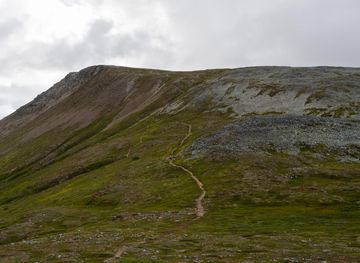
Explore more of Härjedalen
Explore Härjedalen: Sweden's untouched wilderness, offering year-round adventure and serene landscapes, perfect for nature lovers and thrill-seekers alike.
Explore Härjedalen
Explore more of Sweden
Discover Sweden's breathtaking landscapes, vibrant cities, and rich cultural heritage. From the Northern Lights to historic castles, experience the essence of Scandinavia.
Explore Sweden
