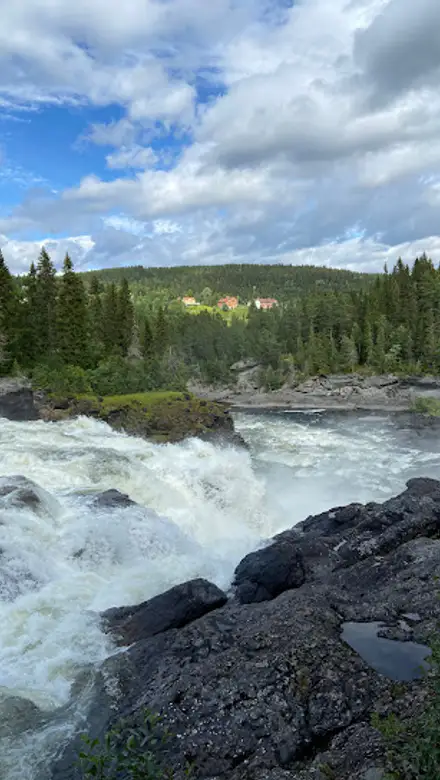
Ristafallet view point Travel Guide
Free Guide: An intimate, theatrical waterfall on Indalsälven—mossy rock, twin curtains of water and a cinematic atmosphere all year round.


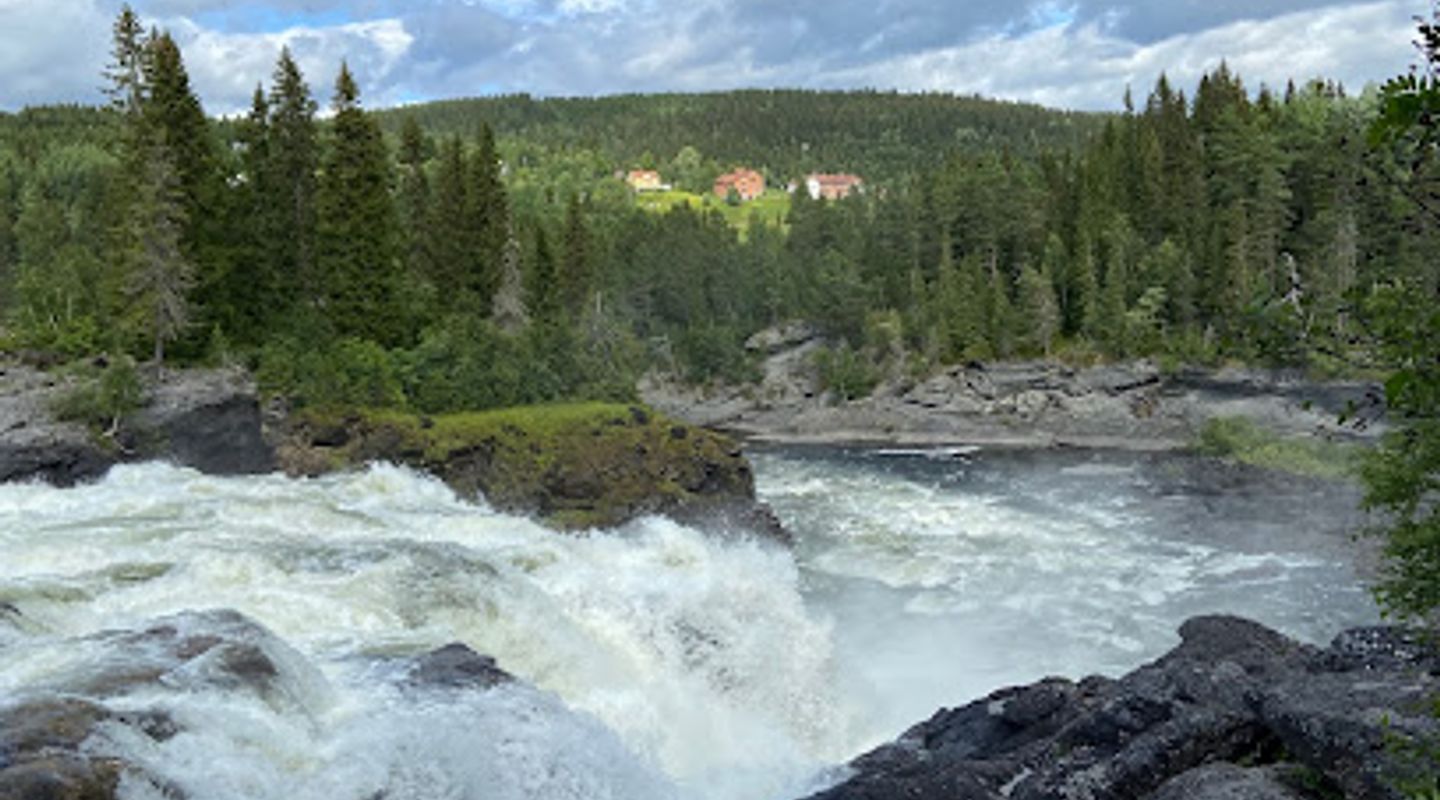
A brief summary of Ristafallet view point
An intimate, theatrical waterfall on Indalsälven—mossy rock, twin curtains of water and a cinematic atmosphere all year round.
Ristafallet viewpoint sits beside the Indalsälven near Järpen in western Jämtland, where a wooded island splits the river and a 50 m‑wide, 14 m‑high waterfall thunders through a mossy gorge. The site combines short, accessible trails and layered viewpoints with a small café and campsite nearby, dramatic seasonal flows and a pocket of damp forest where rare lichens and mosses thrive—an intimate, cinematic waterfall setting known from the film adaptation of Ronja, the Robber’s Daughter.
On-site amenities
 Restrooms
 Drink options
 Food options
 Seating areas
 Information boards
Opening hours
- Every dayOpen 24 hours
Opening hours as listed on the venue’s Google Business Profile. Hours can change for services and special events, so check with the venue before you go.
- Address
- RISTA 188, 830 05 Järpen
Getting there
Car (from Järpen / Åre region)
Regional bus + short walk
On foot from campsite
Discover more about Ristafallet view point
A compact amphitheatre of water and rock
Ristafallet is best understood as a short, spectacular encounter with moving water rather than a long wilderness trek. The river narrows and drops here in a roughly 50‑metre wide sheet that descends about 14 metres, sculpting a shallow gorge and spraying the immediate banks with a fine, cool mist that keeps the surrounding rock faces and trees moss‑slick year round.
The island that makes the falls theatrical
A wooded island divides the river at the crest of the falls, splitting the flow and producing twin curtains of water and an irregular, amphitheatre‑like profile. The island and adjacent rock shelves create intimate viewing angles; from some vantage points the falls feel like a wide, roaring theatre while from others you see narrow, foaming channels threading between boulders.
Microclimate and living surfaces
The constant spray creates a damp microclimate where moisture‑loving mosses, lichens and liverworts carpet stones and tree trunks, giving the place an ancient, primeval quality. Look closely at shaded crevices and damp ledges to see delicate moss cushions and pale foliose lichens that are less common in drier forests. The soundscape—low, persistent thunder with birdsong and the hiss of spray—reinforces the sense that the falls shape the local ecosystem.
Seasons and shifting moods
Ristafallet’s character changes through the year: spring melt swells the river to a powerful, white‑roaring torrent; summer reduces the flow but increases the green intensity of the surrounding woodland; autumn colours frame the turbulent water in warm hues; winter can freeze sections, creating crystalline sculptures and a hushed, monochrome scene. At peak runoff the falls feel enormous; in low water the individual channels and boulder formations become more apparent.
Cultural echoes and cinematic moments
The falls are locally famous for appearing in a film adaptation of Astrid Lindgren’s Ronja, the Robber’s Daughter, where the location doubled for a dramatic, storybook waterfall. Small interpretive signs on nearby trails point out filming spots and riverside features associated with those scenes, giving an added layer of narrative to the landscape.
Visitor experience and the immediate setting
Paths and short trails thread from nearby parking and the campsite/café area to multiple outlooks; some paths are steep or uneven and offer progressively more dramatic views. A compact café and camping facilities lie close by and provide a practical base for a short visit. Wildlife traces—otter slides, beaver cuttings and varied birdlife—are sometimes visible along the calmer upstream and downstream reaches, reminding you that the falls sit within a living river corridor.
Evendo Review Centre
 Google
Guest reviews
Best time to go
Quietest: Jan, Feb & Nov · before 6am or at 9pm
Busy times are Evendo estimates for a typical year, to help you plan. Actual crowds vary with events, school holidays and the weather.
Explore Ristafallet view point on the map
A handpicked selection of must-see spots near Ristafallet view point, mapped for you.
Get your free copy of our complete guide to Ristafallet view point, delivered straight to you.
Everything on this page, from opening hours and how to get there to Eve’s tips and the best time to go, in one PDF you can read offline, print or share.
Already have an account? Sign in
Your Ristafallet view point guide is ready.
We'll send it to · Not you? Sign out

Getting your guide ready…
We are putting together a fresh copy of the Ristafallet view point guide. This can take up to a minute.
This can take a few moments. If your browser asks, choose Allow so the download can start. You'll find the guide in your Downloads folder.
Nothing happened? Download it again
Sorry, the guide is taking longer than usual. Please try again in a minute, or get it by email instead.
Other nearby places you may find interesting
The closest places of the same kind, if this one is not quite what you had in mind.
-
-
-
-
-


Swipe for more places
More to explore near Ristafallet view point

 Best experiences near Ristafallet view point
 Best hotels near Ristafallet view point
 Best landmarks near Ristafallet view point
 Best attractions near Ristafallet view point
 Best shops near Ristafallet view point
 Best restaurants near Ristafallet view point
 Best bars near Ristafallet view point
Do you manage this location?
Take control to get all the benefits, like improved information, better appearance, and stronger visibility across AI-powered discovery.
Explore more

Explore more of Jämtland
Explore Jämtland: A Swedish gem where natural beauty, outdoor adventure, and rich cultural heritage blend seamlessly.
Explore Jämtland
Explore more of Sweden
Discover Sweden's breathtaking landscapes, vibrant cities, and rich cultural heritage. From the Northern Lights to historic castles, experience the essence of Scandinavia.
Explore Sweden