

Free Karlstad Travel Guide & Mobile App
Plan your Karlstad trip with Evendo. Get free guides to top attractions, restaurants, hotels, and bars. Web access or download the mobile app.


Karlstad, Sweden, pairs Lake Vänern and the Klarälven delta with Värmland culture, riverside walks, museums, historic bridges and relaxed city sightseeing.
A City Shaped by Water
Karlstad stands in south-western Sweden where the Klarälven divides into several channels before reaching Lake Vänern, Sweden’s largest lake. Water is central to the city’s identity: bridges connect the river islands, promenades follow the banks and boating, fishing and lakeside recreation are woven into everyday life. The broad landscape gives Karlstad an open, relaxed character, while the compact centre is easy to explore on foot.Read more about Karlstad
History in Streets and Stone
Culture, Art and Green Space
When is the best time to visit Karlstad?
Best: June–August · 22–25°C| Month | High (°C) | Rainfall (mm) |
|---|---|---|
| January | 0 | 28 |
| February | 1 | 25 |
| March | 5 | 22 |
| April | 10 | 17 |
| May | 18 | 15 |
| June (best) | 22 | 21 |
| July (best) | 25 | 25 |
| August (best) | 22 | 23 |
| September | 18 | 19 |
| October | 10 | 20 |
| November | 4 | 24 |
| December | 2 | 25 |
Getting to and around Karlstad
How to get there
Transportation
Best attractions in Karlstad
Karlstad’s principal attractions reveal a city organised around water, culture and regional history. The Värmlands Museum presents the province’s art, archaeology and social history, while Sandgrund Lars Lerin displays the atmospheric watercolours of one of Sweden’s best-known contemporary artists. Mariebergsskogen, a large park near the centre, combines woodland paths, gardens and family-oriented facilities. Along the Klarälven, the Old Stone Bridge offers an elegant route across the river and a reminder of the city’s older infrastructure. Karlstad Cathedral provides a quieter architectural stop, while the Peace Monument on Stora Torget connects the city with the peaceful dissolution of the Swedish-Norwegian union in 1905. Seasonal walks, cycling routes and viewpoints around Lake Vänern add an outdoor dimension, and Alsters herrgård, associated with the poet Gustaf Fröding, offers a cultural excursion just beyond the central streets.
-
Park
Mariebergsskogen
Karlstad's 200-hectare woodland paradise: farm animals, beaches, historic sites, theater, and seasonal magic just minutes from downtown—free, family-focused, open daily.
7 min drive · 2.3 km from city centre
-
Art gallery
Sandgrund Lars Lerin
Discover Scandinavia's watercolor maestro Lars Lerin in a reborn dance hall by the Klarälven—where vivid art meets riverside serenity in Karlstad's cultural heart.
7 min walk · 0.5 km from city centre
-
Shopping mall
Mitt i city
A practical, well‑connected city-centre mall in Karlstad offering everyday shops, eateries and services under one roof.
12 min walk · 1.0 km from city centre
-
Movie theater
Filmstaden Karlstad
A central multi‑screen cinema on Drottninggatan serving contemporary releases with modern projection, tiered seating and a classic cinema kiosk.
15 min walk · 1.2 km from city centre


Best landmarks in Karlstad
Karlstad Cathedral is one of the city’s most recognisable historic buildings, its prominent position reflecting Karlstad’s role as the ecclesiastical centre of Värmland. On Stora Torget, the Peace Monument commemorates the negotiations held in Karlstad in 1905 that helped bring about the peaceful dissolution of the Swedish-Norwegian union. The Old Stone Bridge, completed in the eighteenth century, spans the Klarälven with a series of arches and remains a defining piece of the city’s built heritage. The centre’s stone buildings and broad streets largely date from the reconstruction that followed the devastating fire of 1865. The Klarälven channels themselves are also landmarks of urban identity: they explain the city’s bridges, waterfront views and historic importance as a timber and trade centre between inland Värmland and Lake Vänern.
-
Opera house
Wermland Opera
Sweden's riverside opera gem: intimate world-class performances in a stunning modern venue on Karlstad's waterfront.
12 min walk · 0.9 km from city centre
-
Tourist attraction
Gamla Stenbron
Sweden's longest stone arch bridge graces Karlstad's Klarälven, blending 18th-century grit with timeless river vistas for walkers and dreamers.
5 min walk · 0.4 km from city centre
-
Tourist attraction
Peace monument
Triumphant bronze guardian of peace on Karlstad's grand Stora Torget, honoring the 1905 union's amicable end.
11 min walk · 0.9 km from city centre
-
Historical landmark
Kvarteret Almen
Timber houses that outlasted fire and time, alive with summer music by Karlstad's river bend—a preserved slice of 18th-century Sweden.
14 min walk · 1.1 km from city centre


Explore Karlstad on the map
Plan your Karlstad trip on one map. See where the top attractions, landmarks, restaurants, bars and hotels are, find what's near where you're staying, and book hotels and experiences in a few clicks.
Best hotels in Karlstad
Best restaurants in Karlstad
Karlstad’s dining scene draws on Värmland’s forests, farms, lakes and long-standing café culture. Menus may feature local game, mushrooms, berries, potatoes and dairy products, while fish from Lake Vänern and nearby waterways appears in regional cooking when available. Traditional Swedish dishes sit alongside modern Nordic interpretations, international restaurants and relaxed bistros in the centre. Food markets and seasonal events provide opportunities to encounter cheeses, breads, preserves and other produce from Värmland, while bakeries and cafés sustain the Swedish fika tradition with coffee, cinnamon buns and cakes. Around the central streets and riverfront, dining ranges from informal daytime meals to more polished evening settings. Local restaurants often adjust their menus to the seasons, making autumn forest produce and summer berries particularly characteristic ingredients.
-
Pan Asian
Spicy Hot
Casual Pan-Asian wok and curry spot on Kungsgatan — quick service, vegetarian options and takeaway/delivery for a convenient city-centre meal.
10 min walk · 0.8 km from city centre
-
Tapas
Barón
Savor Spanish tapas with a Swedish soul in a historic Karlstad vault, where shared plates and craft cocktails ignite lively evenings.
11 min walk · 0.9 km from city centre
-
Tapas
Pinchos
World's first app restaurant: Tapas magic, global skewers, dazzling drinks in Karlstad's vibrant core. Order via app for seamless sharing and sips.
14 min walk · 1.1 km from city centre
-
Italian
Restaurang Fontana di Trevi
Savor authentic Italian cuisine at Restaurang Fontana di Trevi in Karlstad – where every meal tells a story.
13 min walk · 1.1 km from city centre


Best bars in Karlstad
Karlstad’s nightlife is sociable rather than metropolitan, with the greatest concentration of evening activity in the central streets around Stora Torget and the river. Pubs, beer bars, wine-led venues and casual cocktail spots provide settings for conversation, while restaurants often remain part of the evening circuit. Nöjesfabriken hosts bowling, activities, concerts and other entertainment, and Löfbergs Arena brings large-scale sporting and music events to the city. Live performances, theatres and seasonal cultural programming offer alternatives to clubbing, particularly during the darker months. Student life contributes to periodic events and late evenings, although the scene varies with the academic calendar. Swedish licensing rules and venue policies apply, and quiet riverside areas are better suited to an early evening walk than noisy late-night gatherings.
-
Bar
Barón
Experience the vibrant flavors of Spain at Barón, Karlstad's premier tapas restaurant and cocktail bar, where culinary artistry meets a lively atmosphere.
11 min walk · 0.9 km from city centre
-
American
O'Learys Karlstad
Karlstad's ultimate sports bar: American eats, live games on big screens, bowling, mini-golf, and shuffleboard for epic nights out with friends.
11 min walk · 0.9 km from city centre
-
Gastropub
The Bishops Arms
An English-style gastropub on the Klarälven — cosy wood interiors, wide beer and whisky lists and a popular riverside terrace in summer.
11 min walk · 0.9 km from city centre
-
Irish pub
The Leprechaun Pub
Savor Ireland's warmth in Karlstad: hearty pub fare, flowing pints, darts, quizzes, and endless craic at this central Irish gem.
13 min walk · 1.0 km from city centre


Best nightclubs in Karlstad
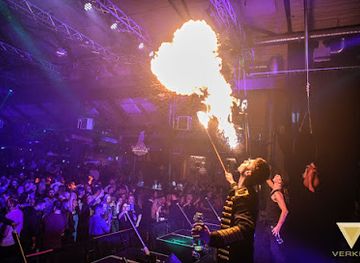
Karlstad’s nightlife is sociable rather than metropolitan, with the greatest concentration of evening activity in the central streets around Stora Torget and the river. Pubs, beer bars, wine-led venues and casual cocktail spots provide settings for conversation, while restaurants often remain part of the evening circuit. Nöjesfabriken hosts bowling, activities, concerts and other entertainment, and Löfbergs Arena brings large-scale sporting and music events to the city. Live performances, theatres and seasonal cultural programming offer alternatives to clubbing, particularly during the darker months. Student life contributes to periodic events and late evenings, although the scene varies with the academic calendar. Swedish licensing rules and venue policies apply, and quiet riverside areas are better suited to an early evening walk than noisy late-night gatherings.
-
Night club
Verket Nattklubb
Experience the vibrant nightlife of Karlstad at Verket Nattklubb, where music, dance, and unforgettable memories await you.
11 min walk · 0.9 km from city centre
-
Night club
Herrgårdsgatan Nattklubb
Dance into the night at Karlstad's high-energy hub on historic Herrgårdsgatan, where premium drinks and relentless beats fuel unforgettable festivities.
9 min walk · 0.7 km from city centre
-
Night club
Sebastian
A compact, energetic nightclub in central Karlstad with DJ sets, close-up dancefloor and a punchy late‑night vibe.
7 min walk · 0.6 km from city centre


Best shops in Karlstad
Karlstad’s central shopping area is concentrated around Drottninggatan, Västra Torggatan and the Mitt i City centre, where Swedish chains sit alongside cafés and smaller independent businesses. For a broader retail selection, Bergvik shopping centre lies west of the city and is more convenient by car or bus than on foot from the historic core. Visitors seeking local character can look for Värmland food products, chocolates, preserves, textiles, ceramics, crafts and design objects rather than relying only on generic souvenirs. Seasonal markets and cultural venues sometimes provide additional opportunities to buy work by regional makers. The centre is compact enough to combine shopping with river walks, the main square and nearby museums, while antiques and specialist goods are best approached through current local listings rather than assumed permanent districts.
-
Shopping mall
Bergvik Köpcenter
Värmland's vibrant shopping oasis: 80 stores, lakeside views, free parking, and endless variety under one roof.
15 min drive · 4.9 km from city centre
-
Thrift store
Solareturen
Unearth sustainable treasures at Karlstad's premier thrift haven, where furniture, books, art, and home essentials find new homes affordably.
8 min drive · 2.6 km from city centre
-
Department store
Åhléns
A compact, service-led department store in central Karlstad offering fashion, beauty and practical homewares under one roof.
14 min walk · 1.1 km from city centre
-
Candy store
Hemmakväll
Late-night pick-and-mix candy shop in central Karlstad, full of seasonal treats, nostalgic sweets and relaxed browsing.
9 min walk · 0.7 km from city centre


Get your free copy of our complete guide to Karlstad, delivered straight to you.
Everything on this page, from attractions and restaurants to essentials and local phrases, in one PDF you can read offline, print or share.
Already have an account? Sign in
Your Karlstad guide is ready.
We'll send it to · Not you? Sign out

Getting your guide ready…
We are putting together a fresh copy of the Karlstad guide. This can take up to a minute.
This can take a few moments. If your browser asks, choose Allow so the download can start. You'll find the guide in your Downloads folder.
Nothing happened? Download it again
Sorry, the guide is taking longer than usual. Please try again in a minute, or get it by email instead.
Karlstad essentials
Currency and Payment
Safety
Emergency Situations
Do's and Don'ts
Local Tips
From Eve
Local phrases worth knowing
You don't need to get them perfect. A few words go a long way, and locals appreciate the effort.
Basics
| English | Local | Say it |
|---|---|---|
| Hello | Hej | [hey] |
| Goodbye | Adjö | [ad-yoo] |
| Yes | Ja | [yah] |
| No | Nej | [nay] |
| Please/You're welcome | Tack | [tahck] |
| Thank you | Tack | [tahck] |
| Excuse me/Sorry | Ursäkta mig | [oor-sheck-ta may] |
| How are you? | Hur mår du? | [hoor mor doo] |
| Fine. And you? | Bra. Och du? | [bra. ock doo] |
| Do you speak English? | Talar du engelska? | [tah-lar doo eng-gels-ka] |
| I don't understand | Jag förstår inte | [yahg for-stor in-teh] |
Eating & Drinking
| English | Local | Say it |
|---|---|---|
| I'd like to see the menu, please | Jag skulle vilja se menyn, tack | [yahg skool-le ve-lya seh men-een, tahck] |
| I don't eat meat | Jag äter inte kött | [yahg eh-ter in-teh chut] |
| Cheers! | Skål! | [skawl] |
| I would like to pay, please | Jag skulle vilja betala, tack | [yahg skool-le ve-lya be-tah-la, tahck] |
Emergencies
| English | Local | Say it |
|---|---|---|
| Help! | Hjälp! | [yelp] |
| Go away! | Gå iväg! | [go ee-veg] |
| Call the Police! | Ring polisen! | [ring po-lee-sen] |
| Call a doctor! | Ring en läkare! | [ring en leh-ka-reh] |
| I'm lost | Jag är vilse | [yahg air veels-eh] |
| I'm ill | Jag är sjuk | [yahg air shyook] |
Shopping
| English | Local | Say it |
|---|---|---|
| I'd like to buy... | Jag skulle vilja köpa... | [yahg skool-le ve-lya chup-pah] |
| I'm just looking | Jag tittar bara | [yahg tee-tar bahr-ah] |
| How much is it? | Hur mycket kostar det? | [hoor mer-ket kus-tar deht] |
| That's too expensive | Det är för dyrt | [deht air for deert] |
| Can you lower the price? | Kan du sänka priset? | [kan doo sen-ka pre-set] |
Time & Numbers
| English | Local | Say it |
|---|---|---|
| What time is it? | Vad är klockan? | [vahd air klok-kan] |
| It's one o'clock | Klockan är ett | [klok-kan air eht] |
| Half past (10) | Halv tio | [halv tee-oh] |
| Morning | Morgon | [mor-gon] |
| Afternoon | Eftermiddag | [ef-ter-mee-dag] |
| Evening | Kväll | [kvel] |
| Yesterday | Igår | [ee-gor] |
| Today | Idag | [ee-dag] |
| Tomorrow | Imorgon | [ee-mor-gon] |
| 1 | En | [en] |
| 2 | Två | [tvo] |
| 3 | Tre | [treh] |
| 4 | Fyra | [fy-rah] |
| 5 | Fem | [fem] |
| 6 | Sex | [seks] |
| 7 | Sju | [syou] |
| 8 | Åtta | [ot-tah] |
| 9 | Nio | [nee-oh] |
| 10 | Tio | [tee-oh] |
Transport & Directions
| English | Local | Say it |
|---|---|---|
| Where's a/the...? | Var finns en/den...? | [var fins en/den] |
| What's the address? | Vad är adressen? | [vahd air ad-res-sen] |
| Can you show me (on the map)? | Kan du visa mig (på kartan)? | [kan doo vee-sa may (poh car-tan)] |
| When's the next (bus)? | När går nästa (buss)? | [nair gor nes-ta (boos)] |
| A ticket (to ....) | En biljett (till ....) | [en bil-yet (teel)] |
History of Karlstad
A Medieval Trading Settlement
The settlement that became Karlstad grew beside the Klarälven’s waterways, which connected inland Värmland with Lake Vänern and its trading routes. Before the modern town was founded, the area was associated with the market settlement of Tingvalla, a regional meeting and trading place. Timber, iron and agricultural goods moved through the river system, helping the location develop economic importance. The surrounding province was also shaped by forest communities, farming and iron production. This combination of waterborne transport and regional commerce explains why the site became a natural centre for administration and trade long before Karlstad acquired its present urban form.
Founded by Duke Karl
In 1584, Duke Karl, the future King Charles IX, granted the settlement town privileges and named it Karlstad. The foundation strengthened royal administration in Värmland and formalised the town’s function as a market and civic centre. Its position between inland resources and Lake Vänern encouraged commerce, while the river channels influenced the layout and movement of the growing community. Karlstad remained a modest town for much of its early history, but its connections with timber, iron and agricultural production gave it a role that reached well beyond its immediate streets. The cathedral and later civic buildings reflect its continuing regional importance.
Trade, Timber and Industrial Growth
During the eighteenth and nineteenth centuries, Karlstad benefited from Värmland’s expanding iron and timber economies. The Klarälven served as a route for floating logs towards Lake Vänern, and the lake connected the region with wider Swedish markets. Warehouses, workshops and merchants helped turn Karlstad into an administrative and commercial hub, while improved roads, canals and railways gradually reduced the isolation of inland districts. Industrialisation also changed the social character of the town, bringing new occupations and institutions. The river landscape visible today therefore represents both a natural feature and the infrastructure of an economy built on forest and mineral resources.
The Fire and Reconstruction
A major fire in 1865 destroyed much of central Karlstad, including numerous wooden buildings. Reconstruction transformed the town’s appearance, introducing wider streets, more substantial stone construction and a more ordered urban plan intended to reduce the risk of future fires. Several buildings from the rebuilding period now give the centre its restrained nineteenth-century character. The disaster also accelerated municipal modernisation, as public services and civic institutions were reorganised during the city’s recovery. Karlstad’s present streetscape is thus partly a product of loss: the fire erased much of the earlier town but created the architectural framework that visitors encounter today.
Karlstad and the Dissolution of the Union
Karlstad acquired international political significance in 1905, when Swedish and Norwegian representatives met there during negotiations over the dissolution of the union between the two countries. The talks helped establish a peaceful settlement at a moment of serious tension, and the event remains part of the city’s civic identity. The Peace Monument on Stora Torget commemorates the agreement and its broader message of resolving conflict through negotiation. In the twentieth century Karlstad continued to develop as Värmland’s administrative, educational and cultural centre, while its river channels, lake connections and industrial heritage remained visible foundations of urban life.
Karlstad in Photos
Browse through our photo collection highlighting the charm and character of the destination.
Cities near Karlstad
The closest cities to Karlstad, if you have time for more than one stop.
-

-

-

-

-


Swipe for more cities
Explore more
Explore more of Sweden
Discover Sweden's breathtaking landscapes, vibrant cities, and rich cultural heritage. From the Northern Lights to historic castles, experience the essence of Scandinavia.
Explore Sweden