
Lappstaden, Lapland Travel Guide
A compact, preserved Sámi church town of timber gåhtie—quiet wooden huts that map centuries of seasonal gatherings in Arvidsjaur.
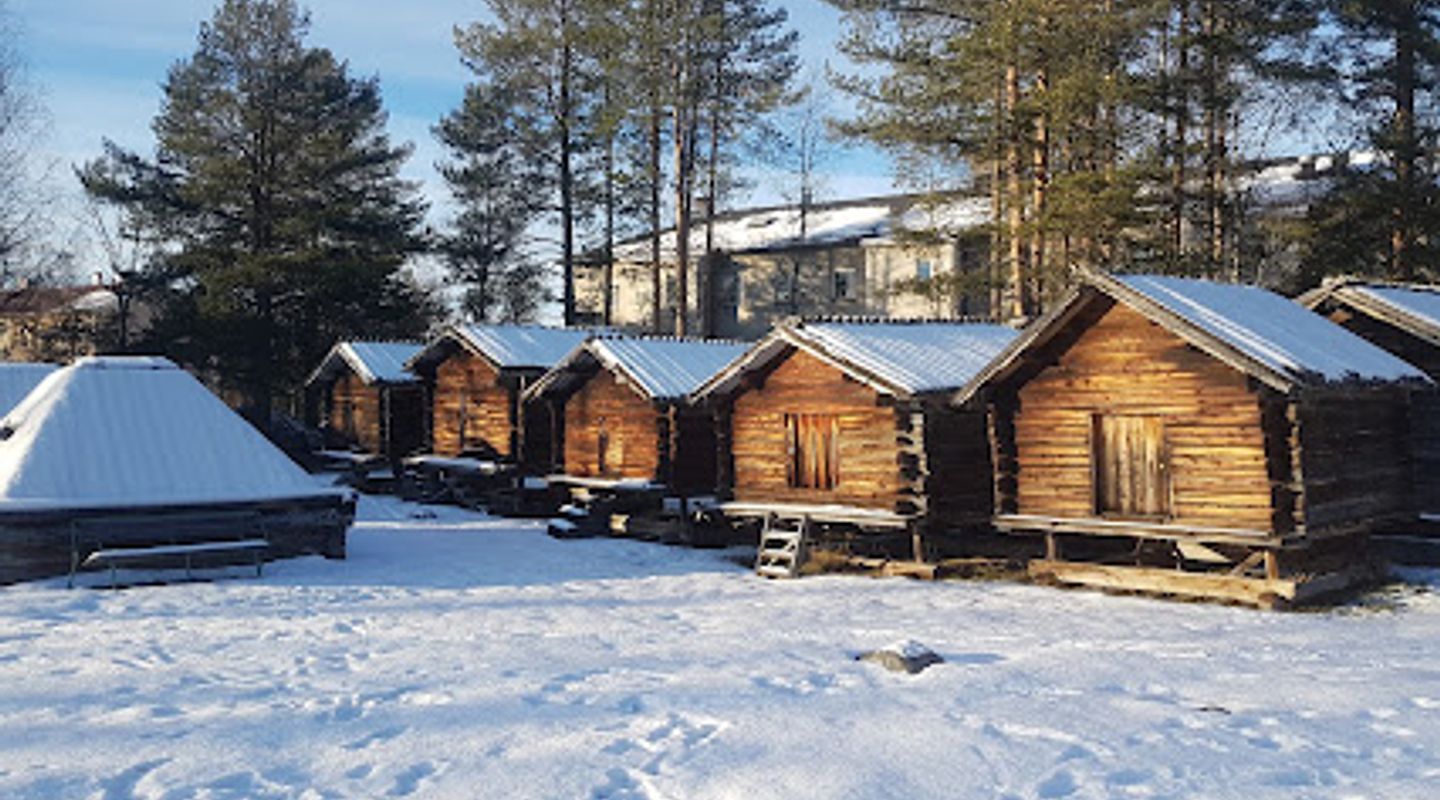
Lappstaden is a conserved Sámi church town on the edge of Arvidsjaur: a cluster of historic wooden gåhtie (Sámi sleeping huts), storehouses and simple shelters that testify to centuries of seasonal pilgrimage, market gatherings and religious assemblies. Set beside a small green and near the modern church, the compact site presents traditional forest-Sámi architecture and quiet, evocative streetscape preserved as an open-air heritage area.
A brief summary to Lappstaden
- Borgargatan, Arvidsjaur, 933 31, SE
- Duration: 0.5 to 2 hours
- Free
-
 Outdoor
- Mobile reception: 4 out of 5

Know before you go
Hi, I'm Eve. Here are a few practical things to know before exploring Lappstaden.
- Respect the site’s heritage: do not enter buildings unless clearly permitted and avoid touching fragile woodwork.
- Visit in different seasons for varied atmosphere—summer brings bird-song and vegetation; winter offers snow-muted silence.
- Look closely at construction details—corner joints, roof profiles and small storage sheds reveal practical Sami carpentry.
- Combine with a visit to the nearby parish church and local heritage centre to place the town in regional history.
Do you manage this location?
Take control to get all the benefits, like improved information, better appearance, and stronger visibility across AI-powered discovery. Learn more about listing your business on Evendo
Activate your presenceOther nearby places you may find interesting
The closest places of the same kind, if this one is not quite what you had in mind.
Explore Lappstaden on the Map
A handpicked selection of must-see spots near Lappstaden, mapped for you.
Getting There
-
Car (from Arvidsjaur centre)
Drive by private car or taxi from central Arvidsjaur; journey time typically 5–10 minutes depending on traffic; limited roadside parking is available near the site and space can be constrained during events, so allow extra time; no tolls apply.
-
Local bus or town shuttle
Use the local town bus or shuttle services that serve main streets in Arvidsjaur; travel time typically 5–15 minutes including stops; services run multiple times daily but frequency can be low on weekends and outside peak season; single-ride fares are modest (local currency) and exact schedules vary by season—check local timetables before travel.
-
Taxi or rideshare
Local taxi offers a door-to-door option with typical travel time 5–10 minutes; fares vary by operator and time of day—expect a short urban fare in Swedish kronor; taxi availability is good in daytime but can be limited late at night or in low season.
For the on-the-go comforts that matter to you
-
 Information Boards
-
 Seating Areas
Discover more about Lappstaden
Origins and cultural purpose
Lappstaden began as a practical cluster of wooden gåhtie—square, small timber buildings with steep, pyramid-like roofs—used by Sámi families when they attended church meetings, markets and seasonal gatherings in the parish of Arvidsjaur. These huts functioned as overnight lodgings and storage during multi-day events; their compact form reflects local timber-building traditions and the practical needs of a historically mobile people. Over time the cluster became a recognised church town, a place where family groups gathered at specific times of year and left behind a built landscape that maps those social rhythms.What you see on site
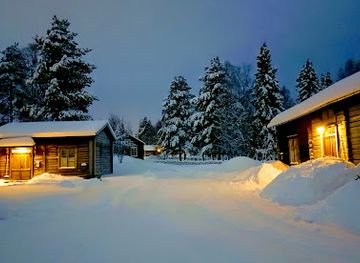
The site is a tight ensemble of weathered wooden cottages, small sheds and outbuildings arranged around simple clearings and paths. Many of the buildings retain the rustic materials and proportions of their origins: rough-sawn planks, plank roofs in some cases, and low doorways that emphasise domestic scale. Interspersed storage sheds and small fenced plots hint at the practical, short-term occupation of the site—places for drying fish, stowing furs and keeping tools. The contrast with nearby modern buildings is visible and helps to frame Lappstaden as a preserved pocket of traditional life within a contemporary town.Architectural character and construction
The gåhtie at Lappstaden are typologically consistent: modest square plans, timber post-and-beam frames and sharply pitched roofs that shed snow and make efficient use of limited materials. While they are simple structures, details such as joined corner timbers, narrow window apertures and small ventilated eaves demonstrate regional carpentry knowledge adapted to a boreal climate. The arrangement of huts—clustered rather than scattered—speaks to the communal function of the place and to the way families claimed proximate spaces during religious festivals and market days.Seasonal rhythms and living memory
Although the huts were designed for intermittent use rather than permanent habitation, the site preserves the imprint of seasonal patterns: compact sleeping spaces, communal clearings, and practical outbuildings for short-term subsistence work. Lappstaden’s character changes with the seasons—soft green and bird-song in summer, snow-muted quiet in winter—and that cyclical shift is part of its meaning. Annual cultural events connected to Sámi traditions still reference the church-town model, and the preserved buildings act as a material archive for local memory and customary practice.Setting and atmosphere
Lappstaden occupies a small, intimate pocket of space within Arvidsjaur, a short distance from the town’s main street and church. The feel is domestic and restrained rather than monumental: narrow paths, low eaves and close-set roofs produce an enclosed, calm atmosphere where wood scents and the creak of timber feel immediate. The simplicity of materials and the human scale make it easy to imagine the practical conversations and short exchanges that once filled these huts during market and church assemblies.Significance and preservation
As one of the most complete examples of a Sámi church town in the region, Lappstaden is important for understanding the intersection of religious, commercial and social life in historic northern Sweden. The preserved huts and outbuildings are a physical record of adaptation to northern environments, and conservation efforts have kept the compound legible as a heritage landscape. Interpretation is unobtrusive: the place is primarily experienced as an ensemble of forms and textures rather than as a curated museum display, which supports a contemplative and respectful encounter with Sámi material culture.












Your all‑in‑one travel companion app
Explore expert travel guides, compare and book tours, experiences, hotels, and more—all from the palm of your hand. Download now for seamless trip planning wherever your wanderlust takes you.


Explore More of Lapland
Looking beyond Lappstaden? Discover Lapland for broader travel guides, local hot-spots, and regional highlights.
Explore Lapland
Discover Norrbotten's hidden wetland paradise: Torrbergstjärn's lake, birds, and trails await in pristine coastal forest solitude.

A tidy, modern lodge in Arvidsjaur offering comfortable rooms, a generous breakfast and a cosy sauna for rewarming after Lapland activities.
