
Forsby-Köping Limestone Cableway, Medelpad Travel Guide
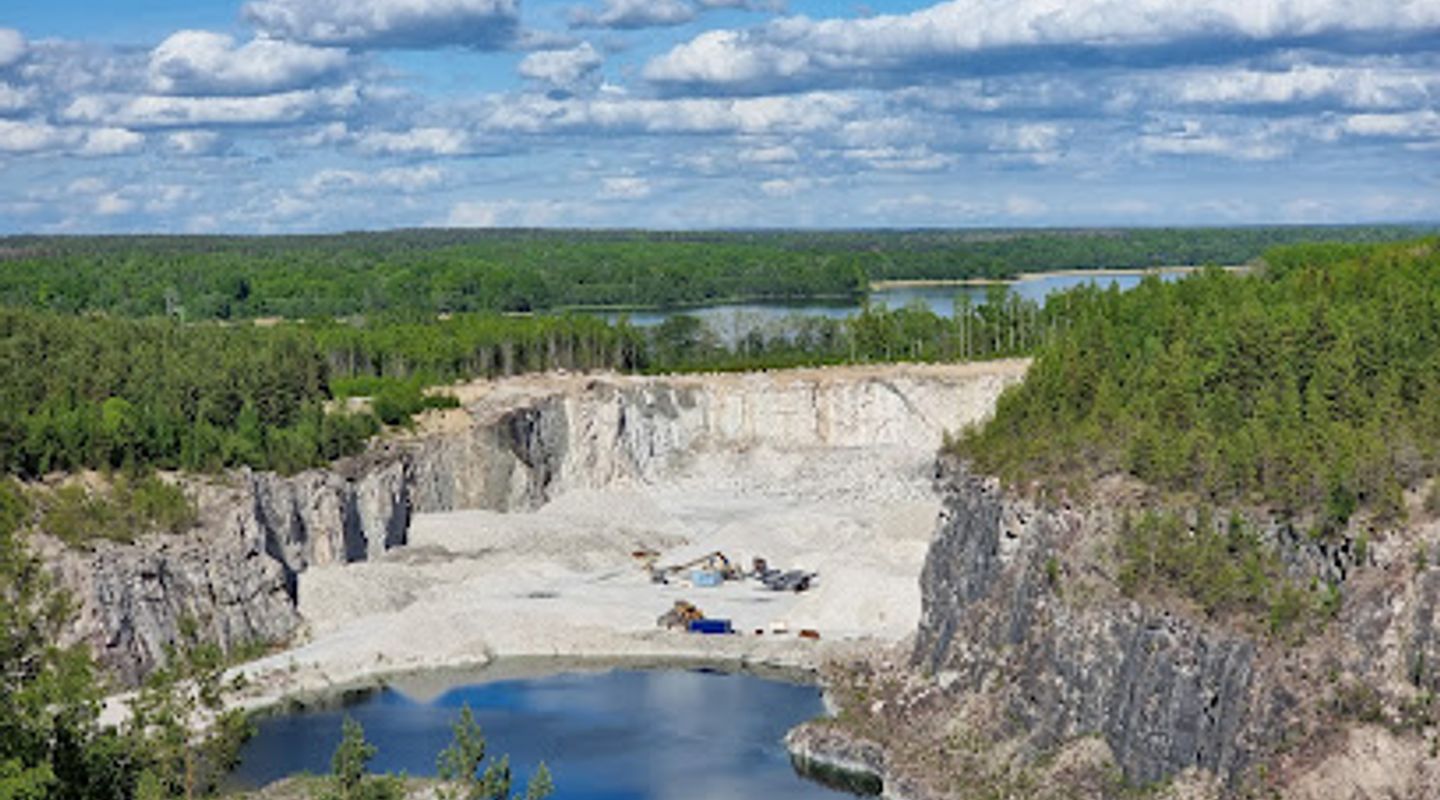
An evocative industrial relic: remnants of the once 40+ km aerial limestone conveyor that stitched Forsby to Köping through Sweden’s lowlands.
A remarkable relic of Swedish industrial ingenuity, the Forsby–Köping Limestone Cableway (Kalklinbanan) once carried limestone in a continuous string of buckets across roughly 42 km of farmland, forest and marsh between Forsby (Vingåker) and Köping. Built in 1939 to feed cement works, today fragments of concrete trestles, angle stations and machinery remain scattered through the landscape, giving the route a melancholy, monumental presence.
A brief summary to Forsby-Köping Limestone Cableway
- Vingåker, 643 95, SE
- Click to display
- Click to display
- Duration: 0.5 to 3 hours
- Free
-
 Outdoor
- Mobile reception: 4 out of 5

Know before you go
Hi, I'm Eve. Here are a few practical things to know before exploring Forsby-Köping Limestone Cableway.
- Wear sturdy footwear for uneven ground around trestles and foundations; many remains sit in fields and rough tracks.
- Bring a map or GPS waypoint—surviving structures are dispersed and easy to miss from minor roads.
- Respect private land: many piers lie adjacent to working farms; observe from public ways unless explicit access is granted.
- If you’re interested in deeper interpretation, seek local museums or the volunteer-run ropeway museum that preserves artefacts and background information.
Do you manage this location?
Take control to get all the benefits, like improved information, better appearance, and stronger visibility across AI-powered discovery. Learn more about listing your business on Evendo
Activate your presenceOther nearby places you may find interesting
The closest places of the same kind, if this one is not quite what you had in mind.
Explore Forsby-Köping Limestone Cableway on the Map
A handpicked selection of must-see spots near Forsby-Köping Limestone Cableway, mapped for you.
Getting There
-
By car
Private car from central Vingåker: allow 15–30 minutes depending on the specific ruin you intend to visit; some remnants lie beyond minor roads and require parking on a verge and a short walk over unpaved farm tracks. Note seasonal surface conditions, limited roadside parking and respect for farm property.
-
Regional bus + walk
Regional bus to a nearby village or small halt: typical journey 30–50 minutes from larger nearby towns; from the bus stop expect a 20–50 minute walk over country lanes and fields to reach visible trestles. Bus frequency can be limited on weekends; check seasonal timetables before travel and allow additional time for the walking leg.
-
Guided local museum tour
Small-group guided tour organised by local heritage volunteers or the ropeway museum: tours typically last 1.5–3 hours and include viewpoints of multiple surviving sites; tours run seasonally with occasional fees in local currency reflecting guide provision and museum entry.
For the on-the-go comforts that matter to you
-
 Information Boards
-
 Seating Areas
Discover more about Forsby-Köping Limestone Cableway
Origins and industrial purpose
The Kalklinbanan was conceived in the late 1930s to meet the relentless demand for crushed limestone for cement production; its engineered solution was to carry material in hundreds of small bucket cars along an endless aerial loop. Built as a continuous transport system of motor stations, tension stations and concrete trestles, the line linked a Forsby quarry to the processing plants around Köping, spanning an extraordinary distance across agricultural lowlands, woodland and waterways.Scale, structure and surviving elements
When complete the system ran for roughly 40–42 kilometres and relied on long runs of cable supported by a dense sequence of trestles and concrete piers; power and angle stations controlled direction and load at key points. Although most of the moving cables, buckets and many trestles have been removed in recent decades, substantial fragments remain: isolated concrete supports, the outlines of former angle stations and occasional machinery housings, all of which hint at the original scale and rhythm of the route.A landscape stitched by steel and concrete
The cableway left an unmistakable imprint on the countryside. In places the route cuts a linear scar across fields and skirts wetlands; in others it threads through small copses and crosses roads and rail corridors. The surviving concrete piers stand like industrial fossils: geometric, weathered and sometimes moss-clad, they provide a tangible sense of how the ribbon of transport once rode above the terrain for kilometres at a time.Technology and operation in brief
The system used continuous-loop cables driven from motor houses and apportioning limestone to the bucket cars at loading terminals; tension stations kept the cable taut over long spans and angle stations redirected the line where geography required it. The original operation handled large tonnages in many small lifts rather than a single heavy convoy—an approach that emphasised reliability and continuous throughput over short bursts of movement.What you will notice on arrival
There is no grand station or single intact viaduct awaiting discovery; instead the experience is fragmentary and forensic: clusters of piers, rusted fixtures, foundations and overgrown service tracks. The air carries a quiet of secondary nature—birdsong, wind in reeds and the hollow echo around concrete bases. Bring curiosity and time to read inscriptions, inspect the engineering details and imagine the long, metallic hum that once threaded this landscape.Conservation, memory and visitor expectations
The cableway sits between industrial archaeology and rural ruin. Local initiatives and small museums preserve pieces and tell parts of the story, but much of the infrastructure has been dismantled, sold or reclaimed by vegetation. The site rewards observers interested in industrial history, civil engineering and landscape transformation; visitors should expect limited facilities, sparse interpretation on-site and to experience the remains as dispersed points of interest rather than a single consolidated attraction.More to explore near Forsby-Köping Limestone Cableway
-

Best experiences near Forsby-Köping Limestone Cableway
-

Best hotels near Forsby-Köping Limestone Cableway
-

Best landmarks near Forsby-Köping Limestone Cableway
-

Best shops near Forsby-Köping Limestone Cableway
-

Best restaurants near Forsby-Köping Limestone Cableway
-

Best bars near Forsby-Köping Limestone Cableway







Your all‑in‑one travel companion app
Explore expert travel guides, compare and book tours, experiences, hotels, and more—all from the palm of your hand. Download now for seamless trip planning wherever your wanderlust takes you.


Explore More of Medelpad
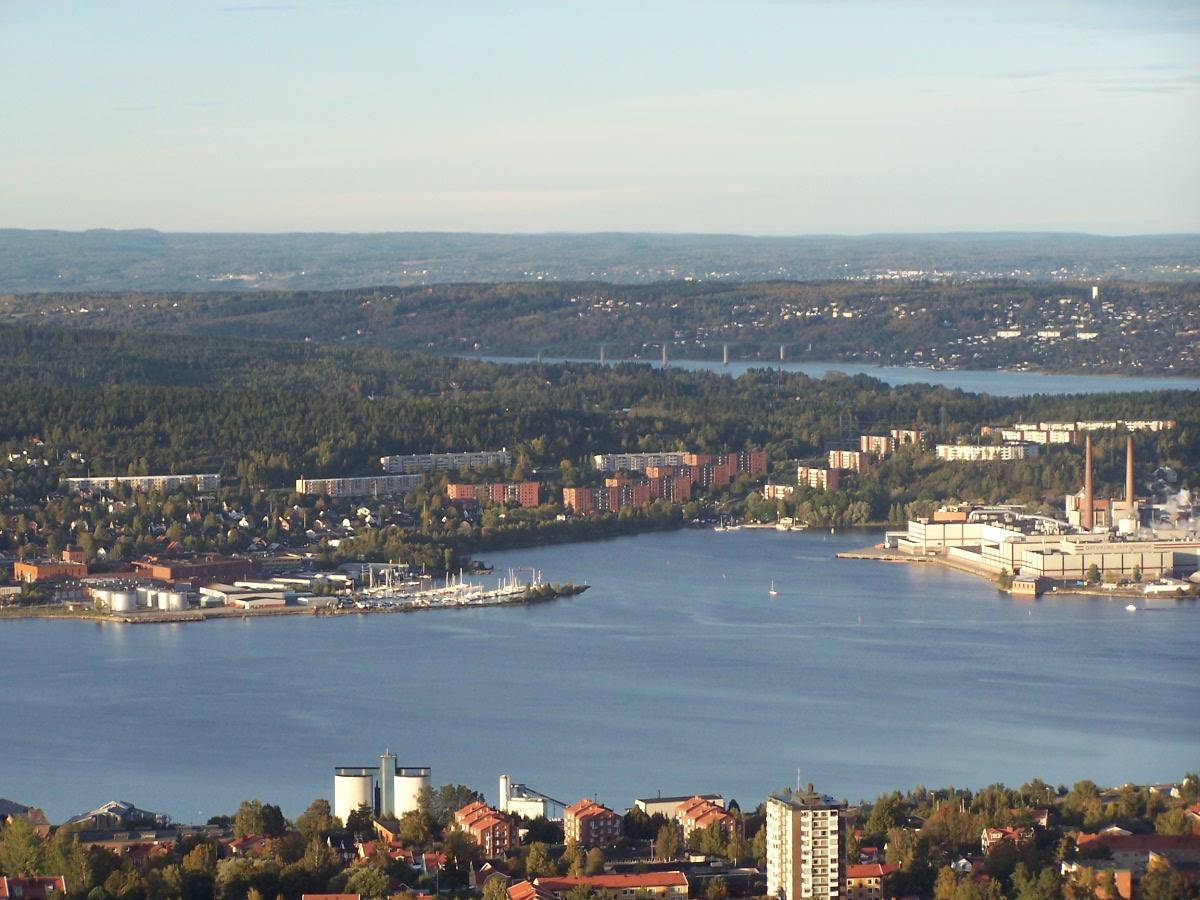
Looking beyond Forsby-Köping Limestone Cableway? Discover Medelpad for broader travel guides, local hot-spots, and regional highlights.
Explore Medelpad
Discover the world's first recycling mall in Eskilstuna, where upcycled treasures from 14 shops and sustainability workshops turn waste into wonder for eco-conscious shoppers.
Step into early 1900s Swedish manor life amid lakeside parks, heritage gardens, and blooming orchards at this Södermanland treasure—open year-round for serene escapes.
