

Free Medelpad Travel Guide & Mobile App
Explore Medelpad with free travel guides. Discover regional history, expert tips, proposed trips, and audio guides on web or mobile app.


Explore Medelpad in central Sweden for Sundsvall’s Stone City, forested river valleys, Baltic coast, island villages and outdoor adventures.
Read more about Medelpad
When is the best time to visit Medelpad?
Best: June–August · 18–21°C| Month | High (°C) | Rainfall (mm) |
|---|---|---|
| January | -2 | 35 |
| February | -2 | 30 |
| March | 3 | 30 |
| April | 7 | 35 |
| May | 14 | 40 |
| June (best) | 18 | 50 |
| July (best) | 21 | 55 |
| August (best) | 20 | 55 |
| September | 15 | 50 |
| October | 9 | 50 |
| November | 2 | 40 |
| December | -1 | 35 |
Getting to and around Medelpad
How to get there
Transportation
Best attractions in Medelpad
Medelpad’s attractions range from urban heritage to broad outdoor landscapes. In Sundsvall, the Stenstan quarter, museums and cultural venues provide a concentrated introduction to the region’s commercial and industrial past, while Norra Berget combines open-air heritage displays, walking routes and views over the city. Södra Berget is a base for recreation in different seasons, with trails and winter activities close to the urban area. Timrå offers access to the Indalsälven delta, coastal scenery and the historic environment of Lögdö bruk, whose former ironworks buildings illustrate an earlier industrial economy. Alnön adds island roads, rural settlements and shoreline landscapes, with its red granite geology providing a distinctive local feature. West of Sundsvall, the Ljungan valley leads through forested countryside, lakes and villages towards Ånge, where fishing, hiking and quiet nature experiences are more prominent than formal visitor attractions. Churches, railway heritage, local museums and seasonal cultural events add smaller points of interest across the region.
-
Open air museum
Norra Berget friluftsmuseum
A leafy hilltop mix of historic farmhouses, heritage animals, cafés and forest trails with wide views over Sundsvall.
-
Swimming facility
Himlabadet Sundsvall
Sundsvall's ultimate splash zone: adrenaline slides, lap lanes, steamy saunas, and seasonal outdoor bliss for every swimmer.
-
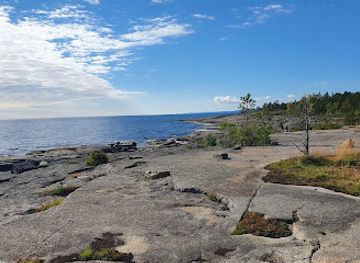
Nature preserve
Rotsidan
A four‑kilometre sweep of wave‑polished diabase slabs and wind‑trimmed pines where the High Coast’s geology and sea drama are on full display.
-
Bar
Comfort Hotel Sundsvall
Central, practical and pet‑friendly hotel on Strandgatan — a compact, well‑placed base for exploring Sundsvall’s stone town.



Best landmarks in Medelpad
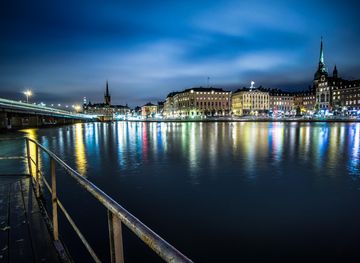
Sundsvall’s Stenstan is Medelpad’s most recognisable architectural landmark. Rebuilt after the 1888 fire, its stone and brick commercial buildings form a coherent late-nineteenth-century centre that reflects the fortunes of the timber trade. Gustav Adolf Church, with its prominent position near the central streets, is another important element of the cityscape. On Alnön, the medieval Alnö old church preserves a much earlier layer of regional history, while the island’s red rapakivi granite is a notable geological feature visible in the local landscape. Lögdö bruk in Timrå is significant for its surviving ironworks environment and demonstrates that Medelpad’s industrial past began before the great sawmill expansion. Inland, Borgsjö church and its surrounding settlement represent the historic religious and farming communities of the Ljungan valley. The broad river mouths at the Indalsälven delta and the wooded forms of the inland valleys are natural landmarks, expressing the geography that enabled settlement, transport and industry.
-
Historical landmark
Slåttdalsskrevan
Descend into Sweden's most mesmerizing granite chasm, a 200m Ice Age scar amid Skuleskogen's ancient forests and uplifting High Coast wonders.
-
Historical landmark
Lögdö Bruk
Step into Sweden's preserved ironworks world at Lögdö Bruk, where 17th-century forges meet timeless rural charm in Timrå's culture reserve.
-
Attraction
Flataklocken, Sveriges geografiska mittpunkt
Stand at Sweden's geographical heart atop Flataklocken, where epic Medelpad views meet historic significance and cozy fika amid serene hilltop wilds.
-
Historical landmark
Galtströms Bruk & Herrgård AB
Medelpads första järnbruk: Masugn, ånglok och herrgård vid havet – en tidsresa i idyllisk natur.


Explore Medelpad on the map
Plan your trip on one map. See where the top cities, national parks and sights are, and book hotels and experiences in a few clicks.
Best hotels in Medelpad
Best restaurants in Medelpad
Dining in Medelpad combines the broadest choice of restaurants and cafés in Sundsvall with traditional pubs, rural eateries and seasonal food stops in smaller communities. Local menus often draw on Baltic fish, potatoes, bread, game, mushrooms and berries, reflecting the meeting of coast and forest. Fish dishes may include herring or other locally available catches, while northern Swedish specialities such as surströmming belong to the wider regional food culture and are usually encountered seasonally rather than on every menu. Västerbotten cheese and other products from northern Sweden may also appear, alongside contemporary Swedish cooking and international food in Sundsvall. Farmers’ markets, bakeries and farm shops are useful places to look for berry preserves, smoked products, bread and locally produced dairy. In the countryside, opening days and service hours can be limited, so advance planning is sensible; city dining is more varied and generally more flexible.
-
Restaurant
E Street
Sundsvall's music-themed eatery: creative dishes by day, live music and nightlife until late. From lunch specials to karaoke vibes on Esplanaden.
-
Hamburger
Restaurant Apa
A lively, no-nonsense burger bar on Storgatan serving generous American-style burgers and an extensive beer selection in central Sundsvall.
-
Italian
BASTA - Italiensk Restaurang Sundsvall
Upplev italiensk romantik i Sundsvall: napolitansk pizza, färsk pasta och cocktails i en livlig trattoria som andas Dolce Far Niente och gemenskap.
-
Restaurant
Restaurang Innergården
Glass-roofed courtyard haven in Sundsvall's historic Stone Town, blending 1890s apothecary legacy with modern Swedish tapas, lunches, and eternal summer vibes.


Best bars in Medelpad
Sundsvall has Medelpad’s most developed evening scene, centred on the city centre and shaped by restaurants, traditional pubs, cocktail-led bars, live music and occasional club nights. The compact Stenstan area provides an atmospheric setting for an evening out, although individual venues and opening arrangements change over time. Cultural events, theatre and concerts broaden the choice beyond drinking establishments. Timrå and Ånge have a smaller selection, with evening life tending to focus on local pubs, restaurants, community events and seasonal gatherings rather than a large nightclub circuit. In rural Medelpad, distances and limited late transport make it important to arrange a safe journey in advance. Breweries and locally produced drinks may feature in the region’s food scene, but alcohol is not necessary to participate in its social or cultural life.
-
American
O'Learys Sundsvall
Sports screens, sizzling wings, and American burgers fuel the fun at this Sundsvall sports bar hotspot—perfect for game nights and lively evenings.
-
Bar
Strike Club
Unleash fun in Sundsvall's ultimate playhouse: bowling, laser tag, Prison Island, and tasty bites for epic group adventures.
-
Tapas Bar
Udda
Sundsvall's coziest tapas bar where small plates unleash bold global flavors, craft drinks flow, and evenings pulse with shared sensory delight.
-
Bar
Lion bar Sundsvall
Sundsvall's go-to bar for cheap beers, pub favorites, and friendly vibes—open late for your perfect unwind spot.


Best nightclubs in Medelpad
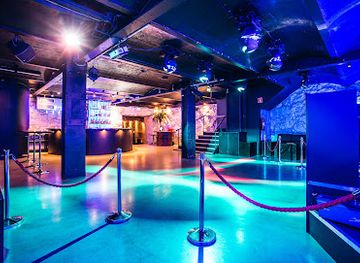
Sundsvall has Medelpad’s most developed evening scene, centred on the city centre and shaped by restaurants, traditional pubs, cocktail-led bars, live music and occasional club nights. The compact Stenstan area provides an atmospheric setting for an evening out, although individual venues and opening arrangements change over time. Cultural events, theatre and concerts broaden the choice beyond drinking establishments. Timrå and Ånge have a smaller selection, with evening life tending to focus on local pubs, restaurants, community events and seasonal gatherings rather than a large nightclub circuit. In rural Medelpad, distances and limited late transport make it important to arrange a safe journey in advance. Breweries and locally produced drinks may feature in the region’s food scene, but alcohol is not necessary to participate in its social or cultural life.
-
Bar
Strike Club
Sundsvall's ultimate playground: bowl, battle in laser tag, conquer Prison Island, and feast on burgers amid non-stop fun for all ages.
-
Night club
Rose Club
Glamorous Stockholm nightlife haven with velvet elegance, rose motifs, and pulsating DJ beats drawing stylish crowds until 5am on weekends.
-
Night club
Klubb Blå
Stockholm's go-to private party palace: two floors of dining, dancing, and drinks since 1994, perfect for student nights and epic group bashes.
-
Gay night club
Club Backdoor
Stockholm's boldest gay nightclub: three dance floors, epic sound, and beats until 5 AM—Fridays hit music and hip-hop, Saturdays dark house techno.



Best shops in Medelpad
Sundsvall is Medelpad’s main shopping centre, with central high-street stores, department-style retail, independent businesses, cafés and the larger Birsta commercial area outside the historic core. The Stenstan streets are particularly suited to browsing smaller shops, design-led goods, books, gifts and food products, while Birsta is oriented towards extensive modern retail and practical shopping. In Timrå, Alnön and the inland communities, shopping is more local in character, with everyday services, small businesses and occasional craft or seasonal outlets rather than a large specialist scene. Farm shops and regional food sellers can provide berries, preserves, smoked foods, bread and other northern Swedish products when available. Visitors interested in crafts and antiques should look for independent galleries, second-hand shops and heritage-site sales, whose stock and opening arrangements vary. Regional food products generally make more useful souvenirs than generic merchandise, particularly when travelling outside Sundsvall.
-
Fast Food
Mat & Nostalgi i Viksjö
Retro gas station wonderland with 50s diner, antiques, flea market finds, and fika bliss in Sweden's High Coast countryside.
-
Department store
Åhléns
Central Sundsvall department store with fashion, homeware and beauty across several floors — practical shopping with seasonal displays and in‑store services.
-
Pastries
Eclair Konditori Café
Sundsvall's cozy konditori haven, crafting irresistible Swedish pastries, custom cakes, and savory smörgåsar for perfect fika moments amid bakery aromas.
-
Souvenir store
The Old Town Souvenir
A compact Gamla Stan shop offering Swedish keepsakes and Viking‑style curios, set inside a centuries‑old cobbled street.


Get your free copy of our complete guide to Medelpad, delivered straight to you.
Everything on this page, from attractions and restaurants to essentials and local phrases, in one PDF you can read offline, print or share.
Already have an account? Sign in
Your Medelpad guide is ready.
We'll send it to · Not you? Sign out

Getting your guide ready…
We are putting together a fresh copy of the Medelpad guide. This can take up to a minute.
This can take a few moments. If your browser asks, choose Allow so the download can start. You'll find the guide in your Downloads folder.
Nothing happened? Download it again
Sorry, the guide is taking longer than usual. Please try again in a minute, or get it by email instead.
Medelpad essentials
Currency and Payment
Safety
Emergency Situations
Do's and Don'ts
Local Tips
From Eve
Local phrases worth knowing
You don't need to get them perfect. A few words go a long way, and locals appreciate the effort.
Basics
| English | Local | Say it |
|---|---|---|
| Hello | Hej | [hey] |
| Goodbye | Hejdå | [hey-daw] |
| Yes | Ja | [yah] |
| No | Nej | [nay] |
| Please/You're welcome | Tack | [tahk] |
| Thank you | Tack så mycket | [tahk soh mee-ket] |
| Excuse me/Sorry | Ursäkta | [oor-sehk-tah] |
| How are you? | Hur mår du? | [hoor mohr doo] |
| Fine. And you? | Bra. Och du? | [brah. ohk doo] |
| Do you speak English? | Talar du engelska? | [tah-lar doo eng-els-kah] |
| I don't understand | Jag förstår inte | [yahg fur-stor in-teh] |
Eating & Drinking
| English | Local | Say it |
|---|---|---|
| I'd like to see the menu, please | Jag skulle vilja se menyn, tack | [yahg skool-leh vil-yah seh meh-nun, tahk] |
| I don't eat meat | Jag äter inte kött | [yahg eh-ter in-teh yurt] |
| Cheers! | Skål! | [skawl] |
| I would like to pay, please | Jag skulle vilja betala, tack | [yahg skool-leh vil-yah beh-tah-lah, tahk] |
Emergencies
| English | Local | Say it |
|---|---|---|
| Help! | Hjälp! | [yelp] |
| Go away! | Gå bort! | [gaw bort] |
| Call the Police! | Ring polisen! | [ring poh-lees-en] |
| Call a doctor! | Ring en doktor! | [ring en dok-tor] |
| I'm lost | Jag har gått vilse | [yahg har goht vil-seh] |
| I'm ill | Jag är sjuk | [yahg air shook] |
Shopping
| English | Local | Say it |
|---|---|---|
| I'd like to buy... | Jag skulle vilja köpa... | [yahg skool-leh vil-yah shur-pah] |
| I'm just looking | Jag tittar bara | [yahg tit-tar bah-rah] |
| How much is it? | Hur mycket kostar det? | [hoor myu-ket koh-star deh] |
| That's too expensive | Det är för dyrt | [deh air fur deert] |
| Can you lower the price? | Kan du sänka priset? | [kan doo sen-kah pree-set] |
Time & Numbers
| English | Local | Say it |
|---|---|---|
| What time is it? | Vad är klockan? | [vahd air klok-kan] |
| It's one o'clock | Klockan är ett | [klok-kan air eht] |
| Half past (10) | Halv (10) | [halv (ten)] |
| Morning | Morgon | [mor-gon] |
| Afternoon | Eftermiddag | [ef-ter-mid-dahg] |
| Evening | Kväll | [kvel] |
| Yesterday | Igår | [ee-gor] |
| Today | Idag | [ee-dahg] |
| Tomorrow | Imorgon | [ee-mor-gon] |
| 1 | 1 | [ett] |
| 2 | 2 | [två] |
| 3 | 3 | [tre] |
| 4 | 4 | [fyra] |
| 5 | 5 | [fem] |
| 6 | 6 | [sex] |
| 7 | 7 | [sju] |
| 8 | 8 | [åtta] |
| 9 | 9 | [nio] |
| 10 | 10 | [tio] |
Transport & Directions
| English | Local | Say it |
|---|---|---|
| Where's a/the...? | Var är en/den...? | [var air en/den...?] |
| What's the address? | Vad är adressen? | [vahd air a-dres-sen] |
| Can you show me (on the map)? | Kan du visa mig (på kartan)? | [kan doo vee-sah may (po kar-tan)?] |
| When's the next (bus)? | När går nästa (buss)? | [nair gor nes-ta (boos)?] |
| A ticket (to ....) | En biljett (till ....) | [en bil-yet (til ....)] |
History of Medelpad
Early settlement and the coastal landscape
People have used Medelpad’s coast, river valleys and inland forests since prehistoric times. As the land rose after the last Ice Age, new shorelines and islands gradually became habitable, while rivers such as the Ljungan and Indalsälven provided routes through the region. Archaeological remains, burial sites and historic settlement patterns show a long relationship with fishing, hunting, farming and seasonal movement. The physical landscape continued to change as post-glacial uplift raised former seabeds, leaving terraces and coastal features that remain visible around Sundsvall, Alnön and the river mouths.
Medieval churches and farming communities
During the medieval period, permanent farming communities developed along Medelpad’s fertile river valleys and around the coast. Christianity reshaped local life, with parish churches becoming important religious and administrative centres. Borgsjö church and other historic churches preserve elements of this rural medieval landscape, even though many buildings have been altered over the centuries. Trade connected the region to the wider Swedish kingdom, while the rivers continued to link inland producers with coastal settlements and emerging market towns.
Ironworking and estates at Lögdö bruk
Lögdö bruk in present-day Timrå municipality represents the industrial development that preceded Medelpad’s large-scale sawmill expansion. Established as an ironworks in the seventeenth century, it used local waterpower, forests and transport links to support iron production. The works later declined, but the surviving manor, industrial buildings and surrounding settlement convey how Swedish ironworking combined raw materials, estate management and rural labour. Lögdö’s buildings are an important counterpoint to the better-known timber history of the coast.
The sawmill era and timber exports
From the nineteenth century, Medelpad became one of Sweden’s leading timber-processing regions. Steam power, improved roads and expanding shipping allowed sawmills along the coast and river mouths to process forest resources for domestic and international markets. Sundsvall grew rapidly as a port, commercial centre and headquarters for timber interests, while settlements in the Ljungan and Indalsälven valleys became tied to forestry and river transport. The wealth of this period funded substantial commercial buildings and helped create the urban landscape for which central Sundsvall is known.
The Sundsvall fire of 1888
On 25 June 1888, a major fire destroyed much of Sundsvall after strong winds spread flames through a largely wooden city. Reconstruction transformed the centre: new buildings were required to use stone or brick, and merchants and industrial interests financed richly decorated façades in late-nineteenth-century styles. The resulting Stenstan is one of the clearest physical expressions of the region’s sawmill-era prosperity. The disaster therefore marked both a severe urban catastrophe and the beginning of Sundsvall’s most distinctive architectural chapter.
Railways and modern regional connections
Railway construction in the late nineteenth and early twentieth centuries changed the relationship between Medelpad’s coast and interior. Lines through Sundsvall, Ånge and the Ljungan valley improved the movement of timber, industrial goods, workers and passengers, reducing dependence on river transport and seasonal roads. Ånge became an important railway junction, while Sundsvall’s port and industrial districts remained central to regional trade. The rail network continues to shape travel through Medelpad and explains the importance of settlements that might otherwise appear small in relation to the surrounding forests.
Forestry, industry and contemporary Medelpad
Forestry and wood processing remain important to Medelpad’s economy and identity, although the region has diversified into education, public services, engineering, commerce and tourism. Sundsvall developed as a regional centre, while Timrå retained strong industrial and maritime associations and Ånge remained connected to forestry and rail transport. Environmental management, outdoor recreation and the protection of historic urban and industrial sites have become increasingly significant. Contemporary Medelpad thus combines a working landscape with cultural institutions, heritage districts and access to extensive natural areas.
Medelpad in Photos
Browse through our photo collection highlighting the charm and character of the destination.
Neighbouring regions of Medelpad
The closest regions to Medelpad, if you have time for more than one.
-

-

-

-

-


Swipe for more regions
Explore more
Explore more of Sweden
Discover Sweden's breathtaking landscapes, vibrant cities, and rich cultural heritage. From the Northern Lights to historic castles, experience the essence of Scandinavia.
Explore Sweden