Femörefortet, Narke Travel Guide
A Cold War coastal fortress excavated in granite — subterranean tunnels, gun emplacements and rugged shoreline walks on Femöre headland.
Femörefortet is a Cold War coastal-artillery fortress and subterranean museum carved into the granite of the Femöre headland near Oxelösund, Sweden. Built in the 1960s as a secret defensive battery and nuclear-protection complex, the site today combines guided tours of a 450 m tunnel system, surface gun emplacements and rugged seaside walking trails, plus a restored lighthouse keeper’s house available for events and stays.
A brief summary to Femörefortet
- Femörehuvud, Söderviksvägen, Oxelösund, 613 35, SE
- Click to display
- Click to display
- Duration: 1 to 3 hours
- Mid ranged
-
 Mixed
Mixed
- Mobile reception: 4 out of 5
- Monday 10:30 am-4 pm
- Tuesday 10:30 am-4 pm
- Wednesday 10:30 am-4 pm
- Thursday 10:30 am-4 pm
- Friday 10:30 am-4 pm
- Saturday 10:30 am-4 pm
- Sunday 10:30 am-4 pm

Know before you go
Hi, I'm Eve. Here are a few practical things to know before exploring Femörefortet.
- Book a guided underground tour in advance during peak season; interior passages are narrow and tours run on a schedule.
- Wear sturdy shoes and a light jacket — inside the tunnels is cool and surface paths are rocky and exposed to wind.
- Combine the visit with a walk on the peninsula’s trails and a stop at the lighthouse house for photos or event bookings.
- If you’re sensitive to confined spaces or low light, ask staff about tour accessibility and any alternatives to deep tunnel sections.
Do you manage this location?
Take control to get all the benefits, like improved information, better appearance, and stronger visibility across AI-powered discovery. Learn more about listing your business on Evendo
Activate your presenceOther nearby places you may find interesting
The closest places of the same kind, if this one is not quite what you had in mind.
Explore Femörefortet on the Map
A handpicked selection of must-see spots near Femörefortet, mapped for you.
Getting There
-
Car (from central Oxelösund)
Private car: allow 10–15 minutes driving time from central Oxelösund to the large public car park at Femöre; parking space is available but can fill on busy summer weekends and there is a short, uneven 400–600 m walk from the lot to the visitor gate. No detailed street directions are provided here; expect seasonal variations in parking demand and bring cashless payment for any site fees.
-
Local shuttle / summer tourist train
Local seasonal shuttle or tourist train: operates during the warmer months with short runs that connect town stops to Femöre; typical journey time is 15–25 minutes depending on the boarding point, services are less frequent off-season and may be free or low-cost—check local timetables in advance and note limited capacity on peak days.
-
Walking from nearby neighbourhoods
On-foot approach: allow 45–80 minutes walking time from central Oxelösund depending on route choice and fitness; terrain includes paved town paths transitioning to rocky coastal trails with roots and uneven stone, so sturdy footwear is recommended and the route is not suitable for wheelchairs across the whole distance.
For the on-the-go comforts that matter to you
-
 Information Boards
-
 Visitor Center
-
 Seating Areas
-
 Trash Bins
Discover more about Femörefortet
Origins carved in granite
Femörefortet was constructed in the 1960s as a coastal-artillery battery and hardened shelter, hewn directly into the rock of the Femöre headland to protect a stretch of Sweden’s eastern seaboard during the Cold War. The fortress’s concrete-and-granite defensive works include three 7.5 cm Bofors gun positions and a network of protected rooms — sleeping quarters, workshops, generators, command posts and sanitary facilities — linked by a roughly 450-metre-long tunnel system that sinks into the island’s bedrock. This subterranean layout was designed to keep a wartime garrison operational even under sustained attack.What you’ll see beneath the surface
On a guided visit you move through low-lit corridors and find spaces that read like a frozen chapter of military daily life: blue-lit control rooms with periscopes and radio gear, ammunition handling areas beside recessed gun mounts, and the mechanical heart of the site where diesel generators and pumps once kept the fortress running. Many of the interior areas are only partially separated from the raw rock, so the smell of cold stone, faint metallic tangs and tight, echoing acoustics are part of the experience. Interpretive displays and preserved equipment explain how a small crew could coordinate fire control, communications and life support from within these protected spaces.Surface features and landscape character
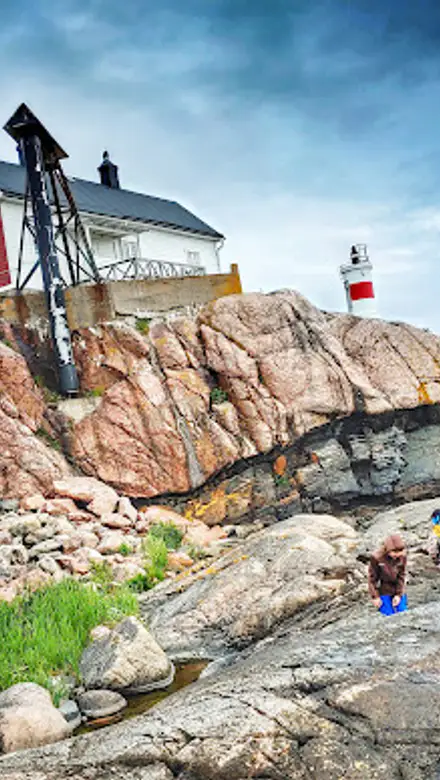
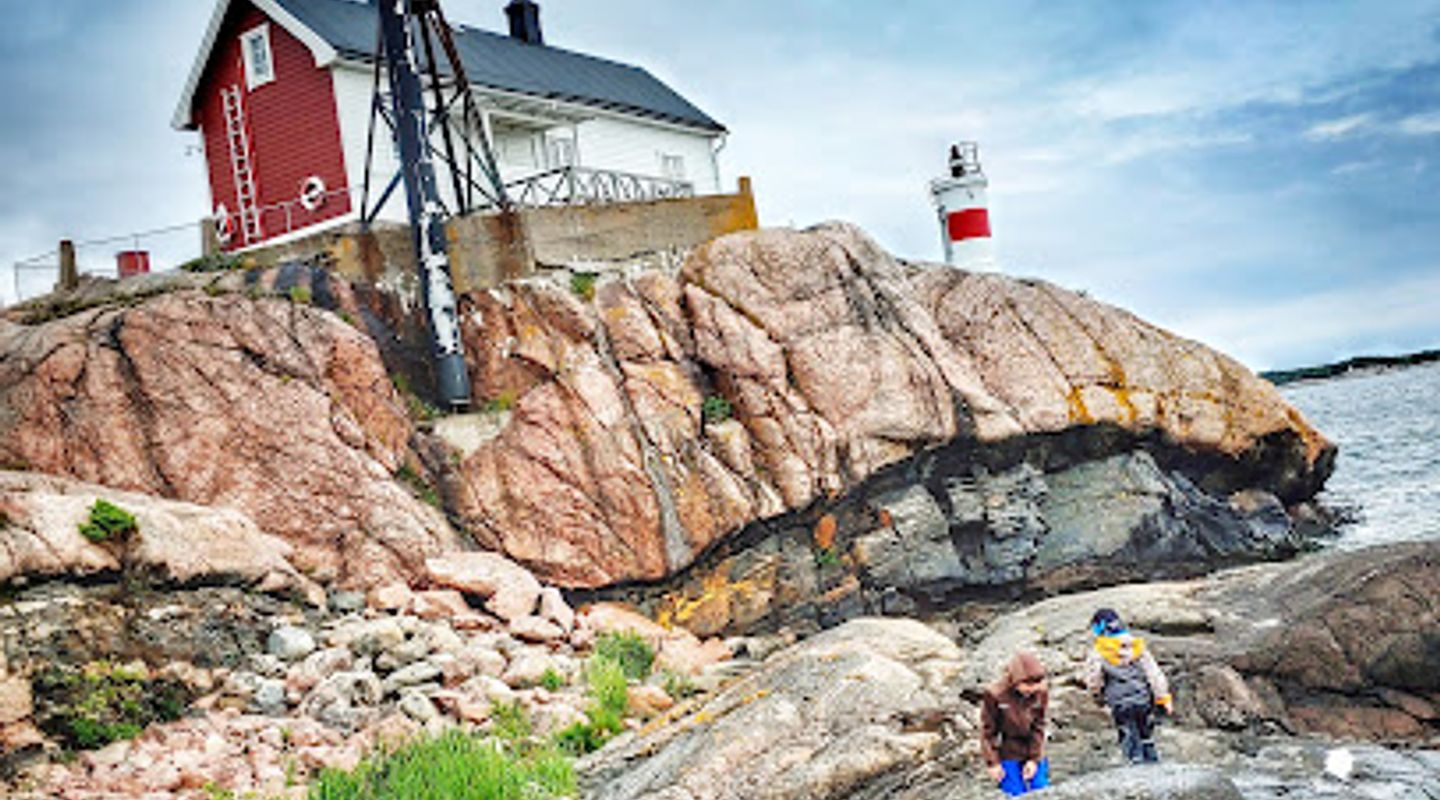
Above ground Femörefortet is less a showy monument and more an integrated coastal landscape: low concrete bunkers nestle among wind-sculpted pines, granite ledges and bracing sea breezes. The gun emplacements and observation posts are set on cliff edges and gently sloping outcrops that offer direct sightlines across the archipelago; from these points the coastline’s razor-edged islands and the open Baltic present both a scenic panorama and a reminder of why the site was located here. Well-marked walking trails thread between the surface fortifications, shoreline cliffs and quiet bays where rocky shelves are used for sunning and swimming in summer.Lighthouse house and visitor facilities
Close to the main complex is a restored lighthouse-keeper’s house that now functions as a small event and accommodation venue, with spaces for meetings and the occasional overnight stay. The visitor facilities are modest: a museum shop and interpretive signage complement the guided-tour program rather than overwhelming the site. The experience blends museum interpretation with the rawness of a coastal nature reserve: you move from confined, engineered interiors into exposed granite and sea-scented air within minutes.Atmosphere and sensory notes
The mood at Femörefortet shifts dramatically as you descend. Above ground you feel the wind, gannets and distant ferry rumble; below, the air is cooler, the light subdued and the corridors intimate — an atmosphere that communicates both the routine of garrison life and the tension of a site built for crisis. The fortress’s materials — brushed concrete, riveted steel, utilitarian paint and bare rock — lend the place a studied austerity that can feel unexpectedly human when you encounter bunks, a canteen, or a neatly folded uniform.Why it matters today
Femörefortet functions as a preserved Cold War complex and living museum: it documents a chapter of 20th-century defence planning, the engineering strategies used to protect people and weapons underground, and the ways coastal terrain was adapted for military purposes. Interpreting both technological detail and the rhythms of life in a fortified post, the site places visitors in the intersection of natural coastline and constructed defence, offering perspective on landscape, history and the human scale of military preparedness.












Your all‑in‑one travel companion app
Explore expert travel guides, compare and book tours, experiences, hotels, and more—all from the palm of your hand. Download now for seamless trip planning wherever your wanderlust takes you.


Explore More of Narke
Looking beyond Femörefortet? Discover Narke for broader travel guides, local hot-spots, and regional highlights.
Explore Narke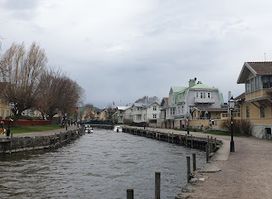
A compact, one‑hour self‑guided walk through Trosa’s wooden villas, small bridges and riverfront squares that reveal the town’s civic and maritime past.
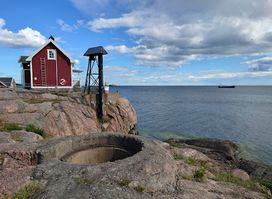
Wind-whipped granite, seabird cries and a rentable lighthouse keeper’s cottage at the wild tip of Femöre peninsula near Oxelösund.