

Nyköpingshus Travel Guide
Free Guide: A compact medieval castle and Renaissance palace in Nyköping, where dramatic royal intrigue, ruinous fires and later prison life have shaped a memorable riverside ruin and museum.


A brief summary of Nyköpingshus
A compact medieval castle and Renaissance palace in Nyköping, where dramatic royal intrigue, ruinous fires and later prison life have shaped a memorable riverside ruin and museum.
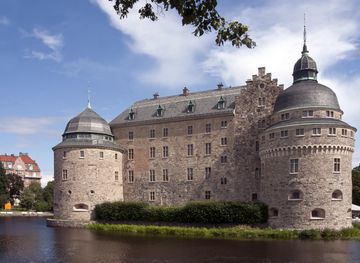
A riverside medieval stronghold turned renaissance palace and evocative ruin, Nyköpingshus sits at the mouth of the Nyköping River and condenses centuries of Swedish history — from thirteenth‑century fortifications and the infamous 1317 ‘Nyköping Banquet’ to later Renaissance remodelling, fires and reuse as prison and residence. Today the King’s Tower houses museum displays while the courtyard and ruins offer atmospheric viewpoints over town and water.
On-site amenities
 Information boards
 Seating areas
- Address
- Vallgatan 12, 611 32 Nyköping
- Phone
- Website
Getting there
Regional bus
Walking from town centre
Taxi or rideshare
Discover more about Nyköpingshus
Origins on the river bluff
Nyköpingshus began as a defensive stone tower in the late 1100s–1200s sited where the Nyköping River meets the inlet; the original kastal and successive curtain walls grew as the settlement became an important Baltic trading point. The castle’s compact footprint and rugged stonework still reveal its early role as a fortified anchor for a medieval town whose fortunes were tied to shipping and regional power.
The banquet and a dynastic drama
The castle is inseparable from a single dramatic episode from the early 14th century often called Nyköping’s banquet: a courtly feast that turned into a political trap and imprisonment of royal rivals. That event cemented the site’s place in national memory and is a key story in the exhibitions preserved in the King’s Tower, which interpret power, punishment and court life in the Middle Ages.
From fortress to Renaissance showpiece
In the 16th century the medieval fortress was remade into a Renaissance palace when Duke Karl (later King Karl IX) commissioned substantial rebuilding and Italianate craftsmen worked on halls and façades. Traces of that ambitious rebuilding — the form of larger halls and refined masonry — remain visible amid the later ruination, underlining a period when the site functioned less as a defensive redoubt and more as a statement of princely prestige.
Fire, decline and changing uses
Repeated city fires and shifting administrative needs after the 17th century left large parts of the castle in ruin; surviving structures were repurposed as a prison, official residences and storehouses. That layered history — luxury palace, ruin, gaol and municipal asset — gives the site its particular character: fragments of carved stone and vaulting beside later brick infill that tell a story of adaptation and loss.
Museum rooms and the King’s Tower experience
The white-painted King’s Tower houses interpretive spaces that focus on two intense periods: medieval power struggles and the 16th‑century Renaissance transformation. Small galleries display objects and reconstructions that help you imagine daily life, ceremonial spectacle and the harsher realities of incarceration; narrow stairways and high window slits reinforce the sense of vertical, defensive architecture.
The ruins, courtyard and riverside setting
Outside the tower, the castle’s open courtyards and fragmentary walls make for quiet, atmospheric wandering with broad views across the river and town roofs. The juxtaposition of exposed masonry, grassy fills and vaulted cellars invites slow exploration: here the site reads as both archaeological trace and living public place where summer performances, interpretation panels and the silhouette of the King’s Tower keep the past visibly present.
Evendo Review Centre
 Google
Guest reviews
Best time to go
Quietest: Jan, Feb & Mar · before 7am or at 8pm
Busy times are Evendo estimates for a typical year, to help you plan. Actual crowds vary with events, school holidays and the weather.
Explore Nyköpingshus on the map
A handpicked selection of must-see spots near Nyköpingshus, mapped for you.
Get your free copy of our complete guide to Nyköpingshus, delivered straight to you.
Everything on this page, from opening hours and how to get there to Eve’s tips and the best time to go, in one PDF you can read offline, print or share.
Already have an account? Sign in
Your Nyköpingshus guide is ready.
We'll send it to · Not you? Sign out

Getting your guide ready…
We are putting together a fresh copy of the Nyköpingshus guide. This can take up to a minute.
This can take a few moments. If your browser asks, choose Allow so the download can start. You'll find the guide in your Downloads folder.
Nothing happened? Download it again
Sorry, the guide is taking longer than usual. Please try again in a minute, or get it by email instead.
Other nearby places you may find interesting
The closest places of the same kind, if this one is not quite what you had in mind.
-
-
-
-
-


Swipe for more places
More to explore near Nyköpingshus

 Best experiences near Nyköpingshus
 Best hotels near Nyköpingshus
 Best landmarks near Nyköpingshus
 Best attractions near Nyköpingshus
 Best shops near Nyköpingshus
 Best restaurants near Nyköpingshus
 Best bars near Nyköpingshus
Do you manage this location?
Take control to get all the benefits, like improved information, better appearance, and stronger visibility across AI-powered discovery.
Explore more
Explore more of Närke
Discover Närke, Sweden's heartland, where natural beauty meets rich history and vibrant culture, offering a tranquil yet enriching experience for every traveler.
Explore Närke
Explore more of Sweden
Discover Sweden's breathtaking landscapes, vibrant cities, and rich cultural heritage. From the Northern Lights to historic castles, experience the essence of Scandinavia.
Explore Sweden
